Tag: Blockchain payments

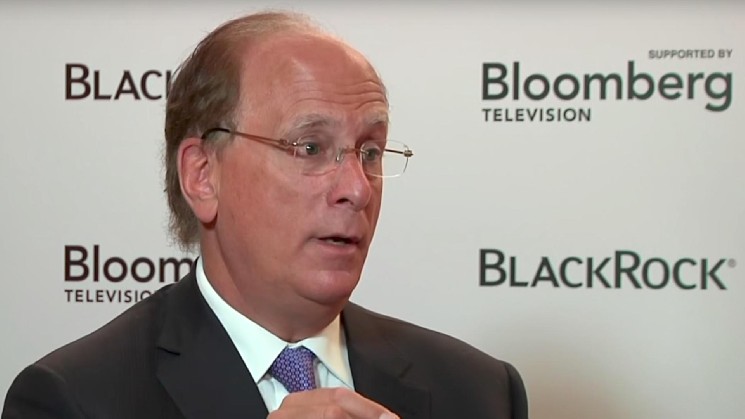
  • BlackRock: AI Agents Will Soon Buy Computing Power and Data Using Stablecoins

    BlackRock: AI Agents Will Soon Buy Computing Power and Data Using Stablecoins

    Key Highlights

    • BlackRock identifies artificial intelligence as a primary catalyst for digital asset adoption, citing autonomous agents’ need for native payment and settlement infrastructure.
    • Stablecoins are positioned as the immediate beneficiary due to their price stability for service pricing and blockchain networks’ 24/7 payment capabilities.
    • The asset manager highlights Coinbase’s x402 protocol as an emerging standard for agent-to-service payments, including API calls, while noting traditional payment networks are also adapting to agentic commerce.

    BlackRock Maps Convergence of AI Agents and Digital Asset Infrastructure

    BlackRock, the world’s largest asset manager, has published research arguing that artificial intelligence will serve as one of the most significant drivers for digital asset adoption in the coming years. The paper centers on the rise of autonomous AI agents—software systems capable of independently executing complex tasks—and their fundamental requirement for programmable, always-on financial infrastructure to operate at machine speed.

    Machine-Native Intelligence Requires Machine-Native Payments

    According to BlackRock’s analysis, AI provides “machine-native intelligence” while digital assets supply the corresponding payment and settlement layer these agents need to act on their decisions without human intervention. The paper illustrates a scenario where an autonomous agent carrying out a task could pay for a data request, book a service, or purchase computing capacity instantly, eliminating the latency and friction inherent in traditional financial systems that require human authorization or operate within limited business hours.

    This architectural fit stems from the programmable nature of blockchain networks and tokenized assets, which allow for conditional, automated value transfer based on code execution rather than institutional intermediaries. For AI agents operating across time zones and negotiating micro-transactions for compute resources or data access, the ability to settle instantly and finality is presented as a functional necessity rather than a speculative feature.

    Stablecoins Emerge as Primary Vehicle for Agentic Commerce

    The research identifies stablecoins as the likely first major beneficiary of this paradigm shift. Their relatively stable value makes them practical for pricing services and settling obligations predictably—a critical requirement for autonomous systems budgeting resources or calculating cost-efficiency in real time. Furthermore, public blockchain networks enable these stablecoin payments to occur around the clock, seven days a week, aligning with the non-stop operational tempo of AI agents.

    BlackRock specifically highlights Coinbase’s x402 protocol as one emerging mechanism facilitating this economy. The protocol is designed to allow agents to pay for online resources—including API calls—directly via HTTP payments, embedding settlement into the web request layer itself. This development signals a move toward standardized, interoperable payment rails for machine-to-machine commerce.

    Traditional Finance Adapts to Agentic Payments Landscape

    While emphasizing the structural advantages of crypto-native infrastructure, BlackRock’s paper acknowledges that existing payment networks are not standing still. The research notes that traditional financial rails are actively adapting to accommodate agentic commerce, suggesting a competitive landscape where both blockchain-based and upgraded legacy systems vie for the high-volume, low-value transaction flows generated by autonomous AI agents.

    Why This Matters

    BlackRock’s endorsement of the AI-agent and digital-asset convergence carries significant weight given the firm’s $10 trillion-plus in assets under management and its growing involvement in tokenized funds and blockchain infrastructure. The paper frames digital assets not as speculative vehicles but as essential utility infrastructure for the next computing paradigm. If autonomous agents become a dominant economic force—as many AI researchers predict—the demand for instant, programmable, global settlement could drive institutional adoption of stablecoins and blockchain payment rails far beyond current crypto-native use cases. The mention of Coinbase’s x402 protocol also underscores how major regulated exchanges are building the middleware to bridge traditional web commerce with onchain settlement. Meanwhile, the acknowledgment that legacy payment networks are adapting signals a broader industry recognition that the future of commerce may be increasingly machine-initiated.

    Frequently Asked Questions

    Why does BlackRock believe AI agents need digital assets for payments?
    BlackRock argues that AI agents require “machine-native” payment infrastructure that operates 24/7, settles instantly, and can be triggered programmatically without human authorization—capabilities that blockchain networks and tokenized assets provide natively.
    What role do stablecoins play in this vision?
    Stablecoins are seen as the immediate primary vehicle because their price stability allows agents to price services and budget resources predictably, while blockchain rails enable round-the-clock settlement.
    What is Coinbase’s x402 protocol and why does BlackRock highlight it?
    x402 is an emerging protocol from Coinbase that enables HTTP-based payments for online resources such as API calls, allowing agents to pay for web services directly at the protocol layer. BlackRock cites it as an example of the middleware being built for agent-to-service commerce.
  • SoFi Moves $25 Billion Mastercard Program Onto Stablecoin Rails

    SoFi Moves $25 Billion Mastercard Program Onto Stablecoin Rails

    Key Highlights

    • SoFi becomes the first nationally chartered U.S. bank to settle debit and credit card transactions via blockchain on Mastercard’s global network, processing an estimated $25 billion annually through its SoFiUSD stablecoin.
    • SoFiUSD is backed primarily by cash reserves, redeemable 1:1 for U.S. dollars, and overseen by the Office of the Comptroller of the Currency, though it carries no FDIC or SIPC insurance.
    • The live rollout caps a six-month partnership with Mastercard and signals a broader industry push to integrate stablecoin settlement into traditional payment rails, with SoFi now pursuing retail, cross-border, and remittance applications.

    SoFi Launches First Bank-Issued Stablecoin Settlement on Mastercard Network

    San Francisco-based SoFi Technologies has achieved a landmark milestone in the convergence of traditional banking and blockchain infrastructure. Announced Tuesday, the company became the first nationally chartered bank in the United States to route its entire debit and credit card program—an operation expected to process roughly $25 billion in annual volume—through blockchain-based settlement on Mastercard’s global network. The move leverages SoFiUSD, a dollar-pegged stablecoin SoFi began issuing earlier this year, marking the first live deployment of a bank-issued digital currency for mainstream card settlement at this scale.

    Regulatory Framework and Token Design

    SoFiUSD is issued by SoFi Bank, N.A., which operates under the supervision of the Office of the Comptroller of the Currency (OCC). According to the announcement, the stablecoin is backed primarily by cash reserves and can be redeemed for U.S. dollars on a one-to-one basis. The companies were explicit, however, that SoFiUSD is not a bank deposit and carries no FDIC or SIPC insurance, a distinction that underscores the novel regulatory territory the product occupies. Transactions were already moving through the blockchain as of Tuesday’s announcement, building on a partnership first revealed in March between SoFi and Mastercard.

    Executive Perspective on Speed and Safeguards

    SoFi CEO Anthony Noto framed the launch as a practical breakthrough for business clients. “In six months, SoFi and Mastercard took stablecoin settlement from an idea to a live product that materially improves how money moves for businesses,” said SoFi CEO Anthony Noto, in a statement. He added that thanks to the move, “businesses have faster access to their money via the speed of blockchain, with the safeguards of a bank.” The emphasis on speed—near-instant settlement versus traditional multi-day cycles—reflects a core value proposition driving institutional adoption of tokenized money.

    Why This Matters

    The deployment signals a pivotal shift in how major payment networks and regulated banks approach blockchain infrastructure. Mastercard has been steadily building a “multi-rail” strategy that accommodates stablecoins alongside legacy rails, working with banks, fintechs, and crypto-native issuers to create interoperable settlement layers. For SoFi, the card program migration is explicitly described as a starting point: the company confirmed it is in active discussions with large retailers and technology platforms about adopting similar settlement arrangements, and it plans to explore additional applications with Mastercard, including cross-border payments and remittances. If those expansions materialize, SoFiUSD could become a template for how chartered banks tokenize commercial money while remaining within the perimeter of federal banking regulation.

    Frequently Asked Questions

    What is SoFiUSD and how is it backed?

    SoFiUSD is a U.S. dollar-denominated stablecoin issued by SoFi Bank, N.A. It is backed primarily by cash reserves and is redeemable 1:1 for U.S. dollars. The token is overseen by the Office of the Comptroller of the Currency but is not a bank deposit and does not carry FDIC or SIPC insurance.

    How does this change the experience for SoFi cardholders and merchants?

    For businesses accepting SoFi card payments, settlement occurs at blockchain speed—effectively near-instant—rather than the traditional multi-day clearing cycle. Cardholders continue to use their SoFi debit and credit cards as normal; the blockchain settlement layer operates behind the scenes on Mastercard’s network.

    Will SoFi expand stablecoin settlement beyond card transactions?

    Yes. SoFi stated it is in talks with large retailers and technology platforms about similar settlement arrangements and plans to explore additional applications with Mastercard, specifically citing cross-border payments and remittances as next steps.

  • The Next Trillion-Dollar Currency May Not Be a Stablecoin

    The Next Trillion-Dollar Currency May Not Be a Stablecoin

    A new CoinDesk analysis examines why the next trillion-dollar currency could emerge outside the stablecoin model used today—and why it may not have a name yet.

    What the CoinDesk Analysis Says

    The development is significant because it could alter the outlook for the next trillion-dollar currency. However, the available reporting identifies a specific development without establishing that it represents a completed, industry-wide shift.

    The figures and descriptions remain limited to the scope and claims presented in the source. Further evidence is needed before drawing broader conclusions about the digital-asset market.

    Why It Matters for Digital Assets

    Crypto infrastructure is increasingly linking payments, financial markets and software systems. These connections may create new opportunities for adoption, while also raising questions about security, regulation, liquidity and operational reliability.

    Those factors will help determine whether the reported development advances beyond an initial test, study or proposal. They will also indicate whether the system can support broader participation from users and institutions.

    What Comes Next

    The key milestones will be additional disclosures, implementation details and evidence of adoption by users or institutions. Until those details emerge, the development should be viewed as a dated event rather than a prediction about market prices or a guarantee of future adoption.

    BlockchainReporter has previously covered related digital-asset infrastructure in earlier reporting.

    Source: cryptonews.net