
Tag: Blockchain infrastructure

  • Kraken Parent Payward Bets Billions on Becoming Financial Infrastructure, Not Just a Crypto Exchange

    Kraken Parent Payward Bets Billions on Becoming Financial Infrastructure, Not Just a Crypto Exchange

    Key Highlights

    • Payward, the parent company of Kraken, is pursuing a regulated infrastructure strategy rather than consolidating all products under a single Kraken-branded exchange platform.
    • Architect Partners describes this as an “Everything Financial Infrastructure” model designed to power financial products across multiple brands, customer segments, and partner channels.
    • Kraken averaged approximately $1.1 billion in daily spot trading volume during the first four months of 2026, while Binance held 38.7% of top-10 centralized exchange spot volume in Q2 and Coinbase reported an 8.6% share of overall crypto trading volume in Q1.

    Payward Charts Infrastructure-First Path Distinct From Coinbase Model

    Digital-asset investment bank Architect Partners reports that Payward, the holding company behind the Kraken cryptocurrency exchange, is pursuing a fundamentally different business architecture than its primary U.S. rival, Coinbase. Rather than concentrating all products and services inside a single Kraken-branded platform, Payward is building regulated infrastructure capable of supporting multiple brands and serving outside financial institutions.

    According to Architect Partners, this approach represents a distinct aggregation layer for the digital-asset economy. “Payward appears to be choosing a different aggregation layer: the regulated infrastructure stack that can power financial products across multiple brands, customer segments, and partner channels,” the firm said. “In our view, Payward is helping define the next evolution beyond the ‘Everything Exchange’: an ‘Everything Financial Infrastructure’ model.”

    Market Position and Competitive Landscape

    The infrastructure strategy unfolds against a backdrop of significant market-share disparities among centralized exchanges. CoinGecko data indicates that Kraken averaged about $1.1 billion in daily spot trading volume during the first four months of 2026. By comparison, Binance controlled 38.7% of spot trading volume across the top-10 centralized exchanges in the second quarter of 2026, while Coinbase reported an 8.6% share of overall cryptocurrency trading volume in the first quarter.

    These figures underscore the scale challenge Kraken faces as a standalone exchange venue. Payward’s response, according to the Architect Partners analysis, is to monetize the underlying technology and regulatory licenses across a broader ecosystem of partners and brands rather than relying exclusively on direct retail exchange revenue.

    Legacy Finance Constraints Drive Blockchain Infrastructure Thesis

    Payward’s thesis centers on structural inefficiencies in the traditional financial system. The company argues that decades-old technology and market conventions continue to constrain legacy finance. Securities settlement remains slow, markets close overnight and on weekends, and banks, brokers, custodians, and clearing houses maintain separate records that require costly reconciliation.

    Kraken co-CEO Arjun Sethi articulated the cost of these boundaries. “Each boundary creates another intermediary, delay and fee,” Sethi said. In his view, blockchain-based systems offer an alternative by enabling assets to function simultaneously as investments, collateral, and programmable instruments on shared infrastructure.

    Why This Matters

    The divergence between Payward’s infrastructure-first model and Coinbase’s platform-centric approach highlights a strategic fork in the maturation of the digital-asset industry. As regulatory clarity improves in major jurisdictions, the value proposition may shift from operating a single branded exchange to providing the compliant rails—licensing, custody, settlement, and programmable asset logic—that allow traditional financial institutions, fintechs, and other brands to embed digital-asset functionality natively. If successful, Payward could generate revenue from a wider surface area of the financial system while reducing dependence on volatile retail trading volumes. The model also positions the company to benefit from the anticipated tokenization of real-world assets, which requires precisely the kind of multi-brand, regulated infrastructure Payward is building.

    Frequently Asked Questions

    How does Payward’s strategy differ from Coinbase’s?

    Coinbase concentrates its products and services within a single Coinbase-branded platform for retail and institutional users. Payward is building a regulated infrastructure stack intended to power financial products across multiple brands, customer segments, and third-party partner channels rather than funneling all activity through the Kraken exchange brand.

    What market-share data contextualizes Kraken’s position?

    CoinGecko data shows Kraken averaged roughly $1.1 billion in daily spot trading volume in the first four months of 2026. Binance held 38.7% of top-10 centralized exchange spot volume in Q2 2026, and Coinbase reported an 8.6% share of overall crypto trading volume in Q1 2026.

    What is the “Everything Financial Infrastructure” model described by Architect Partners?

    Architect Partners uses the term to describe Payward’s approach of providing a regulated, programmable infrastructure layer—covering custody, settlement, compliance, and asset issuance—that can be white-labeled or embedded by multiple brands and financial institutions, moving beyond the single-brand “Everything Exchange” paradigm.
  • Aptos Releases Mainnet Node v1.49.1 as Validator Upgrade Cycle Continues

    Aptos Releases Mainnet Node v1.49.1 as Validator Upgrade Cycle Continues

    Key Highlights

    • Aptos Labs has published mainnet node software v1.49.1, a production release for validators and fullnode operators that consolidates execution, consensus, storage, and state-sync improvements.
    • The release rolls forward fixes from the prior v1.49 hotfix path into a standard public build, giving infrastructure operators a stable, maintainable baseline.
    • No action is required from $APT holders; the upgrade is purely infrastructure-focused and does not involve token migrations, wallet updates, or user-facing changes.

    Aptos Labs Delivers Mainnet Node v1.49.1 for Validator and Fullnode Operators

    Aptos Labs has shipped mainnet node software v1.49.1, a production-grade release targeted squarely at validator operators, fullnode providers, indexers, and RPC services. The update packages a broad set of changes spanning execution consistency, consensus behavior, storage handling, state synchronization, and the Move runtime environment. Crucially, it also incorporates fixes that previously existed only in the private v1.49 hotfix branch, giving the operator community a single, public baseline to deploy and maintain.

    Consolidating Hotfixes into a Standard Release Path

    The v1.49.1 changelog reflects work on validator recovery, database handling, and execution determinism—areas that directly affect network stability under load. By folding the emergency hotfixes into a standard mainnet build, Aptos Labs addresses a practical operational need: validators and infrastructure providers can now move off a narrowly distributed patch branch onto a versioned release with a complete changelog. This reduces version fragmentation across the network, which is essential when multiple parties need to reproduce bugs or coordinate upgrades against the same software baseline.

    Infrastructure Upgrade, Not a User-Facing Fork

    Despite the version increment, the release carries no user-facing implications. $APT holders do not need to swap tokens, update wallet balances, or interact with migration contracts. The practical work sits entirely with node operators planning their next maintenance window. For ordinary users, the optimal outcome is invisible—a network that continues running reliably without demanding any action on their part.

    Why This Matters

    Blockchain software releases are frequently labeled “network upgrades” even when the end-user experience is unchanged. In this case, the distinction is material: v1.49.1 is an operational consolidation effort. Aptos has been iterating rapidly through the 1.49 series, and moving emergency fixes into a supported mainline release is a necessary step toward long-term stability. For validators, RPC providers, and indexers, a common software target simplifies debugging, reduces the risk of consensus divergence, and provides a clearer upgrade cadence. While Aptos continues to address broader stability challenges under heavy load, establishing a clean production baseline after a hotfix cycle is a foundational part of that work.

    Frequently Asked Questions

    Do $APT token holders need to take any action for v1.49.1?

    No. The release is strictly for validator and fullnode operators. End users do not need to migrate tokens, update wallets, or interact with any contracts.

    What changes are included in the v1.49.1 release?

    The release covers execution consistency, consensus improvements, storage and database handling, state synchronization, validator recovery logic, and the Move environment. It also rolls forward all fixes from the prior v1.49 hotfix branch into a single public build.

    Who should upgrade to v1.49.1 and why?

    Validators, fullnode providers, indexers, and RPC operators should plan an upgrade. The release provides a stable, versioned baseline with a complete changelog, replacing the emergency hotfix branch and reducing version fragmentation across the network.

  • S&P Global Quietly Prepares for Round-the-Clock Markets, From Kaiko to OpenZeppelin

    S&P Global Quietly Prepares for Round-the-Clock Markets, From Kaiko to OpenZeppelin

    Key Highlights

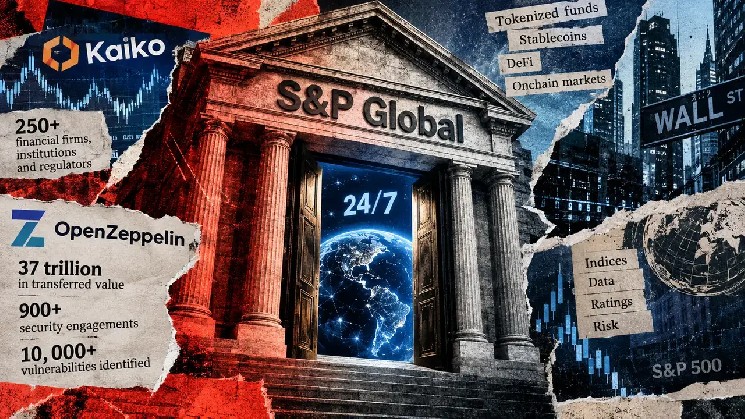
    • S&P Global agreed to acquire smart contract security firm OpenZeppelin, expanding its digital asset business into the technology layer underpinning tokenized finance.
    • OpenZeppelin will operate as a separate business unit under CEO Demian Brener, reporting to S&P Global Ratings President Yann Le Pallec; financial terms were not disclosed.
    • The acquisition gives S&P direct exposure to the security infrastructure behind more than $37 trillion in transferred value, over 900 security engagements, and 10,000+ identified vulnerabilities.

    S&P Global Acquires OpenZeppelin to Secure Tokenized Finance Infrastructure

    Financial data and ratings giant S&P Global announced on September 17 an agreement to acquire OpenZeppelin, a leading smart contract security firm whose open-source libraries and audit services underpin a vast swath of the blockchain ecosystem. The move marks a significant deepening of S&P’s push into digital assets, adding a technical risk layer to its traditional financial risk toolkit as institutional capital increasingly migrates to blockchain networks.

    Under the terms of the agreement, OpenZeppelin will continue operating under its own name as a distinct business unit. Chief Executive Demian Brener will remain in charge and report to S&P Global Ratings President Yann Le Pallec. Financial details of the transaction were not disclosed, and the deal remains subject to customary closing conditions.

    Strategic Rationale: Addressing the On-Chain Technology-Risk Layer

    The acquisition targets a specific gap in institutional risk management. As financial products—from stablecoins and tokenized funds to decentralized finance applications—move onto blockchains, institutions face a new category of risk: the software that issues, transfers, and manages those assets. S&P stated that OpenZeppelin will expand capabilities in what it described as the “on-chain technology-risk layer,” including security assessments and benchmarks for digital assets.

    This adds a technical dimension to S&P’s existing financial-risk business. Tokenized funds and stablecoins remain exposed to traditional risks around issuers, collateral, and liquidity, but their operation also depends on smart contracts, permissions, and blockchain infrastructure that introduce technical vulnerabilities. Le Pallec articulated the strategy directly:

    “Our digital assets strategy centers on bringing trusted data, benchmarks and transparent risk assessment to markets as they move onchain.”

    OpenZeppelin’s Model Preserved: Open Source and Developer Trust

    OpenZeppelin has built its reputation on two pillars: its widely used Contracts library, a standard across blockchain applications, and its security teams that review smart contracts and systems before deployment. The company emphasized that its libraries will remain free, open source, and publicly maintained after the acquisition, including future versions. Its audit, engineering, and security work will also continue under the existing team.

    This preservation of the developer model is critical to OpenZeppelin’s adoption. Brener noted that the combination could help OpenZeppelin reach more financial institutions as banks, asset managers, and issuers increase their use of blockchain infrastructure. For S&P, the acquisition provides access to OpenZeppelin’s technical expertise and developer relationships, while OpenZeppelin gains S&P’s institutional relationships, research resources, and distribution channels. S&P said the acquisition is not expected to materially affect its financial results, emphasizing near-term expansion of capabilities rather than a large new revenue stream.

    Why This Matters: Building Infrastructure for 24/7 Markets

    The OpenZeppelin deal is the latest in a series of strategic moves by S&P Global to build infrastructure for markets that increasingly operate around the clock. Three days prior, S&P led a strategic investment in crypto-data provider Kaiko, extending its Series B funding to $110 million alongside participants including DRW, Susquehanna, Royal Bank of Canada, Nasdaq, and BNP Paribas. Kaiko supplies market data and infrastructure to over 250 financial firms, institutions, and regulators, connecting to more than 150 exchanges.

    S&P and Kaiko have already collaborated to bring traditional benchmarks on-chain. In March, they embedded the iBoxx US Treasuries Index into blockchain infrastructure, and earlier this month they combined their digital-asset benchmark businesses into the S&P Kaiko Digital Asset Indices. S&P Dow Jones Indices also helped develop the S&P Digital Markets 50 Index, which Dinari subsequently tokenized using Chainlink for verifiable on-chain pricing.

    Beyond benchmarks, S&P has developed stablecoin stability assessments, issued a credit rating for DeFi protocol Sky, and licensed the S&P 500 for tokenized products. The OpenZeppelin acquisition adds the smart-contract security piece to a stack that now includes: Kaiko for crypto-native pricing and market data, S&P for benchmarks and financial-risk analysis, and OpenZeppelin for smart-contract expertise governing how assets move between investors and applications.

    As trading expands outside traditional exchange hours, always-on markets require continuous prices, collateral valuations, benchmarks, and risk controls. Tokenized assets add software and smart contract risks alongside conventional financial ones. For S&P, this creates an opportunity to extend services it already sells to banks and asset managers into a market where the infrastructure itself is becoming part of the risk assessment. If more securities and funds migrate onto blockchains, institutions may increasingly need a single provider to understand both the asset they hold and the technology that determines how it moves.

    Frequently Asked Questions

    What does OpenZeppelin do, and why is it significant?

    OpenZeppelin is a smart contract security firm whose open-source Contracts library is a widely used standard across blockchain applications. The company has completed over 900 security engagements, identified more than 10,000 vulnerabilities before production, and its infrastructure has supported over $37 trillion in transferred value. It provides both the code libraries developers build on and the audit services that verify contract safety before deployment.

    Will OpenZeppelin’s open-source libraries remain free after the acquisition?

    Yes. OpenZeppelin explicitly stated that its libraries will remain free, open source, and publicly maintained after the acquisition, including future versions. Its audit, engineering, and security work will also continue under the existing team, preserving the developer model that drove its adoption.

    How does this fit into S&P Global’s broader digital asset strategy?

    The acquisition is part of a coordinated buildout that includes a strategic investment in crypto-data provider Kaiko, the launch of on-chain benchmarks like the iBoxx US Treasuries Index and S&P Kaiko Digital Asset Indices, stablecoin stability assessments, a credit rating for DeFi protocol Sky, and licensing the S&P 500 for tokenized products. Together, these pieces give S&P capabilities across market data, benchmarks, financial risk analysis, and now smart-contract technical risk for 24/7 blockchain markets.