Tag: Bitcoin treasury

  • Metaplanet CEO Surrenders $220M Stock Rights to Restore Investor Trust

    Metaplanet CEO Surrenders $220M Stock Rights to Restore Investor Trust

    Metaplanet Cuts Executive Rewards Amid Declining Bitcoin Per-Share Value

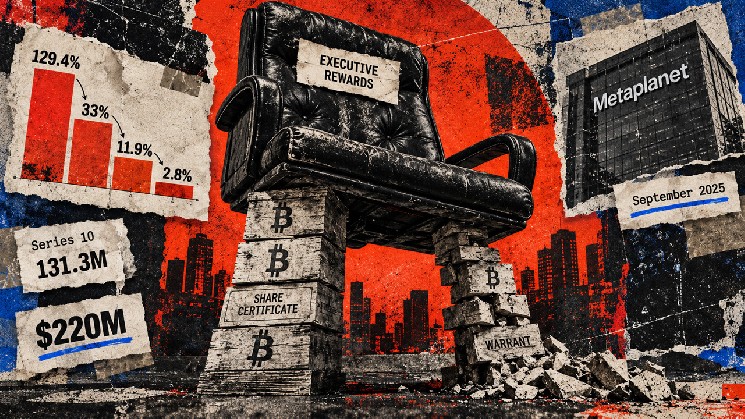
    Tokyo-listed Bitcoin treasury company Metaplanet announced on September 11 that it is resetting its Series 10 stock acquisition rights, eliminating more than $220 million in warrant value. The move cancels 131.3 million potential shares — representing 41.1% of the Series 10 pool — and reduces the remaining unexercised shares by 55.5% to approximately 105.4 million.

    Reset Draws a Line at September 2025 Financing

    The board’s review of previous equity financings focused on the premium to Bitcoin net asset value (NAV) at which shares were sold, the $BTC Yield generated, and the resulting shareholder value. Financings completed through mid-2025 were executed at multiples of Bitcoin NAV and produced substantial increases in Bitcoin per fully diluted share.

    That dynamic shifted with Metaplanet’s September 2025 international offering and subsequent capital raises, which closed at more modest premiums to NAV. While those transactions still added Bitcoin per share, the rate of accretion slowed dramatically.

    CEO Simon Gerovich stated that the September offering marked the point when capital raises became “less accretive” and the Series 10 structure began giving holders disproportionate value relative to existing shareholders.

    Sharp Decline in $BTC Yield Highlights the Problem

    Metaplanet’s $BTC Yield — a measure of Bitcoin accumulation per diluted share — reached 129.4% in the second quarter of 2025 as holdings jumped to 13,350 BTC from 4,046 BTC. The metric fell to 33% in the following quarter, 11.9% in the fourth quarter, and dropped to 2.8% in the first quarter of 2026.

    This declining accretion created a structural issue: the Series 10 pool was designed to adjust alongside Metaplanet’s diluted share count. As the company issued more stock to buy Bitcoin, management’s potential entitlement could expand even when each financing generated progressively less Bitcoin for existing shareholders.

    Investor Pressure Drives Deeper Cuts

    Metaplanet initially addressed the issue in August by eliminating the automatic adjustment mechanism and fixing the Series 10 pool at 319.5 million potential shares, using the June 30, 2026 share count as the reference point. However, investor criticism persisted.

    The board has now gone substantially further, replacing the June 2026 reference date with September 1, 2025 and resetting the conversion ratio to 410 shares per Series 10 right from 696.

    Matthew Sigel, VanEck’s head of digital assets research, called the revision a “meaningful concession,” saying it better aligns management with shareholders. He also noted that the revision would see the firm’s “CEO forfeit $123 million of controversial Series 10 comp.”

    Compensation Reset Boosts Bitcoin Per Share Without New Purchases

    The cancellation of 131.3 million potential shares raises Bitcoin per fully diluted share by approximately 8.8%, according to Gerovich. The company still holds 43,000 BTC; the improvement comes purely from a reduction in the share-count denominator.

    By extinguishing more than $220 million of warrant value, Metaplanet is effectively surrendering part of management’s future equity upside to improve existing investors’ Bitcoin-per-share position. The change also ties executive rewards more closely to the quality of future capital raises, acknowledging that an additional Bitcoin bought with newly issued stock does not provide the same shareholder benefit at every valuation.

    The board also abandoned a proposal to transfer up to 90,000 Series 10 rights into a new employee incentive pool. Those rights will be canceled as part of the 41% reduction.

    New Pay Structure Under Development

    The remaining Series 10 awards are being pushed further out: unvested rights will become exercisable in three equal portions in 2029, 2030, and 2031, while shares received through exercise remain subject to the existing five-year lock-up. This timeline gives the board time to decide which metrics — such as $BTC Yield, Bitcoin per diluted share, or NAV accretion — should determine future rewards as the treasury strategy matures.

    Metaplanet is also expanding internationally, including a pending acquisition of a controlling stake in Nasdaq-listed Super League Enterprise and the establishment of a Hong Kong subsidiary, Metaplanet Asset Management Asia Limited. The company said it will work with a leading global compensation consultant and other external advisers on a new incentive program for employees and future hires.

    CEO Gerovich Outlines Next Steps

    Gerovich said:

    “We will develop a new plan in consultation with a leading global compensation consultant to incentivize new hires. We will share details as the design progresses.”

    Metaplanet’s next compensation plan will reveal whether the September 10 concession simply reduced an unusually large legacy award or permanently changed how executives are rewarded for growing the company’s Bitcoin stack.

  • Cardone Capital Adds 1,200 BTC, Doubles Down on Bitcoin and Multifamily Housing

    Cardone Capital Adds 1,200 BTC, Doubles Down on Bitcoin and Multifamily Housing

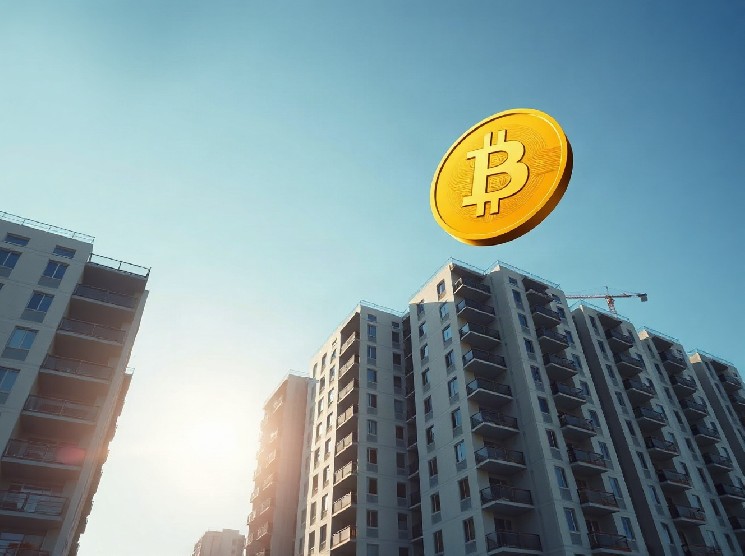
    U.S. real estate investment firm Cardone Capital has expanded its Bitcoin treasury by purchasing 1,200 $BTC. The company, led by founder Grant Cardone, announced the acquisition on X, formerly Twitter, while also reporting growth in its multifamily housing portfolio.

    Cardone Capital Expands Its Bitcoin Holdings

    Grant Cardone said Cardone Capital had added approximately 2,000 apartment units and another 1,200 $BTC. The purchase brings the firm’s total Bitcoin holdings to more than 4,000 $BTC, following an earlier disclosure that it held over 2,800 $BTC.

    The move reflects Cardone’s public support for Bitcoin as a potential hedge against inflation and a store of value. He has repeatedly emphasized diversification into hard assets, and Cardone Capital’s treasury strategy now combines multifamily real estate with cryptocurrency.

    Institutional Interest in Bitcoin and Real Estate

    Cardone Capital’s Bitcoin purchase comes as more institutions and corporations add the cryptocurrency to their balance sheets. While some companies are shifting their focus toward data centers and artificial intelligence infrastructure, Cardone Capital continues to prioritize multifamily housing alongside Bitcoin.

    This approach reflects the view among some investors that Bitcoin can complement traditional real estate holdings. The firm’s continued accumulation also highlights changing institutional attitudes toward digital assets as regulatory clarity improves and Bitcoin exchange-traded funds gain traction in the U.S. market.

    Why Cardone Capital’s Bitcoin Strategy Matters

    Cardone Capital’s decision to increase its Bitcoin holdings indicates that mid-sized investment firms are becoming more comfortable allocating capital to cryptocurrency, beyond the large technology companies and hedge funds that have already entered the market.

    Maintaining a portfolio that combines multifamily housing with Bitcoin also gives the firm exposure to income-producing real estate and a volatile asset with potentially higher growth prospects. For investors, the strategy underscores the importance of diversification and the growing acceptance of Bitcoin as a potential corporate treasury asset.

    The move may also encourage other real estate companies to consider digital assets as part of their long-term investment strategies.

    What Cardone Capital’s Bitcoin Purchase Means

    Cardone Capital’s latest acquisition reinforces its commitment to both real estate and cryptocurrency. By expanding its multifamily housing portfolio while increasing its $BTC reserves, the firm is positioning itself across two major asset classes and participating in the broader institutional shift toward digital assets.

    Frequently Asked Questions

    How much Bitcoin does Cardone Capital now hold?

    Based on the latest announcement, Cardone Capital holds more than 4,000 $BTC after adding 1,200 $BTC to its previous holdings of over 2,800 $BTC.

    Why is Cardone Capital investing in Bitcoin?

    Grant Cardone has publicly described Bitcoin as a hedge against inflation and a store of value. The firm is using Bitcoin to diversify its treasury assets beyond traditional real estate investments.

    Is Cardone Capital’s move part of a broader trend?

    Yes. Institutions and corporations have been adding Bitcoin to their balance sheets, particularly as regulatory clarity improves and Bitcoin ETFs become more established in the U.S. market.

    Related Reading

    • Bitcoin and Gold Slide as Fed Chair Signals Hawkish Stance
    • Crypto Futures Liquidations Top $213M in One Hour as Market Volatility Spikes
    • Bitcoin Drops Below $77,000 as Market Faces Renewed Selling Pressure
    • Crypto Futures Liquidations Top $107 Million in One Hour as Market Volatility Spikes
    • Bitcoin Slips Below $78,000 as Crypto Market Faces Renewed Selling Pressure
  • Genius Group Plans $827M Bitcoin Treasury, $800M AI Treasury

    Genius Group Plans $827M Bitcoin Treasury, $800M AI Treasury

    Genius Group Proposes Perpetual Preferred Securities to Fund $2 Billion Bitcoin and AI Treasury Strategy

    Genius Group announced on August 27 its intention to raise capital through publicly registered perpetual preferred securities, targeting an $827 million Bitcoin treasury and an $800 million AI portfolio within a $2 billion total-asset goal for fiscal 2031. The NYSE American-listed company plans to utilize its $1.2 billion shelf registration, which the Securities and Exchange Commission declared effective on July 18, 2025, to issue the securities over time.

    Preferred Securities Structure and Initial Offering Details

    Under the preliminary proposal, Genius Group would seek $12.5 million in its first preferred securities offering. The company expects the instruments to be non-convertible and to carry a variable dividend paid monthly. Funds from the sale would be allocated among the Bitcoin treasury, the AI treasury, and a U.S. dollar reserve equal to approximately 18 months of preferred dividend payments. Genius Group did not disclose how much of the initial proceeds each allocation would receive.

    Discussions have begun with investment banks experienced in preferred securities and digital asset treasury financing. However, the final issue price, dividend rate, offering size, exchange listing, and sale date remain undecided. Any offering would require separate materials filed with or furnished to the SEC, and the structure will depend on board approval, applicable securities laws, regulatory requirements, and market conditions, according to the announcement.

    Shareholder Authorization and Current Financial Position

    Shareholders provided corporate authority at Genius Group’s annual meeting in July. Approximately 97.58% of votes supported giving the board authority to issue preferred shares, while 99.54% approved a mandate allowing the company to repurchase up to 20% of its ordinary shares.

    The company currently reports net assets of $106.6 million, following a 57% year-over-year increase announced on August 13. Genius Group calculated its net asset value at $0.62 per ordinary share. With GNS closing at $0.18 on August 26, the company said its stock was trading at approximately 0.29 times book value, compared with what it described as a 2.60-times average for the U.S. education sector.

    Five-Year Net Asset Value Projection

    Management has forecast that net asset value could reach between $2 and $4 per share over five years if the company executes its financing, asset-purchase, and share-buyback plans. The projection also depends on market conditions and the performance of Bitcoin and its AI investments.

    Chief executive Roger James Hamilton described perpetual preferred capital as a way to fund treasury purchases without issuing more ordinary shares.

    “Every dollar of preferred capital deployed into our Bitcoin and AI Treasury that generates returns above the preferred dividend rate flows directly to our ordinary shareholders’ net asset value.”

    Returns above the dividend cost could add to the assets attributable to ordinary investors. If the acquired assets lose value or earn less than the dividend rate, however, the preferred payment obligations would remain senior to ordinary shareholder distributions. Genius Group identified Bitcoin price volatility, changes in private technology company valuations, financing costs, and capital availability among the factors that could cause actual results to differ from its forecasts.

    Strategy’s Bitcoin Financing Program Serves as Reference Model

    For its proposed securities, Genius Group has taken Strategy’s Bitcoin financing program as its main reference. The company said Strategy has raised more than $16 billion through four perpetual preferred stock series since introducing STRK in January 2025.

    The preferred securities have no fixed maturity and do not require repayment on a set date. Their dividends and senior claims still create costs that treasury assets must cover before any excess return reaches ordinary shareholders.

    Investor demand has emerged for some of the products. In May, Strategy’s STRC security recorded $1.53 billion in daily trading volume, crypto.news reported, drawing attention to the use of dividend-paying stock to fund corporate Bitcoin holdings.

    Market prices can also depart from the issue or liquidation value. STRC fell to an intraday low of $82.50 on June 18 before closing near $88.59, well below the approximately $100 level around which the security was designed to trade.

    Strategy later used Bitcoin sales to support the preferred program. An August 10 SEC filing showed that the company sold 1,690 BTC for $108.6 million between August 3 and August 9, using the proceeds to repurchase about 1.15 million STRC shares. A subsequent filing showed Strategy spent $132.2 million on additional STRC repurchases and $52.4 million on related dividends during the following week. It also placed $149.1 million into its U.S. dollar reserve, bringing the cash pool to $4.8 billion.

    For U.S. investors, Genius Group’s final prospectus will determine the economic and legal terms of the proposed security. Until those documents are available, its dividend rate, liquidation preference, call provisions, exchange access, and possible tax treatment remain unconfirmed.

    Bitcoin Purchase Timeline and Treasury Evolution

    Before developing the dual-treasury plan, Genius Group pursued a Bitcoin-first policy under which it intended to hold at least 90% of its reserves in BTC. The company adopted the policy in November 2024 and planned an initial $120 million purchase program. By January 2025, it held 420 BTC after buying another $5 million at an average price of $95,912 per coin. Holdings later reached a peak of 440 BTC.

    A U.S. court order disrupted the program in early 2025 by restricting the company from selling shares, raising funds, or buying Bitcoin during a legal dispute tied to its asset purchase agreement with Fatbrain AI. Genius Group reduced its Bitcoin holdings while seeking relief from the restrictions.

    After the order was lifted, the company resumed purchases in June 2025 and increased its balance to 100 BTC. Management also restored a target of accumulating 1,000 BTC. Liquidity needs later forced another change. Genius Group sold its remaining Bitcoin during the first quarter of 2026 and used the funds as part of the repayment of $8.5 million in debt.

    Before the final sale, the company reported holding 84 BTC valued at approximately $5.7 million in March. Its April 1 operating update said it would rebuild the treasury when management considered market conditions more favorable. Under the latest timetable, Bitcoin purchases are expected to restart in the fourth quarter of 2026. The company has not disclosed the size or price of its first planned acquisition.

    AI Portfolio Launches with Private Company Exposure

    Genius Group established the second part of its treasury in May 2026, when the board authorized an AI portfolio with an initial investment plan of up to $100 million. The company made its first allocation in June through funds providing exposure to private companies, including OpenAI, Anthropic, Anduril, and Databricks.

    SpaceX held the largest look-through weighting at 13.5% of the AI portfolio, according to the company. Genius Group said its portfolio also contained exposure to xAI, Figure AI, Replit, and other companies involved in AI models, robotics, and infrastructure.