Tag: Bitcoin rally

  • Bitcoin Bull Run Revives as Price Jumps 8%

    Bitcoin Bull Run Revives as Price Jumps 8%

    Key Highlights

    • Bitcoin rallies 8.10% from Wednesday’s low of $75,064, reclaiming the 365-day moving average at $80,701 for the first time since November 2025.
    • Long-term holder supply hits a record accumulation phase since February while short-term holder supply declines, signaling strengthening conviction among strong hands.
    • Despite technical resilience, analysts warn of subdued trading activity versus prior bull markets and potential headwinds from upcoming rate hikes and a rising U.S. Dollar Index.

    Bitcoin’s Technical Breakthrough Above Yearly Moving Average

    Bitcoin ($BTC) has staged a significant recovery, surging 8.10% from Wednesday’s low of $75,064 to trade back above its 365-day moving average, currently situated at $80,701. This marks the first time since November 2025 that the asset has sustained positioning above this critical long-term trend indicator. The bounce follows a pullback from the $82,000 level earlier in September, a decline the market appears to have attributed to the Federal Reserve’s decision to raise interest rates by 25 basis points. The speed of the recovery suggests the prior dip represented a pricing-in of hawkish monetary policy expectations rather than a fundamental shift in demand.

    Macro Headwinds Fail to Derail Recovery

    The ascent occurs against a backdrop of considerable macroeconomic adversity. The CLARITY Act failed to pass in the Senate, liquidity conditions are tightening due to persistent inflation, and a series of rate hikes is projected for 2027. Compounding the pressure, the Bank of Japan has also moved to raise interest rates. According to crypto researcher Bull Theory on X, this resilience—absorbing multiple bearish catalysts while pushing higher—is “reminiscent of the 2023 market bottom.” The ability to reclaim the yearly moving average amid such conditions is being interpreted by bulls as a major victory, signaling underlying structural strength rather than speculative froth.

    On-Chain Data Reveals Shifting Holder Dynamics

    Supporting the bullish technical structure, on-chain analytics from CryptoQuant reveal a profound shift in investor behavior. Since February, the total supply held by long-term holders (LTHs) has trended steadily higher, while the supply held by short-term holders (STHs)—defined as coins with an age of 155 days or under—has been in consistent decline. Crypto analyst Funding Vest noted on CryptoQuant, “It was a record phase of accumulation.” This dynamic indicates that weak hands are being shaken out of the market while higher-conviction participants accumulate aggressively. Analysts suggest this supply constriction could act as a catalyst for a supply shock if prices continue to appreciate.

    Analyst Perspectives: Bullish Parallels and Cautionary Signals

    However, the picture is not uniformly optimistic. Analyst Joao Wedson highlighted on X that trading activity remains subdued compared to previous bull market peaks, potentially evidencing weaker retail participation. Wedson cautioned, “Right now, Bitcoin is still in the process of breaking its bearish trend. It might not even have fully transitioned into a bull run.” The looming prospect of further rate hikes and a strengthening U.S. Dollar Index (DXY) presents tangible risks for risk-on assets, suggesting the path forward may be volatile despite the current technical victory.

    Why This Matters

    The reconquest of the 365-day moving average is a widely watched milestone that often signals a transition from bearish to bullish market structure. The convergence of this technical signal with a historic accumulation trend among long-term holders suggests the current rally is backed by fundamental conviction rather than leverage-driven speculation. However, the macroeconomic overhang—specifically the trajectory of global interest rates and dollar strength—remains the primary variable. If central banks maintain a hawkish stance, the liquidity required to sustain a full-blown bull run may be constrained, potentially trapping the market in a prolonged consolidation or “chop” phase. The divergence between smart money accumulation and retail apathy is a classic late-bear/early-bull signature that warrants close monitoring of volume metrics in the coming weeks.

    Frequently Asked Questions

    Has Bitcoin confirmed a new bull market?

    Not definitively. While reclaiming the 365-day moving average is a necessary condition for a bull market, analysts like Joao Wedson caution that Bitcoin is still “in the process of breaking its bearish trend” and may not have fully transitioned. Sustained volume expansion and higher highs are required for confirmation.

    What does the long-term holder accumulation trend indicate?

    Data from CryptoQuant shows a record accumulation phase since February, with LTH supply rising and STH supply falling. This signals that experienced, high-conviction investors are absorbing supply from weaker participants, a dynamic that historically precedes supply-constrained price appreciation.

    What are the main risks to Bitcoin’s current rally?

    The primary risks are macroeconomic: a projected series of Federal Reserve rate hikes in 2027, ongoing quantitative tightening, Bank of Japan policy normalization, and a rising U.S. Dollar Index. Additionally, subdued retail trading volume suggests the rally lacks broad-based participation, making it vulnerable to sudden sentiment shifts.


  • Delphi Digital’s Jose Questions Authenticity of Current

    Delphi Digital’s Jose Questions Authenticity of Current

    Delphi Digital Warns Bitcoin Rally May Lack New Capital Inflows

    Amid a wave of selling pressure across the crypto market, Delphi Digital has raised concerns regarding the current Bitcoin rally. Analyst Jose suggests that the recent influx of funds may primarily consist of sidelined investors rather than new money entering the market. This commentary prompts traders to reconsider the sustainability of the rally and its implications for future momentum.

    Market Context: Mixed Signals Across Major Assets

    The crypto market currently presents a mixed landscape, with many major assets showing varying momentum. Delphi Digital’s analysis indicates that the latest Bitcoin rally may not signify a genuine influx of new capital. Instead, it appears that investors who had previously exited the market are returning to buy back in. This raises questions about the overall health of the rally and whether it can sustain itself without fresh investment inflows.

    Trading Volume and Sentiment Indicators

    As of now, market data indicates that Bitcoin’s price remains stable, yet the lack of significant trading volume suggests a cautious sentiment among investors. The broader crypto market is exhibiting signs of indecision, with many traders watching developments closely. The Fear & Greed Index reflects a moderate level of caution, indicating that market participants are weighing potential risks against opportunities presented by the rally.

    About Delphi Digital’s Analysis

    Delphi Digital is known for its analytical insights into the cryptocurrency market, focusing on trends and investor behavior. Their scrutiny of the current Bitcoin rally reflects concerns about market sustainability, making their commentary relevant for traders and investors alike.

    Key Levels to Watch in Coming Days

    Traders should keep a close eye on Bitcoin’s price movements in the coming days, particularly looking for signs of new money entering the market. A failure to attract fresh investment could lead to a pullback, challenging the current rally. Additionally, monitoring the Fear & Greed Index will provide insights into market sentiment and potential price direction as traders weigh their options.

    This article is for informational purposes only and should not be considered financial advice.

  • Bitcoin Remains Unfazed by Trump’s Iran Threats

    Bitcoin Remains Unfazed by Trump’s Iran Threats

    Bitcoin remained largely unchanged despite escalating tensions in the Middle East and U.S. President Donald Trump’s vow on Monday to hit Iran hard.

    The price of Bitcoin, the world’s largest cryptocurrency, recently stood at $79,076, showing no movement over 24 hours. The asset was also virtually unchanged from its level seven days earlier.

    Bitcoin gains nearly 30% in a month

    Bitcoin began a powerful rally two weeks ago, marking its strongest performance in three years. The cryptocurrency is now up nearly 30% over the past month.

    Bitcoin’s price began rising after the U.S. Treasury announced that it would at least double the size of its liquidity-support buyback operations. The announcement weakened the dollar, while non-yielding assets such as Bitcoin and gold benefited.

    Positive cryptocurrency regulation developments have also supported Bitcoin this month. Last week, President Donald Trump described the long-awaited crypto Clarity Act as a “very, very powerful” piece of legislation and urged lawmakers to pass it.

    The Clarity Act is intended to establish a framework for determining whether digital assets should be classified as securities, commodities or payment stablecoins. The cryptocurrency industry has long called for such legislation.

    Crypto ETF inflows support Bitcoin

    Investors have also returned to exchange-traded funds linked to cryptocurrencies, providing further support for Bitcoin’s price. Between August 17 and August 27, investors put more than $2.8 billion into the funds, the highest total since October.

    JUST IN: Crypto ETFs attracted $3.2 billion in inflows last week, “their largest weekly intake since October 2025”, The Kobeissi Letter reports. BlackRock’s IBIT led with $928 million last week, adding to their $1.3 billion from the prior week, and marking the biggest 2-week…

    — Bitcoin Magazine (@BitcoinMagazine), August 31, 2026

    Bitcoin reached a weekly high of $81,281 before declining again on Friday.

    Geopolitical conflict has weighed on Bitcoin’s price this year. The cryptocurrency has typically come under pressure following news of war and rallied when investors saw prospects for a ceasefire.

    When the United States and Israel first attacked Iran in February, Bitcoin’s price plunged. The cryptocurrency also remained volatile after reports of war in March and April.

    However, analysts say Bitcoin’s volatility has eased in recent months. Monday followed that pattern: Trump threatened to strike Iran again, but the digital asset showed little reaction.

    The United States and Iran resumed strikes on Sunday, marking the first such action in more than one month.

    “We’re going to hit them hard,” President Trump was quoted telling a Fox News reporter on Monday.

    Source: cryptonews.net

  • Bitcoin Ready for Its Next Rally, Top Trader Says

    Bitcoin Ready for Its Next Rally, Top Trader Says

    Bitcoin may be positioning for another move higher after holding key support despite a sharp intraday sell-off, according to prominent crypto trader DonAlt.

    “Looks like we’re gonna get another leg up soon,” DonAlt said in a post on X on Aug. 31.

    The outlook comes as Bitcoin enters September following an unusually strong August and a powerful third-quarter recovery. The largest cryptocurrency has climbed sharply from around $64,700 earlier in the month. Recent price action shows $BTC consolidating near $78,000 after briefly approaching $81,000.

    Bitcoin holds support after sharp sell-off

    Bitcoin briefly moved above $80,000 in late August before retreating toward $77,000. Instead of extending its decline, however, the cryptocurrency stabilized and began to recover, suggesting that buyers remain active below $78,000.

    Bitcoin recently suffered an almost 6% intraday decline after Federal Reserve governor Kevin Warsh adopted a more hawkish tone, according to Bitfinex. The cryptocurrency nevertheless held near $77,100.

    Strategy buys another 4,603 Bitcoin

    Strategy, the Michael Saylor-led business intelligence company that has made Bitcoin the centerpiece of its treasury strategy, purchased another 4,603 $BTC for approximately $369.7 million. The purchases took place between Aug. 24 and Aug. 30 at an average price of $80,318.

    The acquisition shows that Strategy continued buying despite considerable Bitcoin volatility toward the end of the month. Whale activity has also remained elevated. Whale Alert reported the transfer of 1,922 $BTC, worth approximately $149.7 million, between two unidentified wallets on Aug. 31.

    Large cryptocurrency transfers do not necessarily indicate buying or selling. They can also reflect internal wallet movements, custody changes or other forms of repositioning.

    Bitcoin posts one of its strongest August performances

    Bitcoin’s technical setup comes as the cryptocurrency closes one of its strongest months in years.

    Bitcoin’s third-quarter return currently stands at approximately 32.48%, substantially above its historical average Q3 return of 7.94%. The performance is particularly notable because it follows two consecutive quarterly declines: a 22.2% loss in Q1 and a 14.09% decline in Q2.

    Analysts remain divided over a sustained Bitcoin rally

    Despite the increasingly bullish technical picture, some analysts remain skeptical that Bitcoin has entered a new sustained bull market.

    Mike McGlone, a longtime Bitcoin bear, argued that the cryptocurrency continues to face significant macroeconomic headwinds. He cited Federal Reserve policy, competition across the broader crypto market and Bitcoin’s growing correlation with equities as reasons for caution.

    As a result, the $80,000-$81,000 range could become a major test for Bitcoin bulls.

  • Bitcoin Tops $80K as Crypto Market Flips to Greed—but Is the Rally Misleading?

    Bitcoin Tops $80K as Crypto Market Flips to Greed—but Is the Rally Misleading?

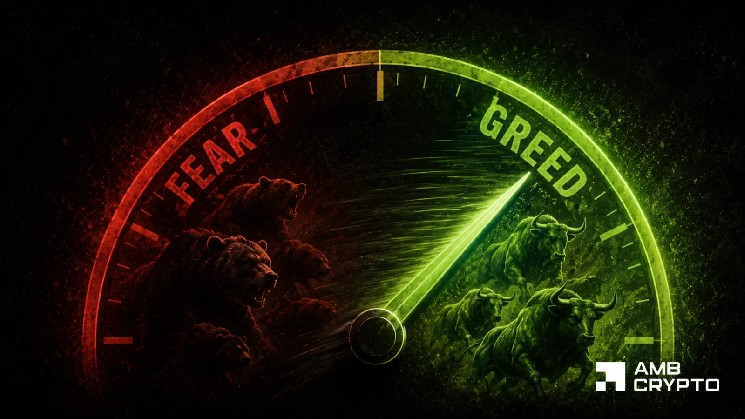
    Crypto market sentiment has shifted sharply in just a few days. After spending months between “Fear” and “Extreme Fear,” the market has now moved into “Greed.”

    At press time, the Crypto Fear and Greed Index stood at 68, placing it in the “Greed” zone. CoinShares’ recent report, ‘From despair to greed in a week: a rally is not a verdict’, highlighted a more favorable environment for Bitcoin’s rally.

    However, the shift does not indicate a fundamental improvement across the entire cryptocurrency industry.

    Source: Alternative

    Why did crypto sentiment change so quickly?

    Jean-Marie Mognetti, CEO of CoinShares, believes conditions surrounding digital assets have become more favorable, particularly for Bitcoin [$BTC]. However, most individual crypto projects have not suddenly become stronger businesses simply because their prices have increased.

    Mognetti put it best when he said:

    This is where the rally becomes more dangerous to interpret.

    Just one month earlier, more than 100 crypto projects had reportedly shut down, entered bankruptcy, or disappeared in 2026. Major industry names were also announcing closures or filing for bankruptcy, creating the impression that the crypto sector was entering another major downturn.

    The situation then changed rapidly. Bitcoin climbed back above $80,000, other digital assets followed, and options traders began placing large bets that Bitcoin could rise above $82,000.

    What is driving the Bitcoin rally?

    Several factors have contributed to the latest crypto market rally. The most prominent was last week’s White House meeting, during which President Trump urged Congress to pass a “fair version” of the CLARITY Act.

    Treasury buybacks, a hawkish tone from the Federal Reserve, and US federal debt surpassing US$40 trillion were additional factors supporting the market’s momentum.

    Despite these developments, the rally has not resolved the fundamental problems that caused more than 100 crypto projects to disappear in 2026. Many failed after running out of funds or experiencing security issues, while cryptocurrency exploits caused more than $1 billion in losses during the first half of 2026.

    These developments suggest that the rally has genuine support from a stronger macroeconomic backdrop. However, rising prices do not automatically validate every asset participating in the rally.

    Mognetti added:

    What deserves scepticism is the assumption that a rising market validates everything rising with it.

    The warning is significant because a similar level of market greed preceded Bitcoin’s correction of more than 30% in October 2025.

    This time, the total crypto market capitalization has risen by more than 22% in a week. However, the weekly relative strength index is extremely overbought, so caution remains warranted. Longer-term data, meanwhile, continues to indicate that the rally may have further room to run.

    Crypto sentiment has not reached peak greed

    Institutional demand remains a key difference in the current market cycle. Spot Bitcoin ETFs recorded more than $1 billion in inflows last week alongside a 21% $BTC rally. October’s inflows, however, exceeded $3 billion, suggesting there may still be scope for stronger institutional demand.

    The Coinbase Premium Index previously reached 0.18, reflecting strong accumulation by US investors. That signal is currently absent. As a result, despite short-term overbought conditions, sentiment around 75 may not yet represent peak greed or guarantee an imminent correction.

    These changes followed Bitcoin’s move back above $80,000. Nevertheless, some concerning market data suggest that the rally could continue while also highlighting the risks of interpreting rising prices as evidence of broad-based strength across the crypto industry.

  • Crypto Market Makers Cash In on Bitcoin’s Rally

    Crypto Market Makers Cash In on Bitcoin’s Rally

    When bitcoin surged from around $62,000 to above $77,000 in a matter of days last week, the rally wiped out $3 billion from leveraged short sellers who had accumulated bearish positions during the previous market downturn. For major crypto trading firms, however, the sharp price increase created an opportunity that did not depend on predicting bitcoin’s next move.

    Leading digital-asset trading firms including Abraxas Capital, Fasanara Capital and Wintermute have quietly accumulated hundreds of millions of dollars in short perpetual futures positions on Hyperliquid, an on-chain derivatives exchange.

    According to on-chain data tracked by Lookonchain, the three firms collectively hold short positions totaling 138,569 $ETH, worth roughly $338 million, and 3,425 $BTC, valued at approximately $265 million.

    At the same time, Abraxas Capital has been withdrawing large amounts of spot cryptocurrency from centralized exchanges. Data from Arkham Intelligence shows that the firm removed 73,872 $ETH, worth approximately $173 million, from Binance over the past four days alone.

    Crypto firms target funding yields instead of market direction

    The strategy is known as a cash-and-carry trade, or basis trade, and it has become one of the most widely used yield-generating strategies in crypto markets during bullish periods.

    The mechanics are straightforward: traders hold a spot cryptocurrency position while simultaneously shorting an equivalent amount through perpetual futures. Because the two positions largely offset each other, the trader has limited exposure to changes in the asset’s price.

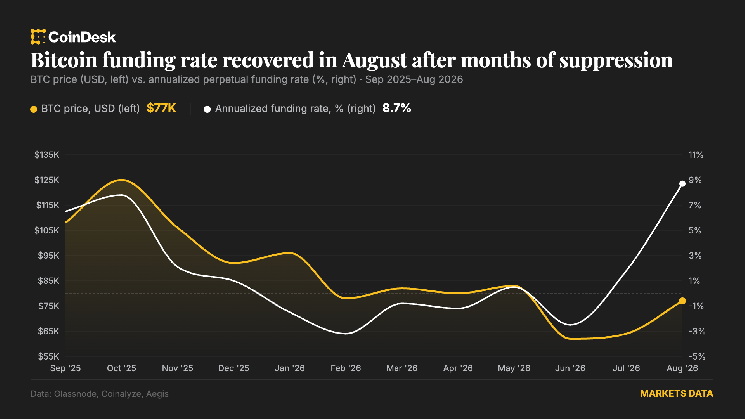
    Instead, the firms seek to capture the funding rate — a periodic payment that traders holding long positions pay to short sellers when market sentiment is bullish.

  • Bitcoin’s 22% Rally Needs Real Demand to Outlast Treasury Liquidity Boost

    Bitcoin’s 22% Rally Needs Real Demand to Outlast Treasury Liquidity Boost

    Bitcoin’s recent breakout appears to have been triggered by a shift in U.S. Treasury-market liquidity, but analysts say the rally’s staying power hinges on whether exchange-traded fund inflows and spot demand can replace the initial macroeconomic boost.

    Treasury Buybacks Spark 22% Surge and Short Squeeze

    Bitcoin surged roughly 22% during its breakout week as long-term Treasury yields fell and the dollar weakened following the U.S. Treasury’s decision to expand buybacks of longer-dated government debt. The move also triggered a major short squeeze, while demand for U.S. spot Bitcoin exchange-traded funds accelerated.

    The Treasury announced on Aug. 19 that it would at least double the maximum size of liquidity-support buybacks for 10-to-20-year and 20-to-30-year nominal Treasuries, raising them from $2 billion to at least $4 billion per operation. The larger operations are scheduled to begin Sept. 9 and continue through the current refunding quarter.

    Macro Forces Drove First Stage of Rally, Analysts Say

    Fabian Dori, chief investment officer at FINMA-regulated digital asset bank Sygnum, told crypto.news that Bitcoin’s behavior alongside other markets suggests the first stage of the rally had a strong macro component.

    “The clearest tell is the combination of cross-asset behavior and crypto-market plumbing.”

    Dori said the Treasury’s announcement temporarily pushed long-term yields lower while weakening the dollar and lifting both gold and Bitcoin. In his view, those moves were consistent with investors seeking hard assets amid renewed concerns about currency debasement rather than a rally driven exclusively by crypto-specific demand.

    Martin Lee, Market Insights Lead at DWF Labs, pointed to a similar divergence across markets. AI and technology assets remained under pressure while gold and Bitcoin ETFs attracted capital as debasement concerns returned, he told crypto.news.

    As crypto.news reported earlier, U.S. spot Bitcoin ETFs received about $1.92 billion during the breakout week, their largest weekly inflow in 10 months. At the same time, the price surge forced traders positioned for further weakness out of the market. Lee said a record $2.7 billion in crypto short positions were liquidated as Bitcoin cleared its previous trading range, meaning part of the apparent spot demand reflected traders buying Bitcoin to cover bearish positions.

    Derivatives Data Points to Mixed Drivers

    Derivatives data provides another clue about the nature of the breakout. Dori noted that Bitcoin-denominated open interest fell during the rally while funding rates remained contained. Bitcoin futures open interest recently declined to roughly 587,584 BTC, its lowest level in nearly five months, from around 645,760 BTC on Aug. 14.

    Rather than showing traders aggressively piling into leveraged long positions, Dori said the combination points toward forced short covering playing an important role. Still, he does not view the entire rally as a macro trade.

    “So the right interpretation is probably mixed.”

    Dori said the first impulse saw Bitcoin behave more like gold, as lower long-term yields, a weaker dollar, and debasement concerns drove demand. A second, crypto-specific impulse came from ETF inflows alongside regulatory developments in Washington, including the SEC’s Regulation Crypto proposal and renewed White House pressure for progress on the CLARITY Act.

    ETF Flows Sustain Momentum as Bond-Market Impact Fades

    ETF flows provide some evidence that demand has continued beyond the initial Treasury shock. U.S. spot Bitcoin ETFs recorded eight consecutive sessions of inflows through Wednesday, attracting about $2.8 billion over the streak.

    The continued inflows matter because the initial reaction in the bond market has already weakened. BNY Markets said the decline in the term premium following the Treasury announcement had largely retraced, with long-term yields returning close to levels seen before the Aug. 19 announcement.

    Bitcoin has therefore reached a point where crypto-specific buying may need to carry more of the rally if the original rate impulse continues to fade.

    Sept. 9 Buyback Launch Is Next Liquidity Test

    The larger Treasury buybacks do not begin until Sept. 9, raising the question of how much of their expected impact markets have already priced in. Dori said markets normally react when such policies are announced rather than waiting for the operations themselves to begin. More important than the immediate size of the purchases, in his view, was the signal that the Treasury is willing to intervene when longer-term borrowing costs become excessively high.

    Whether that support lasts will depend on what happens after the announcement’s effect fades. Dori said rising long-end yields would suggest that the buybacks are failing to provide the expected support, while a rebuilding of the Treasury General Account could withdraw liquidity. Rapid increases in funding rates and open interest would also indicate that leverage, rather than underlying demand, had begun driving Bitcoin higher. Weakening ETF flows or tighter dollar funding conditions would remove another source of marginal demand.

    Lee similarly argued that anticipation alone cannot sustain the rally indefinitely.

    “A rally on anticipation is only as durable as the flow that follows it.”

    He identified ETF flows, futures basis and funding, and Bitcoin’s previous trading range as three key indicators to watch before Sept. 9. A week of negative ETF creations while Bitcoin holds near current levels could indicate that the anticipation trade is unwinding, Lee said. He added that the three-month futures basis moved back above the 10-year Treasury yield during the rally; a reversal below that level would suggest the cash-and-carry bid had failed to persist. The more bearish combination would be Bitcoin closing back inside its pre-breakout range while ETF flows turn negative, which Lee said would indicate that leverage drove much of the move without a durable structural bid emerging.

    Liquidity Analysis Extends Beyond Fed Policy Rate

    Both analysts also argue that investors looking only at the Federal Reserve’s policy rate may miss important forces influencing crypto prices. Dori said Treasury cash management, particularly changes in the Treasury General Account and the mix of issuance and buybacks, has recently become an important marginal driver of liquidity. The term premium then transmits changes at the long end of the Treasury curve into risk assets.

    Other channels include bank balance-sheet capacity, private credit creation, stablecoin growth and global dollar funding conditions, while the Federal Reserve’s balance sheet remains important over a longer horizon. Lee similarly ranks dollar funding conditions and real yields ahead of the policy rate for short-term crypto market behavior, followed by the term premium. Treasury cash balances and reserve dynamics influence the liquidity underneath those markets, while issuance matters partly through its effect on longer-term yields.

    For Lee, Bitcoin’s reaction to the Treasury buyback announcement showed how quickly a change at the long end of the yield curve can affect crypto even without a change in the Fed’s policy-rate outlook.

    Warsh’s Jackson Hole Speech in Focus

    The liquidity debate now shifts toward Federal Reserve Chair Kevin Warsh’s first Jackson Hole keynote on Friday. The latest inflation data gives the Fed a complicated backdrop. The Bureau of Economic Analysis reported that headline Personal Consumption Expenditures inflation rose 0.2% in July and 3.7% from a year earlier. Core PCE increased 0.2% for the month and 3.3% annually. Real consumer spending was nearly unchanged during July, while the personal saving rate stood at 3%.

    Dori said Warsh could affect short-term rate expectations by explaining how the Fed views current inflation pressures, including those connected with oil markets. Treasury is attempting to influence the longer end of the curve through its buyback program, while the Fed has more direct control over short-term rates.

    “If both were to get aligned, that would be a powerful support for risk assets.”

    However, Dori said a simple change in expectations for the September Federal Open Market Committee meeting may not be enough to materially alter institutional crypto positioning. Instead, investors should watch for any signal that changes the broader liquidity outlook, such as greater tolerance for oil-driven inflation, a different balance between inflation risks and economic growth, or comments capable of repricing the Treasury term premium.

    Lee said institutions should remain defensive if inflation, bond yields and the Fed’s policy outlook provide conflicting signals. Bitcoin’s reaction alongside gold could offer another clue about how investors are treating the asset. If Bitcoin rises with gold while long-duration bonds sell off, Lee said it would strengthen the case that investors are treating BTC as a hedge against fiscal and currency concerns. If Bitcoin instead falls alongside gold, its rate sensitivity would remain dominant, and institutions would have greater reason to reduce exposure.

    For both analysts, the next stage of Bitcoin’s rally therefore depends less on any single inflation reading or September rate decision than on whether the liquidity conditions behind the breakout persist. It will also follow whether sustained ETF and spot demand can take over as the initial Treasury-driven impulse fades.