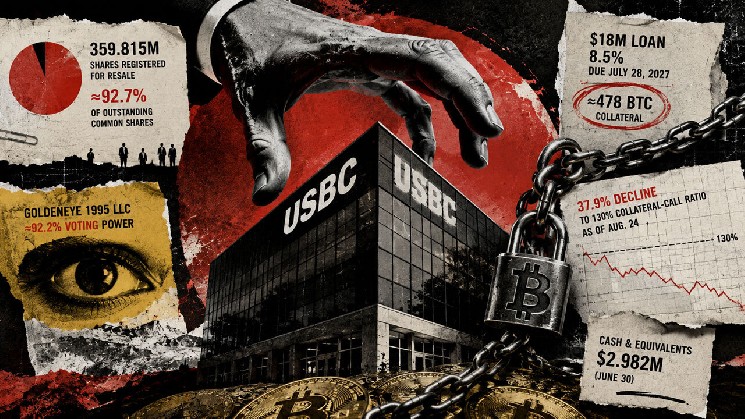
USBC, a company known for its Bitcoin treasury strategy, has filed a registration statement covering approximately 359.82 million shares. The shares represent about 92.7% of the company’s total shares outstanding and could be resold by existing shareholders.
The shares have already been issued, and no sale had been determined as of the filing date, according to a report from CryptoSlate.
What USBC’s Share Resale Registration Means
Registering a large portion of a company’s outstanding shares can indicate that major shareholders may be preparing to sell. However, the filing does not guarantee that any shares will be sold immediately.
The registration gives existing investors greater liquidity and may lead to increased trading activity. For USBC, it also represents a significant corporate governance development that could affect the company’s shareholder structure and market perception.
As of August 24, USBC held 1,029.25 BTC. Approximately 478 BTC had been pledged as collateral for an $18 million loan.
Using Bitcoin as loan collateral allows companies to raise capital without selling their digital assets. This approach enables USBC to retain exposure to potential Bitcoin price gains while accessing fiat liquidity, although it also creates additional financial risks.
USBC’s Bitcoin Options Trading Strategy
Alongside its collateralized loan, USBC is using 34.1% of its total Bitcoin holdings in options trading. The strategy reflects a more active approach to treasury management, potentially aimed at generating income or managing exposure to Bitcoin’s price volatility.
Options trading can create additional revenue opportunities, but it also adds complexity and risk, particularly in the volatile cryptocurrency market. The combination of collateralized lending and options trading shows how Bitcoin-holding companies are seeking to use their digital assets beyond a simple buy-and-hold strategy.
At the same time, the strategy raises questions about the amount of risk USBC is willing to accept and how unexpected Bitcoin price movements could affect its balance sheet.
Potential Impact on USBC Investors
The share resale registration could increase the potential supply of USBC shares in the market. If a large number of shares are sold, the additional supply could put downward pressure on the stock price.
However, the filing does not confirm that a sale will occur. It may simply provide the legal framework for future transactions and give shareholders more flexibility.
USBC’s disclosure of its Bitcoin holdings, collateralized loan and options trading activity also gives investors more information with which to evaluate the company’s financial position and risk profile.
The development highlights the evolving role of Bitcoin in corporate treasury management. Companies are increasingly using Bitcoin not only as a long-term holding, but also as collateral for loans and as part of trading strategies. This trend could influence other corporations considering similar approaches and contribute to broader institutional adoption of Bitcoin and other cryptocurrencies.
Frequently Asked Questions
What does it mean when a company registers shares for potential resale?
Registering shares for potential resale means that existing shareholders are permitted to sell their shares on the open market. It does not mean the shares have been sold immediately. Instead, the registration establishes the legal framework for possible future sales and can increase shareholder liquidity and flexibility.
How does USBC use its Bitcoin holdings in options trading?
USBC uses 34.1% of its total Bitcoin holdings in options trading. This may involve strategies such as writing covered calls or puts to generate income or hedge against price fluctuations. Such strategies can provide additional revenue but also expose the company to market risk.
What are the risks of pledging Bitcoin as collateral for a loan?
Pledging Bitcoin as collateral allows a company to access fiat currency without selling its Bitcoin. However, a significant decline in Bitcoin’s price could trigger margin calls. USBC might then be required to provide additional collateral or sell Bitcoin to maintain the loan terms, potentially resulting in losses.
Related Reading
- U.S. Fiscal Deficit at Highest Among Major Economies Strengthens Bitcoin’s Bull Case
- David Schwartz vs. BIP-110 Supporter: The Bitcoin Hard Fork Debate Intensifies
- Bitcoin, Ethereum, XRP Hold Steady as US-Iran Tensions Escalate
- Willy Woo: Bitcoin Ownership Reaches 5% of Global Population, Surpassing S&P 500 Holders
- Bitcoin’s Week Ahead: Jobs Data, Oil Prices, and a Key Resistance Test