
Tag: Bitcoin holdings

  • Corporate Treasuries Bought Only 5,900 Bitcoin in Three Months as Demand Signals Weaken

    Corporate Treasuries Bought Only 5,900 Bitcoin in Three Months as Demand Signals Weaken

    Key Highlights:

    • Corporate treasuries hold ~1.22 million BTC with an average cost basis of $80.5K, leaving them ~6% underwater at current prices.
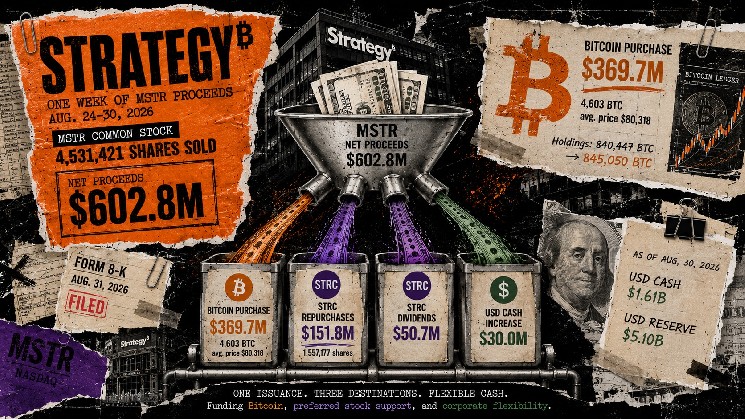
    • Strategy (formerly MicroStrategy) dominates with ~845,050 BTC; Tokyo-listed Metaplanet ranks among the next-largest holders.
    • U.S. spot Bitcoin ETFs have drawn billions since August but remain ~$1 billion negative year-to-date, while the Coinbase premium stays mostly negative, signaling weaker U.S. demand versus offshore markets.

    Corporate Treasury Bitcoin Holdings Sit Underwater as Buying Momentum Stalls

    Corporate treasuries that drove significant Bitcoin accumulation through 2025 have abruptly stepped back, leaving their aggregate position underwater at current market levels. According to on-chain analytics firm Glassnode, the cohort’s average entry price—termed the Corporate Treasury Cost Basis—stands at $80,500, approximately 6% above spot. Bitcoin briefly reclaimed that level in recent sessions but failed to sustain gains, reinforcing the $80.5K threshold as a technical ceiling.

    “Corporate treasuries were a big buyer through 2025, and they have stepped back,” Glassnode said. “Their average entry, the Corporate Treasury Cost Basis, sits at $80.5K, about 6% above spot, so the group as a whole is under water.”

    Data from Bitcoin Treasuries confirms the scale of institutional exposure: public companies collectively hold roughly 1.22 million BTC across 181 listed firms. Strategy (formerly MicroStrategy) remains the dominant buyer and holder, controlling approximately 845,050 BTC. Tokyo-listed Metaplanet ranks among the next-largest corporate stacks. As a group, these treasuries remain in a loss position at prevailing prices, creating a potential overhang if entities choose to de-risk.

    “A reclaim of $80.5K would put the treasuries back in profit and remove one layer of overhead supply; until then their entry is one more ceiling,” Glassnode added.

    ETF Inflows Rebound Yet Year-to-Date Deficit Persists

    Demand indicators beyond corporate treasuries paint a mixed picture. U.S.-listed spot Bitcoin ETFs have attracted billions of dollars in net inflows since early August, signaling a rebound in institutional appetite. However, data from SoSoValue shows these funds remain roughly $1 billion short of turning positive on a year-to-date basis, underscoring that the recent surge has only partially offset earlier outflows.

    Coinbase Premium Signals Weaker U.S. Spot Demand

    The Coinbase premium indicator, tracked by CoinGlass, has stayed mostly negative since May, with only a brief move into positive territory on September 5. A negative reading means Bitcoin is trading at a discount on Coinbase relative to Binance, suggesting that U.S.-based buyers are exhibiting weaker spot demand compared to traders on offshore venues. This divergence highlights a geographic split in buying pressure that could influence price discovery in the near term.

    Why This Matters

    The confluence of corporate treasuries sitting underwater, ETF flows still negative for the year, and a persistent negative Coinbase premium creates a layered resistance structure for Bitcoin. The $80.5K corporate cost basis acts as both a psychological and fundamental supply zone: if reclaimed, it could trigger profit-taking relief and remove a structural overhang; if rejected, it reinforces a ceiling that may cap near-term upside. Meanwhile, the ETF year-to-date deficit indicates that institutional capital has not yet fully recommitted after earlier drawdowns, and the Coinbase discount suggests U.S. participants remain cautious relative to global peers. Market watchers should monitor whether the August ETF inflow momentum can close the YTD gap and whether the Coinbase premium flips sustainably positive—both would signal broadening, conviction-led demand.

    Frequently Asked Questions

    How many Bitcoin do public companies hold in total?

    According to Bitcoin Treasuries, public companies hold approximately 1.22 million BTC across 181 listed firms.

    What is the Corporate Treasury Cost Basis and why is it important?

    The Corporate Treasury Cost Basis is the average entry price of corporate Bitcoin holdings, currently $80,500. It matters because the group is underwater at current prices; a reclaim would put them in profit and remove a layer of potential selling pressure.

    Are U.S. spot Bitcoin ETFs positive for the year?

    No. Despite billions in inflows since early August, SoSoValue data shows U.S. spot Bitcoin ETFs remain roughly $1 billion negative year-to-date.

  • USBC Registers 92.7% of Shares for Potential Resale, Discloses Bitcoin Holdings and Options Strategy

    USBC Registers 92.7% of Shares for Potential Resale, Discloses Bitcoin Holdings and Options Strategy

    USBC, a company known for its Bitcoin treasury strategy, has filed a registration statement covering approximately 359.82 million shares. The shares represent about 92.7% of the company’s total shares outstanding and could be resold by existing shareholders.

    The shares have already been issued, and no sale had been determined as of the filing date, according to a report from CryptoSlate.

    What USBC’s Share Resale Registration Means

    Registering a large portion of a company’s outstanding shares can indicate that major shareholders may be preparing to sell. However, the filing does not guarantee that any shares will be sold immediately.

    The registration gives existing investors greater liquidity and may lead to increased trading activity. For USBC, it also represents a significant corporate governance development that could affect the company’s shareholder structure and market perception.

    As of August 24, USBC held 1,029.25 BTC. Approximately 478 BTC had been pledged as collateral for an $18 million loan.

    Using Bitcoin as loan collateral allows companies to raise capital without selling their digital assets. This approach enables USBC to retain exposure to potential Bitcoin price gains while accessing fiat liquidity, although it also creates additional financial risks.

    USBC’s Bitcoin Options Trading Strategy

    Alongside its collateralized loan, USBC is using 34.1% of its total Bitcoin holdings in options trading. The strategy reflects a more active approach to treasury management, potentially aimed at generating income or managing exposure to Bitcoin’s price volatility.

    Options trading can create additional revenue opportunities, but it also adds complexity and risk, particularly in the volatile cryptocurrency market. The combination of collateralized lending and options trading shows how Bitcoin-holding companies are seeking to use their digital assets beyond a simple buy-and-hold strategy.

    At the same time, the strategy raises questions about the amount of risk USBC is willing to accept and how unexpected Bitcoin price movements could affect its balance sheet.

    Potential Impact on USBC Investors

    The share resale registration could increase the potential supply of USBC shares in the market. If a large number of shares are sold, the additional supply could put downward pressure on the stock price.

    However, the filing does not confirm that a sale will occur. It may simply provide the legal framework for future transactions and give shareholders more flexibility.

    USBC’s disclosure of its Bitcoin holdings, collateralized loan and options trading activity also gives investors more information with which to evaluate the company’s financial position and risk profile.

    The development highlights the evolving role of Bitcoin in corporate treasury management. Companies are increasingly using Bitcoin not only as a long-term holding, but also as collateral for loans and as part of trading strategies. This trend could influence other corporations considering similar approaches and contribute to broader institutional adoption of Bitcoin and other cryptocurrencies.

    Frequently Asked Questions

    What does it mean when a company registers shares for potential resale?

    Registering shares for potential resale means that existing shareholders are permitted to sell their shares on the open market. It does not mean the shares have been sold immediately. Instead, the registration establishes the legal framework for possible future sales and can increase shareholder liquidity and flexibility.

    How does USBC use its Bitcoin holdings in options trading?

    USBC uses 34.1% of its total Bitcoin holdings in options trading. This may involve strategies such as writing covered calls or puts to generate income or hedge against price fluctuations. Such strategies can provide additional revenue but also expose the company to market risk.

    What are the risks of pledging Bitcoin as collateral for a loan?

    Pledging Bitcoin as collateral allows a company to access fiat currency without selling its Bitcoin. However, a significant decline in Bitcoin’s price could trigger margin calls. USBC might then be required to provide additional collateral or sell Bitcoin to maintain the loan terms, potentially resulting in losses.

    Related Reading

    • U.S. Fiscal Deficit at Highest Among Major Economies Strengthens Bitcoin’s Bull Case
    • David Schwartz vs. BIP-110 Supporter: The Bitcoin Hard Fork Debate Intensifies
    • Bitcoin, Ethereum, XRP Hold Steady as US-Iran Tensions Escalate
    • Willy Woo: Bitcoin Ownership Reaches 5% of Global Population, Surpassing S&P 500 Holders
    • Bitcoin’s Week Ahead: Jobs Data, Oil Prices, and a Key Resistance Test
  • Capital B Raises €21 Million to Increase Bitcoin Holdings to 3,415 BTC

    Capital B Raises €21 Million to Increase Bitcoin Holdings to 3,415 BTC

    European-listed investment firm Capital B has announced a €21 million ($24.45 million) capital increase targeting institutional investors. The proceeds are intended to finance the purchase of up to 270 additional Bitcoin, potentially increasing the company’s holdings from approximately 3,145 $BTC to about 3,415 $BTC.

    Capital B’s Bitcoin Capital Raise

    The offering involves issuing 36,219,070 new shares at €0.58 per share. It is aimed at global institutional investors, with Blockstream CEO Adam Back and digital asset manager TOBAM among the participants.

    Capital B said the funds, together with existing operating capital, will be used to buy Bitcoin on the open market. Any purchases will remain subject to market conditions and regulatory approvals.

    Bitcoin Treasury Strategy and Market Context

    Capital B’s move reflects the growing trend of publicly traded companies adopting Bitcoin as a reserve asset. Companies such as MicroStrategy and Tesla have helped drive interest in corporate Bitcoin treasury strategies.

    By expanding its Bitcoin holdings, Capital B aims to give shareholders indirect exposure to Bitcoin’s potential upside through a European-listed company. However, the strategy also exposes the firm and its investors to the cryptocurrency’s significant price volatility.

    Adam Back’s participation adds support from a prominent figure in the Bitcoin ecosystem and signals confidence in Bitcoin’s long-term value proposition. The involvement of TOBAM also highlights continued interest from digital asset managers and institutional investors.

    What the Capital Increase Means for Investors

    The capital raise provides investors with a way to gain Bitcoin exposure through a European-listed entity, potentially benefiting from established corporate governance and regulatory structures. At the same time, investors face risks including Bitcoin price volatility, dilution from the issuance of new shares, and regulatory uncertainty.

    Market participants will be watching whether Capital B can complete the planned Bitcoin purchases at favorable prices and how the additional holdings affect the company’s broader treasury strategy.

    Capital B Bitcoin Holdings and Next Steps

    Capital B’s latest capital increase marks a significant step in its Bitcoin accumulation strategy and positions the firm among Europe’s larger corporate Bitcoin holders. The company’s progress with the offering and its subsequent Bitcoin purchases may provide further insight into its long-term confidence in the asset.

    Frequently Asked Questions

    What is Capital B’s current Bitcoin holding?

    As of the announcement, Capital B holds approximately 3,145 $BTC. If the company completes the full purchase of 270 $BTC, its holdings would rise to about 3,415 $BTC.

    Who are the key investors in Capital B’s capital raise?

    Blockstream CEO Adam Back and digital asset manager TOBAM are among the investors participating in the €21 million offering.

    What are the risks associated with the capital increase?

    The main risks include Bitcoin price volatility, potential dilution of existing shares, and regulatory uncertainty. Investors should conduct their own due diligence before participating.

    Related Reading

    • $BTC Perp Long/Short Ratios Show Slight Shift as Open Interest Holds Steady
    • Bitcoin Spot CVD Signals Mixed Order Flow as $BTC Holds Key Range
    • Bitcoin, Ethereum, Ripple price analysis: Bullish momentum persists but technicals flash caution
    • Bitcoin Crosses $80,000 as $6 Billion Options Expiry Looms; Ethena and Official Trump Lead Altcoin Gains
    • Crypto Futures Liquidations Top $295M in 24 Hours as Shorts Dominate