Tag: Bahrain Grand Prix

  • Alex Albon and Carlos Sainz Reveal Plans for F1 Boys’ Trip

    Alex Albon and Carlos Sainz Reveal Plans for F1 Boys’ Trip

    Key Highlights

    • Alex Albon and Carlos Sainz say a small group of Formula 1 drivers plans to remain in Asia for a boys’ trip between the Bahrain and Singapore Grands Prix.
    • Williams introduced a major FW48 upgrade package at the Azerbaijan Grand Prix, with Sainz qualifying ninth and Albon 13th.
    • Sainz will start the Baku race from 14th after receiving a five-place grid penalty for failing to slow under yellow flags.

    Alex Albon and Carlos Sainz reveal F1 drivers’ Asia trip plans

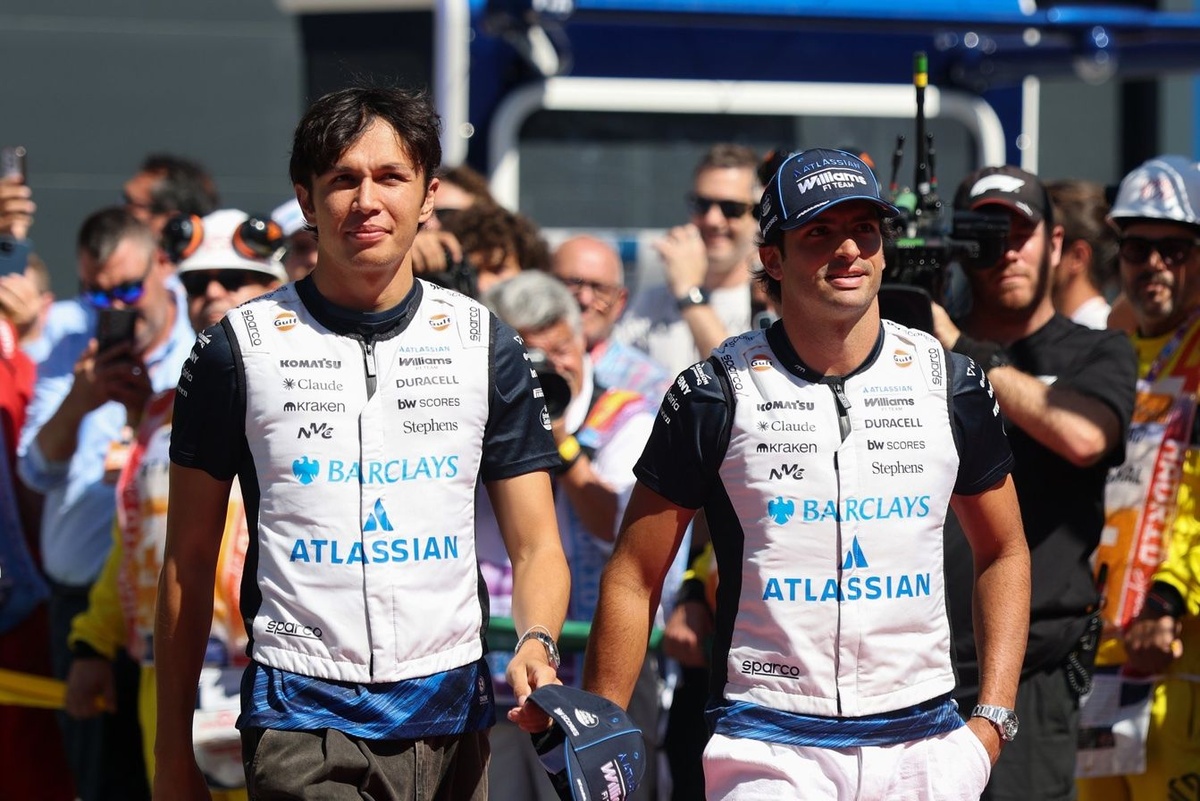
    Williams team-mates Alex Albon and Carlos Sainz have revealed that a small group of Formula 1 drivers will use the gap between the rescheduled Bahrain Grand Prix and the Singapore Grand Prix for a boys’ trip.

    The Bahrain Grand Prix will be held at the Sepang International Circuit in Malaysia because of the conflict in the Middle East. The revised schedule has given drivers the opportunity to remain in Asia between the two races instead of returning to their team bases.

    “We’re going to go on like a boys’ trip, I guess,” Albon said during an interview in the Fan Zone ahead of the Azerbaijan Grand Prix. “I think there are a few drivers where we’re going to hang out.”

    Sainz added: “Yeah, it’s going to be [a boys’ trip]. We just realised no one’s bringing their girlfriend. But it’s not like we’re going to do anything exciting. We’re going to be in a resort in the middle of nowhere.”

    Williams brings major FW48 upgrade to Baku

    The drivers’ travel plans come during an important weekend for Williams, which has introduced a major upgrade package for its FW48 at the Azerbaijan Grand Prix. After arriving at pre-season testing in Bahrain with an overweight car, the Grove-based team has worked on a B-specification car for Baku.

    The upgraded Williams machinery helped Sainz qualify ninth and Albon qualify 13th for the Azerbaijan Grand Prix. However, Sainz will begin the race from 14th after being handed a five-place grid penalty for failing to slow under yellow-flag conditions.

    The Spaniard also received two penalty points, taking his total to four points during the 12-month period. Sainz and Albon currently occupy 16th and 17th in the drivers’ championship, with six and five points respectively.

    Why This Matters

    The revised Formula 1 calendar has created an extended period in Asia between the Bahrain and Singapore races, allowing drivers to avoid returning to their bases between events. For Williams, the Azerbaijan Grand Prix is also an early test of whether its FW48 upgrade can improve the team’s performance after concerns over the car’s weight during pre-season testing.

    The Azerbaijan Grand Prix will take place at the Baku City Circuit at 3pm local time, which is noon UK time. Sainz’s grid penalty means Williams’ qualifying results will not translate directly into its starting positions for the race.

    Frequently Asked Questions

    Which Formula 1 drivers are planning the trip?

    Williams drivers Alex Albon and Carlos Sainz said that a small group of drivers will spend time together in Asia between the Bahrain and Singapore Grands Prix. They did not identify the other drivers involved.

    Why is the Bahrain Grand Prix being held in Malaysia?

    The Bahrain Grand Prix has been rescheduled to the Sepang International Circuit because of the conflict in the Middle East.

    Where will Carlos Sainz and Alex Albon start in Baku?

    Sainz qualified ninth but will start 14th after a five-place grid penalty. Albon qualified 13th and is set to start from that position.
  • Formula 1 2027 Calendar Set for 10 Sprint Races Including Monaco

    Formula 1 2027 Calendar Set for 10 Sprint Races Including Monaco

    Formula 1 has confirmed a significant expansion of its sprint format for the 2027 World Championship, increasing the number of sprint weekends from six to ten. The revised calendar also marks the return of the Portuguese and Turkish Grands Prix, adding further depth to a record-equalling 24-race schedule.

    Sprint Format Expands to Ten Events

    Sprint weekends—which feature a standalone qualifying session on Friday, a 100-kilometre sprint race on Saturday, and the main Grand Prix on Sunday—will debut at five new venues in 2027. Bahrain, Australia, Japan, Monaco, and Abu Dhabi will host sprint events for the first time. They join Canada, Great Britain, Italy, Brazil, and Qatar, which retain their sprint status from previous seasons.

    The format commands a higher hosting fee, but promoters value the commercial upside: competitive track action across all three days drives stronger ticket sales. Silverstone reported that its 2024 sprint weekend delivered the British Grand Prix’s highest-ever attendance, drawing 64,000 more fans across the four days compared with the previous year’s conventional format.

    Monaco Sprint Raises Strategic Questions

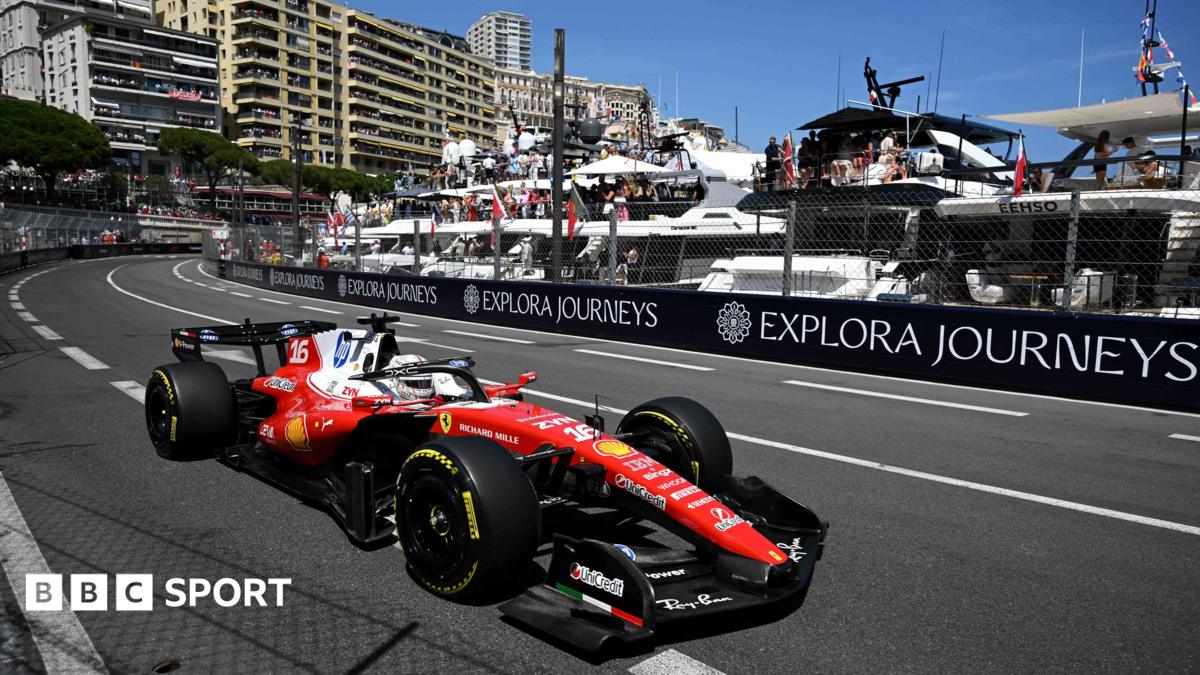
    The inclusion of Monaco has drawn particular attention. Overtaking on the historic street circuit is notoriously difficult, meaning the sprint finishing order is likely to be settled after the opening lap unless incidents intervene. However, Formula 1 is promoting the event on the strength of a double qualifying spectacle—traditional qualifying on Friday and sprint qualifying on Saturday—which could produce two distinct grid orders and inject variability into the weekend.

    Calendar Highlights: Portugal and Turkey Return

    The 2027 schedule welcomes back Portimão and Istanbul Park for the first time since they served as pandemic-era placeholder rounds. The season is slated to open in Bahrain on 12–14 March, followed by Saudi Arabia a week later. The British Grand Prix is fixed for 2–4 July, while pre-season testing will take place in Bahrain from 24–27 February.

    Middle East Uncertainty Prompts Contingency Planning

    Both the Bahrain and Saudi Arabian opening rounds remain in doubt while conflict persists in the region. Bahrain is the traditional season opener, yet Australia has hosted the first race for the past two years due to the timing of Ramadan. The 2026 campaign concludes with back-to-back events in Qatar and Abu Dhabi, and Formula 1 is actively developing alternative schedules should the Middle East rounds become unviable by year-end. A summit of involved nations on Sunday issued a statement urging “maximum restraint” in the ongoing hostilities.

    Leadership Reaction

    F1 president and chief executive officer Stefano Domenicali said: “We are thrilled to welcome Portugal and Turkey to the championship and to expand sprint racing to 10 events, giving our fans even more intensity, drama, and the wheel-to-wheel action that make our sport so special.”

    Mohammed Ben Sulayem, president of the FIA, added: “The 2027 FIA F1 World Championship calendar is a strong reflection of the global appeal and continued growth of our sport.” He continued: “With 24 grands prix across five continents, the return of Portugal and Turkey, and the opportunity for an expanded sprint programme, the calendar combines tradition, innovation and fan engagement while maintaining the highest sporting standards.”

  • F1 Sprint 2027: Key Rule Changes and Format Updates Revealed

    F1 Sprint 2027: Key Rule Changes and Format Updates Revealed

    Key Highlights

    • The 2027 Formula 1 calendar will feature a record 10 Sprint events, up from six in the 2023-2026 period, driven by data showing 12% higher viewership on Sprint weekends.
    • Five venues will host a Sprint for the first time: Bahrain, Australia, Japan, Monaco, and Abu Dhabi, with the season opening with three Sprints in the first four race weekends.
    • The season finale will feature back-to-back Sprint weekends in Qatar and Abu Dhabi, increasing championship-deciding points availability across the final two rounds.

    Sprint Format Expansion Driven by Audience and Attendance Data

    Formula 1 has confirmed a significant expansion of the Sprint format for the 2027 season, increasing the total number of Sprint weekends to 10—four more than the six scheduled annually between 2023 and 2026. The decision follows the release of internal data indicating that total viewership for Sprint weekends is 12% higher than for traditional Grand Prix weekends. Additionally, Sprint Qualifying sessions attract up to three times the audience interest compared to the second practice session they replace on Friday afternoons. Fan engagement metrics further support the move: 82% of attendees at Sprint events report that the format adds value to their ticket by delivering competitive sessions across three days instead of two, while 75% of surveyed F1 fans believe Sprint events enhance the overall value of the season calendar.

    Five New Venues Join the Sprint Calendar, Including Historic Monaco Debut

    The 2027 schedule introduces Sprint weekends at five circuits hosting the format for the first time. The season opener in Bahrain, followed by the Australian Grand Prix, the Japanese Grand Prix, the Monaco Grand Prix, and the season finale in Abu Dhabi will all adopt the compressed format. The inclusion of Monaco is particularly notable; the Principality’s street circuit is renowned for producing one of the most spectacular qualifying sessions of the year as drivers navigate the tight, twisty streets of Monte Carlo. Under the new structure, fans will witness two high-stakes qualifying sessions: Sprint Qualifying on Friday, followed by the Sprint race on Saturday morning (replacing FP3), and finally the traditional Grand Prix Qualifying later on Saturday.

    Returning Venues and Strategic Calendar Weighting

    Five established Sprint venues round out the 2027 roster. Canada retains its Sprint for a second consecutive year after a dramatic battle for the lead between Mercedes teammates George Russell and Kimi Antonelli earlier in the 2025 season. Silverstone hosts its third Sprint, having staged events in 2021 and 2025, while Monza welcomes its second Sprint six years after the Temple of Speed hosted the format’s inaugural Italian edition. Brazil extends its record as the most frequent Sprint host with a sixth event at Interlagos in São Paulo, and Qatar returns for a fourth Sprint in five years at the Lusail International Circuit. The calendar is strategically weighted: the season begins with three Sprints in the first four race weekends, rewarding teams that demonstrate immediate competitiveness, while the championship concludes with back-to-back Sprint weekends in Qatar and Abu Dhabi, placing a premium on consistency and performance under maximum points pressure.

    Sprint Weekend Format Refines Competitive Intensity

    The Sprint race itself covers 100 kilometers—approximately one-third of a standard Grand Prix distance—and lasts roughly 30 minutes. Unlike the main race, there are no mandatory pit stops; while not explicitly banned, the short duration makes a stop for fresh tires strategically unviable. Points are awarded to the top eight finishers on a sliding scale from eight points for the winner down to one point for eighth place. The weekend structure condenses practice to a single 60-minute session, replacing the traditional three one-hour sessions. Sprint Qualifying mirrors the knockout format of the main qualifying session but with truncated segments: SQ1 runs for 12 minutes, SQ2 for 10 minutes, and SQ3 for just eight minutes. The net effect across the season is a substantial increase in competitive track time relative to practice running.

    Why This Matters

    The expansion to 10 Sprint events represents the most aggressive adoption of the format since its 2021 introduction, signaling Formula 1’s confidence in the commercial and sporting viability of the shorter race model. By front-loading the calendar with three Sprints in the opening four rounds, the series incentivizes early-season development readiness and reduces the margin for teams to “grow into the year.” The back-to-back Sprint finale amplifies the potential for late-season championship swings, as a maximum of 16 additional points (plus potential fastest lap points in the main races) become available over the final two weekends. For promoters, the guaranteed three-day action ticket—validated by the 82% attendee satisfaction rate—strengthens the commercial proposition. For broadcasters, the elevated viewership data for Sprint Qualifying specifically addresses the long-standing challenge of Friday audience engagement. The Monaco inclusion also resolves a longstanding debate about whether the format could work on a street circuit where overtaking is minimal; the FIA and F1 clearly believe the qualifying spectacle alone justifies the experiment.

    Frequently Asked Questions

    How many Sprint events are on the 2027 Formula 1 calendar?

    There are 10 Sprint events scheduled for the 2027 Formula 1 season, an increase of four compared to the six held annually from 2023 through 2026.

    Which circuits are hosting a Sprint for the first time in 2027?

    Bahrain, Australia, Japan, Monaco, and Abu Dhabi will all host a Sprint weekend for the first time in 2027.

    How does the Sprint format change the standard weekend schedule?

    A Sprint weekend reduces practice sessions from three one-hour sessions to a single 60-minute session. Friday features Sprint Qualifying (replacing FP2), Saturday morning hosts the 100km Sprint race (replacing FP3), and Saturday afternoon retains the traditional Grand Prix Qualifying. The main Grand Prix remains on Sunday.

  • 2027 Formula 1 Calendar: Full Schedule, Dates, and Everything You Need to Know

    2027 Formula 1 Calendar Revealed: 24 Races, Record 10 Sprint Events, and Returning Circuits

    The 2027 Formula 1 World Championship calendar has been officially confirmed, featuring a record-equalling 24 Grands Prix across 10 months, an expanded Sprint format, and the return of Portugal and Türkiye to the schedule. The season opens with a Middle Eastern double-header in March and concludes in Abu Dhabi in December.

    Season Structure and Sustainability Focus

    The championship will visit five continents over 10 months. The calendar has been designed with sustainability in mind, grouping races geographically to create an efficient flow of freight and personnel throughout the year.

    “Okay, you’ve got my attention. What lies in store next year?”

    We’ve got 24 Grands Prix on the cards with Bahrain hosting the season-opener as part of a double header with Saudi Arabia in March. The teams and drivers will then embark on a global odyssey across five continents, visiting historic venues and major global destinations before arriving at the finale in Abu Dhabi in December.

    The calendar runs across 10 months and was created with sustainability in mind, with races grouped together to allow for an efficient geographical flow of events across the year.

    And for 2027, as the Sprint format has proved so popular, the championship will raise the number of race weekends that feature a Sprint from six to 10. More on that later.

    Opening Rounds: Middle East to Asia-Pacific

    “I can’t wait. What’s the plan after the initial Middle Eastern double header?”

    Australia, which hosted this year’s opener, moves to race three and is the start of a triple header with Japan (don’t worry, it’ll still be cherry blossom season when we hit Suzuka) and China.

    Then there’s a move to North America for the first of three visits to the United States with the Miami Grand Prix.

    There’s a two-weekend gap before the Canadian Grand Prix with freight going direct to Montreal.

    European Leg: Monaco, Portugal Return, and Classic Circuits

    “Nice! When do we get to Europe, then?”

    That’s the next stop! Monaco remains in its new June date and opens the European leg of the season, with Portugal returning to the calendar after signing a two-year deal.

    The Autodromo Internacional do Algarve (most commonly referred to as Portimão) is located in Portugal’s southernmost region and hosted F1 in 2020 and 2021 during the Covid-19 pandemic.

    The 4.6km circuit is an absolute corker as it delivers a technical challenge across dramatic elevation changes amid surrounding historic charm and spectacular beaches.

    “Oooooh, sounds lovely. Then it must be time for Silverstone?”

    You guessed right. Silverstone swaps places with Austria to form a double before another double in Belgium and Hungary.

    The championship then breaks for the summer for some well-deserved time-off for racing personnel.

    We’re back in September at Monza, with the Italian race at the historic Temple of Speed forming a double header with Spain’s Madring, which will host its second-ever Formula 1 race weekend.

    Türkiye Returns for Five-Year Deal

    “What about the other returning race?”

    That’ll be Türkiye, which makes a return to Formula 1 in the middle of an entertaining triple header with Azerbaijan and Singapore.

    The Turkish Grand Prix was last staged in 2020 and 2021, with Lewis Hamilton securing his seventh Drivers’ Championship at the venue at Istanbul Park.

    The race signed a five-year deal through the 2031 season and is home to the very cool multi-apex Turn 8 that tests a driver’s precision and commitment through its long, sweeping left-hander.

    Americas Triple-Header and Las Vegas Finale

    “Great stuff. Then how does the end of the year look?”

    It’s reassuringly familiar with Austin heading a triple header with Mexico City and Brazil’s Sao Paulo before F1 makes its third and final stop in the United States with the Las Vegas Grand Prix.

    A Middle Eastern double header in Qatar and Abu Dhabi in December then closes us out.

    “Tasty. The 2027 season can’t come soon enough!”

    We’re with you!

    Sprint Format Expands to 10 Events

    As I teased earlier, you’ll get more qualifying and racing than ever before as the championship is increasing the number of Sprint events from six to 10.

    “We’re with you! As I teased earlier, you’ll get more qualifying and racing than ever before as the championship is increasing the number of Sprint events from six to 10.”

    Bahrain, Australia, Japan, Monaco and Abu Dhabi will host the format for the first time. And Canada, Great Britain, Italy, Brazil and Qatar will get another shot to host a Sprint.

    You can read more about the Sprint format and plan for next year here.

    Pre-Season Testing Reduced for 2027

    “This is music to our ears. Just one last question – what’s the plan for testing?”

    “I’m glad you asked. With new regulations being introduced this year, teams had a five-day Shakedown in Barcelona followed by two three-day tests in Bahrain to prepare for the season.

    With continuity in the rules heading into 2027, pre-season testing is reduced to one test, lasting four days in Bahrain at the Bahrain International Circuit at the end of February.”

  • Why the 2026 F1 Azerbaijan Grand Prix Is Scheduled for a Saturday

    Why the 2026 F1 Azerbaijan Grand Prix Is Scheduled for a Saturday

    The 2026 Formula 1 season enters its final stretch with 14 of the scheduled 23 rounds complete following last weekend’s Spanish Grand Prix. Kimi Antonelli claimed victory in Madrid on Sunday, closing out the European leg of the calendar before the series heads to Azerbaijan and a run of Asian and American flyaway races.

    Why the 2026 Azerbaijan Grand Prix moves to Saturday

    The 2026 Azerbaijan Grand Prix will run on Saturday, 26 September — one week later than its 2025 slot — despite an original Sunday, 27 September date on the provisional calendar. A schedule revision announced in June 2025 shifted the event forward following a request from the Azerbaijan promoter and relevant government stakeholders, according to an official Formula 1 statement at the time.

    The change accommodates Azerbaijan Remembrance Day, observed annually on 27 September. The national day of mourning honours military personnel and civilians who died during the Second Nagorno-Karabakh War, known domestically as The Patriotic War. The conflict erupted on 27 September 2020 in the disputed Nagorno-Karabakh region and lasted 44 days, ending in an Azerbaijani victory and triggering anti-government protests in Armenia. Official figures cite 2,783 Azerbaijani soldiers killed.

    With Remembrance Day falling on Sunday, 27 September 2026, the entire Grand Prix weekend moves forward by 24 hours:

    • Media day: Wednesday
    • Free Practice 1 & 2: Thursday
    • Free Practice 3 & Qualifying: Friday
    • Grand Prix (51 laps): Saturday

    How common are Saturday Formula 1 races?

    While Sunday has long been the standard race day, Formula 1 has contested grands prix on every day of the week. The very first World Championship race — the 1950 British Grand Prix at Silverstone — took place on a Saturday, and the British round remained a Saturday fixture until 1975.

    The Indianapolis 500, which counted toward the F1 championship from 1950 to 1960, traditionally ran on 30 May (moving to Monday when 30 May fell on a Sunday). After 1985, however, Saturday races vanished from the calendar until Las Vegas returned in 2023. Since its revival, the Las Vegas Grand Prix has been held on Saturday each year.

    More recently, the 2024 Bahrain and Saudi Arabian Grands Prix also ran on Saturdays to avoid a clash with the start of Ramadan.

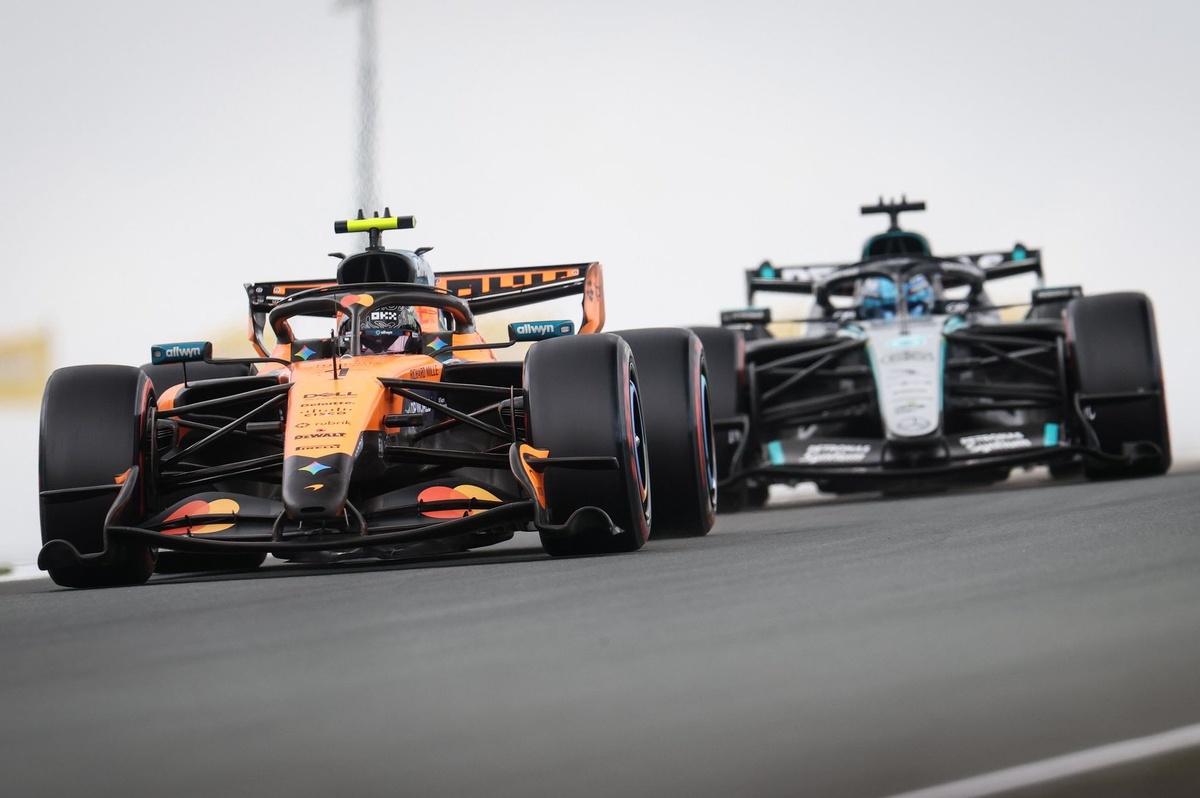
    George Russell, Mercedes
    Photo by: Sam Bagnall / Sutton Images via Getty Images
  • Andrea Stella Challenges Mercedes’ Claim It Can’t Afford F1 Upgrades: “I actually don’t believe you”

    Andrea Stella Challenges Mercedes’ Claim It Can’t Afford F1 Upgrades: “I actually don’t believe you”

    McLaren Formula 1 team principal Andrea Stella has dismissed Toto Wolff’s claim that Mercedes lacks the budget to accelerate its car development programme.

    Ferrari and McLaren have made major gains with their 2026 cars in recent weeks. Both teams have taken two victories, increasing the pressure on Mercedes after its earlier dominance.

    Mercedes delays major F1 upgrade package

    Mercedes has introduced only a limited number of aerodynamic upgrades compared with its rivals. The team is instead planning to bring a larger package to the October Bahrain Grand Prix in Malaysia.

    The delay could leave Mercedes vulnerable during the next three September races in Italy, Spain and Azerbaijan. Asked by Motosport.com after the Dutch Grand Prix whether the development strategy was becoming more difficult to justify amid McLaren’s rapid progress, Wolff said Mercedes was constrained by how its Brackley operation had allocated its $215m cost-cap allowance.

    “We haven’t got the money to put developments on the car. I said before that we are trying to evenly split that through the season based on our calculations of when we can bring the biggest updates and optimising the championship points. But we just can’t do what we can’t do,” the Austrian said.

    “You will see towards the end of the season whether they are going to be able to deploy as much stuff onto the car as they do now.

    “Someone might have a different strategy in spending more at the beginning and the middle of the year than towards the end.”

    When asked about Wolff’s comments, McLaren chief Stella expressed strong doubts about Mercedes’ financial explanation.

    “I would like to believe you, but I actually don’t believe you.”

    Andrea Stella cast doubt on Mercedes’ claims

    Photo by: Steven Tee / LAT Images via Getty Images

    McLaren points to additional 2026 cost-cap allowance

    Stella’s scepticism relates partly to changes in the 2027 power-unit regulations. The rules will move Formula 1 towards a 57-43 split between combustion power and electrical energy, while also affecting specific areas of car design.

    Teams have been granted an additional $3m cost-cap allowance that can be used in their 2026 or 2027 reporting to prepare for those changes. Stella said Mercedes could use that allowance to manufacture upgraded car components if it chose to do so.

    “All teams will have an allowance in their reporting for the cost cap,” Stella said. “And if I’m not wrong, it’s like three million that you can use in the 2026 reporting for cost cap calculations. And I’m sure that Mercedes, having seen that their rivals are kind of elevating the game, I’m sure they will now cash in on their development that surely is happening in the ground.

    “I’m sure the car in the wind tunnel is quite a bit faster than the car they have on track and they will want to now convert some of this potential into upgrades that make it to the real car. So, I’m just pretty sure that they will have upgrades. Obviously, it would be good if not, but I don’t even want to think about it…”