Tag: Asset tokenization

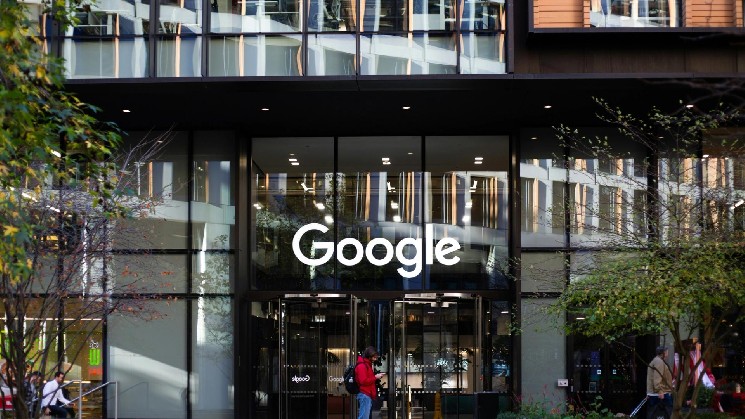
  • Google and Apple Recruit Crypto Talent as Big Tech Targets Stablecoin and Tokenization Infrastructure

    Google and Apple Recruit Crypto Talent as Big Tech Targets Stablecoin and Tokenization Infrastructure

    Key Highlights

    • Google Cloud is recruiting an Industry Principal Architect in Hong Kong to drive real-world asset tokenization across the Asia-Pacific region, signaling a strategic push into blockchain infrastructure for institutional clients.
    • Apple is seeking an Apple Pay Financial Product Strategy Lead in Cupertino or New York, indicating the iPhone maker is deepening its exploration of digital-asset integration within its payments ecosystem.
    • The job postings confirm that stablecoins, tokenized deposits, and blockchain-based payments are becoming core competencies inside the world’s largest technology and payments platforms, moving beyond crypto-native firms.

    Big Tech Accelerates Digital Asset Hiring Amid Institutional Shift

    Google and Apple are actively recruiting specialized talent for digital asset initiatives, providing the clearest evidence yet that the world’s most valuable technology companies are preparing for a significant expansion of blockchain-based payments, stablecoins, and asset tokenization within their core business lines. The simultaneous hiring pushes reveal a coordinated industry movement where traditional Web2 giants are building the internal expertise necessary to support institutional-grade digital asset infrastructure.

    Google Cloud Targets APAC Tokenization Leadership

    Google Cloud has posted a role for an Industry Principal Architect based in Hong Kong, tasked with working directly with protocol foundations, exchanges, custodians, and financial institutions to tokenize real-world assets across the Asia-Pacific region. The position explicitly requires deep experience with blockchain networks, smart contracts, stablecoin infrastructure, tokenized deposits, and custody technologies. According to the listing, the hire will advise executives and help shape Google Cloud’s Web3 product roadmap as the division seeks to become the preferred cloud provider for digital-asset builders and institutional adopters. The Hong Kong location underscores the strategic importance of the APAC market, where regulatory frameworks in Hong Kong and Singapore are rapidly evolving to accommodate tokenized securities and regulated stablecoins.

    Apple Pay Explores Financial Product Strategy for Digital Assets

    In parallel, Apple is advertising for an Apple Pay Financial Product Strategy Lead to be based in either Cupertino, California, or New York. While the job description does not explicitly mention blockchain or cryptocurrency, the placement within Apple Pay—the company’s vast payments ecosystem that processes billions of transactions annually—suggests a focus on integrating new forms of digital value transfer. The role sits at the intersection of consumer payments, financial services partnerships, and emerging payment rails, positioning Apple to potentially leverage stablecoins or tokenized deposits for faster settlement, cross-border transactions, or new financial product offerings for its hundreds of millions of users.

    Why This Matters

    The hiring activity marks a pivotal inflection point for the digital asset industry. For years, blockchain infrastructure and stablecoin development were largely confined to crypto-native startups and specialist firms. The entry of Google Cloud and Apple signals that the technology has matured sufficiently for hyperscale cloud providers and global payments networks to treat it as a standard enterprise capability rather than an experimental frontier. Google Cloud’s explicit pursuit of institutional custodians and exchanges as clients reflects a broader trend: traditional financial institutions are moving from pilot programs to production deployments of tokenized assets, requiring the security, compliance, and scalability that only major cloud platforms can deliver. Meanwhile, Apple’s exploration within Apple Pay could accelerate consumer-facing adoption of blockchain-based payments by abstracting complexity behind familiar interfaces. Regulators in major jurisdictions are simultaneously finalizing frameworks for stablecoins and tokenized deposits, creating a more predictable environment for Big Tech investment. The next 12 to 18 months will likely reveal whether these hires translate into product announcements, platform integrations, or strategic partnerships that reshape how digital value moves across the global economy.

    Frequently Asked Questions

    Are Google or Apple launching their own cryptocurrencies or stablecoins?

    No. The job listings do not confirm that either company is launching a new crypto product, stablecoin, or blockchain. They indicate that both firms are building internal expertise to support digital asset infrastructure, tokenization services, and potential payment integrations for institutional partners and developers.

    Why is Google Cloud hiring in Hong Kong specifically?

    Hong Kong has emerged as a leading hub for digital asset regulation in Asia, with new licensing regimes for virtual asset trading platforms and active pilots for tokenized green bonds and wholesale central bank digital currencies. The location positions Google Cloud to serve financial institutions and protocol foundations operating under these evolving regulatory frameworks across the broader APAC region.

    What does the Apple Pay role suggest about the company’s direction?

    The Apple Pay Financial Product Strategy Lead role suggests Apple is evaluating how emerging payment rails—including stablecoins, tokenized deposits, and potentially central bank digital currencies—could enhance its payments ecosystem. This could enable faster cross-border settlements, new financial product partnerships, or programmable payment features for merchants and consumers, though no specific product has been announced.


  • DSRV Joins XDC Network as Validator

    DSRV Joins XDC Network as Validator

    Key Highlights

    • South Korean blockchain infrastructure provider DSRV has officially joined the XDC Network as an institutional masternode validator after operating a mainnet node for approximately one month.
    • DSRV manages nearly KRW 4 trillion in digital assets and operates validator nodes across more than 70 blockchain networks, while holding registration as a Virtual Asset Service Provider with South Korea’s Financial Intelligence Unit.
    • The validator onboarding represents the first tangible outcome of a July partnership between DSRV and SBI XDC Network APAC to develop blockchain applications for trade finance, supply chain management, and asset tokenization in Japan and South Korea.

    DSRV Expands Institutional Validator Footprint to XDC Network

    South Korean blockchain infrastructure firm DSRV has been admitted to the XDC Network’s consensus layer as an institutional masternode validator, marking a significant expansion of its multi-chain validation operations. The company confirmed it has been running a node on the XDC mainnet for roughly one month prior to the formal announcement, positioning itself alongside an established validator cohort that includes HashKey, Deutsche Telekom, Clear Street, and CertiK. XDC Network, which specializes in trade finance and enterprise-grade blockchain solutions, operates a delegated proof-of-stake consensus mechanism where masternodes validate transactions and secure the network.

    Infrastructure Scale and Regulatory Standing

    DSRV brings substantial operational credentials to the validator set. The firm currently manages close to KRW 4 trillion (approximately USD 3 billion) in digital assets under custody and staking arrangements, while maintaining active validator infrastructure across more than 70 distinct blockchain networks. Domestically, DSRV holds registration as a Virtual Asset Service Provider (VASP) with South Korea’s Financial Intelligence Unit, the regulatory body overseeing anti-money laundering compliance for digital asset businesses. This regulatory clearance underscores the institutional-grade compliance framework underpinning its validation activities.

    Strategic Partnership with SBI XDC Network APAC Yields First Result

    The validator appointment constitutes the first concrete deliverable from a strategic alliance announced in July between DSRV and SBI XDC Network APAC, the Asia-Pacific arm of the SBI Holdings group focused on XDC ecosystem development. The partnership aims to jointly explore and deploy blockchain applications targeting businesses in Japan and South Korea, with an explicit focus on three verticals: trade finance, supply chain management, and asset tokenization. Both entities indicated that DSRV’s integration into the validator set establishes the infrastructure foundation necessary to advance these commercial use cases on the XDC Network.

    Validator Set Composition Reflects Enterprise Orientation

    The composition of XDC Network’s validator roster signals a deliberate strategy to attract established institutional operators rather than relying solely on native crypto validators. Alongside DSRV, the network counts Deutsche Telekom’s T-Systems subsidiary, digital asset custodian HashKey Group, broker-dealer Clear Street, and blockchain security auditor CertiK among its masternode operators. This institutional validator profile aligns with XDC’s positioning as a blockchain optimized for regulatory-compliant enterprise adoption, particularly in trade finance workflows requiring known, accountable validation participants.

    Why This Matters

    The onboarding of DSRV as an XDC Network masternode validator illustrates the accelerating convergence of regulated Asian digital asset infrastructure providers with enterprise-focused blockchain protocols. For XDC Network, securing a validator with DSRV’s multi-chain operational scale—spanning 70+ networks and billions in managed assets—enhances network resilience and credibility among institutional users evaluating the protocol for trade finance and tokenization deployments. For DSRV, the addition extends its validator revenue streams while deepening its strategic alignment with SBI Holdings, a major Japanese financial conglomerate actively bridging traditional finance and blockchain ecosystems. The explicit focus on Japan-South Korea cross-border use cases in trade finance and supply chain management addresses a high-value corridor where blockchain-based document verification, letter of credit automation, and real-time shipment tracking can deliver measurable efficiency gains over legacy paper-based processes. The next phase will likely involve joint technical integrations and pilot programs with corporate clients in both markets, leveraging DSRV’s validation infrastructure as the trusted execution layer.

    Frequently Asked Questions

    What is a masternode validator on XDC Network?

    A masternode validator on XDC Network participates in the network’s delegated proof-of-stake consensus mechanism by validating transactions, producing blocks, and securing the blockchain. Validators are selected based on stake delegation and reputation, and they earn rewards for maintaining network integrity. XDC’s validator set is curated to include institutional operators with established compliance and infrastructure capabilities.

    What is the significance of DSRV’s VASP registration in South Korea?

    Registration as a Virtual Asset Service Provider with South Korea’s Financial Intelligence Unit means DSRV operates under the country’s strict anti-money laundering and counter-terrorism financing regulations. This regulatory status enables DSRV to provide custodial and staking services to institutional clients legally within South Korea and signals compliance credibility to international partners.

    What blockchain applications are DSRV and SBI XDC Network APAC targeting in Japan and South Korea?

    The partnership focuses on three primary verticals: trade finance (including letter of credit automation and documentary trade digitization), supply chain management (track-and-trace, provenance verification, and logistics optimization), and asset tokenization (fractional ownership of real-world assets, securities tokenization, and digital asset issuance). These use cases leverage XDC Network’s enterprise-oriented architecture and EVM compatibility.

  • RedSwanDigital Tokenizes First Manhattan Building on Hedera

    RedSwanDigital Tokenizes First Manhattan Building on Hedera

    RedSwanDigital has successfully tokenized the Hotel on Rivington in Manhattan using the Hedera blockchain, marking a significant milestone for real-world asset tokenization. The announcement, shared via the official Hedera social media channels, underscores the growing convergence of blockchain technology with traditional real estate markets.

    Manhattan Property Becomes First Hedera-Tokenized Building

    The tokenization of the Hotel on Rivington represents the first building in Manhattan to be digitized on the Hedera network. By converting property ownership into digital tokens, the initiative aims to democratize access to real estate investment, historically restricted to high-net-worth individuals and institutional players. This development signals a practical application of distributed ledger technology beyond speculative trading, positioning Hedera as a serious infrastructure layer for traditional finance integration.

    Industry Leaders Emphasize Trust and Asset Integrity

    Gregory L. Bell, CIO at Hashgraph, emphasized trust and asset integrity in tokenization. His comments highlight the critical importance of regulatory compliance, transparent ownership records, and secure custody solutions in bridging physical assets with digital representations. The initiative aligns with Hedera’s broader strategy to expand use cases across sectors including real estate, supply chain, and decentralized finance.

    Hedera’s Technical Foundation for Asset Tokenization

    Hedera operates as a public distributed ledger technology designed for speed, security, and scalability. Its consensus mechanism, based on hashgraph architecture, offers finality in seconds with low, predictable fees — characteristics essential for tokenized assets requiring high throughput and auditability. The network’s governance model, overseen by a council of global enterprises, adds a layer of institutional credibility that appeals to regulated industries.

    Market Context and Trading Activity

    As of the latest data, Hedera’s trading volume specific to this tokenization event remains unreported. However, the announcement arrives amid increasing institutional interest in blockchain-based asset issuance. Analysts suggest that successful deployments like the Hotel on Rivington could catalyze higher transaction volumes and improved liquidity for tokenized securities, provided regulatory frameworks continue to evolve constructively.

    Outlook: Adoption, Regulation, and Liquidity

    Market participants should monitor Hedera’s pipeline of real estate tokenization projects, as further adoption may influence broader digital asset trends. Key variables include regulatory clarity around security tokens, custodial standards, and secondary market infrastructure. While the long-term trajectory appears promising, stakeholders must remain cautious of compliance risks inherent in merging blockchain innovation with established financial systems.

    This article is for informational purposes only and does not constitute financial advice.