
Tag: Artificial Intelligence

  • SBC Summit 2026 Opens in Lisbon with a Star-Studded Opening Day

    SBC Summit 2026 Opens in Lisbon with a Star-Studded Opening Day

    Key Highlights

    • SBC Summit 2026 officially opened on September 29 at the MEO Arena in Lisbon.
    • The event is bringing together more than 40,000 delegates and over 800 exhibitors.
    • More than 600 speakers are addressing sports betting innovation, global regulations, artificial intelligence and payments.

    SBC Summit 2026 Opens in Lisbon

    SBC Summit 2026 officially opened on September 29 at the MEO Arena in Lisbon, launching a large-scale industry event focused on the latest developments across sports betting and related technology sectors.

    The summit is bringing together more than 40,000 delegates, creating a major gathering for professionals attending sessions, exhibitions and discussions across the event’s specialized stages. The program features more than 800 exhibitors showcasing their activities and offerings.

    Sports Betting, Regulation, AI and Payments Take Center Stage

    SBC Summit 2026 includes more than 600 world-class speakers across multiple specialized stages. The event’s subject areas include sports betting innovation, global regulations, artificial intelligence and payments.

    By combining exhibition space with stage programming, the Lisbon summit is addressing both operational and strategic issues affecting the sports betting industry. Its agenda spans innovation, regulatory developments, AI applications and payment-related topics.

    Why This Matters

    The scale of SBC Summit 2026 highlights the breadth of the sports betting ecosystem and the range of issues currently shaping the sector. With more than 40,000 delegates, 800 exhibitors and 600 speakers participating at the MEO Arena in Lisbon, the event provides a central setting for discussions about technology, regulation and industry development.

    Frequently Asked Questions

    When and where did SBC Summit 2026 open?

    SBC Summit 2026 officially opened on September 29 at the MEO Arena in Lisbon.

    How many people are attending SBC Summit 2026?

    The event is bringing together more than 40,000 delegates.

    What topics are covered at SBC Summit 2026?

    The summit covers sports betting innovation, global regulations, artificial intelligence and payments across multiple specialized stages.

  • The Daily Show’s Desi Lydic Torches Trump on Superintelligence

    The Daily Show’s Desi Lydic Torches Trump on Superintelligence

    Key Highlights

    • Former Anthropic researcher Jacob Coxon warns AI “could kill us all by the end of the decade” as Donald Trump uses United Nations platform to rebrand artificial intelligence as “super intelligence dash SI.”
    • The Daily Show correspondent Desi Lydic dismantles Trump’s terminology, noting “SI” already stands for Sports Illustrated and mocking the president’s “weird obsession with rebranding things” on the world stage.
    • Lydic characterizes the UN moment as “the geopolitical version of your dad walking around in his underwear when your friends are over,” highlighting diplomatic embarrassment alongside semantic confusion.

    Trump Unveils ‘Super Intelligence’ Rebrand During UN Address

    President Donald Trump continued what The Daily Show senior correspondent Desi Lydic described as a “bizarre quest to rename artificial intelligence” during his Tuesday address to the United Nations General Assembly. Standing at the podium before world leaders, Trump declared, “Welcome to the new world of super intelligence dash SI,” explicitly voicing the punctuation mark “dash” as part of the proposed abbreviation. The moment immediately drew scrutiny for both its linguistic awkwardness and its collision with an existing global brand.

    Daily Show Dissects ‘Dash SI’ and Sports Illustrated Conflict

    On Tuesday night’s broadcast, Lydic opened her segment by referencing former Anthropic researcher Jacob Coxon‘s stark warning that AI “could kill us all by the end of the decade,” then pivoted to the president’s proposed solution: rebranding. “That’s a relief,” Lydic said. “Here, I was scared of artificial intelligence, but now I’d be honoured to be murdered by super intelligence. Problem solved.”

    Lydic zeroed in on the president’s delivery. “Did you just say ‘dash SI?’” she responded, replaying the clip. “Speaking of super intelligence, congrats on reading the punctuation on the prompter. Also, nobody’s gonna say ‘SI.’ That’s already what we call Sports Illustrated. It’s taken. You of all people should respect Sports Illustrated. The swimsuit issue is your favorite book.”

    Diplomatic Embarrassment and the ‘Geopolitical Version’ of Parental Mortification

    Beyond the trademark collision, Lydic framed the episode as a blow to American standing. “This is so embarrassing for America,” she said. “We’re all used to Trump’s weird obsession with rebranding things, but this is in front of the world. It’s the geopolitical version of your dad walking around in his underwear when your friends are over. Oh my god, Dad, Trinidad and Tobago can see your butt crack!”

    The segment underscored a pattern of presidential neologisms — from “covfefe” to the renaming of military bases and geographic features — but positioned the UN appearance as uniquely exposed because the audience comprised foreign heads of state rather than domestic rally-goers.

    Why This Matters

    The clash between existential AI risk warnings from industry insiders like Coxon and the administration’s focus on branding illustrates a widening gap between technical safety discourse and political messaging. As nations race to regulate advanced models, the U.S. president’s public vocabulary — including the voiced punctuation “dash SI” — becomes part of the diplomatic record, potentially complicating negotiations on AI governance frameworks at forums such as the UN’s own High-Level Advisory Body on Artificial Intelligence. Meanwhile, the Sports Illustrated trademark conflict, while trivial on its face, exemplifies the lack of inter-agency vetting that typically precedes presidential terminology rollouts.

    Frequently Asked Questions

    What exactly did Trump say at the United Nations?
    Trump stated: “Welcome to the new world of super intelligence dash SI,” pronouncing the word “dash” as part of the proposed acronym.
    Why did Desi Lydic reference Sports Illustrated?
    Lydic pointed out that “SI” is the long-standing abbreviation for Sports Illustrated, a brand Trump is known to favor, making the proposed AI rebrand both confusing and legally fraught.
    Who is Jacob Coxon and why is his warning relevant?
    Jacob Coxon is a former researcher at Anthropic, an AI safety-focused company. His statement that AI “could kill us all by the end of the decade” represents a growing chorus of technical experts warning of catastrophic risk, contrasting sharply with the administration’s rhetorical focus on renaming the technology.
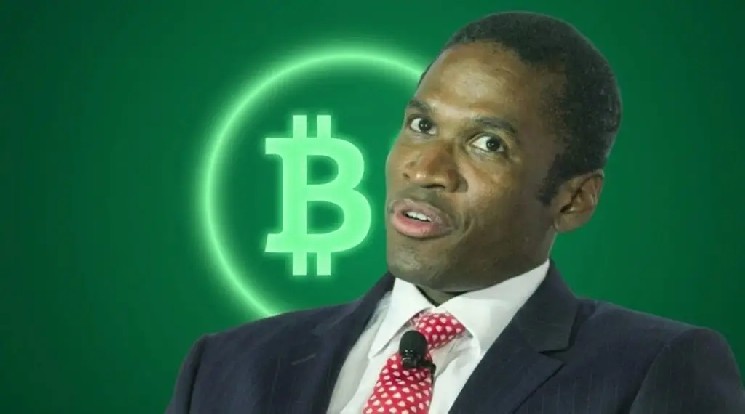
  • BitMEX Founder Arthur Hayes: US AI Growth Slowdown Will Support Bitcoin Price

    BitMEX Founder Arthur Hayes: US AI Growth Slowdown Will Support Bitcoin Price

    Key Highlights

    • BitMEX co-founder Arthur Hayes argues a slowdown in the U.S. AI sector could trigger monetary expansion that benefits Bitcoin long term.
    • Hayes warns that weakening AI compute demand may expose debt risks in data center financing, potentially forcing government liquidity injections.
    • Any resulting increase in money supply could lift Bitcoin and altcoin prices, though Hayes emphasizes this is a conditional scenario, not a certainty.

    Hayes Links AI Slowdown to Potential Monetary Expansion

    BitMEX co-founder Arthur Hayes has outlined a macroeconomic thesis connecting a potential deceleration in the United States artificial intelligence sector to a bullish long-term outlook for Bitcoin (BTC). In a detailed blog post, Hayes posits that a slowdown in AI-driven demand for computing power could illuminate significant debt risks embedded in the financing of data center infrastructure. According to Hayes, the capital-intensive nature of AI build-outs has relied heavily on leverage, and a deceleration in revenue growth could turn those liabilities into systemic stressors.

    Debt Risks in AI Infrastructure Could Trigger Government Intervention

    Hayes specifically highlighted that debt used to finance investments in AI infrastructure could create new risks if growth in the sector slows. He argued that in such a scenario, the U.S. government might consider providing liquidity to support the AI sector directly or to bail out insurance companies exposed to distressed assets tied to that debt. In either case, he noted, this would involve injecting more money into the economy, thereby increasing the broad money supply. This mechanism—where private sector distress prompts public sector balance sheet expansion—forms the core of Hayes’ transmission channel between AI economics and digital asset valuations.

    Bitcoin as a Hedge Against Liquidity Injections

    The co-founder of BitMEX suggested that Bitcoin and some altcoin prices could be positively affected if the money supply expands as a policy response. Hayes’ assessment focuses on the potential connection between developments in the artificial intelligence sector, global liquidity conditions, and cryptocurrency markets. Crucially, he clarifies that the key element in his scenario is not that an AI slowdown will directly increase Bitcoin demand, but rather that the pressure it could put on the financial system might lead policymakers to provide more liquidity. Assets with fixed or predictable supply schedules, such as Bitcoin, have historically rallied during periods of aggressive monetary expansion.

    Why This Matters

    Hayes’ analysis reflects a broader market narrative that views Bitcoin as a primary beneficiary of fiscal and monetary reflexivity—where policy responses to economic stress debase fiat currencies and drive capital toward hard assets. The intersection of AI capital expenditure cycles and sovereign debt dynamics is an emerging theme for macro strategists. As hyperscalers like Microsoft, Google, and Amazon commit hundreds of billions to AI infrastructure, the credit quality of that spending becomes a systemic concern. If revenue growth fails to service the associated debt, the Federal Reserve or Treasury may face pressure to backstop the market, repeating patterns seen in 2008 and 2020. For crypto investors, the thesis underscores the importance of monitoring traditional credit markets and policy signals, not just on-chain metrics.

    Frequently Asked Questions

    Does Arthur Hayes guarantee Bitcoin will rise if the AI sector slows?
    No. Hayes explicitly states that potential policy actions or their impact on the Bitcoin price are not considered certain developments. His view is a conditional scenario analysis, not a price prediction.
    What specific mechanism does Hayes describe linking AI to Bitcoin?
    Hayes argues an AI slowdown could expose data center debt risks, prompting government liquidity injections to prevent financial contagion. The resulting expansion of the money supply could then favor scarce assets like Bitcoin.
    Is this considered investment advice?
    The source material includes a clear disclaimer: “This is not investment advice.” Readers should treat the commentary as macroeconomic perspective, not a recommendation to buy or sell any asset.
  • ‘We have lost control’: Crypto pioneer warns AI could trigger systemic banking, infrastructure shocks

    ‘We have lost control’: Crypto pioneer warns AI could trigger systemic banking, infrastructure shocks

    Key Highlights

    • Hut 8 co-founder Marc van der Chijs has shifted to a “doomer” outlook on artificial intelligence, warning that humanity has lost control over the technology’s rapid development.
    • His concerns mirror warnings from Anthropic CEO Dario Amodei, who cautions that recursive AI self-improvement risks exceeding human control and causing widespread infrastructure damage.
    • Both leaders identify a structural competitive trap among companies and nation-states that penalizes restraint, making systemic disruption likely before international guardrails are established.

    From Bitcoin Pioneer to AI Skeptic: Van der Chijs Sounds Alarm

    Marc van der Chijs, the entrepreneur who co-founded the bitcoin mining firm Hut 8 (HUT), has issued a stark warning about the artificial intelligence sector to which his former company has pivoted. In an interview with CoinDesk, van der Chijs revealed a dramatic shift in his perspective, moving from viewing AI as a transformative opportunity comparable to bitcoin’s early days to fearing that the technology’s trajectory has escaped human governance.

    “I’ve become more of a doomer over the past week, to be honest,” he told CoinDesk. The admission marks a significant pivot for an investor who entered the cryptocurrency market in 2013 and has long championed disruptive technologies. While he maintains that AI will ultimately transform the global economy, van der Chijs now questions whether humanity can retain authority over its creation. “We have lost control, actually,” he said. “And until we get the control back, I’m actually worried that we’re moving too fast.“

    Echoes of Amodei: Converging Warnings from Industry Leaders

    Van der Chijs’s reversal aligns closely with recent public warnings from Dario Amodei, CEO of the AI safety and research company Anthropic. Amodei has urged technology leaders to slow the pace of frontier AI development, arguing that rapid progress—fueled by AI models recursively improving themselves—risks exceeding human control and causing widespread damage to critical infrastructure. Both men identify the same structural dynamic: an intense competitive race between corporations and nation-states that actively penalizes any individual actor who attempts to exercise restraint.

    This game-theoretic trap, they argue, makes systemic disruption or catastrophic failure appear almost inevitable before genuine international regulatory frameworks can be negotiated and enforced. The parallel between a bitcoin industry veteran and a frontier AI lab chief underscores a broadening consensus among technical insiders that the current governance gap represents an acute systemic risk.

    Why This Matters: The Governance Gap and the Risk of Crisis-Driven Policy

    The convergence of views from leaders in both the digital asset and artificial intelligence sectors highlights a maturing debate over technological governance. Van der Chijs fears that a major disruption—potentially affecting financial systems or critical infrastructure—may be the only catalyst sufficient to compel governments into meaningful cooperation. This scenario suggests a dangerous reliance on crisis-driven policymaking rather than proactive regulation. For investors and policymakers, the remarks signal that the “move fast and break things” paradigm may be reaching its logical limit in systems where the cost of failure is societal rather than commercial. The pivot of Hut 8 from bitcoin mining toward AI infrastructure adds institutional weight to the observation that capital is flowing into a sector its own pioneers increasingly view as inadequately controlled.

    Frequently Asked Questions

    Who is Marc van der Chijs and why does his opinion carry weight?

    Marc van der Chijs is a serial entrepreneur who co-founded Hut 8, one of North America’s largest bitcoin mining operations. His background in both cryptocurrency and traditional venture capital gives him a cross-sector perspective on disruptive technology cycles.

    What specific risks do van der Chijs and Amodei highlight?

    Both warn that recursive AI self-improvement, driven by unrestrained competition between companies and nations, could exceed human control and cause widespread damage to financial systems and critical infrastructure before international guardrails exist.

    Has Hut 8 officially pivoted to artificial intelligence?

    The source notes that Hut 8 has pivoted toward artificial intelligence technology, and van der Chijs’s comments reflect his concern about the technology “to which the company has pivoted.”

  • Blockchain Life Returns to Dubai on December 1–2, 2026

    Blockchain Life Returns to Dubai on December 1–2, 2026

    Key Highlights

    • Blockchain Life 2026 returns to Dubai on December 1–2, expecting 15,000+ attendees from 130+ countries alongside 200+ speakers and 200+ sponsors.
    • The forum launches a new AI Future Forum 2026 track dedicated to practical AI applications, robotics advances, and AI convergence with crypto and business.
    • Tickets are on sale now with a 10% discount using promo code CRYPTONEWSNET at blockchain-life.com.

    Global Crypto Convergence Returns to Dubai

    Blockchain Life 2026 is set to convene the international cryptocurrency and Web3 ecosystem for two intensive days on December 1–2 in Dubai. Now three months out, organizers confirm the forum will host more than 15,000 participants representing over 130 countries, cementing its position as one of the largest annual gatherings for digital asset professionals, founders, investors, and technology leaders.

    Three Stages, 200+ Speakers, and a New AI Track

    The program spans three stages featuring more than 200 high-profile speakers, including founders and top executives of major blockchain projects, influential investors, representatives of Tier 1 funds, global experts, and veteran traders. A significant addition for 2026 is the AI Future Forum 2026, a dedicated track examining practical applications of artificial intelligence, the latest advances in robotics, and the convergence of AI with crypto and business. This expansion reflects the accelerating overlap between decentralized technologies and machine learning across the industry.

    Expo, Trading Tournaments, and a Legendary Afterparty

    Beyond the speaking program, a major expo will showcase 200+ sponsors comprising leading projects, top-tier exchanges, mining companies, Web3 and AI teams, and promising startups. Competitive elements include trading tournaments designed to engage active market participants. The forum will conclude with its signature Afterparty at one of Dubai’s premier clubs, headlined by a world-class performer, continuing the event’s tradition of blending high-level business with flagship networking experiences.

    Why This Matters

    Blockchain Life has evolved into a bellwether for the Web3 and digital finance calendar, particularly as Dubai solidifies its regulatory framework and infrastructure as a global virtual asset hub. The 2026 edition’s scale—15,000+ attendees, 200+ speakers, and 200+ sponsors—signals sustained institutional and retail momentum despite market cycles. The introduction of the AI Future Forum track underscores a structural shift: capital and talent are increasingly flowing toward the intersection of decentralized networks and artificial intelligence, from decentralized compute and data markets to on-chain AI agents. For founders, investors, and enterprise decision-makers, the concentration of Tier 1 funds, exchange leadership, and protocol architects in a single venue creates an unusually efficient environment for deal origination, partnership formation, and talent acquisition. The event also kicks off one of the largest tech and business weeks of 2026 in the region, amplifying ancillary meetings and satellite events across the city.

    Frequently Asked Questions

    When and where is Blockchain Life 2026 taking place?
    The forum runs December 1–2, 2026 in Dubai, United Arab Emirates.
    How can I purchase tickets and is there a discount available?
    Tickets are on sale at blockchain-life.com. Use promo code CRYPTONEWSNET for a 10% discount.
    What is the AI Future Forum 2026 track?
    A new dedicated program track focused on practical AI applications, robotics advances, and the convergence of artificial intelligence with crypto and business, reflecting the growing overlap between Web3 and AI technologies.
  • Arch Manning Responds to Backlash Over Laughing at AI-Generated Reporter Video

    Arch Manning Responds to Backlash Over Laughing at AI-Generated Reporter Video

    Arch Manning Issues Public Apology to ESPN Reporter Holly Rowe Over AI Video Incident

    Texas Longhorns quarterback Arch Manning has taken public accountability after laughing at an AI-generated video depicting ESPN reporter Holly Rowe. The college football star offered a direct apology to Rowe during an on-air exchange with the veteran journalist.

    Incident Sparks Conversation About AI Media Ethics

    The situation unfolded when Manning was shown an artificial intelligence-created video featuring Rowe. His visible reaction — laughter at the AI depiction — drew immediate attention across sports media and social platforms, prompting the quarterback to address the matter directly.

    Manning Demonstrates Accountability in On-Air Exchange

    During a subsequent interaction with Rowe, Manning acknowledged the incident and expressed regret for his response to the AI-generated content. The apology represents a notable moment of accountability from one of college football’s most high-profile players, particularly given the growing prevalence of AI-generated media in sports coverage.

    Rowe, a respected veteran broadcaster with decades of experience covering major sporting events for ESPN, accepted the apology during their televised conversation.

    Broader Implications for Athlete-Media Relations

    This incident highlights the evolving challenges at the intersection of sports media, artificial intelligence, and athlete conduct. As AI-generated content becomes increasingly sophisticated and widespread, public figures — including student-athletes — face new scrutiny regarding their engagement with synthetic media depictions of journalists and other professionals.

    The Manning-Rowe exchange serves as a case study in how traditional media relationships are being tested by emerging technologies, and how accountability plays out in real time across broadcast platforms.

  • Transforming Business With Code: How Naduvathezhath Nessariose Jose Is Turning Learning into Leadership

    Transforming Business With Code: How Naduvathezhath Nessariose Jose Is Turning Learning into Leadership

    Data, Intelligent Systems, and Integration: The Pillars of Digital Success

    In the modern business landscape, digital transformation is no longer optional—it is a survival imperative. Organizations aiming to remain competitive and drive sustainable growth must build their strategies on three foundational pillars: data-driven decision-making, intelligent systems powered by artificial intelligence, and seamless integration across their technology ecosystems.

    The Strategic Value of Data

    Data serves as the raw material for insight. Companies that treat data as a strategic asset—collecting, governing, and analyzing it effectively—gain a clearer understanding of customer behavior, market trends, and operational performance. This capability enables faster, more accurate decisions that directly impact revenue and customer satisfaction.

    Intelligent Systems Drive Automation and Innovation

    Artificial intelligence and machine learning transform raw data into predictive insights and autonomous actions. From personalized customer experiences to predictive maintenance and intelligent process automation, these systems allow businesses to scale expertise, reduce manual effort, and unlock new revenue streams.

    Seamless Integration Unlocks Enterprise Agility

    Siloed applications and fragmented data stores hinder speed and innovation. Seamless integration—achieved through APIs, event-driven architectures, and modern middleware—ensures that data flows freely between systems, partners, and channels. This connectivity is essential for real-time responsiveness and composable business models.

    A Unified Approach for Long-Term Resilience

    Success in the digital era requires more than adopting individual technologies. It demands a cohesive strategy where data, intelligence, and integration work in concert. Organizations that align these elements create a self-reinforcing cycle: better data feeds smarter models, which drive more automated processes, generating richer data in return.

    By investing in this triad, companies position themselves not just to survive digital disruption, but to lead it.

  • Consensus Returns to Hong Kong for Third Year with Expanded AI Focus

    Consensus Returns to Hong Kong for Third Year with Expanded AI Focus

    Consensus Hong Kong Returns for Third Year in February 2027

    Consensus, the flagship event for the crypto and blockchain industry, is set to return to Hong Kong in early February 2027. This marks the third consecutive year the conference will be held in the city, reinforcing its status as a pivotal gathering for the global digital asset community.

    Record Attendance and Evolving Focus

    The previous two editions, held in 2025 and 2026, each attracted over 10,000 attendees. For the 2027 installment, organizers have anchored the agenda around two principal themes: the institutional adoption of digital assets and artificial intelligence (AI). Notably, AI is expected to command greater significance than in prior years, mirroring its accelerating influence on the future of finance and money.

    Hong Kong’s Strategic Position in Digital Assets

    Asia is widely recognized as the leading region for digital asset adoption, and Hong Kong sits at the forefront as a premier hub. The city’s appeal stems from a robust regulatory framework designed for virtual assets, combined with its established role as a global financial center. This environment continues to draw major industry players and institutional capital to the region.

    High-Profile Speaker Lineage

    The caliber of the event is underscored by its recent speaker rosters. The 2026 edition featured a lineup of industry titans, including Richard Teng, co-CEO of Binance; Lily Liu, president of the Solana Foundation; Justin Sun, founder of Tron; and Joseph Lubin, CEO of Consensys. Their participation highlights the conference’s ability to convene the leadership shaping the next generation of Web3 and blockchain infrastructure.

  • Reuters and TechCrunch Round Up Top Technology Stories

    Reuters and TechCrunch Round Up Top Technology Stories

    How Reuters and TechCrunch Deliver Daily Technology News Roundups

    Two of the most trusted names in technology journalism—Reuters and TechCrunch—operate dedicated roundup formats that help professionals scan the day’s most important developments in minutes rather than hours. Both outlets publish these curated digests alongside their standard reporting, giving readers a reliable entry point for breaking stories, funding announcements, regulatory shifts, and product launches.

    Reuters Technology Section and Newsletter

    Reuters maintains a global Technology section that aggregates real-time coverage from its worldwide newsroom. The page spans artificial intelligence, cybersecurity, corporate strategy, and enterprise software. In addition to the web hub, Reuters offers a Technology Roundup newsletter delivered directly to subscribers, providing a concise daily briefing of the stories editors judge most significant for a professional audience.

    TechCrunch Daily and Weekly Roundup Posts

    TechCrunch structures its curation around daily summary posts and a recurring weekly roundup tag. These formats emphasize the startup and venture capital ecosystem, highlighting funding rounds, accelerator cohorts, founder interviews, and policy moves that affect early-stage companies. The roundup tag acts as a searchable archive, letting readers trace thematic threads across weeks or months.

    How Editors and Investors Use the Roundups

    Newsroom editors rely on Reuters’ global reporter network for breadth, while TechCrunch’s roundup posts surface the venture-centric angles that general wires often miss. For business and finance readers, both roundups frequently flag market-moving items—product announcements, earnings-sensitive coverage, and regulatory rulings. Recent Reuters technology pages, for example, have featured company-specific AI developments that equity analysts track closely.

    Getting the Digest in Your Inbox or Feed

    Readers who want a compact, curated feed can subscribe to the Reuters Technology Roundup newsletter or follow TechCrunch’s daily and weekly roundup posts. Together, the two sources cover the full spectrum from multinational corporate strategy to seed-stage fundraising, making them complementary tools for anyone tasked with monitoring the technology sector.

    Sources: Reuters Technology section; Reuters Technology Roundup newsletter page; TechCrunch homepage; TechCrunch weekly roundup tag.

  • BitGo CEO Discusses AI and CLARITY Act on Bloomberg Live

    BitGo CEO Discusses AI and CLARITY Act on Bloomberg Live

    BitGo CEO Mike Belshe Discusses AI and CLARITY Act on Bloomberg Live

    BitGo CEO Mike Belshe recently appeared on Bloomberg Live to discuss the intersection of artificial intelligence and the CLARITY Act, offering insights that come at a critical moment for cryptocurrency regulation. As regulators continue shaping the future of digital assets, this conversation highlights the growing importance of understanding how these developments may influence market dynamics.

    Market Context and Regulatory Dialogue

    The broader crypto market is displaying mixed signals, with major assets continuing to fluctuate in response to varying momentum. Against this backdrop, Belshe’s discussion on Bloomberg emphasizes the need for regulatory clarity, specifically regarding artificial intelligence and blockchain technology. As institutional interest in cryptocurrency grows, these regulatory dialogues could significantly impact investor sentiment and market trends, potentially providing a roadmap for how companies like BitGo navigate increasing complexity.

    Key Takeaways from the Interview

    • Belshe emphasized the role of AI in the future of finance
    • The CLARITY Act served as a central theme throughout the discussion
    • Belshe’s insights aim to influence cryptocurrency regulatory frameworks
    • The interview was part of Bloomberg’s live programming on crypto trends
    • Viewers can access the full interview through BitGo’s Twitter link

    Market Implications and Token Metrics

    While BitGo’s recent discussions and market commentary do not reflect specific price movements or trading volumes, the overall context suggests that regulatory clarity could lead to increased institutional participation. This potential shift might stabilize or enhance market activity in the near future. Discussions around the CLARITY Act are particularly relevant, as they address foundational issues for cryptocurrency regulations that could influence future trading behaviors.

    BitGo operates as a prominent digital asset custody service provider that enhances security measures for institutional investors. The CLARITY Act aims to provide a clear framework for the cryptocurrency industry, making it a significant topic for companies operating at the intersection of finance and technology.

    What Traders Are Monitoring

    Market participants should keep a close eye on how regulatory discussions evolve, particularly regarding AI’s role in finance and the implications of the CLARITY Act. As sentiment shifts, potential risks include regulatory delays and market reactions to new announcements. Observing how major industry players respond to these discussions will be crucial for predicting future market movements.

    This article is for informational purposes only and does not constitute financial advice.