Tag: Andrea Stella

  • Andrea Stella: McLaren Must Help Oscar Piastri Stop “Thinking” About Driving ’26 F1 Car

    Andrea Stella: McLaren Must Help Oscar Piastri Stop “Thinking” About Driving ’26 F1 Car

    McLaren’s Stella: Piastri Still “Thinking and Driving” with 2026 F1 Machinery

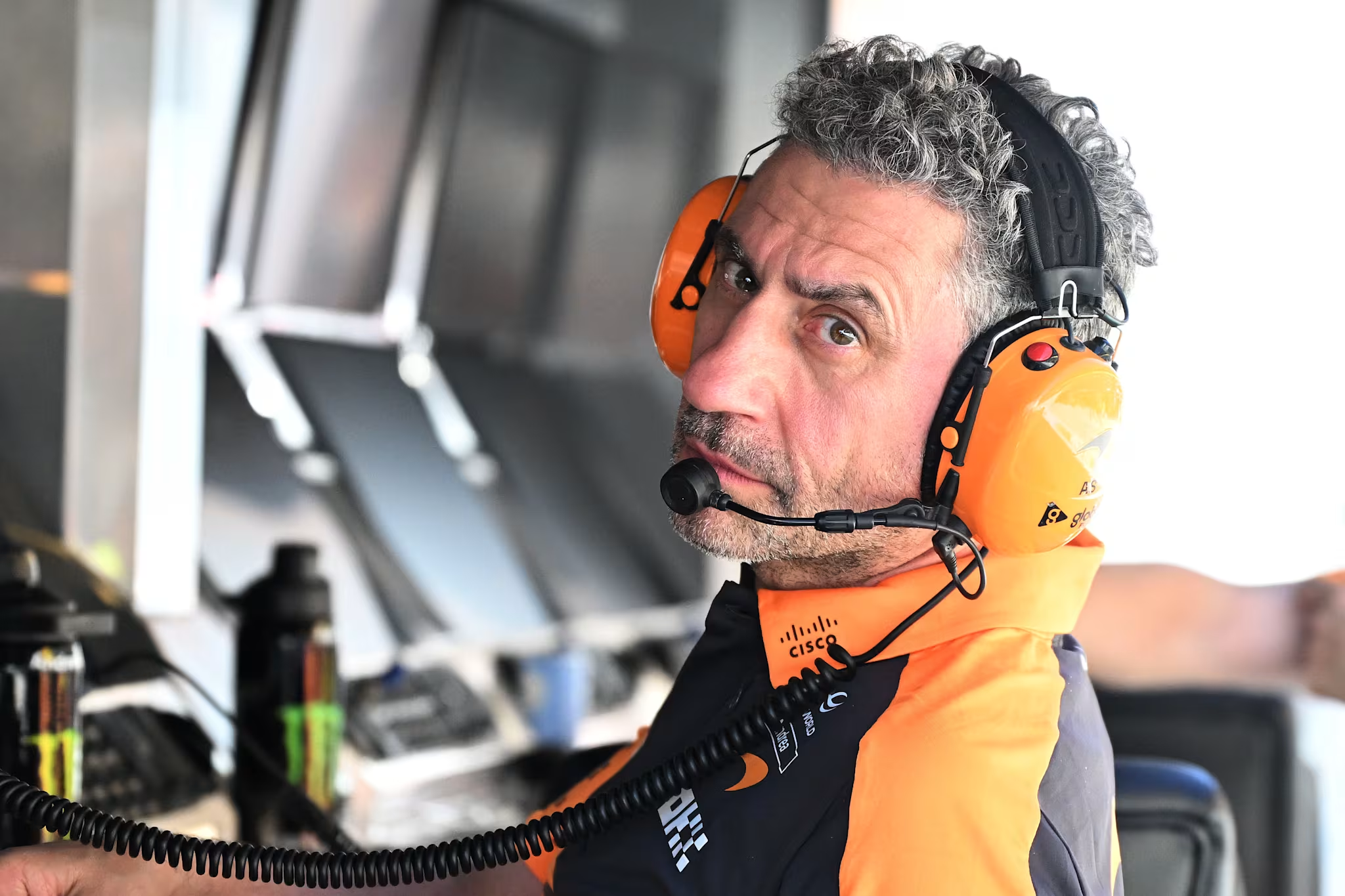
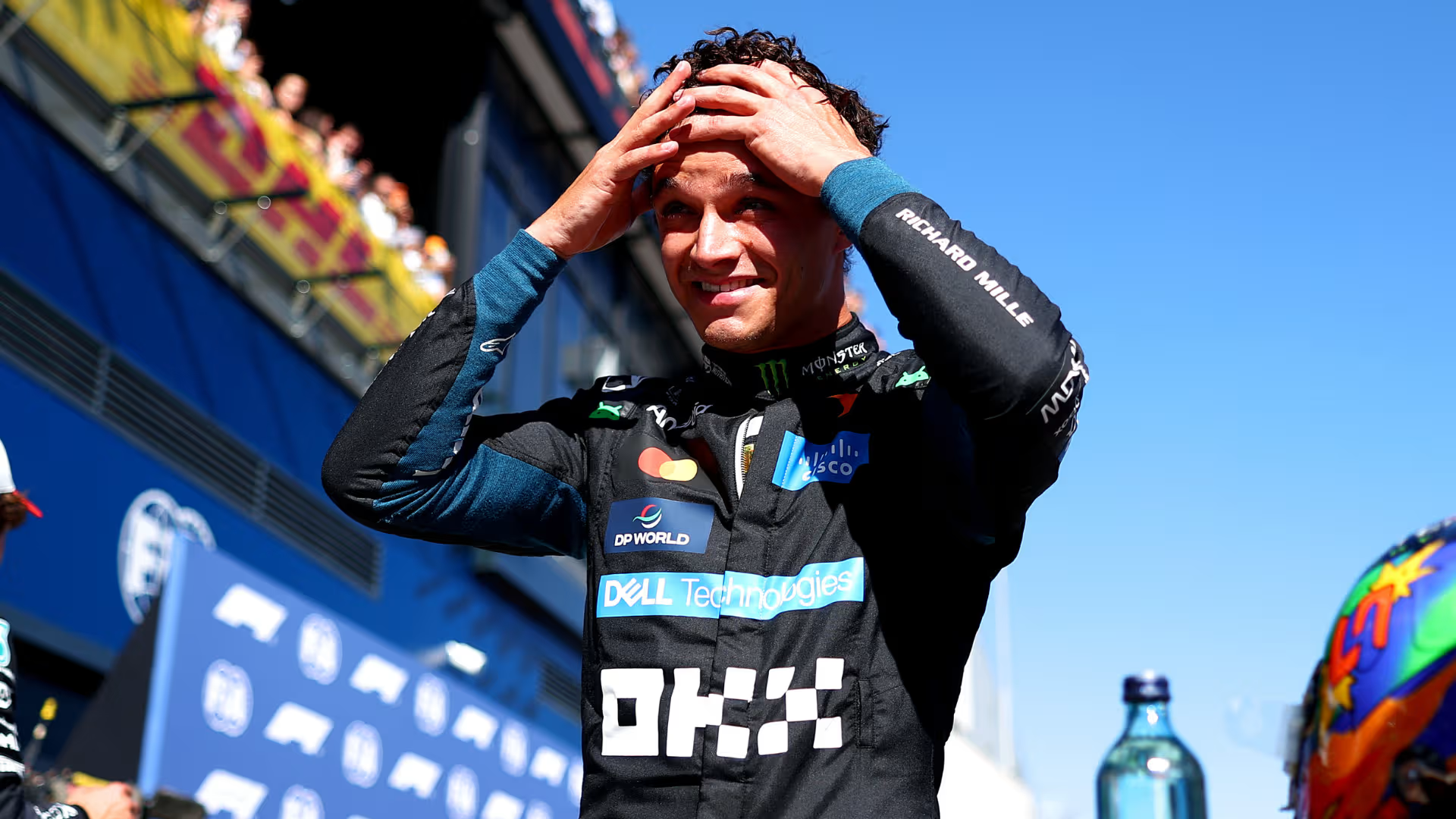
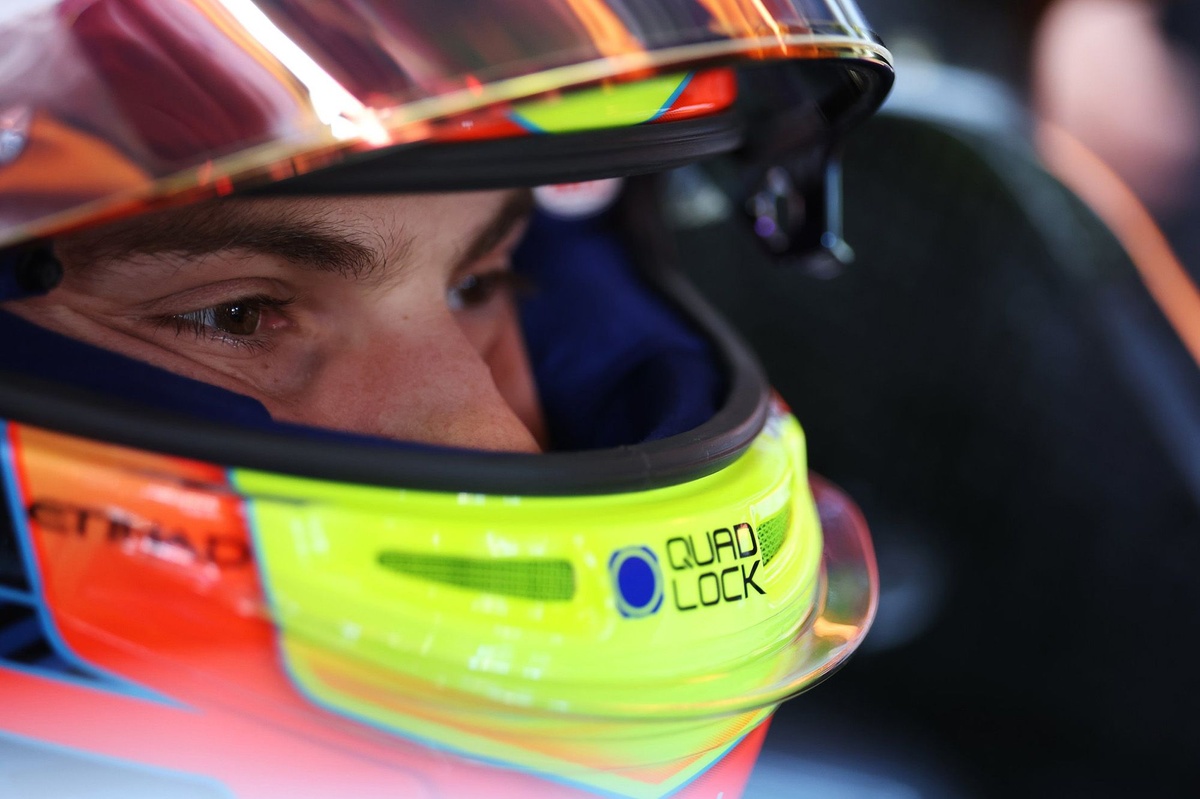
    McLaren team principal Andrea Stella believes Oscar Piastri’s current performance deficit to teammate Lando Norris stems from the Australian driver still “thinking and driving” rather than operating instinctively with the 2026 Formula 1 regulations. The new technical framework has reduced aerodynamic output and introduced narrower tyres, significantly lowering overall grip levels and altering the driving demands compared to previous seasons.

    Piastri’s Strengths Clash with 2026 Car Characteristics

    Over the previous two seasons, Piastri established his strengths in carrying speed through high-speed corners and excelling in high-grip conditions. The 2026 rule changes have stripped away much of that grip, moving the MCL40 outside Piastri’s natural comfort zone. Combined with the charge-and-deploy nature of the new powertrains, this shift has contributed to a challenging campaign for the Melbourne-born driver.

    While Piastri and Norris were closely matched throughout 2025—aside from lower-grip events during the final flyaway races—Norris has held a clear advantage in the current season.

    Stella Targets Qualifying and Car-Driver Harmony

    Stella emphasized that improvement hinges on McLaren helping Piastri stop “thinking” on track, acknowledging that driving the MCL40 does not feel like a natural process for the 23-year-old.

    “I think with Oscar we need to qualify better, stay closer to the podium finish positions from the start,” Stella began. “In Monza he was P3 at the end of qualifying but somehow we managed to start P6 for the impeding. So there are several circumstances of which we need to take more control.
    “We need to execute better and then at the same time we need to get more in tune between Oscar and the MCL40 because still Oscar is driving and thinking. And when you drive and think, things get slowed down; slower as a driver in terms of deciding what to do and ultimately you are slower in terms of lap times.
    “So I think the agenda is very clear as to what we have to improve and I expect, like I always say, that we will get on top of that and we will see a stronger Oscar in the final part [of the year].”

    Front Wing Damage Compromises Piastri’s Race

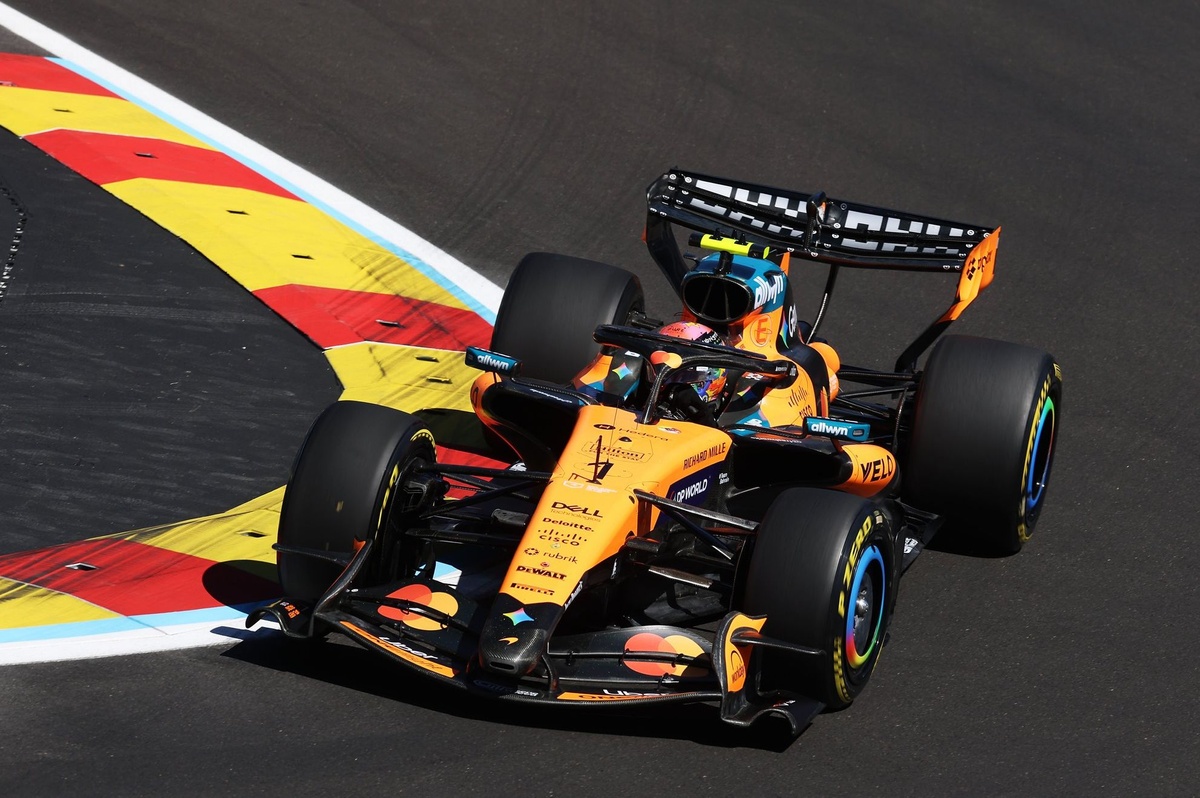
    Piastri’s race was further complicated by front wing damage sustained in the opening corner after contact with George Russell’s Mercedes. The collision left a diveplane flapping against the endplate, costing measurable aerodynamic balance.

    “The front wing damage cost Oscar a few units of aero balance,” Stella added. “So definitely very measurable.
    “We were actually quite worried that this would have caused a lot of graining because the front end lost a lot of downforce. As a matter of fact, and thankfully, the hard tyres were hard and resistant enough not to open up the graining so Oscar could stay in the race.
    “When it comes to Oscar, I think the race was definitely compromised by not only the damage on the car but having lost further positions at the start. So I think even without the damage, it would have been a difficult race to get more out of the situation in which he found himself.”

    Despite the damage, the hard compound tyre proved durable enough to prevent graining, eliminating the need for a front wing change. Piastri managed a pass on Arvid Lindblad after his pit stop but ultimately finished seventh, trapped behind Franco Colapinto’s Alpine.
  • McLaren: Impossible Overtaking Cost Lando Norris Madring F1 Win

    McLaren: Impossible Overtaking Cost Lando Norris Madring F1 Win

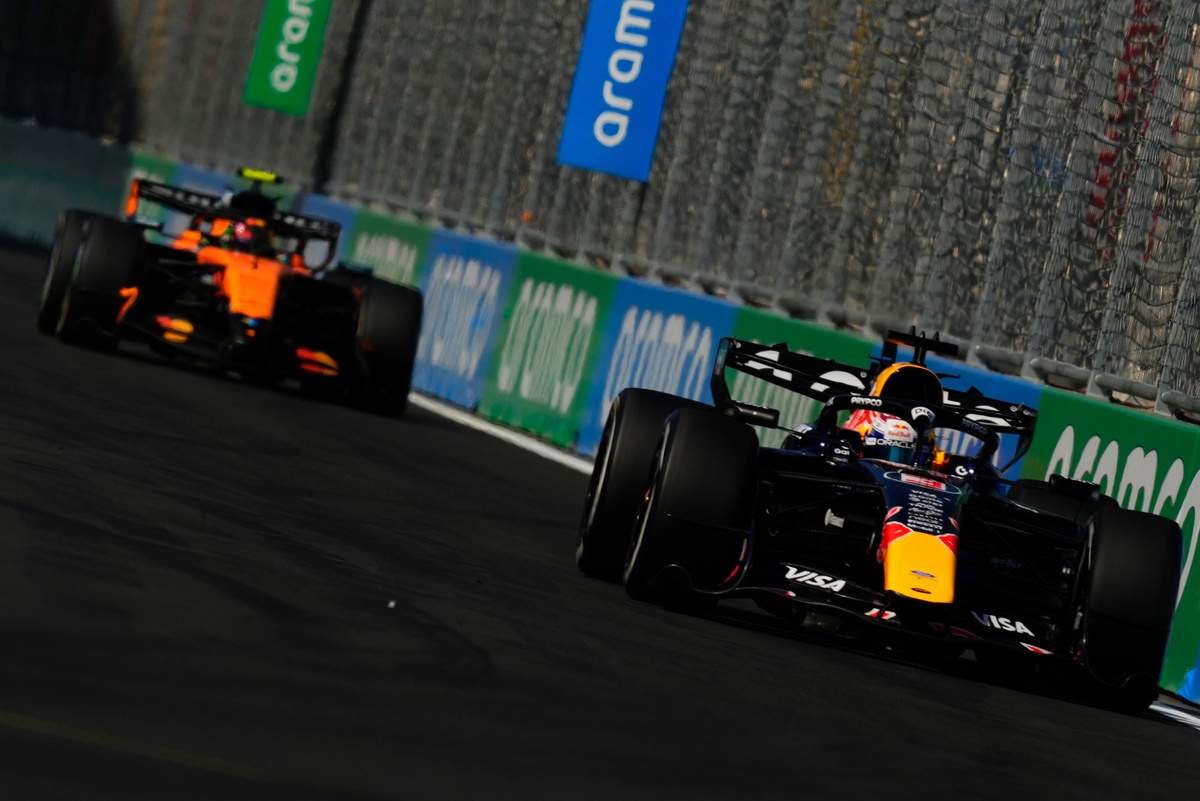
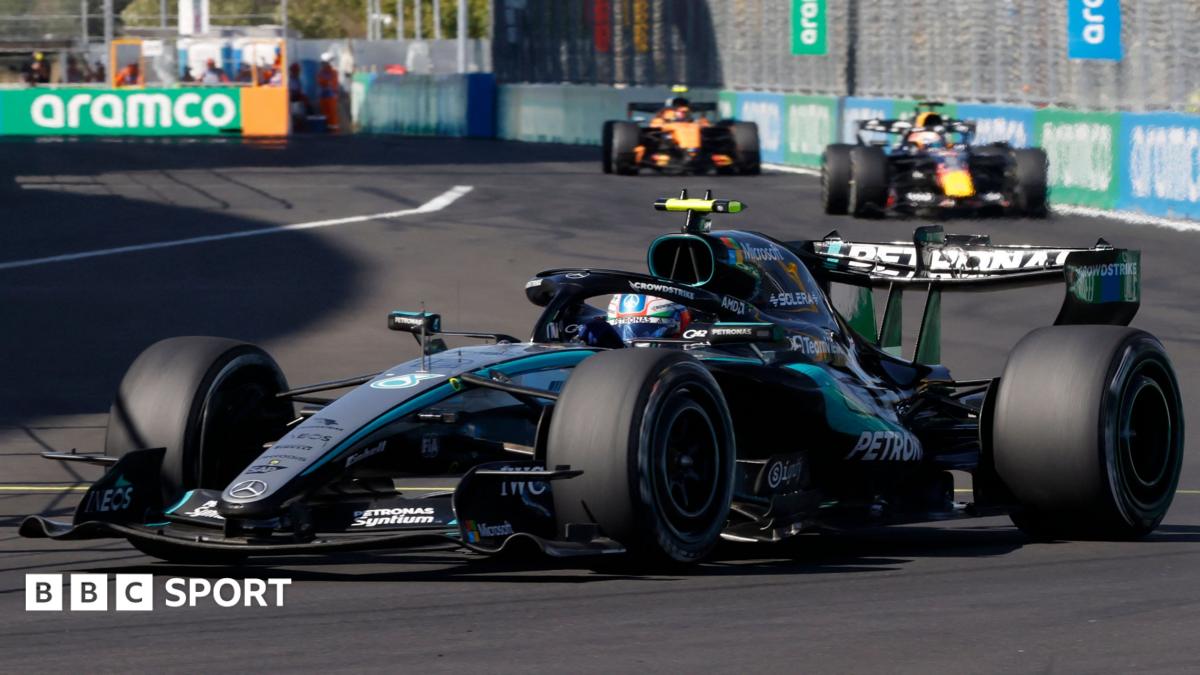
    McLaren Formula 1 team principal Andrea Stella has identified the Madring circuit layout as the primary factor preventing Lando Norris from converting pole position into victory at the Spanish Grand Prix. Despite a dominant early pace, Norris fell victim to a poorly timed virtual safety car and, ultimately, a track design that offered virtually no overtaking opportunities.

    Virtual Safety Car Timing Undermines Norris Lead

    Norris started from pole at Madrid’s new street circuit and immediately built a six-second advantage over the opening 12 laps. That margin, however, became a liability when the virtual safety car (VSC) was deployed. Because Norris was too far ahead to pit without losing track position, he stayed out while rivals stopped.

    When Norris eventually pitted, a seven-second tire change dropped him 16 seconds behind Kimi Antonelli. Although the British driver slashed that deficit to challenge Antonelli and Max Verstappen for the lead by lap 48, he was unable to execute a pass.

    Stella: Slow Pit Stop Did Not Cost the Win

    Stella dismissed the idea that the sluggish stop altered the race outcome, emphasizing the circuit’s fundamental limitations.

    “Because probably Lando would have [come out] anyhow behind [George] Russell,” he pointed out. “And even if not, it would have not been possible to overtake Verstappen and Antonelli.

    “So, definitely, we take note that there’s a lot of work to do in our operation. And it’s not the first time that we have a slow stop. But in terms of the race itself, it didn’t make a difference.”

    The McLaren boss acknowledged the recurring operational issue but insisted the track layout rendered the pit-stop delay irrelevant to the final result.

    Madring Produces Fewest Overtakes of 2026 Season

    Data from Sunday’s race supports Stella’s assessment. The event featured just 10 overtaking moves—the lowest total of the 2026 campaign so far, even fewer than the 11 recorded at the traditionally processional Monaco Grand Prix. Four of those 10 passes involved backmarkers Valtteri Bottas or Lance Stroll being overtaken at the rear of the field.

    Turn 5 Geometry Blocks Overtaking Attempts

    The circuit’s primary passing zone, the heavy braking area at Turn 5, proved ineffective. The corner follows a curve that complicates braking precision, and its narrow width prevents two cars from entering side-by-side.

    “When it comes to overtaking, it’s a shame that it’s so difficult,” Stella added. “It just requires a large, large lap time difference to be able to overtake. I think what F1 will have to review is whether there are some modifications required at this circuit in order to introduce an overtaking possibility.

    “Because at the moment, the fact is that the straight may be long enough, but there’s absolutely no way that two cars can enter [Turn] 5 together. So it’s basically impossible an attempt of overtaking – which is a bit of a shame, because I think if overtaking was possible today, we would have [had] Lando regaining the lead, because the pace advantage was significant.”

    Circuit Modifications Under Consideration

    Stella’s remarks place the onus on Formula 1 and the circuit promoters to evaluate layout changes for future editions. With a straight that theoretically supports slipstreaming but a choke point that negates side-by-side racing, the Madring in its current configuration prioritizes track position over race craft—a dynamic that turned a potential Norris masterclass into a strategic dead end.

  • F1 Q&A: Madring’s Overtaking Problem, Virtual Safety Car Operation, and 2027 Rookie Prospects

    F1 Q&A: Madring’s Overtaking Problem, Virtual Safety Car Operation, and 2027 Rookie Prospects

    Key Highlights

    • Lando Norris lost a likely Spanish Grand Prix victory due to unique Virtual Safety Car timing that prevented only him from pitting, reigniting debate over minimum VSC duration rules.
    • McLaren team principal Andrea Stella expressed uncertainty over whether VSCs should last at least one full lap to equalize conditions or remain a “hands of the Gods” variable.
    • Haas appears the most likely entry point for 2026 rookies, with F2 champion Leonardo Fornaroli and Ferrari academy driver Rafael Camara leading candidates alongside Toyota protege Ryo Hirakawa.

    Norris Misfortune Reignites Virtual Safety Car Debate

    Lando Norris’ cruel twist of fate at the Spanish Grand Prix has thrust Formula 1’s Virtual Safety Car regulations back into the spotlight. The McLaren driver lost a commanding race lead—and near-certain victory—when a VSC deployment froze the field at the precise moment his track position made a pit stop impossible, while rivals behind him gained a free stop under neutralized conditions. Unlike previous strategic VSC gains, where teams deliberately gambled on a neutralisation, Norris’ predicament was purely circumstantial: he was the sole driver unable to access the pits during the brief window. The incident has been described as a “chance card in Monopoly” by observers, highlighting the arbitrary nature of the current system.

    Stella Questions Fairness, FIA Process Looms

    McLaren Team Principal Andrea Stella admitted the situation left him conflicted. “Offering a personal opinion, I’m puzzled myself as to what’s right,” Stella said. “Is it correct to give enough duration such that everyone will have been subject to the same track conditions? So, for instance, the virtual safety car lasts at least one full lap. Or you just keep it in the hands of the Gods, and sometimes you are lucky, sometimes you are not. I’m not sure.”

    Norris revealed after the race that the specific issue of VSC duration and pit-lane equity “has been spoken about many, many times” in driver briefings. Any regulatory change would follow a formal pathway: analysis by the Sporting Advisory Committee, then review by the F1 Commission comprising teams, commercial rights holder Formula 1, and governing body the FIA. However, sources indicate no immediate momentum exists for a rule alteration, as safety-car variability is widely accepted as an intrinsic, albeit unpredictable, competitive element.

    2026 Rookie Market: Haas the Epicenter of Opportunity

    With most 2026 driver line-ups settled or trending toward continuity, Haas emerges as the primary gateway for new talent. Esteban Ocon’s seat appears vulnerable, creating a rare opening. The leading contenders are Italy’s Leonardo Fornaroli, the reigning Formula 2 champion and a McLaren development driver, and Brazilian Rafael Camara, currently second in the F2 standings and a Ferrari Academy member. Both have tested for the American squad and reportedly impressed. Haas reserve driver Ryo Hirakawa, a long-time Toyota protege linked to the team’s technical partnership, remains in contention but is considered a less probable choice. The team is understood to prioritize a combination of pace and financial backing.

    Red Bull Junior Shuffle and Cadillac’s American Dilemma

    Elsewhere, Red Bull is evaluating a promotion for F2 championship leader Nikola Tsolov into the Racing Bulls squad. Such a move would necessitate dropping either Liam Lawson—who has performed solidly this season—or impressive rookie Arvid Lindblad, making the decision complex. At Cadillac, the plan to fast-track IndyCar race-winner Colton Herta has stalled; his difficult F2 campaign, yielding just a best finish of fifth and 19th in the standings, makes a 2026 graduation a significant risk. Fellow American Ugo Ugochukwu, who clinched the Formula 3 title in Madrid, is on Cadillac’s radar but is likely too inexperienced for an immediate F1 step. His stature—well over six feet, taller than current grid giants Esteban Ocon, Alex Albon, and George Russell—also presents unique cockpit integration challenges. The only other potential vacancy hinges on Fernando Alonso’s undecided future at Aston Martin.

    Why This Matters

    The Norris incident exposes a structural tension in F1’s sporting regulations: the balance between operational efficiency—the VSC’s original purpose of minimizing disruption for quickly cleared hazards—and competitive equity. The current rules, evolved through iterations including pit-lane closures, still allow a neutralisation to arbitrarily advantage or disadvantage a single driver based solely on micro-sector position at the moment of deployment. With the Sporting Advisory Committee and F1 Commission as the only formal mechanisms for change, any adjustment will be deliberate and political, requiring consensus among teams that may benefit from the status quo. Simultaneously, the 2026 rookie landscape reflects a broader trend of grid stability driven by multi-year contracts and academy consolidation, making Haas’s decision a bellwether for how teams weigh academy allegiance versus immediate performance and commercial value.

    Frequently Asked Questions

    Could the VSC rules be changed before the end of the 2025 season?

    It is highly unlikely. Any amendment requires analysis by the Sporting Advisory Committee and approval by the F1 Commission, a process that typically spans months. There is currently no indication that the FIA or Formula 1 management views this as an urgent safety or sporting integrity issue warranting an expedited change.

    Who is the favorite for the open Haas seat in 2026?

    There is no clear favorite. Leonardo Fornaroli (McLaren-backed F2 champion) and Rafael Camara (Ferrari-backed F2 runner-up) are the two primary candidates, both having tested successfully. Ryo Hirakawa (Toyota/HAAS reserve) is a dark horse. The final decision will likely weigh on-track performance, simulator work, and the commercial package each driver brings.

    Is Colton Herta’s F1 dream over?

    Not necessarily, but his path has narrowed significantly. A move to F1 in 2026 looks improbable given his current F2 form. Cadillac may opt to let him complete the F2 season to rebuild momentum for a potential 2027 entry, or explore alternative candidates like Ugo Ugochukwu, though the latter’s physical stature and inexperience present additional hurdles.

  • McLaren Won’t Blame F1 Race Control for Spanish GP Loss

    McLaren Won’t Blame F1 Race Control for Spanish GP Loss

    Key Highlights

    • Lando Norris lost a near-certain Spanish Grand Prix victory after a Virtual Safety Car triggered by Lance Stroll’s brake failure cost him approximately 20 seconds relative to rivals who pitted under the neutralisation.
    • McLaren Team Principal Andrea Stella refused to criticise race control, stating the race director’s sole focus must be safety and that regulatory changes require a lengthy process through the Strategy Advisory Committee and F1 Commission.
    • Norris acknowledged the misfortune was part of racing but noted this was likely the first time he had lost a race win specifically due to VSC timing, having previously benefited from similar scenarios.

    Norris Dominates Early Before VSC Cruelly Intervenes

    The 2025 Formula 1 Spanish Grand Prix at the Madring circuit appeared destined for a McLaren victory after Lando Norris converted pole position into a commanding early lead. The Briton quickly pulled away from Mercedes rookie Kimi Antonelli and reigning champion Max Verstappen, exploiting the clean air that is critical on a layout where overtaking proved exceptionally difficult across F1, F2, and F3 support races throughout the weekend.

    That narrative unravelled when Lance Stroll suffered a brake failure on his Aston Martin, forcing the Canadian to stop at the side of the track. Race control deployed a Virtual Safety Car (VSC) at the precise moment Norris had just passed the pit entry. By the time the McLaren driver completed the additional lap required to reach the pits, the track had already gone green again. Meanwhile, Antonelli, Verstappen, and the chasing pack had all dived into the pits under the VSC, swapping tyres at a significantly reduced time loss. Norris emerged from his eventual stop having surrendered roughly 20 seconds to his principal rivals, effectively handing the race lead—and ultimately the win—to Antonelli.

    Stella Defends Race Control, Points to Governance Process

    Despite the bitter disappointment, McLaren Team Principal Andrea Stella was unequivocal in refusing to apportion blame to the race director or FIA race control. Speaking after the Grand Prix, the Italian emphasised that the official’s mandate during a live incident is strictly limited to safety management.

    “Like all the times in which a safety car or a virtual safety car timing or duration has a large influence on a race, we have an opportunity to review whether we can do things differently,”

    Stella said.

    “But this is not under the jurisdiction of the race director. The race director applies the guidance and the regulations at the moment of the race that he’s directing. And I think that when there’s a situation like the one that caused the virtual safety car, the attention of the race director, and rightly so, is on when the conditions exist to turn the virtual safety car on and when they exist to turn it off. I don’t think he takes a look at what’s happening in the race. It would be a big distraction.”

    Stella confirmed the team had absolutely no comment on the race direction of the Spanish GP, adding they had done a good job according to what is present. However, he conceded there was scope for wider reflection on maintaining fairness.

    “I’m puzzled myself as to what’s right,” Stella continued. “Is it correct to give enough duration such that everyone will be subject to the same track conditions? So, for instance, the virtual safety car lasts at least one full lap. Or, you just keep it in the hands of the gods? And sometimes you are lucky, sometimes you are not. I’m not sure myself.”

    The McLaren boss outlined the formal pathway for any regulatory adjustment, noting it must originate in the Strategy Advisory Committee (SAC), progress to the F1 Commission, and ultimately be written into the Sporting Regulations—a relatively lengthy process that precludes any immediate change.

    “But in general, there’s the right place to have this sort of conversation which is the Strategy Advisory Committee, the famous SAC. And this is a topic that may be added to the agenda and discussed over there. But if it’s a change, it will have to be a change that goes through the SAC, then the F1 Commission, and then we have to go at some stage to the Sporting Regulations.”

    Norris Takes Philosophical View on Cruel Timing

    For Norris, the loss was particularly stinging because it occurred while fighting for a victory rather than mere points. In the post-race press conference, the 25-year-old articulated a balanced perspective, recognising that the fickle nature of safety-car timing has swung both ways during his career.

    “I was the only one, the only one on the whole grid that didn’t get the chance to do the pitstop,” Norris said in the post-race press conference. “That’s just unfortunate. It’s happened in races and there’s been plenty of times where I’ve gained from it in the past and times where I lost from it.”

    “It’s racing, but never when fighting for a win. So, I think it’s probably one of the first times a win has been lost simply because of it.”

    Why This Matters

    The Spanish Grand Prix episode has reignited a long-standing debate within Formula 1 regarding the sporting equity of Virtual Safety Car and Safety Car deployments. Because the VSC freezes gaps at the moment of deployment, any driver who has not yet passed the pit entry when the signal is given gains a massive advantage over those who have just missed it. The Madring circuit’s layout—where track position is paramount and overtaking is at a premium—amplified the consequence to a race-deciding level.

    Stella’s reference to the Strategy Advisory Committee underscores that any solution—whether a mandatory minimum VSC duration, a “pit window” guarantee, or a red-flag-style reset—must navigate F1’s multi-layered governance structure involving teams, the FIA, and commercial rights holders. Until such a mechanism is ratified, the sport must accept that the timing of neutralisations remains, in Stella’s words, in the hands of the gods. For Norris and McLaren, the focus now shifts to recovering the championship momentum lost on a Sunday where pace was never the issue.

    Frequently Asked Questions

    Why did Lando Norris lose the Spanish Grand Prix?
    Norris lost the lead when a Virtual Safety Car was deployed moments after he passed the pit entry. He was forced to complete an extra lap at reduced speed before pitting, while rivals including Kimi Antonelli and Max Verstappen pitted immediately under the VSC, gaining roughly 20 seconds on the McLaren driver.
    Is McLaren protesting the race director’s decision?
    No. Team Principal Andrea Stella explicitly stated McLaren has absolutely no comment on the race direction and believes the race director’s sole responsibility during a live incident is safety, not sporting equity.
    Could the rules be changed to prevent this happening again?
    Any rule change would need to be proposed at the Strategy Advisory Committee (SAC), approved by the F1 Commission, and written into the Sporting Regulations. Stella described this as a relatively lengthy process, meaning no immediate fix is expected.
  • Lando Norris Wins ‘Who Slept Best Last Night’ Title

    Lando Norris Wins ‘Who Slept Best Last Night’ Title

    Lando Norris summed up his Spanish Grand Prix heartbreak with brutal honesty on the cooldown lap in Madrid. “We were too quick, that’s all it was.” Those six words captured the cruel irony that defined the inaugural Spanish GP at the Madring circuit.

    How a Six-Second Gap Decided the Madrid Winner

    The sequence began on lap 13 when Lance Stroll parked his Aston Martin at Turn 20 with a brake problem. Norris was just a few corners behind, holding a comfortable six-second advantage over Kimi Antonelli. Had Norris been three or four seconds slower on his opening medium stint, he would have reached the pit lane entry just as track marshals determined they needed to push the stranded car to a safer location.

    Instead, the timing worked against the McLaren driver. Race director Rui Marques deployed the Virtual Safety Car, triggering a cascade of cheap pit stops across the field. Norris had just passed the pit lane entry when the VSC activated, forcing him to slow to comply with delta times. By the time he completed the lap, officials had cleared the Aston Martin, and the VSC period ended. Almost the entire field had pitted under neutralized conditions; Norris was forced to stop under green flag conditions, surrendering track position.

    Antonelli Admits Victory Feels Hollow

    The beneficiary, Kimi Antonelli, offered a remarkably candid assessment after climbing from his Mercedes. “It’s good to win, but it doesn’t feel as good,” the Italian conceded during the post-race broadcast interview with James Hinchcliffe. Jolyon Palmer had predicted earlier in the week that Antonelli’s recent fortune resembled a lottery win, and Sunday’s events in Madrid appeared to validate that observation.

    This is not to diminish Antonelli’s championship credentials, but the circumstances underscored how luck has intervened in his favor during the 2025 season, a contrast to the more testing challenges he faced in his rookie campaign.

    Norris Delivers a Masterclass in Defeat

    Norris was, by any objective measure, the standout performer of the weekend, continuing the form he has displayed since McLaren’s resurgence following their Hungarian upgrade, Monza excepted. This should have been his third victory in four races. While the championship fight is effectively over, a win would have energized those still clinging to title hopes.

    His team radio message as he returned to the pits revealed both frustration and resolve: “Very unlucky today, guys. We deserved the win quite easily, so a big thank you. Didn’t think we were going to have a chance here, but we should have won. Well done guys. Keep it going.” He added a line that spoke volumes about his current mindset: “I’ll keep delivering.”

    Perspective on Luck’s Two-Way Street

    In the post-race press conference, Norris acknowledged that VSC timing has cost others victories before, while admitting he benefited from a timely safety car at his maiden Miami win in 2023. His philosophical acceptance, “what comes around goes around,” reflects a maturity forged since that breakthrough.

    The transformation from the self-deprecating “No wins” Norris of early 2023 to the driver declaring “I’ll keep delivering” illustrates a profound shift in self-belief and understanding of his own capabilities.

    Norris Debunks the “Driver Difference” Theories

    Recent commentary from Max Verstappen and George Russell has suggested that 2026 regulations reduce the impact a driver can make. Verstappen cited Liam Lawson’s improved form as evidence, while Russell linked Lewis Hamilton’s revival and Antonelli’s dominance to driving styles suited to the new rules, including Norris in that category.

    Norris’s performances dismantle both arguments. He has not only outperformed Oscar Piastri this season, the gap has widened significantly compared to 2025. Piastri’s standout moments have been scarce outside of commercial appearances, while Norris has produced a string of exceptional performances. The data suggests Norris is making the difference, and it transcends driving style preferences.

    McLaren’s Operational Excellence Signals 2027 Threat

    With an 81-point championship lead over his nearest rival, who is not Norris, Antonelli’s 2026 title appears secure. Verstappen’s late-season heroics last year are not repeatable on demand, and even Toto Wolff’s cautious public stance likely masks active championship merchandise planning for the Italian rookie.

    For Norris and McLaren, the bigger picture is encouraging. The organization under Andrea Stella continues to impress with systematic car development, eliminating weaknesses methodically. Norris now looks like the ideal product of that culture, a driver with immense potential refined into a consistent force.

    Being “too quick” cost Norris a victory in Madrid, but that same pace will win far more races in the future than it costs. With McLaren’s trajectory and Norris’s confidence, the 2027 championship battle promises to be considerably closer.

  • Spanish Grand Prix: How VSC Cost Lando Norris Race Win — And Should F1 Change the Rules?

    Spanish Grand Prix: How VSC Cost Lando Norris Race Win — And Should F1 Change the Rules?

    Norris Explains Pit Stop Decision After Race

    After the race, McLaren faced questions about whether pitting on the following lap was the optimal call or if Lando Norris should have stayed out. Norris defended the decision, stating: “I had to come in at the end of the lap because it was the only chance.”

    He elaborated on the trade-offs: “It was still effectively some pit loss, (but) the fact that everyone’s kind of on colder tyres and you’re still minimising the pit loss.” Norris highlighted the tyre performance disparity: “The medium tyre (on which Norris had started the race) was destroyed and the hard tyre (to which Antonelli and Verstappen switched) was amazing.”

    Despite the outcome, Norris pointed to strong pace: “But the pace was very, very strong and on the hard tyre… I know they were stuck (behind Ferrari’s Charles Leclerc, who stayed out under the VSC), we caught up 13, 14 seconds or more, almost. So, plenty of positives. A day full of positives, just one thing let it all down.”

    Stella Analyzes Strategy Options

    McLaren team principal Andrea Stella confirmed the team evaluated staying out: “We considered staying out, but you have to accept the fact that now you are on relatively used medium tyres. And the people behind you will be on new hard. So you’re never going to open a gap on people on new hard.”

    Anticipating the VSC: Risk vs Reward

    Another question was whether McLaren should have anticipated the Virtual Safety Car (VSC) and pitted Norris before its deployment. Stella admitted: “In hindsight, that would have been a good idea.”

    However, he emphasized the real-time risks, noting the Madring circuit’s long pit lane — the longest on the calendar — meant a pit stop carried a significant time penalty. Stella said: “I would have to review with my engineers, see whether it was kind of obvious that it would end up in a virtual safety car. Therefore, you try to anticipate or not.”

    He detailed the specific danger: “Here, the problem is that you need to be extremely careful, because it’s 27 seconds if you don’t pit under a virtual safety car.”

    Stella explained the consequence of a wrong prediction: “So if you get it wrong, it would be extremely penalising. From the lead, you pit unnecessarily, and now you have lost the victory.”

    He outlined the team’s guiding principle: “So a good rule is to respond to what is a fact, to what is the real condition of the circuit.”

    Looking ahead, Stella said: “But we will definitely take a look as to whether in these conditions it was just simply, you know, obvious that he would end up in a virtual safety car. I cannot answer at the moment.”

  • How Brutal VSC Timing Turned Lando Norris’ Spanish GP Upside Down

    How Brutal VSC Timing Turned Lando Norris’ Spanish GP Upside Down

    Norris Loses Spanish GP Victory by Two Seconds as VSC Timing Ends Win Hopes

    Lando Norris missed victory at the Spanish Grand Prix by a mere two seconds — the margin between the McLaren driver passing the Madring pit entry and the deployment of the virtual safety car that ultimately handed the win to Kimi Antonelli. Norris had built a 6.2-second lead over the Mercedes rookie by the start of lap 14 and appeared firmly in control after shaking off a frantic opening lap that saw championship leader Max Verstappen run off at both Turn 1 and Turn 5 while pressuring the Briton.

    Stroll’s Brake Failure Triggers Chain of Events

    The race dynamics shifted dramatically when Lance Stroll stopped at Turn 20 at the end of lap 13. The Aston Martin driver reported fading brakes — a problem that had earlier affected Lewis Hamilton, who managed to nurse his Ferrari back to the pits. Unlike Hamilton, Stroll had no strategic reason to continue and parked his car at the marshals’ post near the barrier opening, making it accessible for retrieval.

    Yellow flags waved just as Norris exited Turn 14. At that point, there was little indication a VSC would be called; the expectation appeared to be that marshals could quickly remove the stranded Aston Martin.

    McLaren team principal Andrea Stella later reflected on the decision not to pit pre-emptively:

    “In hindsight, it would have been a good idea [to pit pre-emptively], but we will have to review with my engineers to see whether it was kind of obvious that it would end up in a virtual safety car,” said McLaren team principal Andrea Stella.

    “Here, the problem is that you need to be extremely careful because it is 27 seconds if you don’t pit under a virtual safety car. So if you get it wrong it will be extremely penalising: from the lead, you pit unnecessarily and now you have lost the victory.

    “So, I think a good rule is to respond to what is a fact, to what is the real condition of the circuit. But we will definitely take a look as to whether in these conditions it was just simply obvious that it would end up in a virtual safety car.”

    VSC Deployed Two Seconds Too Late for Norris

    When Norris passed Stroll’s car, yellow flags were still displayed. McLaren opted against a pre-emptive stop, and the race leader negotiated Turns 21 and 22 — the final corners of the Madring layout. The virtual safety car was deployed the moment Norris exited the last corner, a timing McLaren calculated as just two seconds too late to bring their driver in.

    Antonelli, now 6.3 seconds behind, received the call to pit — as did Verstappen and George Russell. Both Antonelli and Verstappen switched to hard tyres, securing a one-stop strategy to the finish. Norris, meanwhile, faced at least one more lap before he could stop, with the risk that the VSC would end before he could capitalize on the reduced pit-lane time loss — approximately 30 seconds under normal conditions at Madring.

    Norris Stops After VSC Ends, Loses Track Position

    Antonelli and Verstappen emerged from their VSC stops behind Charles Leclerc, who had stayed out on his original hard tyres. Had Norris pitted under VSC conditions, he likely would have rejoined ahead of the Ferrari. Instead, Norris was instructed to stop regardless of the VSC status. The VSC ended as he rounded Turn 21, and he entered the pit lane for his sole stop, taking on hard tyres.

    A slow front-right wheel change added several seconds to his stationary time. Stella assessed the impact:

    “In fairness and for completeness, we had a seven second pit stop, so there’s definitely takeaways even when it comes to our operations.

    “It would have not made a difference for the final result, because probably Lando would have pitted anyhow behind Russell and even if not, it would have not been possible to overtake Verstappen and Antonelli. So definitely, we take note that there’s a lot of work to do in our operation, and it’s not the first time that we have a slow stop. But in terms of the race itself, it didn’t make a difference.”

    After Russell’s subsequent stop on lap 28, Norris closed on Verstappen but remained trapped in the Red Bull’s wake until the chequered flag, with victory slipping further away each lap.

    Radio Traffic Reveals Real-Time Decision Making

    The team radio exchange between race engineer Will Joseph and Norris captures the uncertainty:

    Will Joseph: Yellow flags at turn 20. Yellows. Virtual safety car deployed, virtual safety car deployed. No drives in the delta.
    Lando Norris: We box?

    WJ: If it stays long enough.
    LN: How big’s the crash?
    WJ: I think someone’s brakes… There are marshals on track at turn 20, I haven’t seen it. Just try and stay on the delta.
    And Lando [radio breaks]?
    LN: I think so, do you?
    WJ: Yes, we are.
    WJ: Lando, confirming we are boxing this lap, irrespective.
    LN: Confirmed.
    WJ: We still think there’s marshals on track.
    WJ: Virtual safety car ending, virtual safety car ending.
    LN: Confirmed box still?
    WJ: Yes, confirmed box. So box this lap.

    Could McLaren Have Gone Long?

    The lingering question is whether McLaren should have kept Norris out longer to build a sufficient gap. With Leclerc holding up Verstappen and Antonelli, a case exists that Norris could have extended his stint, built the roughly 30-second advantage needed to clear Antonelli, and either emerged ahead of Leclerc or waited behind him for the Ferrari’s stop.

    The data, however, undermines that scenario. Norris was on used mediums, and his gap to Leclerc pre-VSC stood at just 13.8 seconds. His per-lap advantage over the Ferrari was rapidly diminishing: 0.506 seconds quicker on lap 10, 0.272 on lap 11, 0.264 on lap 12, and only 0.027 on lap 13. With Leclerc experiencing no hard-tyre degradation and gaining pace from fuel burn, building the required 16-second buffer after the VSC lifted was effectively impossible.

    Norris quipped that McLaren had been “too fast” over the weekend — suggesting that in their usual competitive position, the VSC timing would have favored them. Stella concluded:

    “We considered staying out, but you have to you have to accept the fact that now you are on relatively used medium tyres and the people behind you will be a new hard – so you’re never going to open a gap on people with a new hard,” Stella concluded. “Therefore we kind of needed to accept that that was what we should have done, and the fact that it was incredibly unfortunate.

    “Sometimes we talk about being unlucky. I think at times the being unlucky is used for too many applications but, in this case, it’s almost a mathematical definition of being unlucky.”

  • “There was no option to retain the lead” – Andrea Stella explains logic behind Lando Norris’ ‘unlucky’ Spanish GP pit stop

    “There was no option to retain the lead” – Andrea Stella explains logic behind Lando Norris’ ‘unlucky’ Spanish GP pit stop

    McLaren Team Principal Andrea Stella has detailed the strategic call that saw Lando Norris pit for fresh tyres just as the Virtual Safety Car (VSC) period concluded at the Spanish Grand Prix, acknowledging that there was no option to retain the lead.

    VSC Timing Costs Norris Lead

    After securing pole position with a dramatic final lap in qualifying, Norris defended strongly against Kimi Antonelli on the opening lap and built a comfortable advantage. The race dynamics shifted when a VSC was deployed to recover Lance Stroll’s stranded Aston Martin. While rivals Antonelli and Max Verstappen pitted under the neutralised conditions, Norris had already passed the pit entry. He entered the pits only as the VSC ended, enduring a 7-second stop that dropped him to fifth place. Despite a strong recovery to finish third, the team’s frustration was evident.

    Stella Explains Strategic Reasoning

    Speaking to F1 TV, Stella laid out the rationale behind the decision:

    Starting from pole position, leading the race and having incredible pace… this would’ve been a race won by many seconds, and we ended up in third position.

    The reality is that in racing, there are elements that you can control and some that you cannot control. The timing of the Virtual Safety Car was a couple of seconds too late – Lando had already passed the pit entry – and then he was a few seconds too early because then it was ending once he came in to pit.

    When asked to elaborate on the logic of pitting versus staying out, Stella added:

    The logic is that if you stay out, you stay out with used mediums [that are] already grained, and it means that at some stage you will pit behind the people that have already pitted on the hard tyres, so it’s going to be a similar race to [Charles] Leclerc.

    We would actually have pitted even earlier because the medium would finish earlier, so there was no option really to retain the lead.

    We needed to accept that the timing was incredibly unfortunate and, like I said, it’s a positive race overall.

    The elements that we could not control made a difference but those that we could control make us very optimistic for the future.

    Positive Outlook Despite Frustration

    McLaren’s competitive trajectory has been upward all season, highlighted by Norris’s dominant victories in Hungary and the Netherlands. The Spanish Grand Prix weekend reinforced that progress, even in defeat. Verstappen admitted Norris was faster than all of us in the closing stages, while Antonelli felt the British driver deserved to win.

    Stella concluded with a perspective focused on the bigger picture:

    Just very unlucky, but I want to think that the positive message of a McLaren [that was] so competitive at a very different circuit layout to Zandvoort and Hungary is very encouraging for the future.

    We take it on the chin. Today we were too fast to win the race because had we been a little slower, we would’ve made it to the pits! We have a smile on our faces, we look forward to the rest of the season.

  • Why Lando Norris’ ‘masterpiece’ Madrid pole lap was ‘almost unrepeatable’

    Why Lando Norris’ ‘masterpiece’ Madrid pole lap was ‘almost unrepeatable’

    Norris Secures Third Pole in Four Races With ‘Masterpiece’ Lap in Madrid

    A remarkable final lap from Lando Norris in Q3 at the Madrid circuit delivered a third pole position in four races for the McLaren driver, prompting team principal Andrea Stella to label the performance a “bit of a masterpiece”.

    The achievement stands out not only in the context of the 2026 season but across Norris’ entire career. Perhaps the most striking detail was a slide at the 22nd and final corner—caused as his tyres began to degrade—that cost him over 0.3 seconds. Despite the mistake, his advantage was already so substantial that he still claimed his 19th career pole. The performance electrified the McLaren pit wall and fans alike, particularly because it appeared to materialize unexpectedly.

    Stella Hails ‘Most Impressive Lap’ in 450 Grands Prix

    “I would say that definitely this was one of the most impressive laps that I witnessed, as somebody that watches telemetry in 450 Grands Prix,” Stella said after the session.

    “Because we were not honestly performing to the level of scoring of pole position. I think at no stage during the weekend we demonstrated that the car was performing at the level of being the best car.

    We were lacking quite significantly in the first sector – low-speed and kerbing – and for the drivers it was a very difficult car to nail a lap. We saw that there were spells of potential, but it’s always very difficult to put it together.”

    As Stella noted, the pole lap would have been even more dominant without the time loss at the finale.

    “I think the most impressive thing is the fact that it’s a pole position despite having lost three and a half tenths in the last corner,” the Italian explained. “Which means that it would have been a pretty convincing pole position without this issue.

    At the same time, this issue is a consequence of pushing to the level that Lando managed to push. But today, everyone will push the limits.

    The thing that makes the lap unique, when you look especially at the telemetry, is the precision, the braking, the speed you carry an entry, the striking of the kerb, the going on power – everything is executed with a pretty unique level of precision.

    So for me, that’s if anything the main attribute that would associate to this lap, just the incredible precision in the metre-by-metre execution.”

    McLaren’s Weekend-Long Focus on Sector 1 Pays Off

    Throughout the weekend, the McLaren engineering team concentrated on the critical opening sector, which features tight complexes at Turns 1 and 2 and again at Turns 5, 5A, and 6. Progress was hampered by a gearbox issue that cost Norris crucial track time in FP2, but incremental setup tweaks through FP3 and qualifying gradually delivered the improvements the team targeted.

    “Shout out to Lando, but let me say also to the team,” said Stella. “Because we had the clear objective from the first runs in practice to add some low-speed performance and kerbing performance.

    And we kept doing that session after session, but obviously P2 was a bit of loss of ground, because Lando lost pretty much the entire session. So I think this makes his work in Qualifying even more remarkable. And also on Oscar, we were experiencing a little problem on the car, so we didn’t have great references. We kept learning, we kept putting this together.”

    Overcoming the MCL40’s Inherent Low-Speed Weakness

    Stella emphasized that the core challenge was overcoming the inherent characteristics of the MCL40.

    “The car much more naturally performs well in high-speed, fast-flowing sections,” he said. “But struggles to be consistent when you brake and you carry the brakes into low-speed, and then you have to hit a kerb – it’s very unpredictable.

    And here there’s many of these kinds of corners. So to start with, in FP1, we saw the difficulties. What I appreciated in the work of the team is that we gave ourselves a clear objective, and we started to nail several areas of the setup that ultimately compounded and allowed the performance of the car to go to another level.

    So corner 5, corner 6, I think it’s one of the most difficult corners of the entire championship. The fact that a McLaren could have the fastest Sector 1, it was not only in 5 and 6, we can see in the GPS overlays that we are also the fastest in corner 1 and 2.

    But once again, the amount of kerb that you take in corner 1 and landing without upsetting the car, this is why I say the lap was almost unrepeatable, because all this was nailed. So the gain in Sector 1 comes 50% in 5/6, but the other 50% in corner 1 and 2.”

    Setup Changes Transform Car for Key Corners

    The setup revisions also paid dividends across other critical sections, as Stella further detailed:

    “Like I said before, the car was completely changed from the start of FP1 to perform well in these two corners, and corner 7 and corner 20. These are the places where we focussed, because we knew that in the other corners the performance was coming quite naturally for the characteristics of the car.

    And in these places, we forced the car to work, but still the performance needed to be extracted. And like I said, this required a level of precision that thankfully we were able to deploy in the final run of Q3. But you know, that lap gives you a sense that it would be difficult to be repeated.”

    He added: “Still, I think the exploitation of car potential for the pole position lap is pretty unique. I would say that if we put another set of tyres, I mean, we would gain three-tenths in the last corner, but I’m not sure we would be able to repeat what Lando was able to do in the first 21 corners.”

    Tyre Degradation Costs Three Tenths at Final Corner

    The only blemish for Norris and the team was the slide at the very end of the lap as the tyres passed their optimal window.

    “I think in the last corner he just paid the price of the fact that the lap was coming like one second faster than any other lap,” Stella explained. “Therefore, there was quite a lot more that was extracted from the tyres. But the tyres were tired, and somehow Lando did not take this into account, and he entered the corner with the same impetus that he had in some other corners.

    I think it’s just a little bit of a toll that was presented by the tyres – he oversteered in entry, and this means that he loses completely the racing line. And like I say, he lost more than three-tenths.”

  • Lando Norris Exclusive Interview: Why the 2025 World Champion Sees His Future at McLaren After Signing a New Long-Term Extension

    Lando Norris Exclusive Interview: Why the 2025 World Champion Sees His Future at McLaren After Signing a New Long-Term Extension

    Lando Norris is extending his McLaren contract until at least the end of 2030, reaffirming his commitment to the Formula 1 team after a highly successful partnership.

    The new deal will keep Norris at McLaren for at least 12 years by the time it expires, matching the length of Lewis Hamilton’s time with Mercedes. The agreement represents a major vote of confidence between the British driver and the team where he began his Formula 1 career.

    “I’m very, very excited,” he says in his first interview since the news was announced. “McLaren’s been my home since the very, very beginning of my career in Formula 1 and I want it to stay that way for as long as possible. We’ve had a great few years and I’m confident we can achieve that many more times. So I want to stay.”

    Norris joined McLaren as a test and development driver before becoming a reserve driver. He earned a full-time race seat in 2019 alongside Carlos Sainz, then claimed his first podium at the 2020 Austrian Grand Prix and his first pole position in Russia in 2021.

    His first Formula 1 victory came in Miami in 2024. He followed it with his first Monaco win in 2025 and then secured his maiden British Grand Prix victory at Silverstone later that year. Norris also went on to win his first World Championship, giving McLaren its first drivers’ title since 2008.

    The driver and team have experienced every stage of Norris’s career together, and neither wants to change a partnership that continues to work. The contract extension also provides stability and allows both sides to focus on performance.

    “I know for a good amount more years that I’m comfortable in terms of I’ve got a job and I’m where I want to be, and with the people that I want to be with, and for me that’s calming,” he says. “I can focus on a job I need to do and as a team we can also focus on the job that we want to do.”

    He adds: “You can always see results as most important and 99% of the time I think they are, but I would say there’s leeway, there’s leverage in terms of just the fact I’m with the people that I want to be with, people that I enjoy spending my career with.”

    “I don’t want to be bouncing around teams and doing different things. I want be where I’m happy and, even when we weren’t winning, I was also happy to be part of McLaren.

    “I think something I always know for my future is I want results of course – the team know that just as much as anyone – but I also just want to be wherever I’m most happy and even if we’re not winning like the beginning of this year, it’s not like I want to change team.

    “I’m still very happy with who I am with and happy to kind of fight through whatever we have coming up.”

    McLaren fighting back after slow start

    McLaren’s recent resurgence has strengthened the team’s position in the Formula 1 championship. The reigning World Champions endured a difficult start to the season, with McLaren failing to take the start at the season opener in Australia and both cars failing to start the following race in China.

    An upgrade introduced in Hungary before the summer break brought McLaren into contention and helped Norris claim his first win of the season. Further upgrades were added at Zandvoort after the break, where Norris took pole position and secured a second consecutive victory.

    Norris remains 83 points behind championship leader Kimi Antonelli, but he and McLaren have built momentum. Last year, Max Verstappen recovered from a 104-point deficit to force a title decider in Abu Dhabi, meaning Norris remains firmly in contention to defend his championship.

    That comeback reflects the potential Norris believes McLaren has, but it was not the reason behind his contract renewal. Discussions had already been planned after Norris won the world title in Abu Dhabi the previous year.

    Norris knew he wanted to stay, while McLaren wanted to retain him. Both sides were keen to remove uncertainty about his future and discourage interest from rival teams.

    “It’s a continuation of my last [contract],” he says. “We just want to be able to focus on doing our best job, to extract performance, to get the most out of everyone and focus on the importance that we do not get caught up in the mess of everyone else deciding contracts.

    “I don’t want to distract my team, I don’t want to distract the guys and girls here that are here to give me the best car possible and for me to do the best job for them.

    “We want to focus on our jobs and not think about all the noise that goes on in the sidelines. So for me it’s ‘guys I’m here to stay. I want to be with you for a long time’ and it gives them a good boost, gives me a good boost and together it means we can just focus.”

    Norris praises McLaren leadership

    Norris also expressed confidence in the McLaren structure led by CEO Zak Brown and Team Principal Andrea Stella.

    “Zak is a very good leader, he’s a very good boss,” says Norris.

    “As much as we get on and we just, we love racing, we want to win together, we enjoy golf and things, he is still my boss so he still gives me a kick whenever I do something wrong or if I’m not doing something well enough.

    “That’s always what I want – someone that’s honest and who gives me the brutal truth no matter what it is and that something that’s very important to me.”

    “At the same time I have that very much so with Andrea, and Andrea is for me – and of course I’m biased and this is the only place I’ve been – but we have had a few different team principals and he is most certainly the most influential over the team.

    “He is an incredible leader, someone who knows how to bring a group of people together and also knows how to lead individuals such as me in terms of how I can go out and increase my performance every day and be a better person.

    “So, even if I could change anything with where I am now, I wouldn’t and I think that’s the perfect reason.”

    Norris will be 31 when his latest McLaren contract expires, and he suggested that he could remain with the team for the rest of his career. He already holds the record for the most starts for McLaren.

    “I want to make this my home,” says the Briton, who holds the record for the most starts for McLaren. “I want it to be the place that I am at for a very, very long time and maybe even forever.

    “There are more nice things that just allow me to work better here and live better here, and that’s an amazing thing.”

    Source: www.formula1.com