Tag: Alexander Albon

  • Was Cadillac “faster” than Williams in Madring F1 Race?

    Was Cadillac “faster” than Williams in Madring F1 Race?

    Key Highlights

    • Sergio Perez showed strong race pace at the Spanish Grand Prix, matching and briefly surpassing Alexander Albon’s Williams before a water leak forced his retirement.
    • Teammate Valtteri Bottas struggled with significant tire degradation and brake management, highlighting a performance disparity within the Cadillac squad.
    • Cadillac targets improvement at the Azerbaijan Grand Prix, where the Baku circuit’s low-downforce nature may mask the MAC-26’s current aerodynamic deficiencies.

    Perez Finds Encouraging Pace Amid Reliability Woes

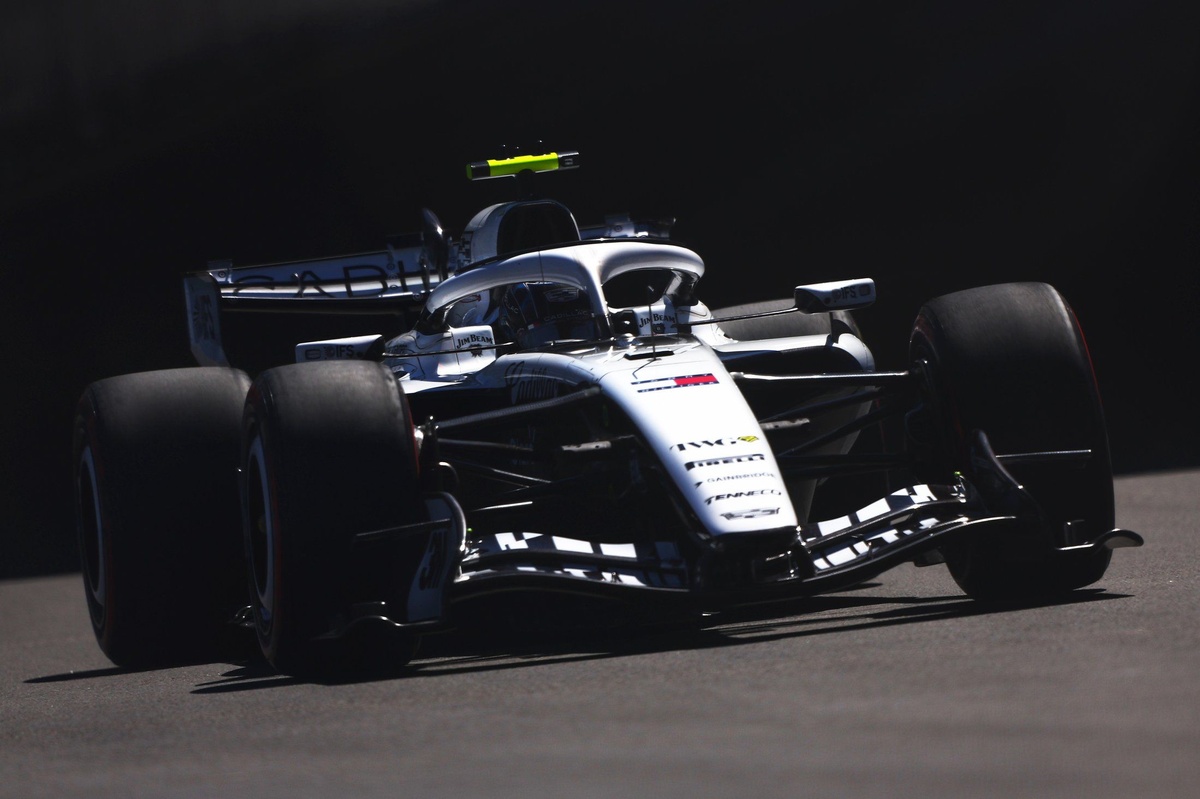
    Cadillac’s maiden Formula 1 campaign has largely been defined by backmarker status, but the Spanish Grand Prix at the new Madrid circuit—referred to as Madring—offered a glimmer of competitiveness from Sergio Perez. The Mexican driver qualified 18th but made a lively start, jumping past Yuki Tsunoda and Carlos Sainz to sit 16th. More importantly, his race pace proved genuinely competitive against the midfield benchmark.

    Perez spent the entirety of his race shadowing Alexander Albon’s Williams, running a near-identical strategy of mediums to hards under the Virtual Safety Car. “I was pretty much the same pace as [Alexander] Albon all the way through,” Perez commented. “I was within a second or two until we had the issue. So a really strong weekend for the team in terms of pace. We pushed everything, we were on the limit with the brakes, but we pushed to the very limit, and [I’m] happy with that.” Telemetry backed his assessment: while Perez was 0.403 seconds per lap slower on the medium compound over 11 representative laps, he turned the tables on the hard tire, lapping 0.351 seconds quicker than Albon over eight laps before a terminal water leak and blue flags ended his challenge.

    Bottas Highlights Degradation and Durability Deficits

    The picture was starkly different for Valtteri Bottas. The Finn languished at the rear of the field, managing excessive brake temperatures with persistent lift-and-coast throughout the afternoon. “We know we need to improve,” the Finn nervously chuckled. “The car is still not robust enough, and we need to make it a lot faster. And the deg today highlights how much we’re lacking, it’s like way more than the competition.” Cadillac’s reliability record underscores the struggle: the team has suffered 11 retirements or non-starts in the 2026 season, fewer than Aston Martin’s 15 but significantly more than Williams’ seven.

    When presented with Perez’s positive comparison to Albon, Bottas offered a nuanced counterpoint. “In the beginning we can be there, we’ve seen, but as the race progresses, the deg gets worse. But actually for the next event, I’m more hopeful that we can be there. Baku, the only high-speed corners, they are flat out; otherwise it’s slow- or medium-speed.” His assessment points to a fundamental aerodynamic inefficiency on the MAC-26 that punishes the car disproportionately on conventional circuits.

    Why This Matters: A Two-Tier Trajectory for a Rookie Team

    The divergent weekends of Perez and Bottas expose the volatile nature of Cadillac’s development curve. Perez’s ability to match a race-winning midfield outfit like Williams—albeit over a limited sample—suggests the underlying potential of the chassis and power unit package exists, provided the car is in its optimal window. Conversely, Bottas’s experience confirms that the operational window remains dangerously narrow, with tire degradation and thermal management acting as primary performance limiters. With 11 DNFs already on the board, reliability is not merely a statistical blemish but a barrier to data accumulation. The upcoming Azerbaijan Grand Prix represents a critical calibration opportunity: Baku’s unique layout, dominated by long straights and low-speed corners, reduces the downforce demand that currently plagues the MAC-26. A strong showing there would validate the team’s aerodynamic diagnosis and provide momentum heading into the European swing, but it would not solve the fundamental lack of robustness that Bottas emphasized.

    Frequently Asked Questions

    How did Sergio Perez’s pace compare to Alexander Albon at the Spanish Grand Prix?

    On the opening medium stint, Perez lapped 0.403 seconds slower per lap than Albon. After both switched to hard tires under the Virtual Safety Car, Perez was 0.351 seconds per lap quicker over eight representative laps before a water leak and blue flags intervened.

    What are Cadillac’s main technical issues according to Valtteri Bottas?

    Bottas cited insufficient car robustness, excessive tire degradation relative to rivals, and persistent brake temperature management issues requiring significant lift-and-coast throughout the race.

    Why is the Azerbaijan Grand Prix seen as a better opportunity for Cadillac?

    The Baku circuit features predominantly slow- and medium-speed corners with only flat-out high-speed sections, reducing the downforce demand that currently exposes the MAC-26’s aerodynamic deficiencies on conventional tracks.
  • Carlos Sainz Denies Audi F1 Talks for 2027: ‘I never considered leaving Williams’

    Carlos Sainz Denies Audi F1 Talks for 2027: ‘I never considered leaving Williams’

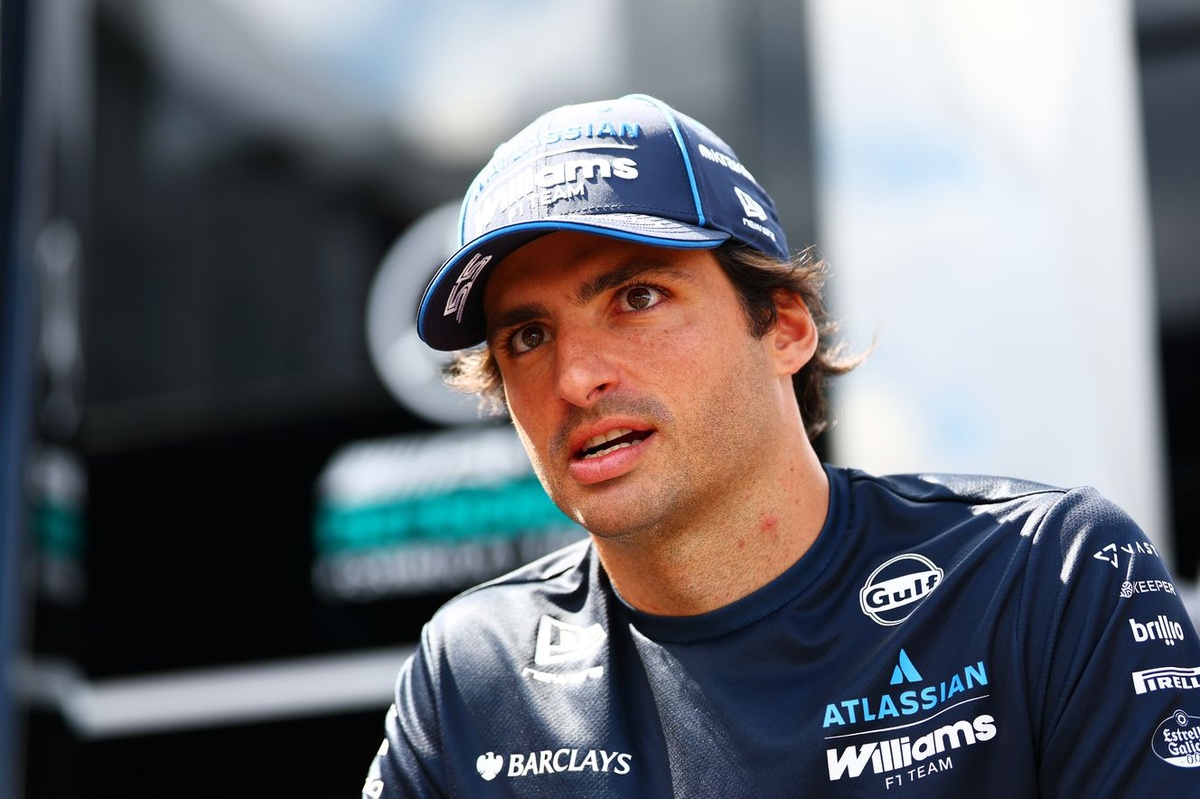
    Carlos Sainz says he never considered leaving Williams despite the team’s difficult start to the 2026 Formula 1 season. The Spaniard signed a new contract alongside team-mate Alexander Albon last week, committing his future to the Grove-based team.

    Williams, a nine-time constructors’ championship winner, has struggled so far this season. The FW48 has slipped down the competitive order and failed to score points in the last six races. The downturn had led team principal James Vowles to question whether he could retain his current driver line-up.

    Sainz dismisses Audi links

    Sainz held discussions with Williams and the future Audi team after losing his Ferrari seat ahead of the 2025 season, eventually choosing the Grove-based outfit. Two years later, reports linked him with a potential move to Audi for 2027, although there was no clear vacancy at the Hinwil-based team.

    However, Sainz told Motorsport.com that he had not seriously considered such a move.

    “No, it was just the usual paddock rumours,” he said in our exclusive interview. “I can confirm that this year I never seriously considered going anywhere else.”

    Nico Hulkenberg, Audi F1 Team, Carlos Sainz, Williams

    Unlike Albon, who has committed to Williams for 2027 only, Sainz signed a “multi-year contract”. The wording suggests the agreement runs at least until 2028, although such language is also commonly used for contracts containing options for subsequent seasons.

    Why Sainz stayed with Williams

    Asked whether the new agreement meant he was no longer available to Formula 1’s leading teams, Sainz gave an indirect response.

    “The usual process is that, before signing a contract, you always assess the overall situation,” he said. “But when we put everything on the table, another aspect emerged that is very important to me: I’ve never liked leaving a team when it’s going through a difficult period.

    “It’s not in my character to go somewhere else if the situation has become worse since I joined the team. When I committed to the Williams project, I knew there could be difficult moments and, even though the one we’re going through now is particularly tough, I’m ready to accept it.

    “Nobody in the team is happy with the current situation, and we’re all pushing to change it as quickly as possible. But, as I said, it’s not in my nature to abandon ship when things get tough.”

  • Williams Collapses in F1 Pecking Order: ‘Aston is a different league right now’

    Williams Collapses in F1 Pecking Order: ‘Aston is a different league right now’

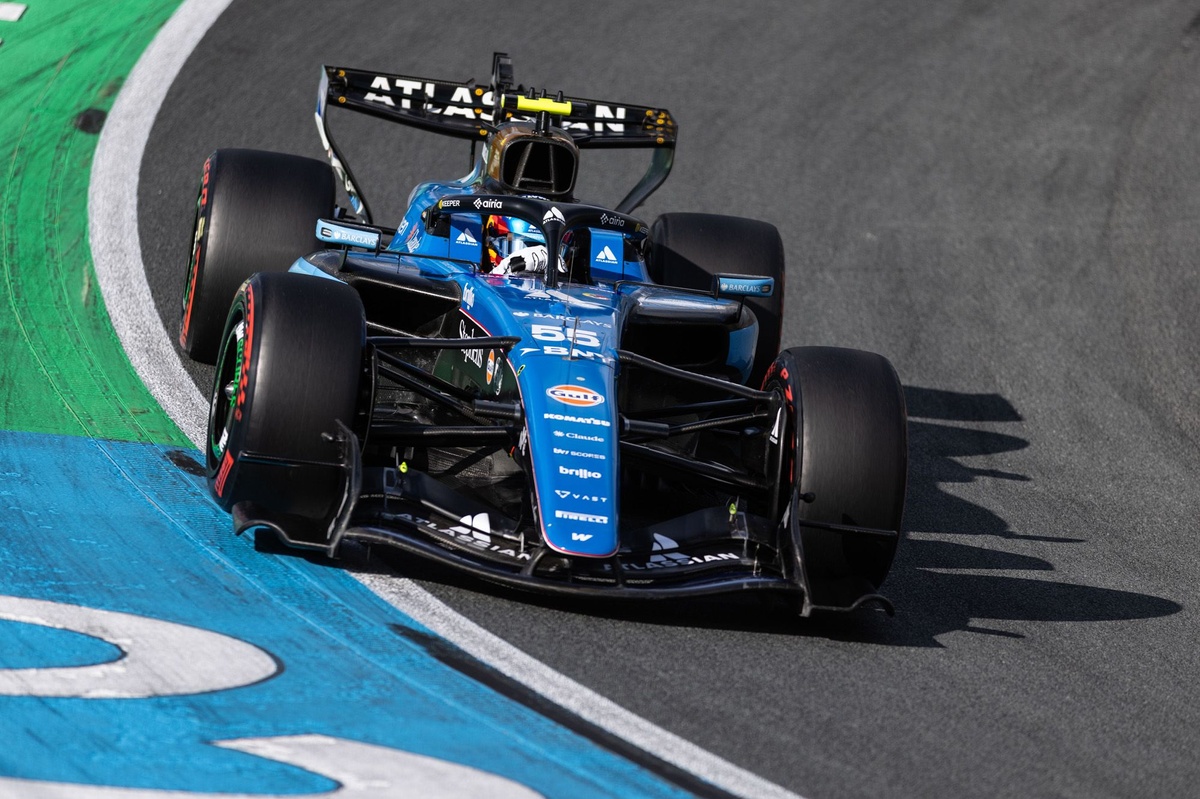
    Williams Formula 1 driver Carlos Sainz says the team is currently faster only than Cadillac, while team-mate Alexander Albon has criticised the excessive number of blue flags the team faced during the Dutch Grand Prix.

    Williams made a steady start to F1’s new era, scoring 11 points in the opening six rounds and sitting eighth in the constructors’ championship after the Monaco Grand Prix. However, Sainz finished only 12th at the following race in Barcelona, and neither Williams driver has since managed a result better than 15th. The team has also struggled to progress beyond Q1 in qualifying.

    At Zandvoort, Albon narrowly reached Q2 in both qualifying sessions, while both Aston Martin cars were eliminated early. Fernando Alonso then delivered an impressive one-stop strategy to finish ninth in Sunday’s race, as Albon and Sainz slipped towards the back of the field.

    “We are pretty much where we expected, which is towards the back,” Williams’ Spaniard lamented. “We are only quicker than Cadillac at the moment. You saw the Astons in race pace, they are a different league right now. So we couldn’t fight them. We couldn’t fight anyone, really.”

    “You can’t imagine in the middle of the race how many blue flags you get,” Albon added. “I literally mean that every other lap is a blue flag.

    “When we pit too early on that first stint, we come out behind a group of midfield cars that we were racing. They all boxed to miss all the blue flags. But because of us pitting early, we had no choice but to take the blue flags. It’s like you get dirtier every lap to cars that you’re not even trying to race, you’re in the marbles. The ones that did box in front of you to miss the blue flags, they’ve now got new tyres, and they’re catching up to three or four seconds a lap because of the blue flags. So, within five laps, the cars that just pitted in front of you are already behind you.”

    Williams struggles with blue-flag traffic

    Albon made those comments before reviewing the race and its data. He was primarily referring to Gabriel Bortoleto, who made his second of three pit stops on lap 34 while running directly behind the Anglo-Thai driver and approaching the point at which the leaders would lap him.

    The Audi driver caught Albon just eight laps later, leaving the Williams driver repeatedly dealing with blue flags and traffic from cars he was not directly racing.

    Neither Williams driver expects the team to challenge for points at the upcoming races in Monza and Baku, despite both circuits being considered potentially suitable for the Mercedes-powered FW48.

    “If you look at the last five races, this is where we’ve been for the last five races. It is where we are,” said Sainz, who scored a podium finish in Azerbaijan last year.

    “We’ve had a very tough weekend on my side with some consistency of the parts, which haven’t allowed me to set up the car correctly for the race. We have to learn from it. There will be some interesting data points to go through as a team with the struggles that I’ve had. We will be able to, for sure, conclude on them and probably help us to understand better in the future.”

    Asked specifically about Monza, Albon added: “It’s always a good track for us. Low [downforce], not much combined cornering, so that tends to suit our car. We’ve got the best power unit on the grid, so it should help us. But I’m not expecting points.”

    Williams sits ninth in the constructors’ standings with 11 points. Audi is ahead on 16 points, while Aston Martin is behind on three.