Tag: Alex Albon

  • Alex Albon and Carlos Sainz Reveal Plans for F1 Boys’ Trip

    Alex Albon and Carlos Sainz Reveal Plans for F1 Boys’ Trip

    Key Highlights

    • Alex Albon and Carlos Sainz say a small group of Formula 1 drivers plans to remain in Asia for a boys’ trip between the Bahrain and Singapore Grands Prix.
    • Williams introduced a major FW48 upgrade package at the Azerbaijan Grand Prix, with Sainz qualifying ninth and Albon 13th.
    • Sainz will start the Baku race from 14th after receiving a five-place grid penalty for failing to slow under yellow flags.

    Alex Albon and Carlos Sainz reveal F1 drivers’ Asia trip plans

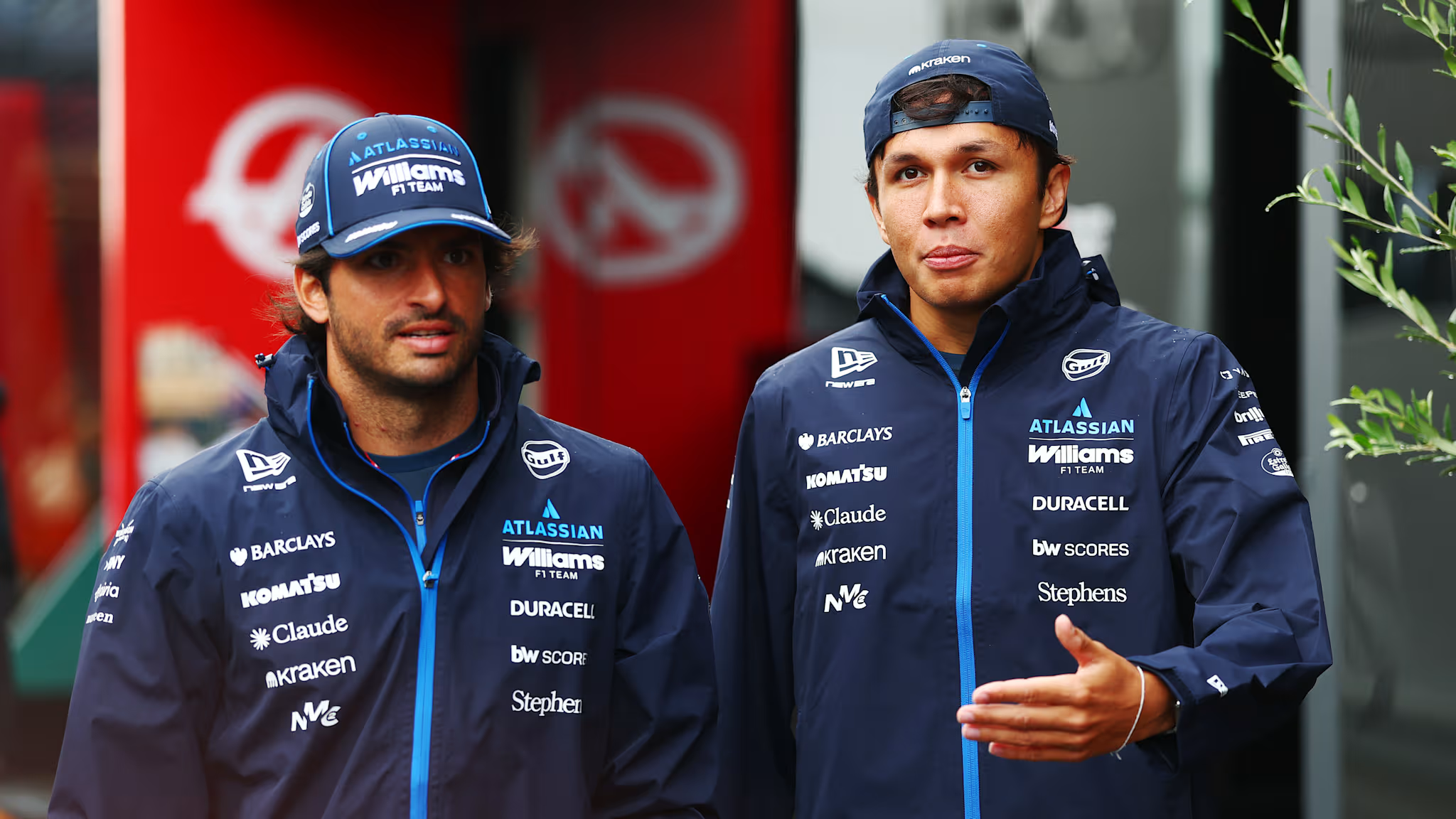
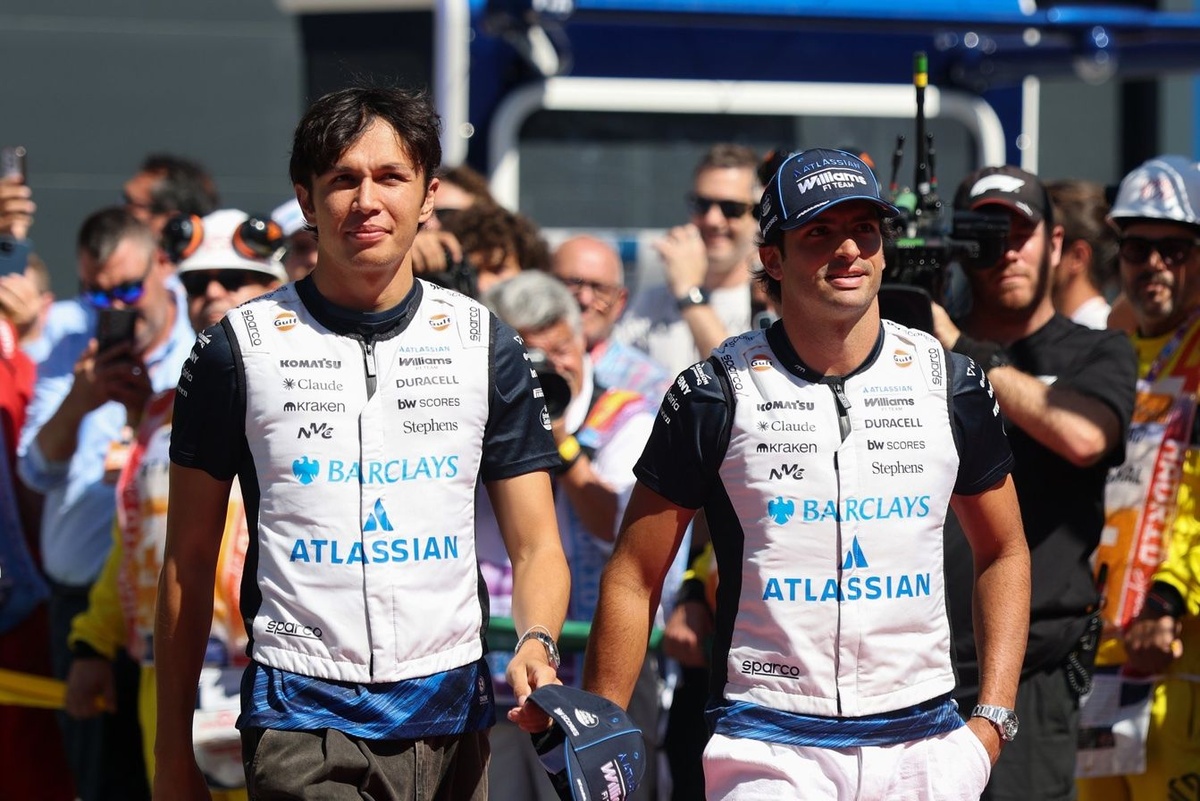
    Williams team-mates Alex Albon and Carlos Sainz have revealed that a small group of Formula 1 drivers will use the gap between the rescheduled Bahrain Grand Prix and the Singapore Grand Prix for a boys’ trip.

    The Bahrain Grand Prix will be held at the Sepang International Circuit in Malaysia because of the conflict in the Middle East. The revised schedule has given drivers the opportunity to remain in Asia between the two races instead of returning to their team bases.

    “We’re going to go on like a boys’ trip, I guess,” Albon said during an interview in the Fan Zone ahead of the Azerbaijan Grand Prix. “I think there are a few drivers where we’re going to hang out.”

    Sainz added: “Yeah, it’s going to be [a boys’ trip]. We just realised no one’s bringing their girlfriend. But it’s not like we’re going to do anything exciting. We’re going to be in a resort in the middle of nowhere.”

    Williams brings major FW48 upgrade to Baku

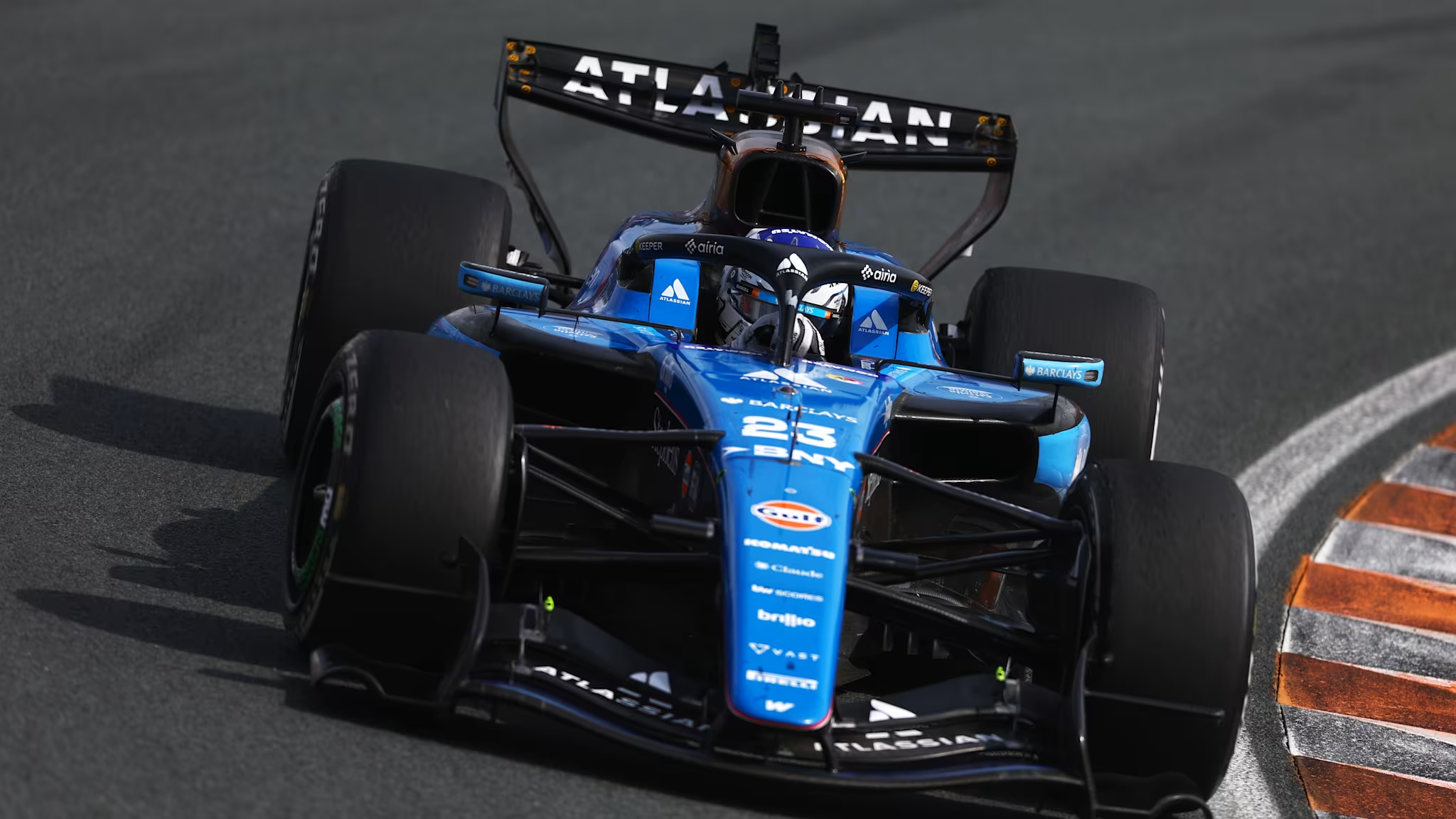
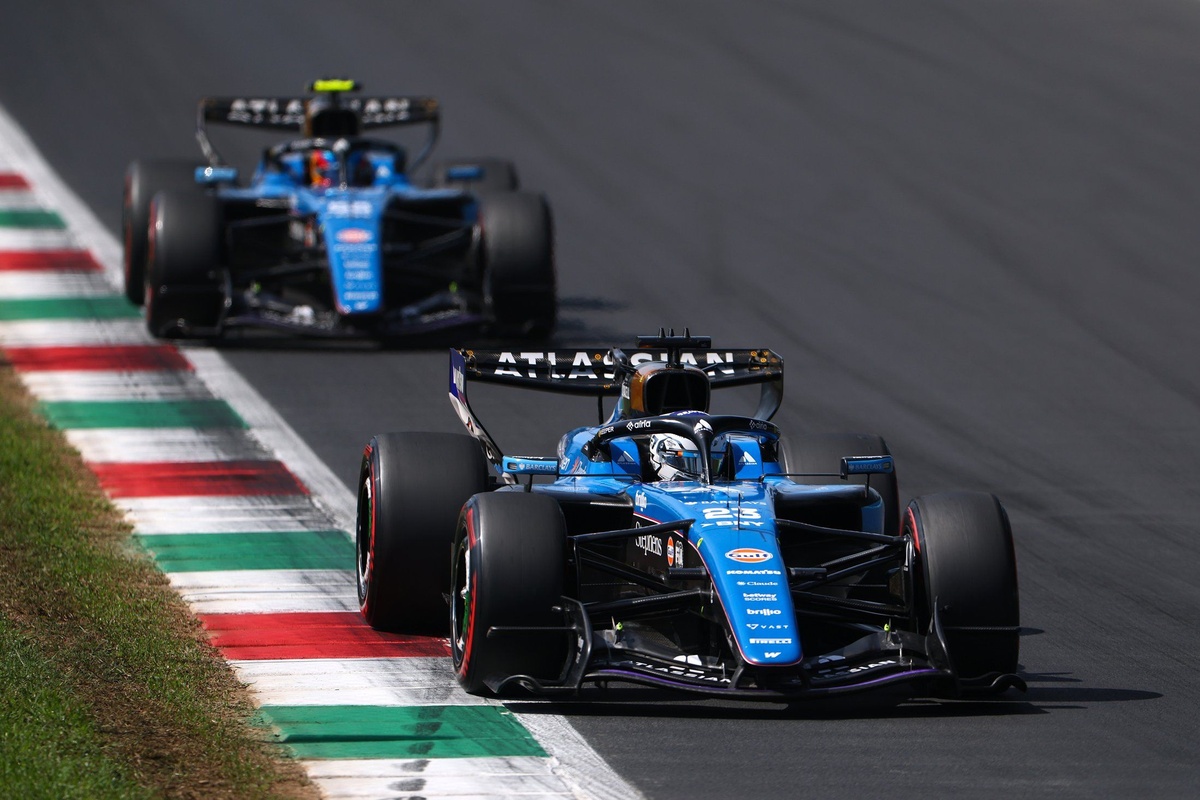
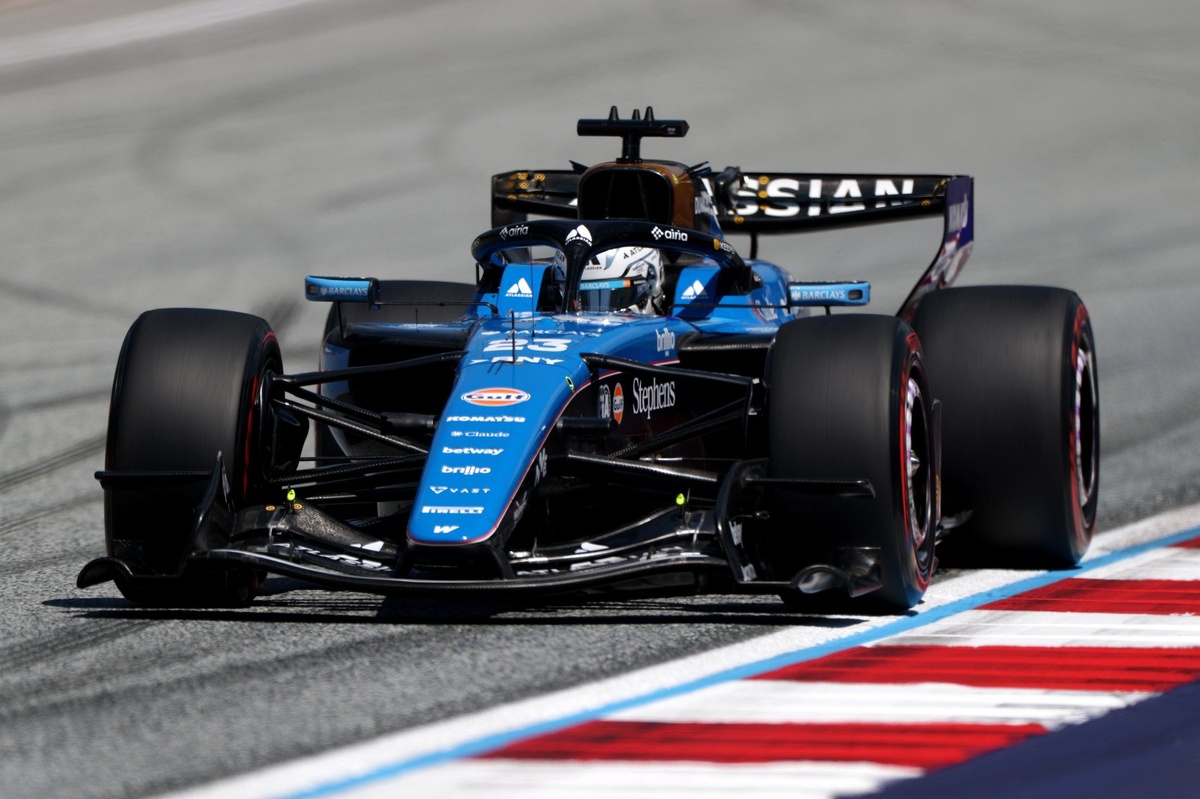
    The drivers’ travel plans come during an important weekend for Williams, which has introduced a major upgrade package for its FW48 at the Azerbaijan Grand Prix. After arriving at pre-season testing in Bahrain with an overweight car, the Grove-based team has worked on a B-specification car for Baku.

    The upgraded Williams machinery helped Sainz qualify ninth and Albon qualify 13th for the Azerbaijan Grand Prix. However, Sainz will begin the race from 14th after being handed a five-place grid penalty for failing to slow under yellow-flag conditions.

    The Spaniard also received two penalty points, taking his total to four points during the 12-month period. Sainz and Albon currently occupy 16th and 17th in the drivers’ championship, with six and five points respectively.

    Why This Matters

    The revised Formula 1 calendar has created an extended period in Asia between the Bahrain and Singapore races, allowing drivers to avoid returning to their bases between events. For Williams, the Azerbaijan Grand Prix is also an early test of whether its FW48 upgrade can improve the team’s performance after concerns over the car’s weight during pre-season testing.

    The Azerbaijan Grand Prix will take place at the Baku City Circuit at 3pm local time, which is noon UK time. Sainz’s grid penalty means Williams’ qualifying results will not translate directly into its starting positions for the race.

    Frequently Asked Questions

    Which Formula 1 drivers are planning the trip?

    Williams drivers Alex Albon and Carlos Sainz said that a small group of drivers will spend time together in Asia between the Bahrain and Singapore Grands Prix. They did not identify the other drivers involved.

    Why is the Bahrain Grand Prix being held in Malaysia?

    The Bahrain Grand Prix has been rescheduled to the Sepang International Circuit because of the conflict in the Middle East.

    Where will Carlos Sainz and Alex Albon start in Baku?

    Sainz qualified ninth but will start 14th after a five-place grid penalty. Albon qualified 13th and is set to start from that position.

  • Williams Accepts 2026 F1 Development Compromise, Shifts Focus to 2027

    Williams Accepts 2026 F1 Development Compromise, Shifts Focus to 2027

    Key Highlights

    • Williams Racing has accepted a developmental compromise for the remainder of the 2026 Formula 1 season, having redirected the majority of its engineering resources toward the 2027 campaign.
    • Team principal James Vowles confirmed two new chassis and aerodynamic upgrades will debut at the Azerbaijan Grand Prix to address car mass limits, but warned the updates will not be sufficient to consistently score points given the pace of rival development.
    • A difficult Spanish Grand Prix at the new Madring circuit—where Alex Albon finished 15th and Carlos Sainz retired with floor damage—exposed the extent of Williams’ current performance deficit relative to the midfield.

    Vowles Acknowledges Difficult Spanish Grand Prix Reality

    Williams team principal James Vowles offered a candid assessment of the squad’s trajectory during his post-race “Vowles Verdict” debrief following a challenging Spanish Grand Prix at the brand-new Madring circuit. The weekend underscored the Grove outfit’s current struggles: Alex Albon and Carlos Sainz qualified 16th and 17th respectively, before Sainz incurred a three-place grid penalty for impeding, dropping him to 20th on the grid. Albon managed only 15th at the finish, while Sainz retired after 43 laps due to floor damage.

    “For us, a difficult grand prix. We knew it was going to be difficult going into it,” Vowles explained. “It’s just exaggerating the issues we have at the moment, and we haven’t added performance to the car for far too long and have fallen back relative to teams around us.”

    Baku Upgrades Offer Limited Relief

    Looking ahead to the Azerbaijan Grand Prix, Vowles outlined a technical plan aimed at extracting immediate gains. “We have Baku coming up next, and it’s a race we’ve been looking forward to for a while. We’re going to be bringing two new chassis to that event in a bid to get our car mass below the limit. So that should be a strong step up in performance for us. And in addition to that, we’ll have some aerodynamic upgrades that go with it.”

    However, the team principal tempered expectations regarding the impact of those updates. “There is a however. The field has moved on so significantly and these upgrades, whilst powerful, simply won’t be what we are looking for in order to consistently score points.”

    Strategic Pivot Toward 2027 Season

    The fundamental constraint, Vowles revealed, is a resource allocation decision made months ago. “We’ve invested a lot already into next year and beyond, and the resultant behind this is that we accept the compromise to this year, and it stems from what happened over the winter, and we weren’t able to recuperate to the level we wanted. So, a positive step forward but really we need more, and it will come into next year.”

    This strategic pivot means Williams has effectively conceded the remainder of the 2026 championship, accepting a period of limited competitiveness to accelerate development for the 2027 regulation cycle.

    Why This Matters

    Williams’ situation illustrates the brutal resource allocation dilemma facing midfield teams under Formula 1’s cost cap and aerodynamic testing restrictions. With development bandwidth finite, teams must choose between fighting for points in the current season or investing early in the next regulatory cycle—a decision that can define competitiveness for years. For Williams, a historic constructor seeking to return to the front, the 2027 regulation changes represent a potential inflection point. The team’s willingness to endure a barren second half of 2026 signals high internal confidence in their 2027 concept, but also carries reputational and commercial risk if the projected gains fail to materialize. The Baku upgrades will serve as a litmus test for whether the new chassis can at least stabilize the car’s platform before the long pivot to next year.

    Frequently Asked Questions

    Why is Williams bringing two new chassis to the Azerbaijan Grand Prix?
    Williams is introducing two new chassis in Baku to reduce the car’s mass below the regulatory minimum weight limit, which Vowles described as a “strong step up in performance” for the team.
    Will the Baku upgrades make Williams competitive enough to score points regularly?
    No. Vowles explicitly stated that while the upgrades are “powerful,” the development rate of rival teams means they “simply won’t be what we are looking for in order to consistently score points.”
    What caused Williams to accept a compromise for the rest of the 2026 season?
    The team shifted the majority of its engineering resources to the 2027 project during the winter, and Vowles acknowledged they “weren’t able to recuperate to the level we wanted” for the current campaign, forcing a strategic acceptance of reduced competitiveness in 2026.
  • Williams’ FW48 Upgrade Package in Baku Crucial for Formula 1 Team’s Progress

    Williams’ FW48 Upgrade Package in Baku Crucial for Formula 1 Team’s Progress

    Key Highlights

    • Williams introduces its long-awaited major FW48 upgrade package at the Azerbaijan Grand Prix after a difficult 2026 season marked by weight issues and missed development milestones.
    • Drivers Carlos Sainz and Alex Albon caution that the upgrade may not close the gap to the midfield, as rival teams have accelerated their development pace beyond initial projections.
    • Team Principal James Vowles frames the Baku package as a critical validation of improved processes and simulation tools ahead of the 2027 FW50 project, while acknowledging no guarantees against future missteps.

    Williams Pins Hopes on Baku Upgrade After Difficult 2026 Campaign

    The Azerbaijan Grand Prix represents a pivotal weekend for Williams Racing as the team finally debuts the major upgrade package for its FW48 challenger. The 2026 season has proven painful for drivers Carlos Sainz and Alex Albon, particularly given the promise shown during the previous campaign. Delays forced the squad to miss the Barcelona Shakedown, and when the car eventually hit the track it was significantly overweight and suffered from inherent aerodynamic issues. Like Aston Martin, Williams elected to concentrate resources on a substantial mid-season package, though smaller updates such as a revised front wing for Silverstone and an ongoing weight-reduction programme have been introduced in the interim.

    Midfield Development Race Outpaces Williams’ Progress

    The results underscore the scale of the challenge. Early in the year the drivers secured five points finishes, with Albon’s eighth place in the high-attrition Monaco Grand Prix the high watermark. Since then, however, the team has failed to score a single point, regularly finishing in the P15–P17 range. Improved reliability across the field has played a part, but the primary factor is that rivals have developed at a faster rate while Williams has largely stood still. Albon articulated the shifting landscape after a difficult race in Madrid: I think what’s been interesting this year is most of the midfield teams, they always bring one or two upgrades a year. That’s kind of how it’s gone. This year, even the midfield teams are bringing three or four upgrades a year, and the size of upgrades are huge as well. So if you think of us in a normal year, Baku would have put us back in contention. But we have to be honest with ourselves, the speed of the development race this year is huge – and yeah, we’ve fallen back.

    When the Baku package was signed off months ago, the projected gains looked promising. Yet as midfield competitors have improved, the goalposts have moved. The FW48 will be faster, but the relative gain may not produce the dramatic grid surge originally envisioned. Albon added a sobering assessment of the current deficit: We’re finishing realistically 50 seconds behind the midfield at the minute in a race. So we’re losing a second a lap, more or less, in the race, and this has to be a pretty big upgrade to do it. Let’s see. We know it’s going to be a good step. Is it going to be the full step? I’m hopeful for it, but I don’t think it will be. Unfortunately, we said it last year, but the focus is on next year as well. And we realise we’re too far back at the moment to have a couple of upgrades for this year. We need to focus on next year.

    Sainz and Albon Manage Expectations for Immediate Gains

    Sainz, who qualified second and finished third in Azerbaijan last year — a reminder of Williams’ competitiveness at certain venues — strikes a similarly cautious tone. At his home race he stated: I think that upgrade is going to definitely help us to get ourselves closer to potentially fighting for some points. But realistically speaking, that’s nowhere near where we wanted to be this year, nowhere near what we promised. So, it’s still not enough, and it’s still not where we want to be. It’s an upgrade that will help a bit the motivation of the team and just to look into the weekend with something to look forward to, maybe to potentially get a point or two when we were like we were at the beginning of the year. But it’s nowhere near where we want to be, and I think our biggest hope is putting all the eggs in next year’s basket.

    Sainz’s point about motivation is salient. Even if the Baku package does not propel the team into Q3 contention, delivering the performance gains calculated months ago would demonstrate that the development processes are functioning correctly — a crucial confidence builder for the design team working on the 2027 FW50.

    Vowles Highlights Process Improvements and Simulation Gaps

    The weekend is equally critical for Team Principal James Vowles, the architect of Williams’ long-term revival who recently secured contract extensions from both Sainz and Albon. Vowles has pointed to changes in methodology, the recruitment of key personnel such as Chief Optimisation and Planning Officer Piers Thynne, and upgraded simulation infrastructure as reasons to believe the team will avoid repeating the mistakes that hampered the 2026 car’s genesis. Speaking at Zandvoort, he explained: You’re making a thousand decisions in the winter. You don’t need many of them to be wrong before you start putting yourself into the wrong path. And that’ll be the difference between a few tenths, but a few tenths these days is the between winning a championship or not. You go to the level of what are the big building blocks you’re putting in place? Which is a combination of people, which is different to what we had before. A combination of strength in the team that was different to what we had before. And for us, we had a lack last year at the beginning of ’25 of simulation technology. That actually only came online in November last year. The car was already pretty much done by that point in time. So what we were doing was using educated guessing, and we got some of it wrong. If you look at our rear ride height, we developed at the wrong rear ride height, as did Aston, for that matter, and corrected it. That doesn’t seem like a huge amount. But you’re aerodynamically developing in completely the wrong space, and it’s not driven by anything more than simulation telling you that’s a good direction for whatever characteristic you’re after, and it goes wrong. That error can still be made across any winter, because you’re in a theoretical space against a maximal space.

    Baku Package as Validation for 2027 FW50 Direction

    If the Baku upgrade performs as predicted, it will signal that Williams’ revised workflows and toolsets are yielding results. However, Vowles offers no guarantees that the 2027 development cycle will be flawless: Not for a second am I going to promise anyone, because there’s no championship team that would. What you’re more trying to do is show that there’s enough depth that didn’t exist previously in the ways of working systems, tools, processes, and people that allow you to catch as many of those as possible.

    Why This Matters

    The Azerbaijan Grand Prix serves as a litmus test for Williams’ technical reorganization under James Vowles. The team’s struggles in 2026 — overweight car, delayed upgrades, simulation shortfalls — mirror challenges faced by several midfield outfits, but the accelerated development pace across the grid has exposed those deficiencies more ruthlessly. The ability to deliver a correlated upgrade that matches wind-tunnel and CFD predictions is fundamental to the credibility of the FW50 project, which aims to return Williams to championship contention. Furthermore, the public expectation management by both Sainz and Albon reflects a mature driver–team alignment, essential for maintaining morale during a transition year. The recruitment of figures like Piers Thynne and the belated arrival of advanced simulation tools highlight the infrastructure gap Williams is racing to close before the 2027 regulation cycle.

    Frequently Asked Questions

    What specific upgrades is Williams bringing to the Azerbaijan Grand Prix?

    The article refers to a “major upgrade package” for the FW48, described as the long-awaited mid-season development that the team focused on after missing the Barcelona Shakedown. Earlier smaller updates included a revised front wing at Silverstone and an ongoing weight-reduction programme.

    Why are Sainz and Albon downplaying the immediate impact of the Baku upgrade?

    Both drivers note that rival midfield teams have introduced three or four substantial upgrades this year — more than the typical one or two — moving the performance target significantly since the Baku package was defined. Albon estimates Williams is currently losing roughly one second per race lap to the midfield, so even a “good step” may not be enough to reach the points-paying positions consistently.

    How does this weekend affect Williams’ 2027 FW50 programme?

    A successful correlation of the Baku upgrade would validate the new processes, simulation tools, and personnel (including Chief Optimisation and Planning Officer Piers Thynne) that Team Principal James Vowles has put in place. This validation is critical for confidence in the FW50 development, though Vowles stresses that no team can guarantee a mistake-free winter.
  • Williams Tipped for ‘Huge Step’ Forward at Azerbaijan GP With Major Upgrade

    Williams Tipped for ‘Huge Step’ Forward at Azerbaijan GP With Major Upgrade

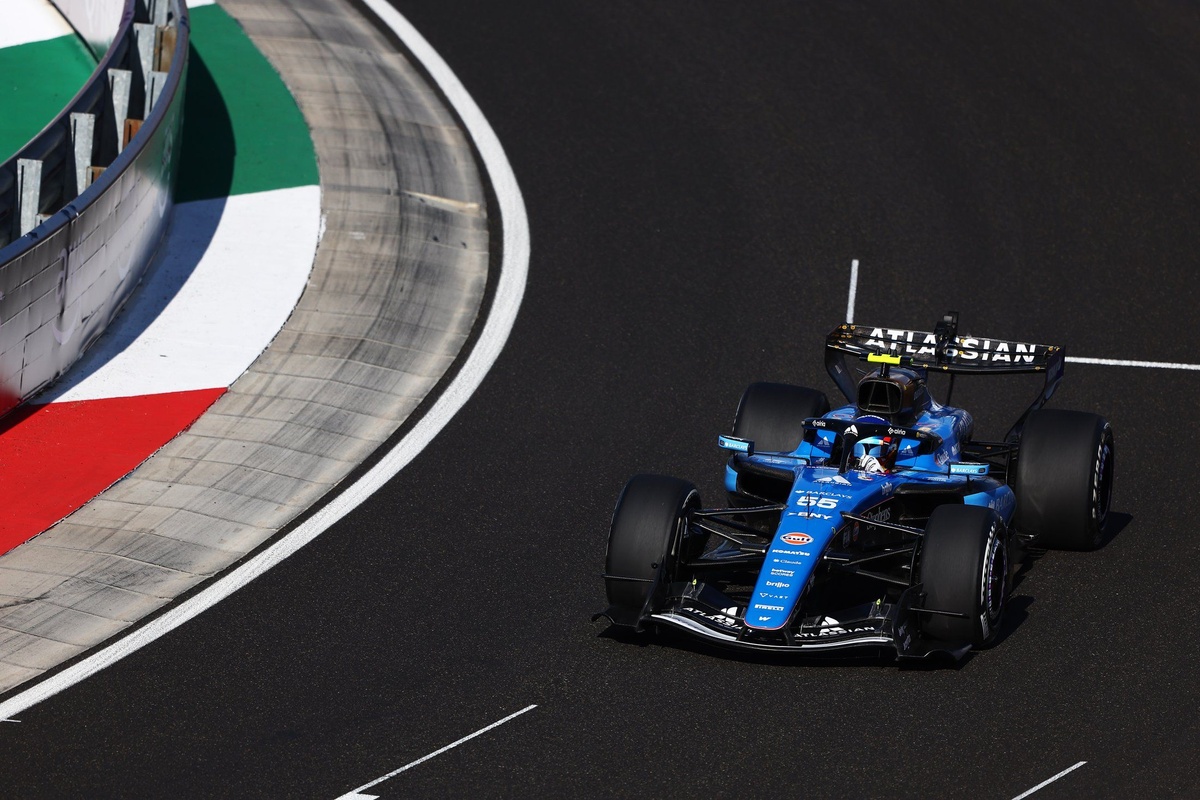
    Former Formula 1 driver Juan Pablo Montoya believes Williams is poised for a significant performance leap at the upcoming Azerbaijan Grand Prix, as the Grove-based team prepares to debut a major upgrade package.

    Difficult Spanish Grand Prix Highlights Williams Struggles

    The prediction comes on the back of another challenging weekend for Williams at the inaugural Spanish Grand Prix held at the Madrid circuit. Carlos Sainz saw his home race end in retirement, while teammate Alex Albon could only manage a 15th-place finish. The result compounds a difficult 2025 campaign that sees Williams sitting ninth in the Constructors’ Championship with 11 points, ahead of only Aston Martin and Cadillac.

    Montoya Anticipates “Huge Step” in Baku

    Speaking on F1 TV’s post-race broadcast, Montoya expressed high expectations for the team’s next outing.

    “I want to see what Williams brings,” Montoya said of the Azerbaijan Grand Prix on F1 TV’s post-race broadcast. “I want to see how much of a step Williams really brings. They even told Carlos today, ‘Sorry for all this pain. Next year, we want to make you proud.’

    “Their first big step in the right direction is the next race. So, we’ll see how much of a step in the right direction it is. I think it’s going to be a huge step, and they deserve it. It’s been a rough year for them.”

    Vowles Confirms “B-Spec” Chassis Upgrade

    Team principal James Vowles previously characterized the impending Baku package as a fundamental overhaul of the current machinery.

    “The best way to describe it to you is it’s a B-spec car,” he said in July. “It’s a new chassis, and other bits that go with it at the same time. That will be a large upgrade, that’s true.”

    Vowles emphasized that the upgrade serves a dual purpose: delivering on-track performance and validating the team’s internal engineering and production capabilities.

    “In terms of our direction of travel, we have to – as a business – prove to ourselves that we can do the engineering to the right level of quality, and build a car to the right level of quality in-season – effectively the equivalency of flying the plane and rebuilding it at the same time.

    “We have to prove to ourselves that we have changed from where we were three years ago, and have that capability. And we’re on target to do it at the moment.”

    Azerbaijan Grand Prix as a Defining Moment

    With the “B-spec” car set to debut on the streets of Baku, the Azerbaijan Grand Prix represents a critical milestone for Williams Racing. The event will offer the first tangible evidence of whether the squad’s restructuring under Vowles can translate into competitive performance and close the gap to the midfield.

  • James Vowles Admits He Feared Losing Both Carlos Sainz and Alex Albon Amid Williams’ Struggles

    James Vowles Admits He Feared Losing Both Carlos Sainz and Alex Albon Amid Williams’ Struggles

    Williams team principal James Vowles has admitted he was concerned the team could lose both Carlos Sainz and Alex Albon during its difficult 2026 Formula 1 campaign.

    However, confirmation that both drivers will remain with Williams next season has given the Grove-based team a major boost, with Vowles saying a “weight lifted” off the factory.

    Williams feared losing Sainz and Albon

    Williams climbed from ninth to fifth in the 2025 constructors’ championship, with Sainz securing two podium finishes. The team has struggled to match that progress in 2026 and currently sits ninth after scoring just 11 points.

    Despite the downturn in form, Sainz and Albon were recently confirmed as Williams drivers for next season. Speaking to the media during the Dutch Grand Prix weekend, shortly after the announcements, Vowles was asked whether he had feared losing the pair.

    “[I was] concerned about losing both, because they are World Championship-material drivers that deserve the opportunity to be fighting for podiums or more, and we haven’t delivered that,” he explained.

    “And more than that, we had a scope of where we were moving to. I think that there’s no doubt if you sort of look to the outside – I hope there’s no doubt – over the last few years, we’ve been slowly stepping forward with last year being a blip. I think [it was] too positive from where we were, but a step in the right direction.

    “So for us to move backwards isn’t just a surprise to the drivers, it’s a surprise to everyone else, and that will always create risk that you lose them. What I’m thankful for is, the moment we had problems, they stood by our side.

    “There wasn’t finger pointing, it was actually, ‘tell me what I can do’, and they both came into the factory, spoke to the whole organisation and gave them a lift. Carlos did the same and Alex did the same this week once they re-signed.

    “They wanted to make sure that they were here with the team. They want this to be a part of them, that is here on a turnaround of this organisation, and I’m thankful for that. But it’s also an indication of what we’ve shown them in the back end of what’s happened and what we’re doing about it.”

    Why Williams’ driver stability matters

    Vowles said keeping Sainz and Albon was “incredibly important” because their decisions send a positive message about Williams’ long-term prospects and provide continuity as the team develops.

    “[Reason number] one, it shows the outside world – I can’t tell you everything that’s going on behind the scenes, but I can tell them, and if they are re-signing it will give you an indication that there’s a lot of change ongoing and they believe in what the future looks like.

    “And that belief is incredibly important, whether it’s for team members or for anyone in the outside world.

    “Number two, that consistency is important because the team is really maturing and changing and, as much as you can keep consistent, especially in a driver line-up, it becomes desperately important in order to keep building on that.

    “Probably the best way to summarise it to you is [that in] the factory, there’s a weight lifted off it this week as the result of it and I’ve seen them move forward at a much faster pace as a result, so the belief is real and tangible.”

    Why Williams announced the deals separately

    Albon’s new contract was announced first, with Sainz’s confirmation following a day later. Vowles said the separate announcements reflected the different circumstances surrounding each driver and also allowed the team to mark the occasions individually.

    “For me, and for the drivers, it was important to state that they are different stories and different timings,” the Team Principal said.

    “Also, it helped me because Alex was in the simulator on Tuesday and Carlos on Wednesday. I was able to show them to the team and I didn’t have them both on the same day at the same time!

    “But for me, they’re different journeys. Alex has been here since 2022. He has dedicated so much of his life to this project and he wants it to be successful, and I think that’s one message in its own right.

    “With Carlos, what he needed was to be demonstrated what’s happening behind the scenes and he wanted to then commit into the long term, and it’s a very different set of arrangements that we have between the two of them. I think the messaging is no different though.

    “We all have unfinished business. Our goal is to have Alex and Carlos by our side for many years to come. We have to do work on our side in order to make sure we are stepping up, irrespective of our drivers. The drivers are not the limitation to us at the moment. We are.

    “We have to fix that, and quickly, for us more than anything else. But the announcements of the drivers will show you that there’s belief in the project for the long term, and that individuals, even the ones that have been here since ‘22, can see the change and want to be a part of it.”

  • Williams Criticized for ‘overpromising and underdelivering’ Amid 2026 F1 Struggles

    Williams Criticized for ‘overpromising and underdelivering’ Amid 2026 F1 Struggles

    Formula 1 broadcaster Will Buxton has criticised Williams for “overpromising and underdelivering” during the 2026 season, while admitting he remains surprised that Carlos Sainz chose the Grove-based team over Audi.

    Williams struggles after ambitious 2025 claims

    Williams made bold statements throughout 2025, but its campaign has fallen well short of expectations. The team arrived at pre-season testing in Bahrain on the back foot after missing private testing in Barcelona, and it has since battled significant problems with an overweight car.

    After 12 rounds, Williams sits ninth in the constructors’ championship with 11 points. Sainz and Alex Albon are 16th and 17th in the drivers’ standings, with six and five points respectively.

    The team’s difficult season was compounded at the Dutch Grand Prix in Zandvoort, where the two Williams drivers collided. Albon was forced to retire, while Sainz received a 10-second penalty.

    Buxton compares Williams with Audi

    Speaking on the Up To Speed podcast, Buxton compared Williams with Audi, which joined the Formula 1 grid as a works team in 2026 after taking over Sauber.

    Sainz had held talks with Audi after losing his Ferrari seat to Lewis Hamilton, but ultimately chose Williams for the 2025 season.

    “There’s an interesting difference in mindset and philosophy between Williams and Audi. When you look at the two places that Carlos could have ended up, you might have expected Audi to turn up with great fanfare, and yet I feel that they’ve been quite understated and have kind of underpromised and overdelivered,” Buxton explained.

    “Whereas Williams keep making the big statements of, ‘We’re going to take these steps up; we want to be fighting for X, Y and Z, and this is going to be a great year for us,’ and then it disappoints. So they overpromise and underdeliver. 

    “I did find it interesting back when Carlos signed for Williams, and he had that option of going to Audi. I found it really interesting that you would turn down a factory seat over the dream that is Williams, and obviously James Vowles sold him a brilliant dream.”

    Source: www.motorsport.com

  • Bernie Collins Issues Stark Warning to Williams After Alex Albon and Carlos Sainz’s Dutch GP Crash

    Bernie Collins Issues Stark Warning to Williams After Alex Albon and Carlos Sainz’s Dutch GP Crash

    Williams cannot afford the financial and development consequences of the collision between Carlos Sainz and Alex Albon at the Dutch Grand Prix, according to Sky Sports Formula 1 analyst Bernie Collins.

    Speaking on the Sky Sports F1 Show, Collins highlighted the serious impact of the intra-team crash on the Grove-based team, which is already dealing with an overweight car, delayed upgrades and budget-cap constraints.

    Williams entered the Zandvoort weekend after announcing contract extensions for both drivers. However, its race quickly unravelled when Sainz and Albon made contact. Albon retired from the race, while Sainz received a 10-second penalty and eventually finished 16th.

    “The first rule within a team is do not hit your team-mate,” Collins said. “That is like the P1 rule. Particularly [for] a team who are struggling to bring upgrades, struggling for money. Their car is overweight and underperforming.

    “We hear Mercedes saying they don’t have enough money to bring upgrades. You just can’t lose the parts, the performance, the knowledge. So I think that’s something that they’re going to have a big discussion about.

    “Whether it comes out of their pay packet or not doesn’t matter because it’s already out of the budget. You can’t put it back into the budget and say, ‘Oh, the drivers have subbed this bit of the budget.’ It doesn’t work like that. So that was a difficult weekend for them.

    “And whether they did or didn’t do the right strategy, it was only [Fernando] Alonso who did the other strategy. So, they had very similar strategies to those around them. But the performance was lacking, and it just seems the car wasn’t the right weight, and it wasn’t delivered on time, and it didn’t have the right performance. So, there’s lots going on in the background of Williams there.”

  • James Vowles Reveals Williams’ “huge number of projects” to Fix 2026 Problems

    James Vowles Reveals Williams’ “huge number of projects” to Fix 2026 Problems

    Williams team principal James Vowles says the Grove-based Formula 1 team is managing a “huge number of projects” to correct development mistakes made during the winter that continue to affect its 2026 campaign.

    Williams targeting long-term performance fixes

    Speaking in his post-race The Vowles Verdict debrief after a difficult Dutch Grand Prix, Vowles said Williams is restructuring behind the scenes to identify and address the reasons for its current lack of performance.

    “As you saw, we announced both driver contracts last week, and it’s hard to put into words what it means to the organisation when that happens,” he said. “But it’s a monumental change. We have made mistakes this winter, which we’re still paying for today, and the drivers are paying for on the car that we’ve delivered on track.

    “What was great is when we started to show the future that’s beyond here, one that’s more around the long term, their commitment came to the forefront. And that’s really important to me. It’s important to the team. It’s important to everyone because ultimately we’re here and we know we have a pathway to go, but we’re here fighting as a team.”

    Williams ended speculation over its driver line-up before the Dutch Grand Prix, with Alex Albon and Carlos Sainz both signing contract extensions. Albon agreed to a one-year extension that will keep him at Williams until the end of 2027, while Sainz signed a multi-year deal.

    Although some updated car components are scheduled to arrive later in the season, Vowles said the Williams factory is prioritising fixes designed to improve the team’s long-term competitiveness.

    “We have huge numbers of projects, though, in the background to make sure that we’re just digging out what went wrong this winter and fixing for the long term,” Vowles added. “And that’s our commitment today as it will be in six months’ time.”

    Williams currently sits ninth in the Formula 1 constructors’ championship with 11 points.

  • James Vowles Addresses Alex Albon–Carlos Sainz Collision at Dutch GP

    James Vowles Addresses Alex Albon–Carlos Sainz Collision at Dutch GP

    Williams team principal James Vowles says the team must accept part of the blame for the late-race collision between Alex Albon and Carlos Sainz at the Dutch Grand Prix.

    During a chaotic race at Zandvoort, won by McLaren’s Lando Norris, the two Williams drivers collided while fighting outside the points-paying positions.

    Williams accepts responsibility for Albon and Sainz crash

    Speaking in the team’s post-race video debrief, The Vowles Verdict, the Williams boss addressed the incident.

    “As you saw, Alex and Carlos came together on track,” Vowles explained. “There’s a lot of questions around whose fault it is, whose isn’t it? I’ll start with this. I think with our two drivers, both have a responsibility to not hit each other.

    “It’s hard to do it as a majority to one or the other, but both have a culpability in that. This particular circumstance, actually, I think we as a team have a culpability.”

    According to Vowles, the team’s decision to leave Sainz on worn tyres during the virtual safety car period contributed to the situation.

    “We tried leaving Carlos out at that VSC. The reason why was because had we stopped, he would have been behind Alex and Franco anyway. So you’re back net to where you would have been before, without the pace to be able to overtake them.

    “But that said, this also put our cars into a situation where they were fighting tooth and nail for no points on track. That’s not a situation we should be putting them in either.”

    Albon retired from the race after the collision, while Sainz continued to finish 16th.

    Sainz received a 10-second penalty for the incident, which he described as “fair” after the race.

    “Fair penalty. I had a bit of a surprise when I went to defend,” the Spaniard explained. “I had really worn hard tyres, struggling a lot with the car, with the pace of the race. “And when I went to brake on the inside, there was a massive bump on the inside of Turn 1. When you are further in the inside, the bigger it gets. I just hit with the plank. “I had the front tyres in the air. And as soon as I touched the brake, I locked up and I took Alex with me, which is the worst possible outcome for that race, because it’s not like we were fighting for anything big. But honestly, it caught me so much by surprise. Apologies to him, because it’s the last thing I wanted.”

  • Alex Albon Explains Why Williams Cannot Afford Team-Mate Secrets in F1

    Alex Albon Explains Why Williams Cannot Afford Team-Mate Secrets in F1

    Alex Albon has explained why he and Williams teammate Carlos Sainz share setup information rather than keeping performance gains secret on their respective sides of the garage.

    Williams has endured a difficult 2026 Formula 1 season. The Grove-based team is ninth in the constructors’ championship with 11 points, while Sainz and Albon sit 16th and 17th in the drivers’ standings with six and five points respectively.

    Although teammates naturally compete against each other, Albon believes the current limitations of the Williams car make collaboration essential. Speaking on The Fast And The Curious podcast after the Dutch Grand Prix, he explained that drivers at other teams may withhold useful information to gain an advantage, but said that approach would not benefit Williams.

    “What happens in some teams, and I know this, is that you will find something on your car, but it won’t be something the other car can’t find,” Albon explained. “It could be a line into a corner, it could be a gear choice, it could be a set-up direction, it could be the way that we implement the electronic system into the car.

    You could find something good, but you just won’t mention it. You can keep it quiet to your side of the garage.

    Carlos Sainz and Alex Albon in Williams Formula 1 cars
    Carlos Sainz and Alexander Albon, Williams. Photo by: Bryn Lennon / Formula 1 / Getty Images

    “Realistically, for us, at least I don’t do it, so maybe Carlos does it, I don’t know,” he laughed. “But because of the limitations of our car, we kind of work together on it.

    “It’s almost like we both have the same feedback with the same problems, and then we can split the cars,” he said. “One car might go, ‘Yes, this is working,’ so the other car joins onto that. Sometimes it’s like, ‘Oh, this works, and this works, so we’ll take a bit of both.’ You kind of chop and change sometimes.

    “Oh, this is the wrong way, so now the other car’s gone the other way, so now it’s that way. But there is a balance.

    “I remember that happened a lot more when you have two rookie drivers and you’re kind of fighting for the same [position]. You can imagine it becomes a little bit more [elbows out],” Albon added.