Tag: AI agents

  • Sui Network Launches AI Builder Lab to Empower Users

    Sui Network Launches AI Builder Lab to Empower Users

    Key Highlights

    • Sui Network launches AI Builder Lab with 15 hands-on sessions scheduled for October 7–8, open to participants without coding experience.
    • The initiative reflects Sui’s strategy to expand ecosystem engagement and lower barriers to AI agent development on its blockchain.
    • Industry observers note the program could drive broader user adoption and signal growing institutional interest in user-driven blockchain innovation.

    Sui Network Opens AI Builder Lab to Non-Technical Users

    Sui Network has officially announced the launch of its AI Builder Lab, a two-day interactive program designed to enable participants to create their own AI agents through guided, hands-on sessions. Scheduled for October 7–8, the lab features 15 dedicated workshops structured to be accessible to users regardless of programming background. According to the project’s official communications, the initiative underscores Sui’s commitment to fostering innovation and deepening user engagement across its Layer 1 blockchain ecosystem.

    Lowering Barriers to On-Chain AI Development

    The AI Builder Lab represents a deliberate strategic move by Sui to broaden participation in decentralized application development. By removing the requirement for coding expertise, the program targets a wider demographic including creators, entrepreneurs, and curious users who have previously been excluded from technical blockchain activities. Each session is structured to walk participants through the practical steps of conceptualizing, building, and deploying AI agents that can operate within the Sui environment, leveraging the network’s Move programming language and object-centric architecture.

    Ecosystem Growth and Institutional Signaling

    Market analysts suggest that initiatives like the AI Builder Lab serve a dual purpose: they stimulate grassroots innovation while also sending a signal to institutional stakeholders about the maturity and direction of the Sui ecosystem. As blockchain platforms compete for developer mindshare and user retention, programs that translate complex infrastructure into tangible, user-facing tools are increasingly viewed as leading indicators of long-term platform viability. The lab’s timing coincides with Sui’s ongoing efforts to position itself as a premier environment for decentralized applications requiring high throughput and low latency.

    Why This Matters

    The launch of the AI Builder Lab reflects a broader industry trend where blockchain protocols are investing heavily in application-layer accessibility to unlock network effects. By enabling non-technical users to build and deploy AI agents, Sui is experimenting with a model that could accelerate the emergence of novel use cases—ranging from automated trading strategies to personalized on-chain assistants—without relying solely on professional developer communities. If successful, this approach may influence how other Layer 1 networks structure their outreach and education programs, potentially reshaping the relationship between blockchain infrastructure and end-user creativity. Participants and observers alike will be watching closely to measure post-event activity, including new agent deployments, wallet activations, and any uptick in transaction volume attributable to lab graduates.

    Frequently Asked Questions

    When and how can I join the Sui AI Builder Lab?
    The AI Builder Lab runs on October 7–8 and consists of 15 hands-on sessions. Registration details and access links are available through Sui Network’s official channels, including their website and social media announcements.
    Do I need programming skills to participate?
    No. The program is explicitly designed to be accessible to users without coding experience, with guided sessions that walk participants through building AI agents step by step.
    What is the strategic goal behind this initiative?
    Sui aims to expand ecosystem engagement, lower barriers to AI and blockchain integration, and stimulate user-driven innovation that could attract both retail participants and institutional interest over time.

  • AI Agents Choose Ripple USD Over XRP as BlackRock Issues Major Prediction

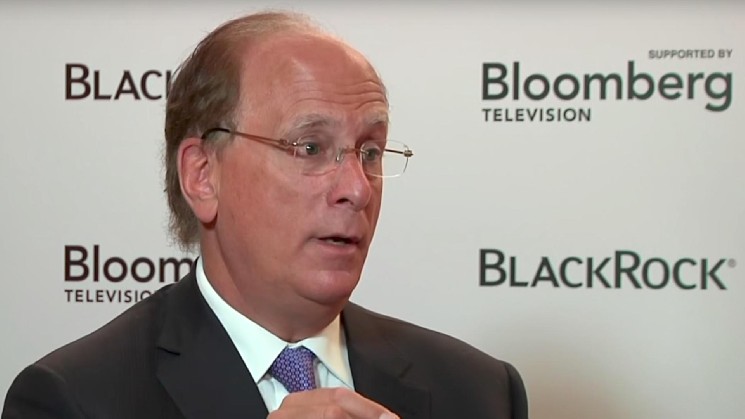
    AI Agents Choose Ripple USD Over XRP as BlackRock Issues Major Prediction

    Key Highlights

    • Autonomous AI agents on the XRP Ledger are settling transactions predominantly with Ripple USD stablecoin rather than native XRP, according to XRPL AI Hub on-chain data.
    • BlackRock’s “The Machine-Native Economy” research note identifies the $300 billion stablecoin market—with $11.6 trillion in annual transaction volume—as the foundational unit of account for AI-driven micropayments.
    • Algorithmic budgeting requirements favor dollar-pegged assets: even hourly XRP volatility of a few percent can break an autonomous task’s financial model, while Ripple USD enables precise cost forecasting.

    AI Agents Drive Stablecoin Dominance on XRP Ledger

    On-chain payment activity tracked by XRPL AI Hub reveals a structural shift in how autonomous software agents settle value on the XRP Ledger. Analysis of all-time highs and 30-day trends in direct clearing settlements shows sustained dominance of Ripple’s regulated stablecoin, Ripple USD, while transaction volumes denominated in the network’s native cryptocurrency, XRP, have stagnated over the past week. The data captures a growing preference among machine participants for regulated stablecoins as the primary medium of exchange in continuous, around-the-clock settlement workflows.

    BlackRock Validates Machine-Native Economy Thesis

    This trend aligns with findings from BlackRock’s research note, The Machine-Native Economy, which describes a tectonic shift in financial infrastructure. The asset manager argues that the traditional banking system, constrained by human operating schedules, is technically incapable of handling the millisecond micropayments executed by autonomous software. According to BlackRock, the global stablecoin market has already surpassed $300 billion in size, while its annual transaction volume of $11.6 trillion has turned this asset class into a basic unit of account for AI. This circulating liquidity allows machine networks to reliably run high-frequency micropayments without causing friction or systemic blockages.

    Predictable Costs Fuel Algorithmic Preference for Ripple USD

    The machines’ pragmatism is explained by the nature of their programming. As Coinbase CEO Brian Armstrong noted, the number of AI agents making transactions will grow exponentially, but they critically need predictable costs. Software’s strict budgeting algorithms rule out volatile assets: even a change of a few percent in $XRP’s price within an hour could undermine an autonomous task’s financial model. By contrast, Ripple USD, pegged one-to-one to the U.S. dollar, allows algorithms to forecast costs precisely. Autonomous agents must purchase computing power around the clock and pay for API access, making tokenized GPUs a key raw material of the new technological order.

    XRP Retains Interbank Role While Stablecoins Lead Robot Economy

    While XRP retains its established role in interbank clearing, Ripple’s digital dollar is taking the lead in the internal economy of robots on the XRP Ledger across all time horizons. The divergence reflects a functional specialization: XRP serves as a bridge asset for institutional cross-border settlement, whereas dollar-pegged stablecoins provide the price stability required for autonomous, high-frequency machine-to-machine commerce.

    Why This Matters

    The convergence of AI agent proliferation and stablecoin infrastructure marks a fundamental evolution in how value moves through digital networks. BlackRock’s framing of a “machine-native economy” suggests that financial rails originally designed for human-paced commerce are being repurposed—and in some cases replaced—by settlement layers optimized for software-speed execution. As regulated stablecoins like Ripple USD gain traction on permissioned and public ledgers alike, they may become the default denomination for compute procurement, data licensing, and API metering in agent-driven workflows. This shift also carries regulatory implications, as the dominance of compliant, dollar-backed tokens in machine commerce could accelerate policy clarity around stablecoin issuance and reserve requirements.

    Frequently Asked Questions

    Why are AI agents choosing Ripple USD over XRP on the XRP Ledger?

    Autonomous agents require predictable pricing for budgeting computing resources and API access. XRP’s hourly price volatility of even a few percent can disrupt an agent’s financial model, while Ripple USD’s 1:1 dollar peg enables precise cost forecasting.

    What does BlackRock’s “The Machine-Native Economy” report conclude about stablecoins?

    BlackRock identifies the $300 billion stablecoin market—with $11.6 trillion in annual transaction volume—as the foundational unit of account for AI, arguing that traditional banking cannot support the millisecond micropayments required by autonomous software networks.

    Does XRP still have a role on the XRP Ledger?

    Yes. XRP continues to serve its established function in interbank and cross-border clearing, while Ripple USD is emerging as the preferred settlement asset for high-frequency, machine-to-machine transactions within the ledger’s internal economy.

  • BlackRock: AI Agents Will Soon Buy Computing Power and Data Using Stablecoins

    BlackRock: AI Agents Will Soon Buy Computing Power and Data Using Stablecoins

    Key Highlights

    • BlackRock identifies artificial intelligence as a primary catalyst for digital asset adoption, citing autonomous agents’ need for native payment and settlement infrastructure.
    • Stablecoins are positioned as the immediate beneficiary due to their price stability for service pricing and blockchain networks’ 24/7 payment capabilities.
    • The asset manager highlights Coinbase’s x402 protocol as an emerging standard for agent-to-service payments, including API calls, while noting traditional payment networks are also adapting to agentic commerce.

    BlackRock Maps Convergence of AI Agents and Digital Asset Infrastructure

    BlackRock, the world’s largest asset manager, has published research arguing that artificial intelligence will serve as one of the most significant drivers for digital asset adoption in the coming years. The paper centers on the rise of autonomous AI agents—software systems capable of independently executing complex tasks—and their fundamental requirement for programmable, always-on financial infrastructure to operate at machine speed.

    Machine-Native Intelligence Requires Machine-Native Payments

    According to BlackRock’s analysis, AI provides “machine-native intelligence” while digital assets supply the corresponding payment and settlement layer these agents need to act on their decisions without human intervention. The paper illustrates a scenario where an autonomous agent carrying out a task could pay for a data request, book a service, or purchase computing capacity instantly, eliminating the latency and friction inherent in traditional financial systems that require human authorization or operate within limited business hours.

    This architectural fit stems from the programmable nature of blockchain networks and tokenized assets, which allow for conditional, automated value transfer based on code execution rather than institutional intermediaries. For AI agents operating across time zones and negotiating micro-transactions for compute resources or data access, the ability to settle instantly and finality is presented as a functional necessity rather than a speculative feature.

    Stablecoins Emerge as Primary Vehicle for Agentic Commerce

    The research identifies stablecoins as the likely first major beneficiary of this paradigm shift. Their relatively stable value makes them practical for pricing services and settling obligations predictably—a critical requirement for autonomous systems budgeting resources or calculating cost-efficiency in real time. Furthermore, public blockchain networks enable these stablecoin payments to occur around the clock, seven days a week, aligning with the non-stop operational tempo of AI agents.

    BlackRock specifically highlights Coinbase’s x402 protocol as one emerging mechanism facilitating this economy. The protocol is designed to allow agents to pay for online resources—including API calls—directly via HTTP payments, embedding settlement into the web request layer itself. This development signals a move toward standardized, interoperable payment rails for machine-to-machine commerce.

    Traditional Finance Adapts to Agentic Payments Landscape

    While emphasizing the structural advantages of crypto-native infrastructure, BlackRock’s paper acknowledges that existing payment networks are not standing still. The research notes that traditional financial rails are actively adapting to accommodate agentic commerce, suggesting a competitive landscape where both blockchain-based and upgraded legacy systems vie for the high-volume, low-value transaction flows generated by autonomous AI agents.

    Why This Matters

    BlackRock’s endorsement of the AI-agent and digital-asset convergence carries significant weight given the firm’s $10 trillion-plus in assets under management and its growing involvement in tokenized funds and blockchain infrastructure. The paper frames digital assets not as speculative vehicles but as essential utility infrastructure for the next computing paradigm. If autonomous agents become a dominant economic force—as many AI researchers predict—the demand for instant, programmable, global settlement could drive institutional adoption of stablecoins and blockchain payment rails far beyond current crypto-native use cases. The mention of Coinbase’s x402 protocol also underscores how major regulated exchanges are building the middleware to bridge traditional web commerce with onchain settlement. Meanwhile, the acknowledgment that legacy payment networks are adapting signals a broader industry recognition that the future of commerce may be increasingly machine-initiated.

    Frequently Asked Questions

    Why does BlackRock believe AI agents need digital assets for payments?
    BlackRock argues that AI agents require “machine-native” payment infrastructure that operates 24/7, settles instantly, and can be triggered programmatically without human authorization—capabilities that blockchain networks and tokenized assets provide natively.
    What role do stablecoins play in this vision?
    Stablecoins are seen as the immediate primary vehicle because their price stability allows agents to price services and budget resources predictably, while blockchain rails enable round-the-clock settlement.
    What is Coinbase’s x402 protocol and why does BlackRock highlight it?
    x402 is an emerging protocol from Coinbase that enables HTTP-based payments for online resources such as API calls, allowing agents to pay for web services directly at the protocol layer. BlackRock cites it as an example of the middleware being built for agent-to-service commerce.
  • NGD Launches Neo 3650 AI-Assisted Art Campaign to Mark 10 Years of Neo MainNet

    NGD Launches Neo 3650 AI-Assisted Art Campaign to Mark 10 Years of Neo MainNet

    Key Highlights

    • Neo Global Development launches Neo 3650, a 10-year MainNet anniversary campaign where AI agents research historical blockchain days and mint generative artworks on Neo X with storage on NeoFS.
    • A 500 $GAS reward pool will be split: 200 $GAS awarded by an AI Judge Agent to 200 selected works, and 300 $GAS distributed randomly among eligible participants.
    • Participation is gas-free via the Neo X GovPaymaster sponsorship pool; each wallet can register up to three agents claiming up to nine historical dates before the October 17 reveal.

    Neo Global Development Unveils Neo 3650 Campaign to Mark Decade of MainNet Operation

    Neo Global Development (NGD) has opened registration for Neo 3650, a commemorative campaign celebrating ten years since the Neo MainNet genesis. Running through October 17—the exact date the network completes 3,652 days of continuous operation—the initiative invites community members to deploy autonomous AI agents that each claim a specific day from the blockchain’s first decade, research its on-chain and off-chain history, and translate those findings into a unique generative artwork. The resulting pieces will be minted as tokens on the Neo X EVM sidechain and permanently preserved on the NeoFS decentralized storage network, creating a distributed, immutable archive of the network’s history rendered through artificial intelligence.

    How Participation Works: Wallets, Agents, and Historical Dates

    The onboarding flow at neo3650.ngd.network guides users through a three-step process: connect a wallet to prove address ownership without importing private keys, shape the agent’s personality and aesthetic direction, then approve the registration and claim a date from Neo’s history. Each wallet address may register up to three distinct agents, and each agent can select up to three different days, allowing a single participant to produce a maximum of nine artworks across the campaign window. Once a date is claimed, the agent autonomously researches that day’s block data, ecosystem announcements, market movements, and community discourse before generating its visual interpretation.

    Gasless Minting via Neo X GovPaymaster

    To remove friction, transaction fees for both artwork creation and minting are covered by the Neo X GovPaymaster pool, the network’s native gas sponsorship mechanism. Coverage operates on a first-come, first-served basis, meaning participants do not need a $GAS balance to take part, though NGD notes that pool capacity is finite and sponsorship is not guaranteed for every submission. All minted works remain hidden until the simultaneous reveal on October 17, when the full collection goes live on Neo X and NeoFS.

    Two-Tier Reward Structure: AI Judge Agent and Random Distribution

    A total of 500 $GAS will be allocated across two tiers at the campaign’s conclusion. The first tier relies on a dedicated Judge Agent—an AI reviewer built by NGD—that will evaluate every submitted work and select 200 favorites, each receiving 1 $GAS (200 $GAS total). The second tier distributes the remaining 300 $GAS at random among all other eligible participants. At press time the Judge Agent is not yet live; NGD confirms it will launch ahead of the October 17 reveal date to complete its curation.

    Why This Matters: Neo X as an AI-Agent-Native Platform

    The Neo 3650 campaign is more than an anniversary celebration; it serves as a live demonstration of NGD’s broader Agent Economy strategy for Neo X. By designing a workflow where humans configure high-level intent—personality, aesthetic, date selection—while agents execute research and generation autonomously, the campaign mirrors the architecture Da Hongfei, Neo’s founder, has outlined for the SpoonOS operating system and the on-chain agent economy. SpoonOS aims to provide the infrastructure for AI agents to transact, collaborate, and persist on-chain, and Neo 3650 offers an early, user-facing proof point: agents that own wallets, pay gas via protocol-level sponsorship, mint assets, and store data decentralizedly, all without continuous human intervention. The simultaneous reveal on Neo X and NeoFS also stress-tests the EVM sidechain’s throughput and the storage layer’s durability under a coordinated, time-bound load.

    Frequently Asked Questions

    When does the Neo 3650 campaign end and when are artworks revealed?

    The campaign runs until October 17, the tenth anniversary of the Neo MainNet launch. All minted artworks will be revealed simultaneously on that date.

    Do I need $GAS to participate?

    No. Transaction fees for agent registration, artwork generation, and minting are covered by the Neo X GovPaymaster pool on a first-come, first-served basis. A $GAS balance is not required, though sponsorship is not guaranteed for all submissions if pool capacity is exhausted.

    How are the 500 $GAS rewards distributed?

    The pool is split into two tiers: 200 $GAS awarded by the AI Judge Agent to its 200 selected works (1 $GAS each), and 300 $GAS distributed randomly among the remaining eligible participants. The Judge Agent will launch before the October 17 reveal to complete its evaluation.

  • 30-Year Veteran Analyst: “This Trend Could Fuel Bitcoin in the Coming Period”

    30-Year Veteran Analyst: “This Trend Could Fuel Bitcoin in the Coming Period”

    Key Highlights

    • Macro investor Jordi Visser argues AI agents will drive Bitcoin adoption by requiring blockchain infrastructure for machine-to-machine transactions.
    • Visser predicts tokenization will unlock dormant assets as programmable collateral, creating a growth dynamic independent of traditional liquidity cycles.
    • The analyst identifies privacy-focused projects like Zcash and NEAR as early beneficiaries of the AI-agent economy.

    AI Agents Poised to Reshape Cryptocurrency Fundamentals, Says Macro Investor Jordi Visser

    Experienced macro investor Jordi Visser has articulated a thesis positioning artificial intelligence agents as a transformative catalyst for Bitcoin and the broader cryptocurrency market. In a detailed analysis, Visser contends that evaluating Bitcoin’s trajectory exclusively through conventional macroeconomic lenses—global liquidity, interest-rate regimes, or money-supply metrics—is becoming an increasingly incomplete framework. While acknowledging that Bitcoin’s price history shows strong correlation with liquidity conditions, he argues that the maturation of genuine cryptocurrency utility could decouple the asset class from traditional economic cycles.

    Blockchain as Essential Infrastructure for Machine-to-Machine Economies

    Central to Visser’s argument is the inevitability of advanced AI agents interacting directly with one another, a dynamic he asserts will require blockchain settlement rails. “Agents will interact with each other. Blockchain is necessary,” Visser stated, emphasizing that the proliferation of autonomous software actors is “extremely positive for the cryptocurrency sector.” He envisions these agents evolving from analytical tools into full-fledged economic participants capable of executing purchases, payments, reservations, and complex financial decisions. Digital wallets controlled by such agents, he predicts, could become critical infrastructure in the emerging machine-to-machine economy.

    Tokenization and Programmable Finance Unlock Dormant Capital

    Visser further argues that this shift will accelerate the tokenization of assets currently dormant within the traditional financial system, enabling them to serve as programmable collateral. He describes a mechanism distinct from legacy liquidity indicators, where automated, code-driven financial transactions become commonplace. This programmable layer, he suggests, could foster competition between corporate-owned AI agents and consumers’ personal agents over pricing, privacy protections, and transaction terms—creating novel use cases for privacy-centric crypto projects and decentralized finance applications.

    Why This Matters: The Convergence of AI and Crypto Economics

    Visser’s framework highlights a structural inflection point: as AI agents multiply, traditional employment and productivity metrics may lose relevance. He notes his own firm operates with fewer than 15 human employees while deploying nearly 100 digital AI agents, illustrating how current economic statistics struggle to capture this transformation. For Bitcoin specifically, Visser maintains a 30-year conviction horizon, viewing the convergence of AI autonomy and blockchain verification as a powerful拓展 of real-world cryptocurrency utility that could sustain value appreciation independent of fiat monetary cycles. The heightened September interest in privacy-oriented protocols such as Zcash and NEAR, he suggests, reflects early market recognition of this AI-agent privacy narrative.

    Frequently Asked Questions

    How does Jordi Visser believe AI agents will use blockchain technology?

    Visser argues that advanced AI agents will need to transact directly with each other—making purchases, payments, and financial decisions autonomously—and that blockchain provides the necessary trust-minimized settlement layer for these machine-to-machine interactions.

    What is the significance of tokenization in Visser’s thesis?

    Tokenization, according to Visser, will bring currently dormant assets into active economic circulation as programmable collateral, creating a new growth mechanism for crypto that operates independently of traditional liquidity indicators like interest rates or money supply.

    Which crypto projects does Visser associate with the AI-agent privacy trend?

    Visser specifically links increased September interest in Zcash and NEAR to the strengthening narrative around AI agents requiring privacy-preserving transaction infrastructure for commercial negotiations.

    This is not investment advice.

  • Analyst With 30 Years Experience Weighs In on Bitcoin, Altcoins Future

    Analyst With 30 Years Experience Weighs In on Bitcoin, Altcoins Future

    Key Highlights

    • Macro investor Jordi Visser shifts from cautious to bullish on crypto, citing the convergence of AI and blockchain infrastructure as the primary catalyst for a new growth era.
    • Visser argues Bitcoin’s role is evolving into a long-term store of value and collateral asset, distinct from stablecoins and networks like Ethereum and Solana that will power high-speed AI agent transactions.
    • The investor predicts Bitcoin is the only crypto technology certain to exist in 20 years, providing “collateral” and “stability” amid technological disruption, while noting its investor base is shifting from ideological decentralization to portfolio diversification.

    Visser Signals Major Pivot: From Crypto Skeptic to Strategic Bull

    Renowned macro investor Jordi Visser has articulated a significant reversal in his stance on Bitcoin and the broader cryptocurrency market, moving from a historically cautious posture to a constructive long-term outlook. In a recent program appearance, Visser was characterized as an investor who has “always gone from bear to bull,” a trajectory he attributes to a fundamental maturation of the sector. The pivot hinges on a singular observation: cryptocurrency is transitioning from a vehicle for price speculation to an infrastructure layer supporting real-world economic utility. Visser emphasized that his optimism is not rooted in cyclical liquidity tailwinds or monetary expansion, but in the structural integration of innovation—specifically artificial intelligence—into the crypto stack.

    AI Agents and the New Payment Rails: Why Stablecoins and Smart Contract Platforms Lead

    Central to Visser’s thesis is the impending rise of autonomous AI agents. He argues that a future economy populated by high-speed, machine-to-machine commerce will require a payment infrastructure fundamentally different from the traditional financial system. In this architecture, stablecoins and high-throughput blockchain networks such as Ethereum and Solana are positioned to play a dominant role. Visser suggested that once AI agents begin transacting natively on-chain, adoption could grow “parabolically,” ushering in a period where consumer-facing AI agents become ubiquitous. This framework explicitly delineates function: programmable, high-speed settlement layers handle the velocity of agent commerce, while Bitcoin serves a separate, foundational purpose.

    Bitcoin as Digital Collateral: Survival Over Speculation

    Visser draws a sharp distinction between Bitcoin and the smart contract ecosystems designed for transactional throughput. He contends that Bitcoin’s primary utility is not as a medium of exchange, but as a long-term store of value and a pristine collateral asset. Noting that hundreds of millions of individuals have already selected Bitcoin as a digital savings vehicle, he points to its survival through multiple severe bear markets as the ultimate proof of resilience. In a landscape where artificial intelligence threatens to rapidly obsolete companies, business models, and traditional equity investments, Visser views Bitcoin as one of the few assets likely to remain completely unaffected by technological transformation. Its value proposition, he argues, lies in a high probability of survival over decades, offering portfolio protection that is uncorrelated to the disruption cycle.

    Shifting Capital Flows and an Evolving Identity

    Addressing Bitcoin’s recent relative underperformance versus AI-equity darlings, Visser acknowledged that capital has rotated toward higher-return opportunities in the technology sector, dampening near-term demand for the digital asset. However, he identifies a powerful structural counter-trend: the strengthening bridge between traditional finance and crypto infrastructure. The advent of tokenization and the maturation of Ethereum, Solana, and related blockchain rails are poised to attract significant institutional capital into the ecosystem, a tailwind that will ultimately benefit Bitcoin as the reserve asset of the sector. Furthermore, Visser observed that Bitcoin’s identity is undergoing a profound shift. The asset has migrated from an early investor base motivated by ideological separation from state systems toward a broader, mainstream constituency focused on portfolio diversification. He interprets this not as a betrayal of origins, but as the natural consequence of parallel financial systems merging over time.

    The Twenty-Year Conviction: Bitcoin as the System’s Bedrock

    Capping his analysis with a striking long-term forecast, Visser stated that Bitcoin is the only technology he is confident will still exist within both the crypto ecosystem and the current fiat system two decades from now. While acknowledging that AI will rapidly transform or destroy countless other assets and corporations, he maintains that Bitcoin will endure as the system’s “collateral” and “stability.” This conviction underscores a view of Bitcoin not as a speculative bet on price appreciation, but as a monetary constant engineered to withstand the entropy of technological revolution.

    Why This Matters

    Visser’s commentary reflects a growing consensus among macro strategists that the crypto narrative is decoupling from simple “risk-on/risk-off” liquidity trades. The convergence of AI agents and blockchain settlement layers represents a tangible total addressable market (TAM) expansion—programmable money for a machine economy. For investors, the critical takeaway is the functional unbundling of crypto assets: high-velocity chains (Solana, Ethereum L2s) capture the transactional layer, stablecoins capture the unit-of-account layer, and Bitcoin captures the trust-minimized collateral layer. This framework suggests that portfolio construction should reflect these distinct roles rather than treating the sector as a monolithic beta trade. Additionally, the noted shift in Bitcoin’s holder base—from cypherpunks to institutions—signals a reduction in systemic “holder risk” (the probability of mass ideological abandonment), potentially lowering the asset’s long-term volatility profile as it becomes a standard diversifier in multi-asset portfolios.

    Frequently Asked Questions

    Why does Jordi Visser believe Bitcoin will not be used for AI agent payments?

    Visser argues that Bitcoin’s design prioritizes security and decentralization over transaction throughput and programmability. High-speed commerce between AI agents requires low-latency, high-capacity settlement layers—roles better suited for stablecoins and smart contract platforms like Ethereum and Solana. He views Bitcoin’s optimal function as a static store of value and collateral asset rather than a dynamic medium of exchange.

    What does Visser mean by Bitcoin providing “collateral” and “stability” in 20 years?

    He posits that as AI disrupts corporate earnings, business models, and equity valuations, Bitcoin’s immutable monetary policy and proven resistance to censorship make it the most reliable asset to pledge as collateral or hold as a stability anchor. Unlike companies that can be rendered obsolete, the Bitcoin protocol has no management team to disrupt and no cash flows to impair, making it a unique “survivor” asset in a period of accelerated technological creative destruction.

    How does the changing investor base affect Bitcoin’s risk profile?

    Visser notes the transition from holders motivated by anti-state ideology to those seeking portfolio diversification. This broadens the demand base, reduces concentration risk among ideologically rigid holders, and integrates Bitcoin into standard financial planning. The result is a more resilient holder base less likely to capitulate during drawdowns, which may dampen volatility and support long-term price stability.

  • Celo Adds Local Currency Payments for AI Agents

    Celo Adds Local Currency Payments for AI Agents

    Key Highlights

    • Celo Core Co. launched a native x402 facilitator on July 16, enabling AI agents to transact using Ripio’s wARS, wBRL, and wCOP tokens denominated in Argentine pesos, Brazilian reais, and Colombian pesos.
    • The update eliminates the need for AI agents to convert local currencies into dollar-based stablecoins, reducing foreign exchange exposure for users who delegate transaction authority to autonomous agents.
    • Celo plans to extend support to additional Latin American currencies including Mexican pesos (wMXN), Chilean pesos (wCLP), and Peruvian sol (wPEN), building on a network that has processed over 1.4 billion transactions since its 2020 mainnet launch.

    Celo Integrates Local Currency Payments for Autonomous AI Agents

    Celo Core Co., the core development team behind the Celo blockchain, has deployed a native x402 payment facilitator that allows artificial intelligence agents operating on the network to settle transactions in local Latin American currencies. Announced on July 16, the integration leverages Ripio’s wrapped fiat tokens—wARS for the Argentine peso, wBRL for the Brazilian real, and wCOP for the Colombian peso—enabling AI agents to make payments, purchase data, and access APIs without converting to dollar-pegged stablecoins.

    Eliminating Foreign Exchange Friction for Agentic Commerce

    The architectural shift addresses a structural limitation in current agentic payment flows. Previously, AI agents acting on behalf of users in Latin America were forced to route payments through USD-denominated stablecoins, introducing foreign exchange spreads, conversion latency, and custody risk. By supporting Ripio’s wFIAT suite directly, Celo allows agents to operate in the same monetary unit as their human principals. This parity simplifies accounting, preserves purchasing power, and reduces the operational overhead for developers building agent-driven commerce, remittance, and service applications across the region.

    Ripio’s Regulated Token Infrastructure Underpins the Expansion

    Ripio, a licensed digital asset platform operating across Latin America, issues the wFIAT token family used in the integration. Each token is fully backed by reserves held in the corresponding sovereign currency, including the Argentine peso, Brazilian real, Mexican peso, Colombian peso, Chilean peso, and Peruvian sol. The company’s regulatory compliance and local banking relationships provide the off-ramp credibility necessary for mainstream adoption. With the x402 facilitator now live, businesses and developers on Celo can price services, data feeds, and API calls in local currency terms, aligning revenue models with end-user economics.

    Why This Matters

    The convergence of AI agent frameworks and blockchain payment rails is accelerating, but currency localization remains an underdeveloped layer. Most agentic payment prototypes assume a dollarized world, which mismatches the reality of emerging markets where local currency volatility and banking access shape user behavior. Celo’s x402 implementation, combined with Ripio’s regulated fiat tokens, creates a template for regionally native agent economies. The roadmap to add wMXN, wCLP, and wPEN signals intent to cover the major Spanish-speaking and Portuguese-speaking markets in Latin America. With over 1.4 billion transactions processed since 2020—spanning payments, remittances, commerce, and DeFi—Celo’s transaction throughput provides a proven base for scaling agent-driven activity without the congestion risks seen on higher-fee networks.

    Frequently Asked Questions

    What is the x402 facilitator and how does it work with AI agents?

    The x402 facilitator is a native payment protocol on Celo that enables HTTP 402 “Payment Required” responses to be settled programmatically. AI agents can automatically fulfill payment challenges for API access, data, or services using supported tokens—in this case, Ripio’s wARS, wBRL, and wCOP—without human intervention or currency conversion.

    Which currencies are currently supported and what is coming next?

    As of the July 16 launch, the x402 facilitator supports Argentine peso (wARS), Brazilian real (wBRL), and Colombian peso (wCOP) via Ripio’s wrapped tokens. Celo has announced plans to add Mexican peso (wMXN), Chilean peso (wCLP), and Peruvian sol (wPEN) in future updates.

    Why does local currency support matter for AI agents in Latin America?

    It removes the need for agents to convert local funds into dollar stablecoins before transacting, eliminating foreign exchange fees, slippage, and settlement delay. Users can delegate spending authority to agents in their native currency, while merchants and developers can price goods and services in the same unit of account their customers use daily.

  • Ripple Integrates XRP Payments With Stripe, Tempo AI Standard in New Developer Kit

    Ripple Integrates XRP Payments With Stripe, Tempo AI Standard in New Developer Kit

    Ripple has expanded its XRP Ledger developer toolkit to support a new payments standard designed for artificial intelligence agents, broadening the options for machines to pay for data, computing power, and other digital services using cryptocurrency.

    XRPL AI Starter Kit Adds Machine Payments Protocol Support

    Version 1.1 of the XRPL AI Starter Kit now integrates the Machine Payments Protocol (MPP) and the Open Wallet Standard, according to a blog post from RippleX developers. The Open Wallet Standard enables software to manage wallets across multiple blockchains through a single, unified interface.

    The update positions both XRP and RLUSD—Ripple’s dollar-pegged stablecoin—as native payment options for developers building AI-driven services.

    RippleX Commits to Multi-Standard Strategy

    “Our job is to make $XRP and $RLUSD first-class options wherever developers are building,” RippleX head of product Jazzi Cooper wrote on X.

    Ripple previously added support for x402, a separate web payments standard, in June. By backing both MPP and x402, the company is pursuing a multi-standard approach rather than betting on a single protocol.

    How MPP Enables AI Commerce

    The Machine Payments Protocol, co-authored by payments giant Stripe and Tempo—a blockchain purpose-built for payments—gives AI agents a standardized way to transact autonomously. An AI agent, defined as software that executes tasks on a user’s behalf, can now request a resource, receive a price quote, authorize payment, and receive the requested service in a seamless flow.

    Why This Matters for the Agent Economy

    As developers build services that charge machines per request, those AI agents need a currency the seller accepts and the software rails to send it. Ripple’s latest move aims to ensure XRP and RLUSD are among the default choices for this emerging machine-to-machine economy.

  • AxLabs Launches Full Ax402 Stack on Neo X

    AxLabs Launches Full Ax402 Stack on Neo X

    AxLabs Deploys Full Ax402 Payment Stack on Neo X for Machine-to-Machine Commerce

    AxLabs has launched the complete Ax402 stack on Neo X, delivering a live payment infrastructure that enables developers to monetize REST APIs, gate resources behind a stablecoin paywall, and facilitate programmatic payments between AI agents. Transactions settle on a per-request basis using supported tokens including $USDC and xGAS.

    From July Launch to Production Deployment

    The release marks Ax402’s transition from its initial July launch—previously covered by NNT—to a full production deployment. Ax402 is built on x402, an open protocol that repurposes the HTTP 402 Payment Required status code as the trigger for machine-to-machine payments.

    When Ax402 first launched on Neo X in July, the gateway integrated through xGAS, a wrapped GAS token deployed by Bane Labs specifically for x402 payments. This provided a Neo-native settlement option alongside the protocol’s broader $USDC support.

    New $USDC Settlement Via Chainlink CCIP

    $USDC settlement on Neo X became possible one day before this announcement, when $USDC.e and WETH arrived on the network through Chainlink’s CCIP-powered Transporter bridge on September 14.

    Solving Friction in Machine-to-Machine Commerce

    Ax402 addresses a critical friction point in machine-to-machine commerce: AI agents and API consumers currently lack a standard way to pay for resources on a per-request basis without accounts, subscriptions, or checkout flows.

    Practical examples include:

    • A research agent paying for a single query to a premium data API
    • A coding agent paying to run a specialized security scan
    • One AI agent paying another for a translation or other discrete service

    Resources and Documentation

    Developers can explore the protocol at ax402.io. Full documentation is available at docs.ax402.io.

    The full announcement can be found at the link below:

    https://x.com/ax_labs/status/2099855010137887212

  • The Grounding Problem: How 19-Year-Old Eshaan Gulati Taught AI Where to Click

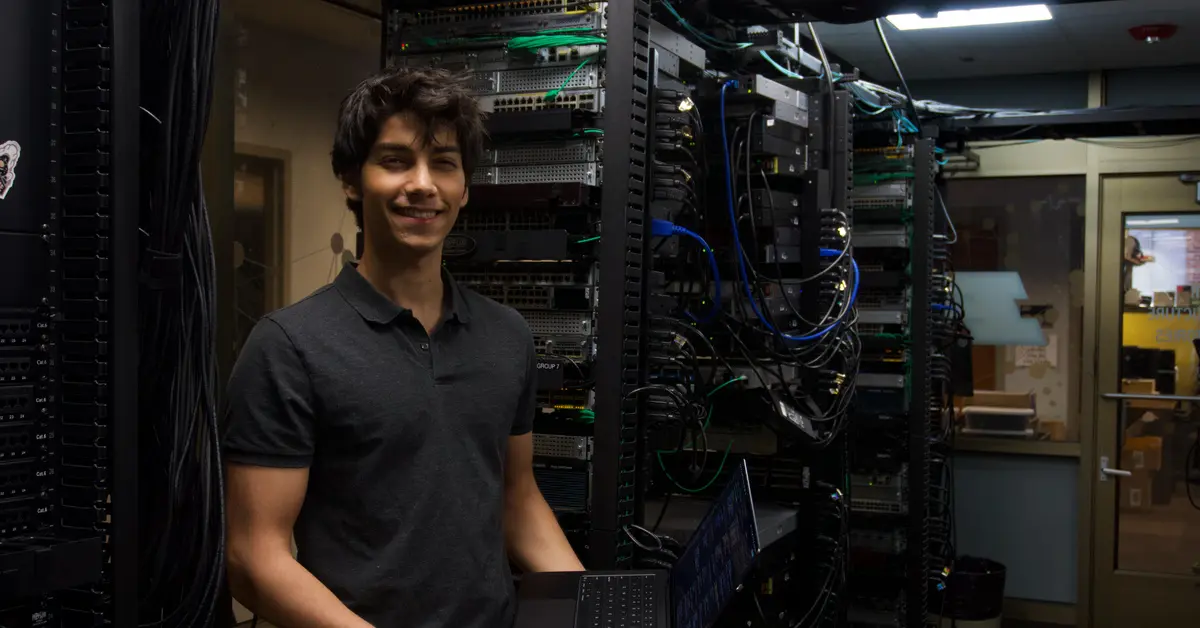
    The Grounding Problem: How 19-Year-Old Eshaan Gulati Taught AI Where to Click

    New research into computer-use capabilities has tackled a persistent technical bottleneck that prevented advanced models from translating visual recognition into precise, executable actions.

    While modern AI systems have achieved remarkable accuracy in identifying objects and patterns within images, bridging the gap between seeing and doing has remained a significant engineering challenge. The latest work focuses on closing this perception-to-action loop, enabling models to not only understand what they see but to manipulate interfaces, navigate software, and complete multi-step tasks with greater reliability.

    By addressing the failure points where visual understanding previously broke down during execution, the research aims to unlock a new generation of AI agents capable of operating real-world computer environments autonomously.