Animated Film Julián Delivers a Vibrant, Heartfelt Celebration of Identity and Community
Amid a crowded 2026 animation slate packed with sequels like The Super Mario Galaxy Movie, Toy Story 5, Minions & Monsters, Avatar Aang: The Last Airbender, and PAW Patrol: The Dino Movie—alongside original titles such as GOAT, Hoppers, and Swapped—one film stands out as a likely favorite for the year: Julián. Produced by the acclaimed Irish studio Cartoon Saloon (The Secret of Kells, Wolfwalkers, The Breadwinner) and directed by Louise Bagnall, this adaptation of Jessica Love’s bestselling children’s book Julián Is a Mermaid expands a 40-page picture book into an 85-minute feature that feels both intimate and expansive.
A Summer in Brooklyn: Plot and Character Dynamics
Set during a Brooklyn summer, Julián follows a cheerful, imaginative Afro-Latino boy (voiced by Knyght Darius Jack) who loves the ocean and makes glorious messes while playing. His father Javi (Anthony Sardinha) embraces his son’s exuberance, but his Dominican American abuela (Milcania Diaz-Rojas) operates on a strict my way or the highway
parenting style. The friction is immediate: in a sequence that echoes Paddington’s chaotic charm, Julián turns the bathroom into a disaster zone while trying to be a good guest.
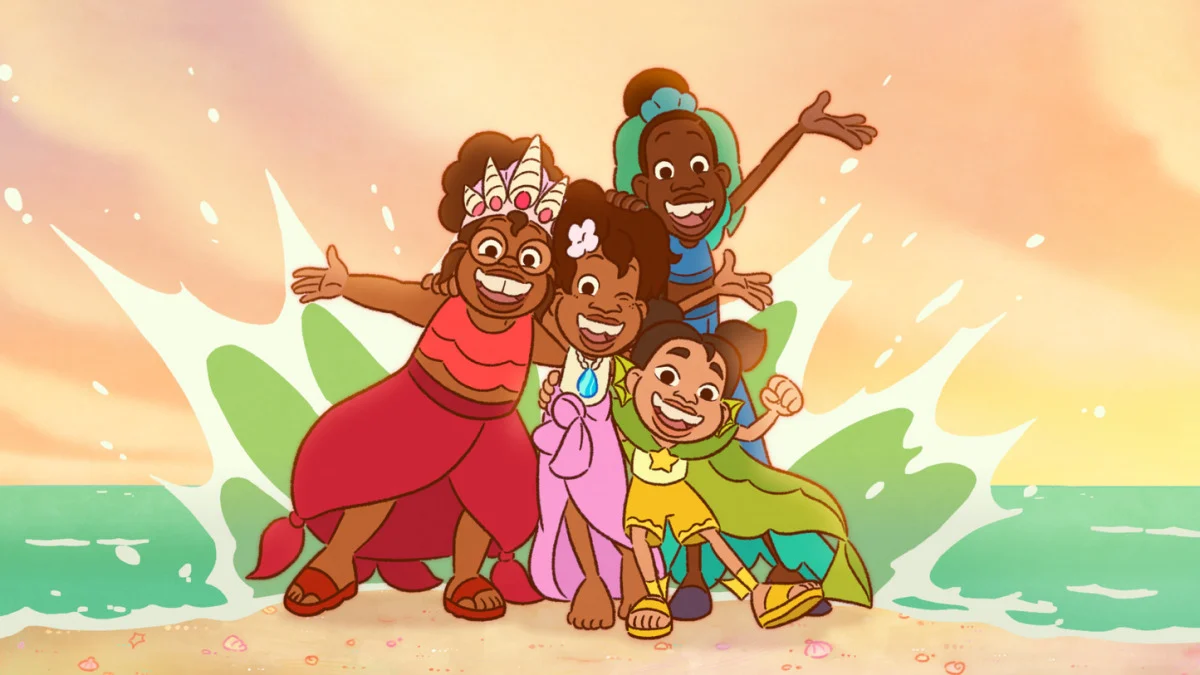
Bagnall stages these missteps with empathy for both characters, allowing the audience to understand the grandmother’s rigidity and the boy’s boundless spirit. The story deepens when Julián meets three local girls designing their mersonas
for Coney Island’s annual Mermaid Parade. Abuela and her friends, however, heteronormatively assume he’s a lady killer
. When Julián asks her to do his hair to show off to girls
, he envisions long braids; the short-cropped cut she gives him to show off [his] handsome face
reduces him to tears.
No Labels, Just a Child Being Told He Is Wrong
The film never forces Julián to articulate a queer identity or come out. He is simply a kid who loves what he loves—mermaids, sparkle, color—and is told that desire is wrong. After the haircut incident, Abuela begins to understand. She sews the vibrant, shimmering costume he dreams of, yet in a moment of pique she warns him about being too much
, reflecting the protective but stifling gender norms that leave him isolated and ashamed.
That tension—between a child’s irrepressible light and the world’s attempt to dim it—drives the emotional core. The young voice actor’s choked-up performance and the animation’s shift from fluid, spirited movement to stilted, confined gestures (as Julián literally locks his imaginary friend in a jewelry box) make the heartbreak palpable.
A Distinct Visual Language: Markers, Crayons, and Imagination
Bagnall rejects the near-mandatory 3D CGI theatrical look, instead crafting a style that imitates the texture of markers and crayons—fitting for a protagonist who loves to draw. Vibrant colors render the Afro-Latino Brooklyn neighborhood as warm and alive. Soft edges and round, bouncy character designs mirror Julián’s Super Ball energy.
When the world transforms to reflect his imagination, watery fish fly, an aquatic goddess rises, and a whale shark with a star-filled belly soars alongside the boy mermaid. These sequences evoke the playful camaraderie of Craig of the Creek, the fluid sprite work of Spirited Away and Ponyo, and the sun-soaked tenderness of Luca—yet Julián never feels derivative. It stands as a solid stone in the cathedral those works collectively build to the glory of animation as an art form.
Expanding the Source Material: From Gentle Walk to Rousing Chase
Where Love’s book ends with a gentle hand-in-hand walk to the beach, the film’s final act becomes a rousing action sequence. Julián runs away from home to join his friends at the Mermaid Parade, triggering a race against time. His pursuing abuela is on a determined mission to mend what she fears she’s broken. The parade itself bursts with wonder: a cast of characters as varied and vivid as Steven Universe’s Crystal Gems—big, colorful hair in pinks, greens, blues, and magentas; bodies of all shapes, none from a cookie cutter.
When the children call on strangers for help, a trio of queer-coded mermaids (some with facial hair) aid them kindly and easily. That moment—recognition, community, unconditional acceptance—elicited tears of joy. While the film acknowledges moments of homophobia, it overwhelmingly blooms with love.
Premiere and Verdict
Julián premiered in North America at the Toronto International Film Festival. It is a deeply charming, visually distinctive, and emotionally resonant film about a child fighting for his individuality—supported, ultimately, by the family and community that learn to celebrate him exactly as he is.