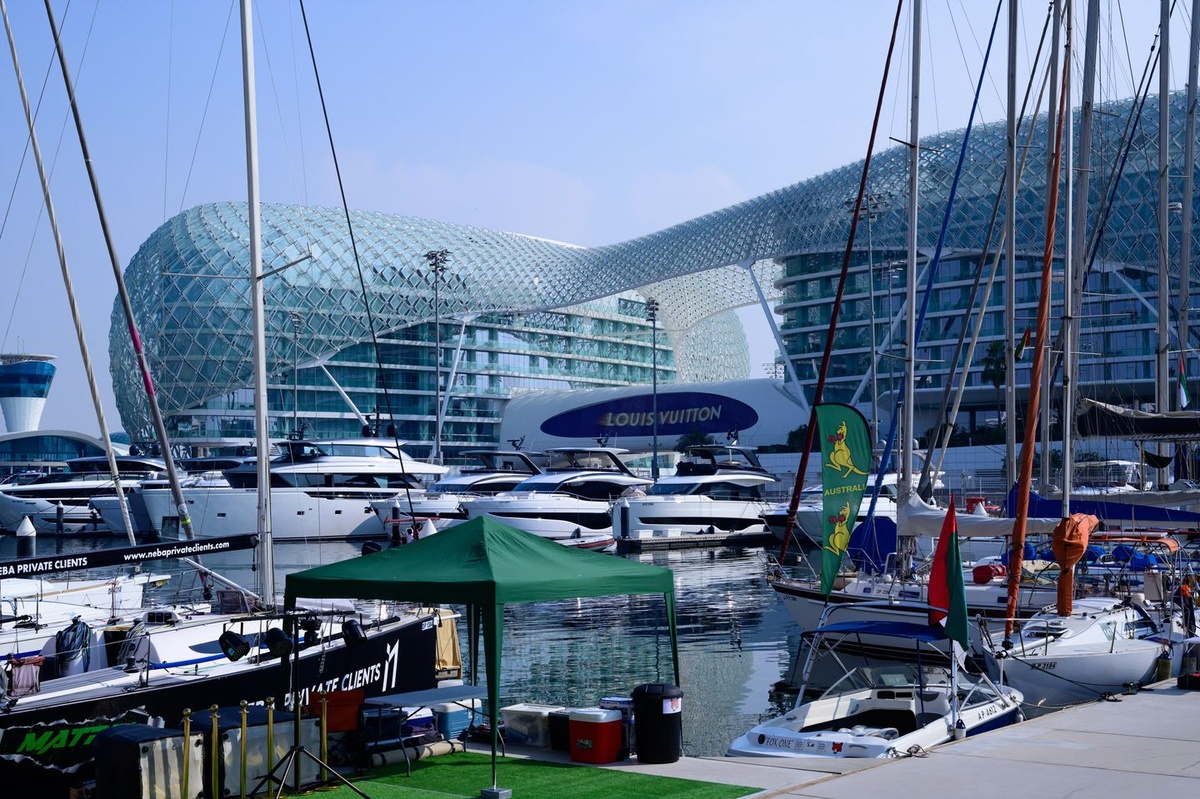
Tag: Abu Dhabi Grand Prix

  • Imola Builds Grandstands as Abu Dhabi Plan A Emerges for F1 Season Finale

    Imola Builds Grandstands as Abu Dhabi Plan A Emerges for F1 Season Finale

    Key Highlights

    • Formula 1 has authorized Imola’s Autodromo Enzo e Dino Ferrari to begin constructing grandstands and preparing for a potential 2026 season finale as a contingency plan (Plan B) should the Qatar and Abu Dhabi Grands Prix be cancelled due to Middle East unrest.
    • Formula One Management (FOM) is covering all financial risks for Imola’s preparations, including temporary grandstand construction, ensuring the circuit faces no financial exposure regardless of whether the race ultimately takes place.
    • The decision deadline has shifted from mid-September to mid-October, with team principals confirming the new timeframe while emphasizing logistical challenges like European motorhome staffing rather than weather concerns.

    Formula 1 Activates Imola Contingency for 2026 Season Finale

    Plan B Preparations Underway Amid Middle East Uncertainty

    As Formula 1 enters the final phase of the 2025 season with three triple-headers on the calendar, attention has turned to the conclusion of the 2026 campaign. While the Qatar and Abu Dhabi Grands Prix remain scheduled as the season-ending events—constituting what F1 refers to as “Plan A”—the sport is actively preparing for a scenario in which continued unrest in the Middle East forces their cancellation. Behind the scenes, the green light has been given to develop a robust Plan B centered on the Autodromo Enzo e Dino Ferrari in Imola.

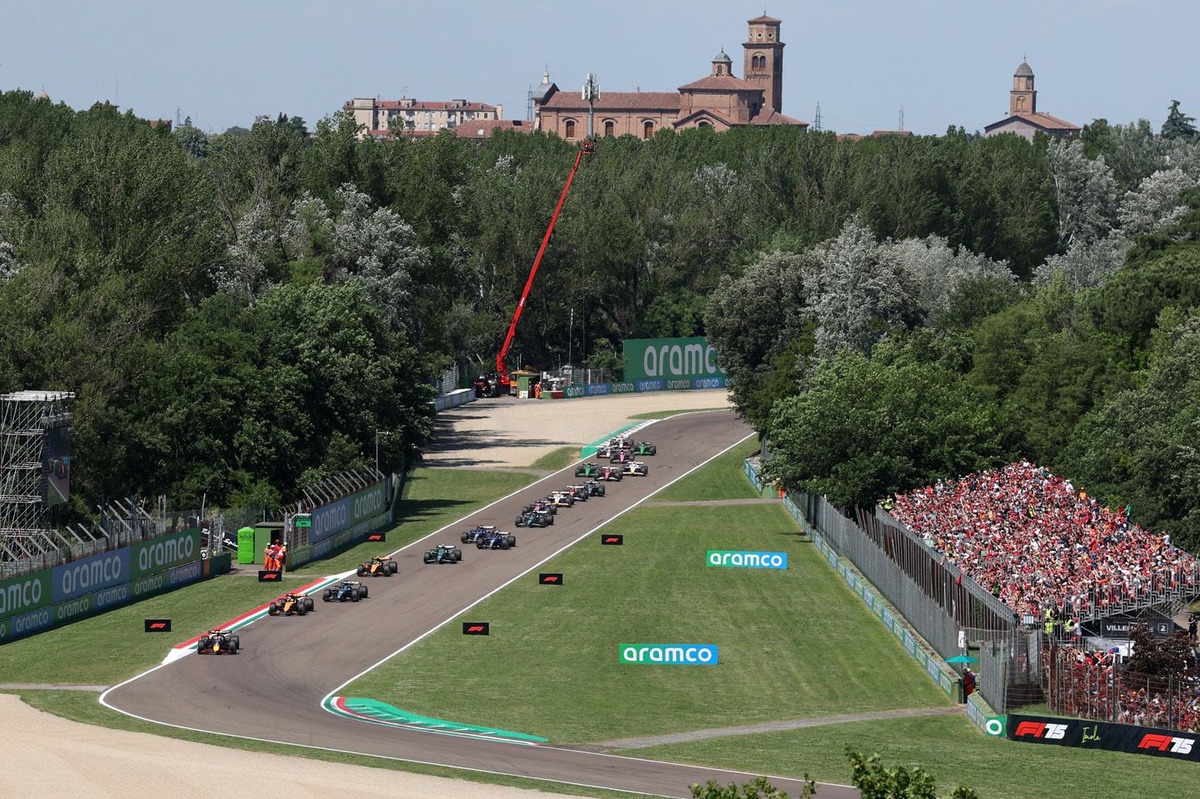
    Sources within F1 have confirmed to Motorsport.com that organizers in Imola have now been instructed to build grandstands and continue all preparatory work as if the Emilia-Romagna Grand Prix will take place on the first weekend of December. This proactive stance does not guarantee the race will happen; Qatar and Abu Dhabi remain the primary target. However, Formula One Management (FOM) must press ahead with an alternative to guarantee a season finale after the Las Vegas Grand Prix in any eventuality.

    Financial Risk Absorbed by Formula One Management

    Building grandstands and maintaining full operational readiness without final confirmation carries significant financial risk. According to paddock sources, F1 is covering all those risks directly. This means FOM is fully paying for the preparations—including the construction of the temporary grandstands—and Imola will not face any financial liability regardless of the outcome. Should the Imola option ultimately prove unnecessary, this approach will cost F1 money, but the sport views it as a necessary insurance policy. If the situation in the Middle East escalates further a month before the scheduled races in Qatar and Abu Dhabi, F1 cannot afford to be without a ready-to-deploy alternative. The strategy also underscores F1’s desire to wait as long as possible before making a final decision, while acknowledging the substantial financial attractiveness of the final two race weekends in the Middle East.

    Decision Timeline Shifts to Mid-October

    F1 CEO Stefano Domenicali initially indicated a decision would be made in mid-September, but the evolving geopolitical landscape has altered that schedule. Several team principals now point to mid-October as the new timeframe for clarity, although F1 stresses there is no hard deadline. From a logistical perspective, there remains relatively little urgency at this stage, provided Imola is fully ready to step in by the first weekend of December.

    The teams have been informed of this reality and are not particularly concerned for now, a sentiment echoed during Thursday’s press conference in Baku. Haas team boss Ayao Komatsu stated:

    “I believe that Stefano was targeting to tell us in mid-October, right? So, we all know what the situation is. I believe that Imola is getting ready in case we have to do it. I think the challenges are, for instance, things like European motorhome structure, etcetera. All those people who look after them, they have a winter job, so we need to find alternative people to do that. But I’m sure we all, as a family, community, will make sure if we have to do that, that will happen. But hopefully, as a baseline, we can go to Qatar and Abu Dhabi. That would be really good.”

    Audi team principal Mattia Binotto shares the same view and confirms the mid-October timeframe.

    “As we discussed during the F1 Commission last Monday, mid-October is the last call for such a decision.”

    Teams Briefed on Logistical Realities

    Binotto does not see potentially low temperatures as an obstacle to a possible season finale in Imola.

    “The main challenges are more organisation and logistics, I would think. From a technical point, often we may say wintertime, snow tyres, but at the end, as a matter of fact, the average temperature in Imola in that time of the year is hotter than Las Vegas by the time we’ve got the race in Las Vegas. So I don’t think that’s a true concern. It’s more from the organisation and the logistics, really. And again, mid-October, hopefully we may do the right decision.”

    The primary logistical hurdle identified by both Komatsu and Binotto revolves around the European motorhome infrastructure. Support staff who typically manage these facilities have winter employment commitments, requiring F1 and teams to source alternative personnel if the Imola race proceeds. Despite these complexities, the paddock mood remains pragmatic, with a clear preference for the established Middle East finale but full readiness to adapt.

    Why This Matters

    The activation of a formal Plan B for the 2026 season finale highlights the increasing complexity of managing a global sporting calendar amid geopolitical volatility. Formula 1’s commitment to covering Imola’s preparation costs—estimated to be substantial given the need for temporary grandstands and full circuit homologation—demonstrates the high stakes involved in protecting the integrity of the championship schedule. The Middle East races in Qatar and Abu Dhabi are not only lucrative but strategically vital to F1’s commercial model, making their potential loss a significant financial and operational blow. The shift of the decision deadline to mid-October reflects a calculated balance: maximizing the window to assess the security situation while retaining enough time to execute a European pivot. For teams, the logistical scramble—particularly re-staffing motorhome operations deep into the off-season—underscores the human resource challenges that often accompany calendar fluidity. Ultimately, this contingency planning ensures that whatever unfolds in the Middle East, Formula 1 can crown its 2026 champions on track, not in a boardroom.

    Frequently Asked Questions

    Why is Formula 1 preparing Imola as a backup for the 2026 season finale?

    Formula 1 is preparing Imola as a contingency (Plan B) because continued unrest in the Middle East creates a risk that the scheduled season-ending races in Qatar and Abu Dhabi could be cancelled. F1 needs to guarantee a finale after the Las Vegas Grand Prix regardless of geopolitical developments.

    Who is paying for the Imola preparations?

    Formula One Management (FOM) is covering all financial risks associated with Imola’s preparations, including the construction of temporary grandstands. The circuit will not face any financial liability whether the race proceeds or not.

    When will a final decision be made on the 2026 season finale location?

    While F1 stresses there is no hard deadline, multiple team principals—including Ayao Komatsu (Haas) and Mattia Binotto (Audi)—indicate mid-October as the expected timeframe for a final decision, aligning with discussions at the recent F1 Commission meeting.

  • F1 Sprint 2027: Key Rule Changes and Format Updates Revealed

    F1 Sprint 2027: Key Rule Changes and Format Updates Revealed

    Key Highlights

    • The 2027 Formula 1 calendar will feature a record 10 Sprint events, up from six in the 2023-2026 period, driven by data showing 12% higher viewership on Sprint weekends.
    • Five venues will host a Sprint for the first time: Bahrain, Australia, Japan, Monaco, and Abu Dhabi, with the season opening with three Sprints in the first four race weekends.
    • The season finale will feature back-to-back Sprint weekends in Qatar and Abu Dhabi, increasing championship-deciding points availability across the final two rounds.

    Sprint Format Expansion Driven by Audience and Attendance Data

    Formula 1 has confirmed a significant expansion of the Sprint format for the 2027 season, increasing the total number of Sprint weekends to 10—four more than the six scheduled annually between 2023 and 2026. The decision follows the release of internal data indicating that total viewership for Sprint weekends is 12% higher than for traditional Grand Prix weekends. Additionally, Sprint Qualifying sessions attract up to three times the audience interest compared to the second practice session they replace on Friday afternoons. Fan engagement metrics further support the move: 82% of attendees at Sprint events report that the format adds value to their ticket by delivering competitive sessions across three days instead of two, while 75% of surveyed F1 fans believe Sprint events enhance the overall value of the season calendar.

    Five New Venues Join the Sprint Calendar, Including Historic Monaco Debut

    The 2027 schedule introduces Sprint weekends at five circuits hosting the format for the first time. The season opener in Bahrain, followed by the Australian Grand Prix, the Japanese Grand Prix, the Monaco Grand Prix, and the season finale in Abu Dhabi will all adopt the compressed format. The inclusion of Monaco is particularly notable; the Principality’s street circuit is renowned for producing one of the most spectacular qualifying sessions of the year as drivers navigate the tight, twisty streets of Monte Carlo. Under the new structure, fans will witness two high-stakes qualifying sessions: Sprint Qualifying on Friday, followed by the Sprint race on Saturday morning (replacing FP3), and finally the traditional Grand Prix Qualifying later on Saturday.

    Returning Venues and Strategic Calendar Weighting

    Five established Sprint venues round out the 2027 roster. Canada retains its Sprint for a second consecutive year after a dramatic battle for the lead between Mercedes teammates George Russell and Kimi Antonelli earlier in the 2025 season. Silverstone hosts its third Sprint, having staged events in 2021 and 2025, while Monza welcomes its second Sprint six years after the Temple of Speed hosted the format’s inaugural Italian edition. Brazil extends its record as the most frequent Sprint host with a sixth event at Interlagos in São Paulo, and Qatar returns for a fourth Sprint in five years at the Lusail International Circuit. The calendar is strategically weighted: the season begins with three Sprints in the first four race weekends, rewarding teams that demonstrate immediate competitiveness, while the championship concludes with back-to-back Sprint weekends in Qatar and Abu Dhabi, placing a premium on consistency and performance under maximum points pressure.

    Sprint Weekend Format Refines Competitive Intensity

    The Sprint race itself covers 100 kilometers—approximately one-third of a standard Grand Prix distance—and lasts roughly 30 minutes. Unlike the main race, there are no mandatory pit stops; while not explicitly banned, the short duration makes a stop for fresh tires strategically unviable. Points are awarded to the top eight finishers on a sliding scale from eight points for the winner down to one point for eighth place. The weekend structure condenses practice to a single 60-minute session, replacing the traditional three one-hour sessions. Sprint Qualifying mirrors the knockout format of the main qualifying session but with truncated segments: SQ1 runs for 12 minutes, SQ2 for 10 minutes, and SQ3 for just eight minutes. The net effect across the season is a substantial increase in competitive track time relative to practice running.

    Why This Matters

    The expansion to 10 Sprint events represents the most aggressive adoption of the format since its 2021 introduction, signaling Formula 1’s confidence in the commercial and sporting viability of the shorter race model. By front-loading the calendar with three Sprints in the opening four rounds, the series incentivizes early-season development readiness and reduces the margin for teams to “grow into the year.” The back-to-back Sprint finale amplifies the potential for late-season championship swings, as a maximum of 16 additional points (plus potential fastest lap points in the main races) become available over the final two weekends. For promoters, the guaranteed three-day action ticket—validated by the 82% attendee satisfaction rate—strengthens the commercial proposition. For broadcasters, the elevated viewership data for Sprint Qualifying specifically addresses the long-standing challenge of Friday audience engagement. The Monaco inclusion also resolves a longstanding debate about whether the format could work on a street circuit where overtaking is minimal; the FIA and F1 clearly believe the qualifying spectacle alone justifies the experiment.

    Frequently Asked Questions

    How many Sprint events are on the 2027 Formula 1 calendar?

    There are 10 Sprint events scheduled for the 2027 Formula 1 season, an increase of four compared to the six held annually from 2023 through 2026.

    Which circuits are hosting a Sprint for the first time in 2027?

    Bahrain, Australia, Japan, Monaco, and Abu Dhabi will all host a Sprint weekend for the first time in 2027.

    How does the Sprint format change the standard weekend schedule?

    A Sprint weekend reduces practice sessions from three one-hour sessions to a single 60-minute session. Friday features Sprint Qualifying (replacing FP2), Saturday morning hosts the 100km Sprint race (replacing FP3), and Saturday afternoon retains the traditional Grand Prix Qualifying. The main Grand Prix remains on Sunday.

  • Imola Could Return to the F1 Calendar in Place of the Qatar or Abu Dhabi Grand Prix

    Imola Could Return to the F1 Calendar in Place of the Qatar or Abu Dhabi Grand Prix

    Formula 1 may be forced to make a decision about the final races of the 2026 season as the conflict involving Iran, Israel and the United States continues to destabilise the Middle East and cast doubt over the Qatar and Abu Dhabi Grands Prix. An unexpected alternative has reportedly emerged, with Italy potentially preparing to host a second race on the 2026 F1 calendar.

    Could Imola host the 2026 Qatar Grand Prix?

    The 2026 Formula 1 World Championship is scheduled to conclude with the Qatar Grand Prix on 29 November. However, the race may not take place at its usual venue, Lusail International Circuit. Instead, the event could reportedly be moved to the Enzo e Dino Ferrari circuit in Imola.

    The possibility of Imola deciding the 2026 world championship is considered realistic, although several logistical and weather-related issues would need to be resolved.

    A decision is expected by 15 September, between the Spanish Grand Prix in Madrid and the Azerbaijan Grand Prix. Formula 1 will need to determine whether the final two scheduled races in Qatar and Abu Dhabi can go ahead. Qatar is due to host its race on 29 November, followed by Abu Dhabi on 6 December.

    Instability in the Gulf remains a concern, with the United States and Iran yet to reach a definitive agreement regarding the passage of ships through the Strait of Hormuz. With time running out, the organisational window for making changes to the 2026 calendar is rapidly closing.

    Imola could return to the F1 calendar

    Formula 1 president and CEO Stefano Domenicali is reportedly working to find a suitable way to conclude the 2026 championship. One possibility is moving either the Qatar or Abu Dhabi race to Imola, following the same principle that is expected to see the Bahrain Grand Prix take place at Malaysia’s Sepang circuit on 4 October.

    The plan would give Imola back the race it lost in 2023 after floods devastated the surrounding region. If the proposal goes ahead, Qatar could provide the budget for the event, with the promoter handling the entire promotional campaign. Race operations would be entrusted to ACI and Formula Imola, the company responsible for the Enzo e Dino Ferrari circuit.

    Under this arrangement, sponsorship revenue and grandstand ticket sales would go to the Middle Eastern promoter, while Imola would be reimbursed for the costs of organising the race.

    The proposal could satisfy all sides. Qatar, like Bahrain, would retain its place on the Formula 1 calendar, while Liberty Media would ensure that the season includes 22 races. That would help F1 avoid potentially substantial penalties from television broadcasters whose agreements refer to a 22-event championship.

    Imola would return to the calendar unexpectedly, while Geronimo La Russa, president of ACI Italy, would benefit from a second world championship race on Italian soil without having to fund the event. For Domenicali, it would provide an effective way to resolve the calendar situation.

    The teams have reportedly made provisional hotel bookings in the Imola area as a precaution.

    Fog could create a major Imola problem

    The Enzo e Dino Ferrari circuit would face a significant challenge if it hosted a race at the end of November: the risk of poor weather. The main concern would not be cold temperatures or rain, but fog.

    Fog could prevent the helicopters responsible for circuit safety from flying, bringing track activity to a standstill. With daylight hours becoming shorter, the event schedule would also need to be revised if the Qatar Grand Prix moved to Emilia-Romagna. Qualifying and the race would likely be brought forward to reduce the risk of darkness affecting the event.

    For now, the proposal remains confidential and has not been officially discussed. The hope is that US president Donald Trump will find a definitive solution to end the conflict he started with Iran. However, Italian fans would be excited by the prospect of the championship battle between Mercedes driver Kimi Antonelli and Ferrari being decided on home soil.

    Source: www.motorsport.com