Tag: 2027 Season

  • Monaco F1 Sprint: Good Idea or Madness? Writers Have Their Say

    Monaco F1 Sprint: Good Idea or Madness? Writers Have Their Say

    F1 Expands Sprint Format to 10 Races in 2027, Including Controversial Monaco Addition

    Formula 1 has confirmed a significant expansion of its sprint format for the 2027 season, increasing the number of sprint weekends from six to ten. While the commercial rationale is clear—promoters gain higher-value Friday and Saturday sessions, and viewership data shows stronger engagement compared to traditional practice—the decision to introduce a sprint race at the Monaco Grand Prix has sparked intense debate among pundits and purists alike.

    Monaco Sprint Alters Historic Weekend DNA

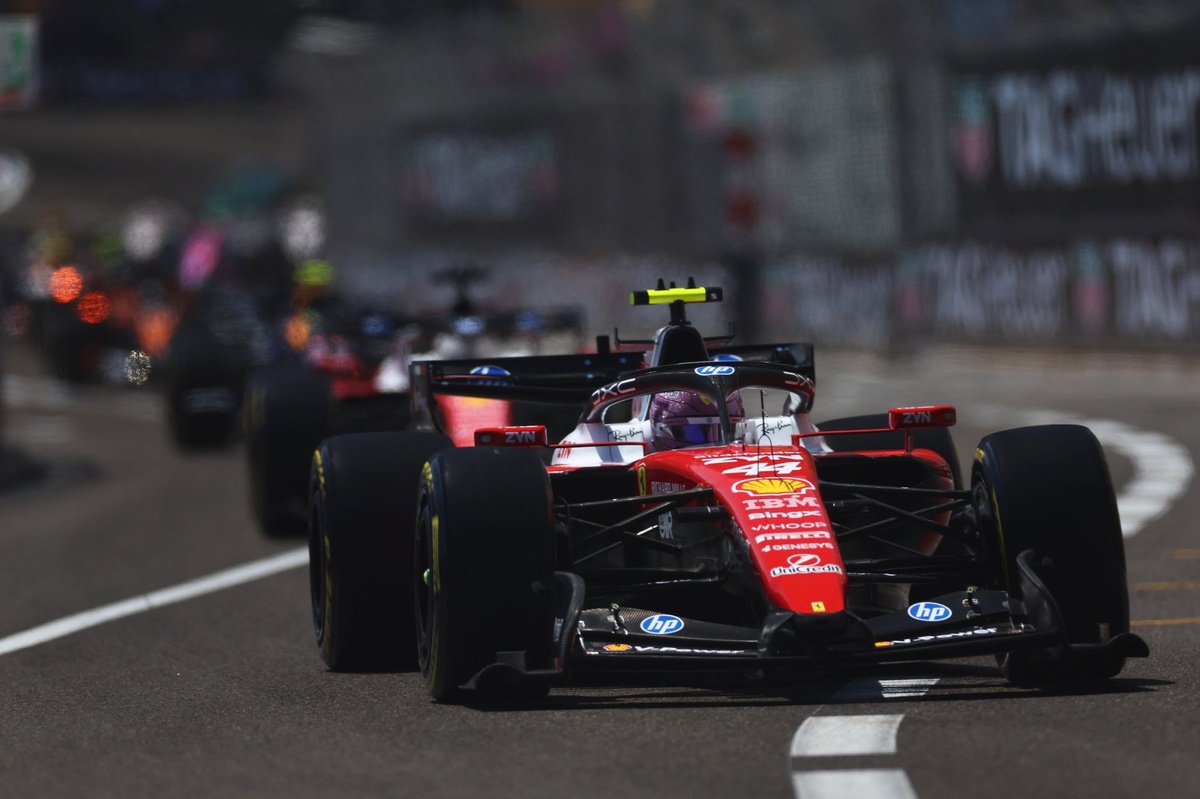
    The inclusion of Monaco marks the most radical departure yet for the sprint concept. Traditionally, the Monte Carlo weekend follows a unique rhythm: a gradual, session-by-session build-up where drivers edge closer to the barriers, culminating in a high-stakes qualifying session on Saturday afternoon. That crescendo is now disrupted by a Saturday morning sprint race and a second qualifying session—Sprint Qualifying—effectively delivering two “pole position” shootouts in 24 hours.

    Ronald Vording argues this fundamentally changes the character of the event. “Two qualifying sessions in Monaco will undoubtedly be spectacular, but this changes the DNA of the Monaco weekend and the way drivers build it up – and I’m not sure the purist in me necessarily needed that to change.” He notes that the trackside experience—watching drivers progressively find the limit at Piscine and Tabac across FP1, FP2, and FP3—is an art form in itself. Max Verstappen’s 2018 FP3 crash, which forced him to miss qualifying in a potential race-winning car, exemplifies the risk-reward dynamic that defined the traditional build-up.

    With a sprint race now preceding the main qualifying session, drivers may adopt a more conservative approach on Saturday morning to protect their primary grid position. The unique tension of a single, all-or-nothing qualifying lap is diluted, replaced by a format that prioritizes commercial inventory over the circuit’s distinctive sporting challenge.

    Calls for Format Innovation: Reverse Grids and Qualifying Shootouts

    Beyond Monaco, the broader expansion to ten sprint weekends raises questions about the format’s sporting value. Oleg Karpov suggests F1 should be bolder in differentiating the sprint from a “mini-grand prix.” In its current form, the sprint offers little strategic variance—no pit stops, same tyre compounds, same grid order logic—effectively handing extra points to the frontrunners and widening the gap to the midfield.

    Karpov proposes a reverse-grid sprint based on championship standings, arguing it would create genuine jeopardy and showcase midfield and backmarker teams. “We’d see Cadillac and Williams drivers trying to salvage a few more points in such races, and that would surely add another intrigue: how many places can the championship leaders still gain, starting from the back?” He acknowledges the artificiality but counters that purpose-built racing cars on designed circuits are inherently unnatural constructs.

    A third perspective advocates for a one-lap qualifying shootout on sprint weekends, run in championship order—slowest team first, fastest last. This would introduce variable track conditions as a leveller without the sporting controversy of a full reverse grid. Crucially, this format would apply only to the sprint grid, preserving the integrity of Sunday’s Grand Prix qualifying.

    Has F1 Conceded Monaco as a Race?

    The Monaco sprint decision carries a symbolic weight. After the failed mandatory two-stop experiment in 2025 failed to manufacture overtaking, the sprint pivot reads as an acceptance that the Grand Prix itself will remain a procession. Instead of addressing the root cause—track layout and car dimensions—F1 is leaning into Monaco’s strongest asset: qualifying spectacle.

    From a promoter’s perspective, two high-stakes qualifying sessions are a commercial masterstroke. From a sporting standpoint, it risks normalizing the idea that certain races are “write-offs” in advance, with the weekend’s competitive narrative shifted entirely to Saturday. As the calendar expands and sprint events proliferate, the pressure to differentiate the format—and justify its existence beyond revenue generation—will only intensify.

    2027 Sprint Calendar at a Glance

    The ten sprint venues for 2027 include a mix of traditional circuits and newer street tracks. Notably, the Canadian Grand Prix joins the list alongside Monaco, signaling F1’s commitment to the format across diverse circuit types. The full slate reflects the championship’s strategy to maximize “meaningful sessions” per weekend, but the debate over sporting purity versus commercial optimization remains unresolved.

  • Audi Junior, F3 Runner-Up Freddie Slater Set for 2027 F2 Debut

    Audi Junior, F3 Runner-Up Freddie Slater Set for 2027 F2 Debut

    Formula 3 runner-up Freddie Slater, a member of the Audi Driver Development Programme, will graduate to Formula 2 with Invicta Racing for the 2027 season.

    Standout Rookie Campaign Earns F2 Promotion

    The 18-year-old British driver completed a remarkable debut season in FIA Formula 3, securing one Feature Race victory, three pole positions, and eight total podium finishes. Slater narrowly missed the 2024 championship title, finishing 14 points behind champion Ugo Ugochukwu after a season-long battle that extended to the final round.

    Audi Backing Continues Through Single-Seater Ladder

    Slater joined the Audi Driver Development Programme as its inaugural member earlier this year. The manufacturer’s support has accompanied his rapid ascent through the junior ranks, which includes titles in the Ginetta Junior Championship, success in Italian and UAE Formula 4, and a strong showing in the Formula Regional European Championship before stepping up to F3.

    Invicta Racing: Back-to-Back Champions

    Invicta Racing enters 2027 as the dominant force in Formula 2, having claimed consecutive Drivers’ and Teams’ Championships in 2024 and 2025. The squad’s proven track record and technical infrastructure made it a natural destination for Slater’s next career step.

    Allan McNish: “Natural Next Step” for Development

    Allan McNish, Director of the Audi Driver Development Programme said: “The move to Formula 2 is the natural next step for Freddie, and an important new phase of his development as a driver.

    “He enjoyed a strong Formula 3 season, fighting for the title until the final round – showing his speed, racecraft and progress throughout the year. We are very proud of what Freddie has achieved this season and how he has developed along the way.

    “Invicta Racing has had an excellent record in recent years, and we are delighted to be working with them. We believe it is the ideal environment for him, and we look forward to supporting him as he takes on this new challenge in 2027.”

    Slater “Excited” for New Challenge with Invicta

    “I’m really excited to be stepping up to Formula 2 with Invicta Racing next year,” Slater added. “I learned a lot in Formula 3 this season, and I feel I have developed as a driver and as a person over the course of the year.

    “Invicta has a great record in Formula 2, and I cannot wait to get started with the team and prepare for our campaign together.

    “I am also very grateful for the continued support from the Audi Driver Development Programme. There is still a lot for me to learn, and I’m really looking forward to taking on this new challenge.”

  • Spanish GP Promises Madrid Circuit Changes After F1 Criticism

    Spanish GP Promises Madrid Circuit Changes After F1 Criticism

    Organisers of the Formula 1 Spanish Grand Prix at Madrid’s new Madring circuit are preparing layout modifications for the 2027 event to address a lack of overtaking opportunities that defined the venue’s inaugural weekend. The 5.4km track, constructed around the IFEMA fairgrounds, earned praise for its facilities and qualifying challenge but produced limited on-track action across F1, F2, and F3 races.

    Overtaking Issues Dominate Post-Race Analysis

    The primary passing zone was intended to be the Turn 5 chicane at the end of the circuit’s longest straight. However, the corner’s geometry—requiring combined braking and steering—allowed leading cars to defend easily. Drivers raised these concerns during Friday night’s briefing, highlighting multiple corners where simultaneous braking and turning neutralized overtaking potential. The circuit’s lengthy pitlane was also criticised for discouraging alternative pitstop strategies.

    Organisers Commit to Changes for 2027

    Speaking exclusively to Motorsport.com after Sunday’s race, event managing director Luis Garcia Abad confirmed his team is ready to implement necessary modifications. He revealed that the FIA has already provided specific recommendations for the 2027 layout.

    “Being honest with you, the FIA defined clearly which is the way to improve the track layout, and we will be open because we will have to reinstall the track for the next year,”

    Abad told Motorsport.com.

    “I really believe that the drivers enjoyed qualifying a lot. But for sure we will try to make an improvement for next year.”

    The Madrid race is the first year of a 10-year contract. With the northern half of the circuit built on previously empty land, Abad emphasised the physical capacity for significant revisions.

    “We have the space, we have a venue, we have the facilities, we have the capacity to do it,”

    he promised.

    “I’m sure that FOM, FIA, and ourselves, we will try. If we can improve something, we will do it.”

    Norris Proposes Specific Layout Revisions

    World champion Lando Norris offered detailed suggestions after the race, advocating for a high-speed straight linking Turn 17 to Turn 20 to create a heavy braking zone similar to corners at Circuit of the Americas.

    “To me, it’s not a great racetrack. It’s great in qualifying, but a straight line from Turn 17 straight to Turn 20 [would help], to have a much wider entry like Austin Turn 1 or Turn 10, a big hairpin. You’ll create much better opportunities for everyone and you’ll be able to enjoy the race.”

    Norris also identified the Turn 5-6-7 complex as a key area requiring attention.

    “There are some simple changes and maybe some trickier ones, like Turn 5, 6, 7. It’s hard to know exactly what is the best thing. The fact you have to turn and brake [at the same time] basically defeats the whole object of racing.”

  • Analysis: Why Franco Colapinto Was Rewarded with an Alpine Contract Extension

    Analysis: Why Franco Colapinto Was Rewarded with an Alpine Contract Extension

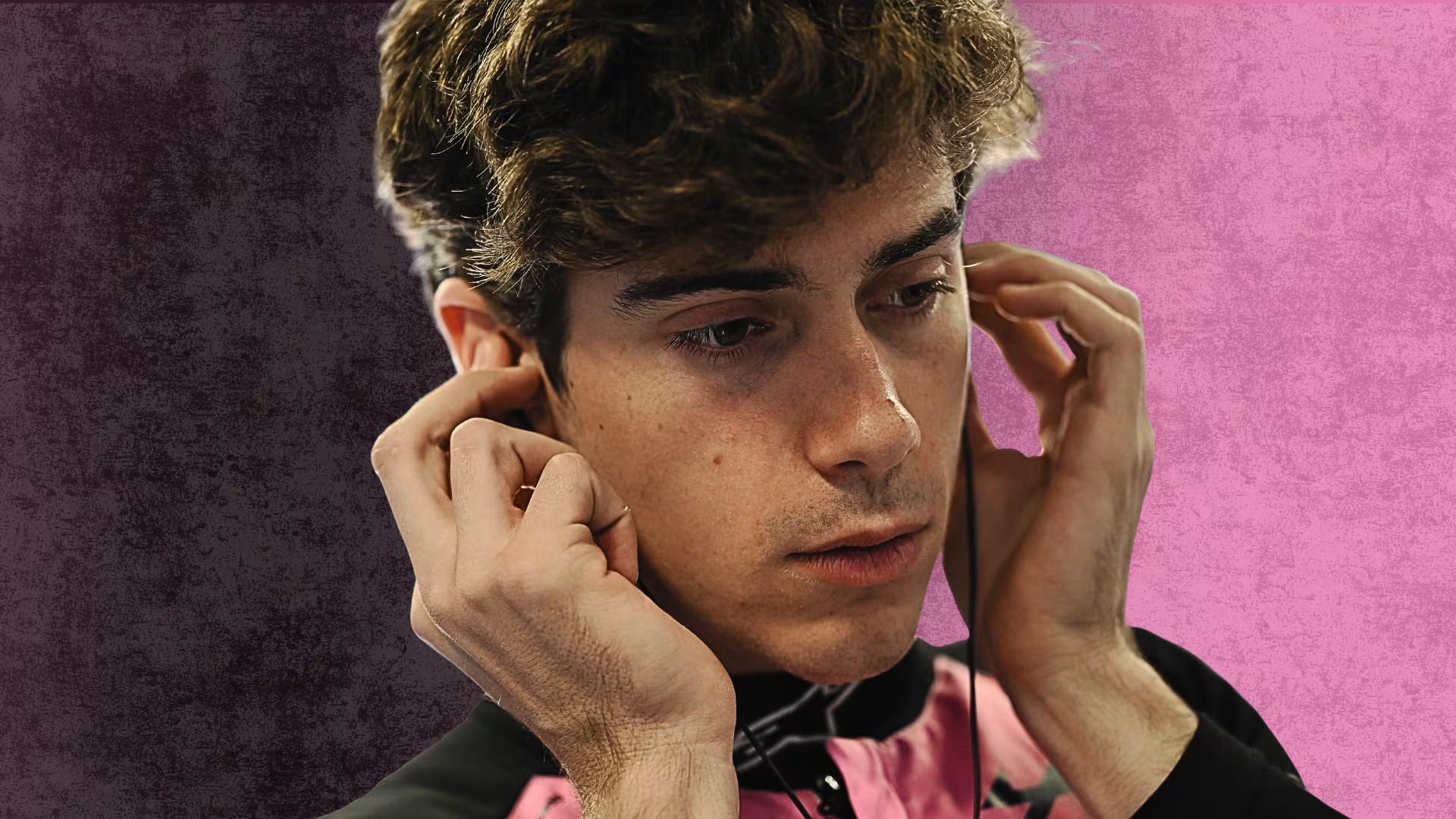
    Franco Colapinto has secured a contract extension with Alpine Formula 1 Team, locking in his race seat for the 2027 season alongside teammate Pierre Gasly. The announcement rewards the Argentine driver’s significant step forward in performance during the 2026 campaign.

    From Reserve to Race Leader

    Colapinto joined Alpine as a reserve driver in 2025 following a strong nine-race debut with Williams at the tail end of 2024, where he replaced Logan Sargeant. He was promoted to a race seat early in the 2025 season after Jack Doohan’s departure, ultimately fending off a challenge from reserve driver Paul Aron to retain the drive for 2026.

    Turning Point in 2026

    The 23-year-old’s early season form was inconsistent. Executive Advisor Flavio Briatore stated at the time that he felt Colapinto was “lost” before finding himself and his form and maturing into a “different” driver later in the season.

    That maturity translated into results. Colapinto has scored points in six of the first 12 Grands Prix of 2026, with a season-high finish of sixth place in Montreal. Combined with Gasly’s continued high performance — the Frenchman is under contract until at least the end of 2028 — Alpine sits sixth in the Constructors’ Championship, meeting the minimum target Briatore set for the year.

    Stability for a Rebuilding Project

    Alpine evaluated other options but was ultimately convinced by Colapinto’s improved on-track pace, growing maturity, and tenacity. His strong working relationship with Gasly fosters team harmony, while his rapport with Briatore and the wider engineering group has deepened.

    Commercial factors also played a role. Colapinto brings significant financial backing and a massive South American fanbase, enhancing the team’s sponsor appeal in the region. This all-round package led to the decision, with the driver believed to have been informed during the Dutch Grand Prix weekend at Zandvoort.

    Focus Shifts to 2027 Ambitions

    With the driver lineup settled early, Alpine can concentrate fully on its primary challenge: closing the performance gap to the frontrunners. The team remains in a rebuilding phase, and lineup stability is seen as critical to accelerating development.

    The early renewal also removes contract uncertainty for Colapinto, allowing him to focus on maximizing results over the remainder of 2026. Alpine is currently battling for fifth place in the Constructors’ Championship, a position the team believes is achievable by season’s end.

    That momentum would set up 2027 — when the squad will be rebranded as the Gucci Racing Alpine Formula One Team — with ambitions to significantly reduce the deficit to the top teams.

    Williams Door Closed

    Speculation linked Colapinto with a return to Williams, the team where he made his F1 debut. However, the British outfit has retained Carlos Sainz and Alex Albon for 2027, making Alpine the most logical and, ultimately, the only viable landing spot.

    Colapinto is reportedly very happy within the Alpine structure. Having failed to score in 2025, he absorbed the pressure to deliver in 2026 with impressive resilience. The challenge now is to maintain his upward trajectory and return to consistent points finishes for the rest of the season.