Lewis Hamilton Says Ferrari Had Pace to Win Spanish GP Before Brake Failure
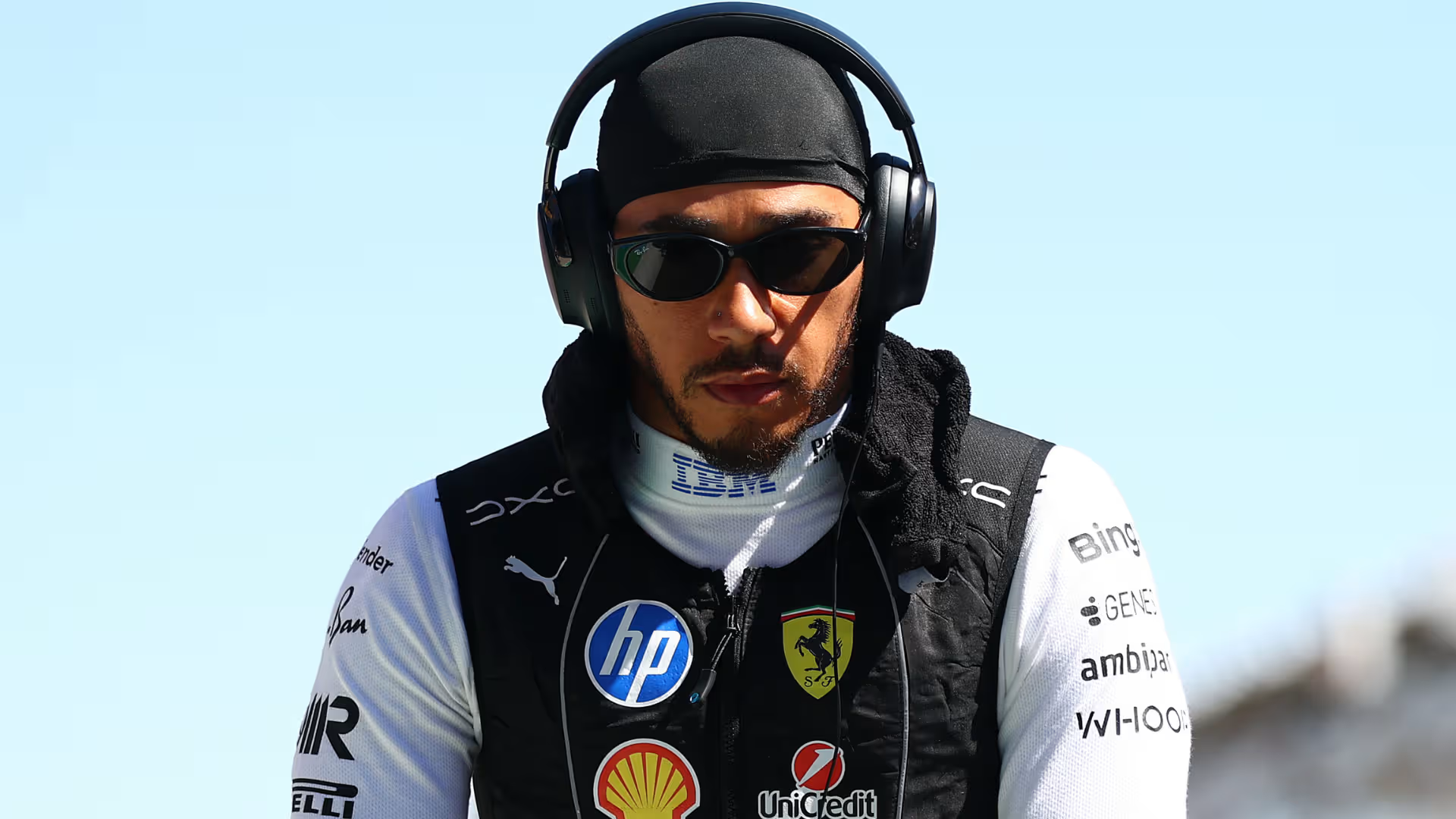
Lewis Hamilton insisted Ferrari “had the car to fight for a win” at the Spanish Grand Prix after the seven-time world champion suffered an early retirement due to brake problems at Formula 1’s newest venue, the Madring.
Early Retirement at Madring
The Briton started fourth for Sunday’s 57-lap race and made a strong launch on the soft Pirelli compound. Hamilton initially moved ahead of Max Verstappen’s Red Bull on the run to Turn 1 and briefly threatened to overtake front-row starters Lando Norris and Kimi Antonelli before backing out. After Verstappen cut the first corner, Hamilton was handed back third place, but braking issues emerged in the opening laps. He reported over team radio that he had glanced the wall.
Hamilton continued to lose positions over the following laps and ran deep into the Turn 20 run-off area. He rejoined the circuit before pulling into the pits and retiring after just seven laps.
Hamilton: Wall Contact Not Root Cause
“It was already basically before that,” Hamilton told Sky F1 when asked if the contact with the wall had caused the braking issue.
“Braking for Turn 5 I hit the brake, the car started stopping and then the pedal took a step and all of a sudden the car didn’t de-accelerate as fast a normal.
“I ended up carrying a lot of speed in and just brushed the barrier. After that the pedal came back and then a few corners later, the pedal went long. I don’t really know where that’s come from.”
Leclerc Leads Laps, Finishes Fourth
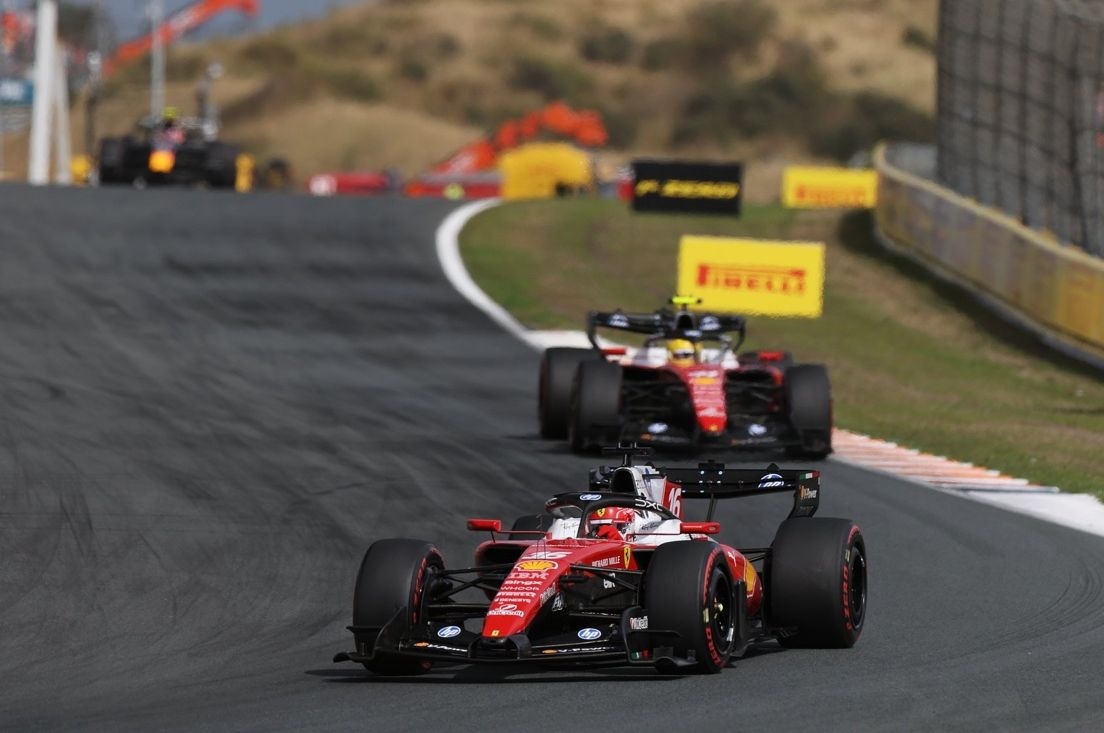
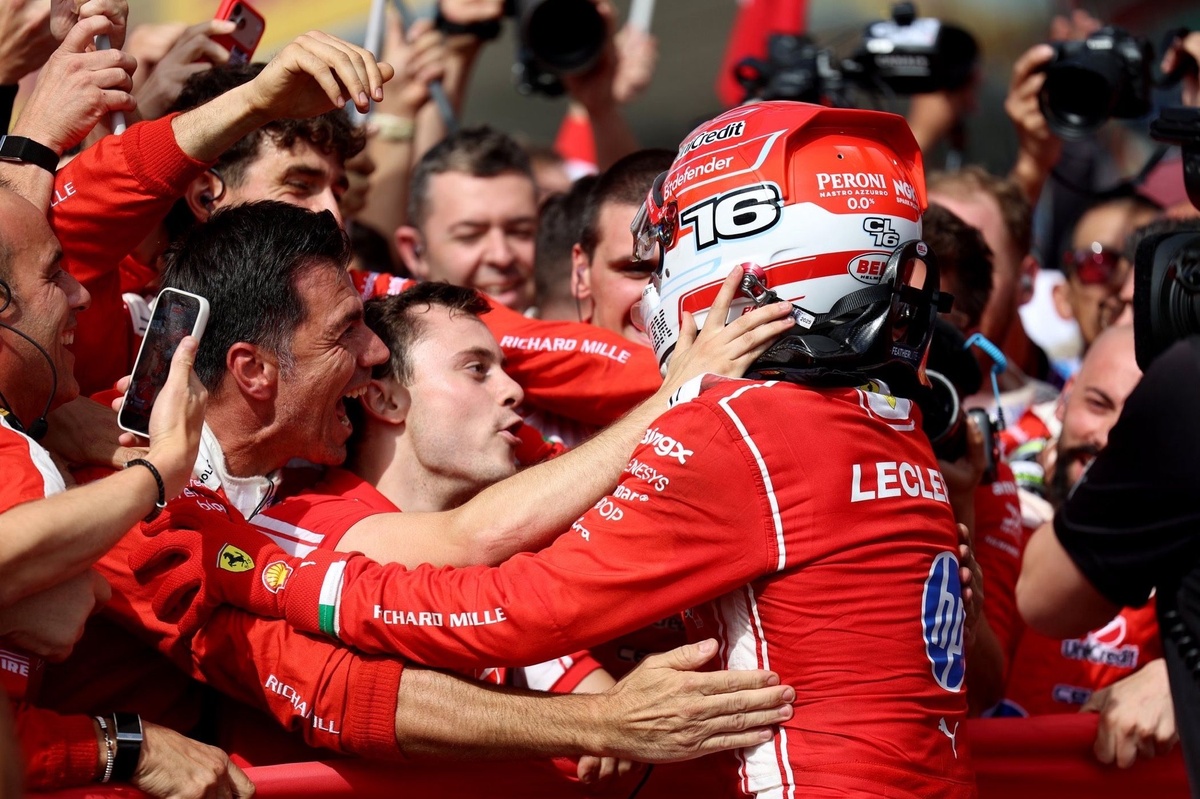
Hamilton had challenged for pole position on Saturday. In Sunday’s race, team-mate Charles Leclerc led the most laps as Ferrari tried to keep the Monegasque driver out in the hope of a late Safety Car period before ultimately finishing fourth.
Hamilton Praises Team, Eyes Future Wins
“We’ve had a pretty decent car, a good car this weekend and I think we will continue to try and improve it and I think we have better results coming in the future,” said Hamilton.
He added: “I think the team’s done an amazing job, so I’m sad for them today that they couldn’t get max points. I think we had the car to fight for a win today, and unfortunately it just didn’t work out.”
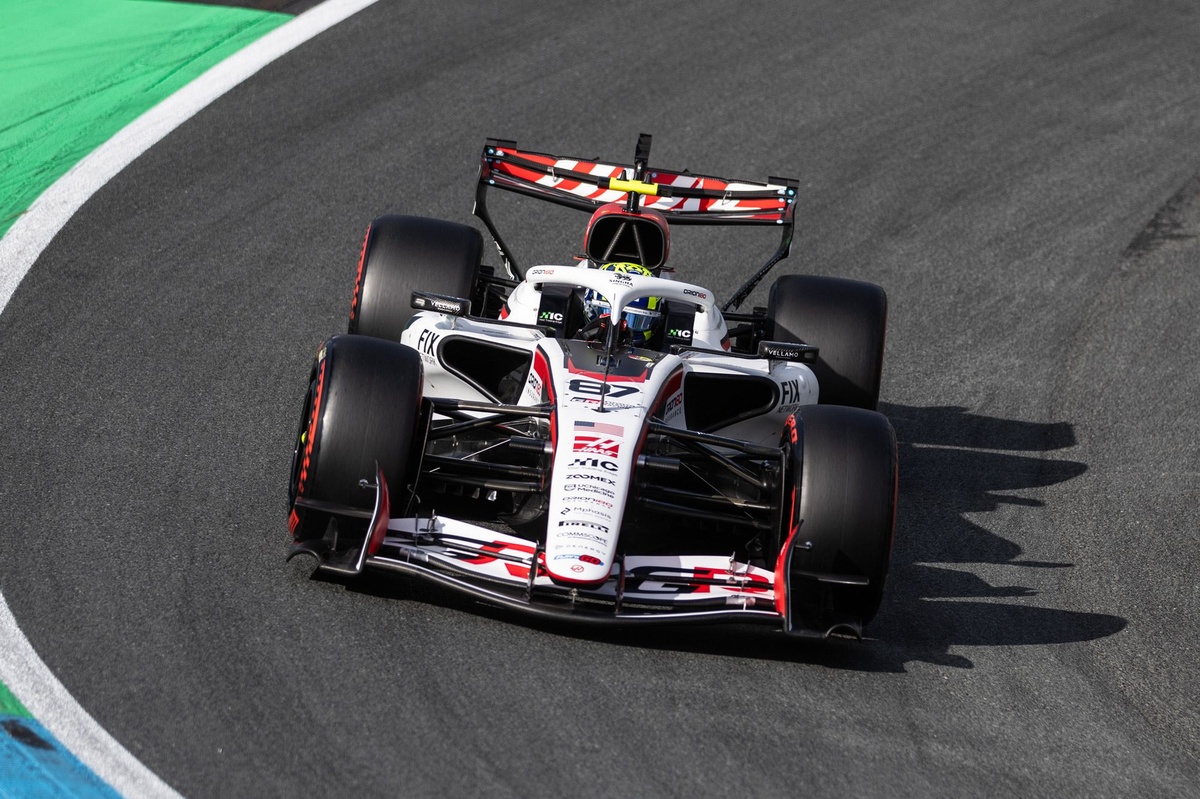
Haas has admitted that its rivals have overtaken and out-developed the team during the 2026 Formula 1 season, despite a strong start. Team principal Ayao Komatsu and driver Oliver Bearman remain confident that Haas can close the gap “soon”.
Haas traditionally begins each season strongly, and it maintained that trend in 2026 by scoring points in the opening three races. That run included a fifth-place finish for Bearman at the Chinese Grand Prix.
However, the team has since been caught by its rivals as it struggles with an inconsistent car and a slower development rate than midfield competitors Alpine and Racing Bulls.
“2025 was really the first year for us, or one of very few years, where we seemed to have good pace throughout the year,” Bearman explained ahead of the Dutch Grand Prix. “We actually improved our relative performance as the year went on.
“Now, 2026 is more of what we’ve seen from Haas in the past, of starting incredibly strong with a really quick car as a base, but not being able to improve like the others have.
“Quite frankly, we’ve been overtaken right now. We are the 10th-best team. It really hurts, myself and all the others. We were working really hard to make that not be the case, but that’s the reality of where we are right now.”
Haas has not scored points since the Monaco Grand Prix in June, when Esteban Ocon finished ninth. Since then, inconsistency has limited the team’s ability to extract the maximum performance from its 2026 car.
Haas will not abandon its 2026 Formula 1 car
Komatsu remains hopeful that Haas can find solutions to the problems affecting its car. The team principal said the organisation has demonstrated over the past two seasons that it has the technical capability to develop its machinery.
“So, the last two years, I think we proved to ourselves and the outside world that we can develop the car. We’ve got the people, the technical department is functioning,” Komatsu said ahead of the Zandvoort race.
“For us to have any remote chance of keeping up with the others, because of the size of our team, everything has to be perfect. But that’s just not realistic in anyone’s life. And the Montreal upgrade wasn’t perfect. Some bits worked, some bits made the car faster, but some bits wasn’t perfect. Actually, [it] made the drivability more difficult as well.
“So, we’re learning from those lessons. And what’s the objective for the rest of the season? For me, it’s the same as the last two years. We’ve got to prove to ourselves that we can identify the key issues, we can solve the issues and then put it on the car to move forward.”
Haas’s struggles have prompted questions about when the team will stop developing its 2026 challenger and switch its resources to next year’s car. Komatsu said that is not an option, insisting that Haas must unlock the performance of the VF-26. He believes that process will also benefit the team over the longer term.
“If you say, OK, fine, ‘26, we started well, but tail off, it’s the first year of regulation. Fine, let’s move on, start ’27. We haven’t solved the fundamental issue. If we do that, it doesn’t give confidence to people,” the Japanese engineer explained.
“They’ve got to believe in themselves. One of the main driving factors in the way they’re tackling now, together as a team, is the confidence and togetherness they’ve gained from the last two years. That’s why we are developing out of it.”
Haas confirms Monza upgrades for the Italian Grand Prix
Haas will bring new parts for the VF-26 to Monza this weekend for the Italian Grand Prix as it attempts to develop its way out of its current performance problems.
“This weekend, we’re bringing another upgrade package to the car,” Komatsu explained in a statement shared by the team. “So again, it’s critical we maximise our practice time, evaluate our data comprehensively, and strive to keep pushing in the midfield.”
Bearman cautioned, however, that new parts do not always result in an immediate improvement on track. He said Haas has seen significant differences in downforce from one race to another, meaning that improving the car’s consistency could be as valuable as introducing an upgrade.
“We have new parts coming,” the Briton said. “But we’re very sceptical in some ways. We have discrepancies in a race like Budapest. We have discrepancies of downforce equivalent to the size of an upgrade. If I have the car that I had in Spa, here [in Zandvoort], it’s like putting an upgrade on the car.
“An upgrade, I don’t know how much it costs, but many millions. If we can figure out how to get our car to work, it’s for free. If we get the upgrade but it doesn’t perform, then it’s like not getting it. There’s many factors at play, it’s a big challenge.”
Looking ahead to the Italian Grand Prix, Bearman believes Haas can move up to ninth in the Formula 1 constructors’ order. Aston Martin has recently introduced a major overhaul of its AMR26 and moved away from the back of the field, but Bearman expects Haas to hold an advantage at Monza because of the circuit’s power-sensitive layout.
“We expect to beat [Aston Martin] in Monza, where it’s a power track,” Bearman said. “But in Hungary, they were faster than us, or at least more consistent. Those are the facts in terms of that. That’s where we are.
“It really hurts to be sitting here saying that, but that’s the case.”
Ferrari team principal Fred Vasseur has urged the team to improve its Formula 1 race weekend execution as the performance gap between the leading 2026 teams continues to narrow.
After dedicating much of 2025 to preparing for the new regulations, Ferrari has produced a competitive SF-26 and continued to introduce upgrades aimed at giving Lewis Hamilton and Charles Leclerc a chance to win a grand prix. The team currently sits second in the constructors’ championship.
However, Ferrari failed to convert its pace into podium finishes at the last two races in Hungary and the Netherlands, despite having a car capable of challenging for the top three.
Ferrari missed opportunities in Hungary and the Netherlands
Ferrari appeared strong during practice at the twisty Hungaroring, a circuit expected to suit the team’s strengths, and Hamilton narrowly missed pole position. A poor start, a speeding penalty and slow pit stops subsequently prevented both drivers from finishing on the podium.
At Zandvoort, Ferrari believed it lost performance during qualifying after its tyres fell outside the ideal operating window. The team also missed further opportunities during the race to secure a podium on a circuit that suited the SF-26 and helped mask weaknesses in Ferrari’s power unit.
Photo by: Eric Le Galliot
Speaking exclusively to Motorsport.com, Vasseur acknowledged that Ferrari cannot afford to leave points on the table if it is to close the gap to Mercedes and hold off a resurgent McLaren. He also stressed that the team has made significant progress in recent seasons.
“Honestly, I think we made a huge step in terms of execution over the last two or three years. In terms of strategy, pitstops, we are doing well,” Vasseur said. “We missed opportunities mainly over the last two weekends, but I’m not sure that we missed more opportunities than McLaren or Mercedes from the beginning of the season.
“But if you want to be the champion, you can’t leave points on the table. We have to score the maximum number of points that we can.”
Ferrari focuses on execution as performance gaps shrink
Ferrari has introduced an impressive number of upgrades in recent weeks and months. Further aerodynamic components and an upgraded engine are expected for the team’s home race at Monza this weekend.
With the field continuing to converge in outright performance, Vasseur believes that maximising the car’s potential during every part of the race weekend is becoming increasingly important.
“You have two races. You have the development race; race after race, you are bringing parts to improve the potential. But then you have also to be at the limit of your potential,” he pointed out. “Sometimes you are doing well, sometimes not.
“It’s challenging this season because everything is new. Regulations, energy, tyres are different compared to last year, so it means that we have many more new questions on the table than we had last year, and it’s why we are all making more mistakes. But my job is also to minimise this number of mistakes. It doesn’t matter what the others are doing, but we have to minimise this.”
Photo by: Sam Bagnall / Sutton Images via Getty Images
Power unit performance remains crucial in Formula 1
Although teams have developed a better understanding of the complex 2026 power units and the regulations governing their operation, energy deployment can still have a major impact on performance.
“The power unit is the key. From one lap to the other you can still have a swing of performance,” the Frenchman cautioned. “It’s much less than what we had in China or Australia, where we were sometimes losing four, five tenths. Now we are losing one or two. But that’s four positions on the grid in Zandvoort. It means that we need to keep this [focus].
“I think it’s more linked to the fact that it’s a new area of regulations and a challenging year, but it’s one of the focus areas of the team for sure.”
Ferrari enters the Italian Grand Prix weekend 87 points behind Mercedes in the constructors’ standings. Hamilton is level on points with George Russell, with both drivers 59 points behind championship leader Kimi Antonelli.
Ferrari’s 2026 Formula 1 car, the SF-26, has emerged as one of the grid’s most innovative designs after debuting several striking aerodynamic solutions during winter testing in Bahrain.
The car featured an unusual vane behind the exhaust pipe on the opening day, internally known as FTM. One day later, Ferrari introduced an even more eye-catching rear wing that rotated 180 degrees between cornering and straight-line modes. The design was quickly nicknamed the “Macarena wing.”
Ferrari leads F1 innovation with SF-26
The exhaust wing and upside-down rear wing are only the most visible examples of Ferrari’s technical innovation. While both elements have had a relatively minor performance impact, their unusual appearance attracted significant attention and highlighted a Ferrari team increasingly willing to lead rather than follow its rivals.
Red Bull and McLaren have since introduced their own versions of the upside-down rear wing. Red Bull is believed to have developed its solution independently of Ferrari, while McLaren began work on its design after recognising the opportunity created by Ferrari’s concept.
Ferrari’s exhaust wing has also been widely copied, although rival teams have reportedly struggled to replicate it as effectively. Ferrari made specific rear-end design choices to accommodate the system, making the FTM difficult to reverse-engineer.
Lewis Hamilton, Ferrari
Photo by: Marcel van Dorst / EYE4images / NurPhoto via Getty Images
Ferrari’s innovative 2026 car is the result of a deliberate cultural shift led by team principal Fred Vasseur. Since joining the team at the start of 2023, Vasseur has focused on reducing blame culture at Maranello and encouraging engineers to take greater risks.
In an interview with Motorsport.com, Vasseur said Ferrari needed a change in mentality across every area of the team, not only aerodynamic design. In Formula 1, small performance gains can accumulate quickly, particularly as the field becomes more closely matched. Those margins can determine whether a driver starts from the front row or qualifies sixth.
“It’s true that from day one I had the feeling that we have to take more risks,” Vasseur explained. “More risk on track, more risk on the innovation, on the development to take a different direction compared to the others, not to follow the others.”
Ferrari’s willingness to take risks has not always produced the desired result. The team’s design choices, car set-up decisions and race strategies have occasionally taken it in the wrong direction. Charles Leclerc and Lewis Hamilton have both won a grand prix this year in a more competitive Ferrari, but Vasseur believes the team’s decision-making will improve as it continues to adopt a bolder approach.
“Sometimes it’s paying off, sometimes it’s not,” he said. “When you are a bit aggressive on strategy, sometimes you are a genius, like in Barcelona, and sometimes not, but we are the same guys on the pitwall.
“I think we need to develop this mentality because you are improving on taking risks. You will improve in the risk assessment. You will improve in the capacity to make decisions, it means that we have to continue to do so, and we will do better and better race after race.”
Cost cap raises the stakes for technical risks
Changing an established company culture takes time, which explains why the process has remained a major focus for Vasseur. Innovation also carries significant risks under Formula 1’s cost cap and development restrictions, as teams cannot simply invest unlimited money in experimental ideas.
“I’m very pleased with what we did in terms of options of development, because with the cost cap, when you are taking this direction, if it’s not paying off, it’s negative,” Vasseur explained. “It’s not that if it’s not paying off, it’s [just] a shame. You are putting your money, you are betting on something.”
Vasseur said he was “more than keen” for Ferrari to continue leading Formula 1’s development race. He believes the team’s changing culture is giving engineers the confidence to innovate instead of playing safe because they fear the consequences of failure.
“It was important for the guys in the team to feel the support from the company when they were innovating,” the Frenchman said. “I hope it’s only the start of this process, and that we will be able to continue to have the same approach and the same dynamic.
“We will have a convergence of directions that we are taking, because one of the favourite parts of F1 is also to copy the others. But if we can stay one step ahead and lead the pack on some topics on some projects, I am more than keen.
“For sure it will be more and more difficult, but it will be the same challenge for everybody.”
Frederic Vasseur, Ferrari
Photo by: Michael Potts / LAT Images via Getty Images
Carlos Sainz believes Formula 1’s regulation changes have played a major role in reshaping the competitive order among drivers in 2026.
F1 introduced its biggest rules overhaul last winter, changing both the chassis and power unit. The new regulations moved the sport away from ground-effect cars and introduced active aerodynamics, alongside a 50/50 split between internal-combustion and electrical power.
The changes created a fresh challenge for drivers, who had to adapt to different car characteristics and manage power units that were significantly different from those used during the 2022-25 era.
Sainz links F1 regulation changes to driver performance swings
Sainz believes that transition has contributed to the changes in competitiveness seen among drivers in 2026.
“Let’s start with one thing: it’s been impressive to see how much the performance balance between team-mates has changed. Not only between Antonelli and Russell, but also between Hamilton and Leclerc, and with Verstappen not being as dominant over Hadjar,” Sainz said in an exclusive interview.
“I think it’s a lesson for everyone. We’ve had confirmation that when the fundamental concept of a car changes, the competitive picture can change as well.
Lewis Hamilton, Ferrari, Charles Leclerc, Ferrari
Photo by: Joe Portlock / Getty Images
“It’s something I’ve always believed: a car can suit you extremely well or it can be far from what you would ideally want, but sooner or later you have to adapt. It might take some time, but eventually you have to find a way.
“I’ve always thought that many results in Formula 1 have also been helped by the combination of being in the right place at the right time. For many years, I’ve believed there are cars that simply suit your driving style from the very first laps.”
Why ground-effect cars did not suit Sainz
Sainz said the ground-effect era did not naturally fit his preferred driving style, forcing him to adapt in order to maximise his performance.
“It happened when the ground-effect regulations came in. From 2022 onwards, for four years, I was never able to drive in my natural style,” he explained.
“I adapted and still managed to achieve some good results, but I remain convinced that the Carlos who drove during the ground-effect era wasn’t the same Carlos who drove the 2021, 2020 or 2019 cars.
“I’m not saying I was slow with the ground-effect cars. I think I had some very good races during that period, both with Ferrari and Williams, but I always had to adapt to something that didn’t come as naturally to me.
Charles Leclerc, Ferrari F1-75, passes the beached car of Carlos Sainz, Ferrari F1-75
Photo by: Andy Hone / Motorsport Images
“I had to work harder at it, and I think it was the same for other drivers too.”
Changing teams can transform an F1 driver’s performance
The four-time grand prix winner also believes moving between teams can have a similar effect. However, he said joining a new team is not necessarily a disadvantage when it comes to adapting to a different car or working alongside a team-mate who is already established.
“At the final test of the season in Abu Dhabi [December 2018], I got into their [McLaren’s] car for the first time and immediately felt that it drove in a way that was exactly in line with what I liked,” Sainz said.
“I think during my two years with McLaren, you saw the best version of me, although I also really liked the Toro Rosso. I liked the Renault a little less, while I immediately liked the 2021 Ferrari and I always performed very well in that car.
“Then, with the arrival of the ground-effect regulations, things became more difficult, but this year, I’ve started enjoying the driving more again.
“In the end, I don’t think a team can design a car specifically around your driving style. Sometimes you just get a fortunate combination, and when that happens you feel unbeatable. You have the feeling that it’s your car.”
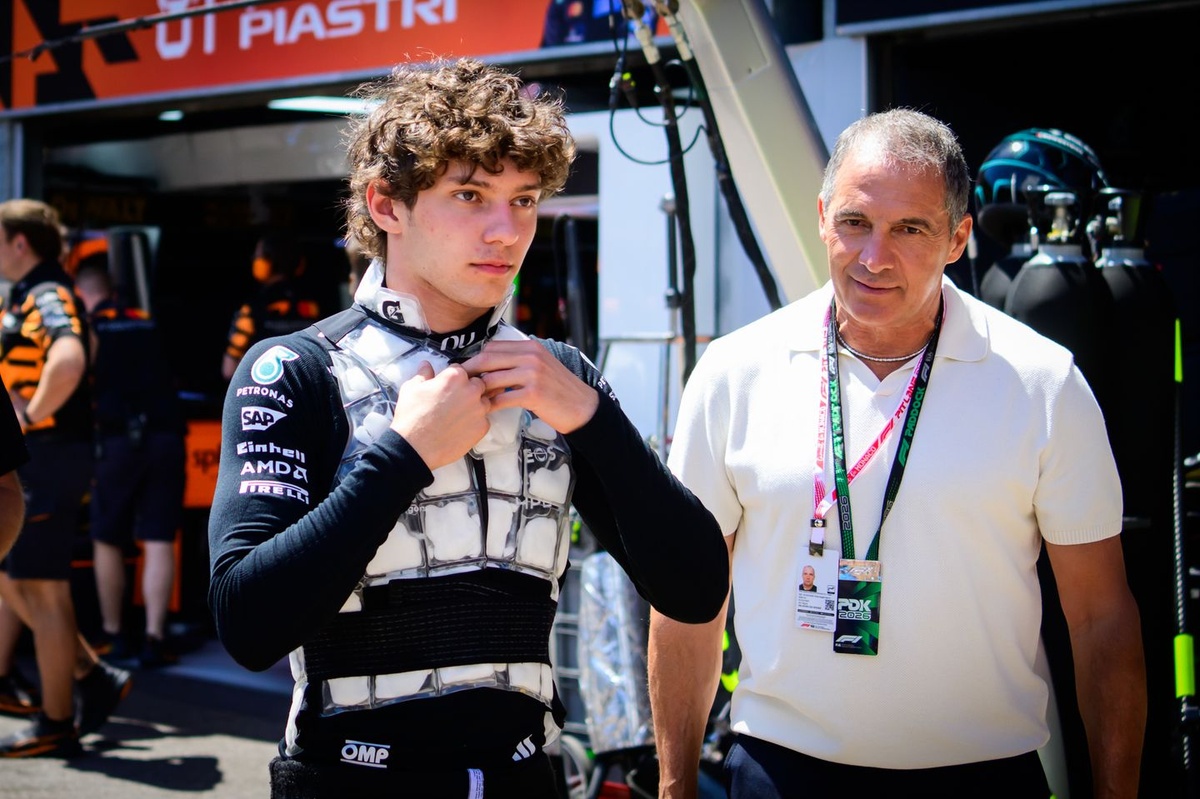
Mercedes driver Kimi Antonelli says the difficulties of his rookie Formula 1 season in 2025 helped him become mentally stronger for the 2026 championship.
The Italian currently leads his Mercedes team-mate George Russell and Ferrari’s Lewis Hamilton by 59 points in the drivers’ standings. After back-to-back victories in China and Japan, Antonelli became the youngest driver to lead the championship in his second season in Formula 1. He then added four more Grand Prix wins before the summer break.
Antonelli’s Formula 1 progress
Antonelli has made a significant performance improvement compared with the same stage 12 months ago, when he scored points in just two of nine European races. He finished his rookie season seventh in the standings with 150 points, recording podium finishes in Canada, Brazil and Las Vegas, alongside four retirements in Emilia-Romagna, Spain, Austria and Great Britain.
“Experience is playing a massive role,” the 20-year-old explained to F1.com as he reflected on the changes from 2025 to 2026.
Andrea Kimi Antonelli, Mercedes Photo by: Sam Bagnall / Sutton Images via Getty Images
Antonelli said that although his 2025 campaign was challenging, he “needed” those difficult moments to become stronger “emotionally and mentally”.
“Of course, I still have a lot of experience to make, but I think last year, despite all the bad moments, the difficult periods, I think that was what I needed because that helped me to grow even more than what I anticipated. It made me stronger emotionally and mentally.”
Antonelli prepares for the Italian Grand Prix
Since Antonelli took the championship lead in Japan, there has been considerable discussion about when the pressure of a title fight might affect the young driver. So far, that pressure has yet to slow him down.
Antonelli now heads into his home race at Monza hoping for better fortunes than he experienced in 2025, although he will serve a power unit penalty. The Italian Grand Prix will take place at Monza from 4-6 September.
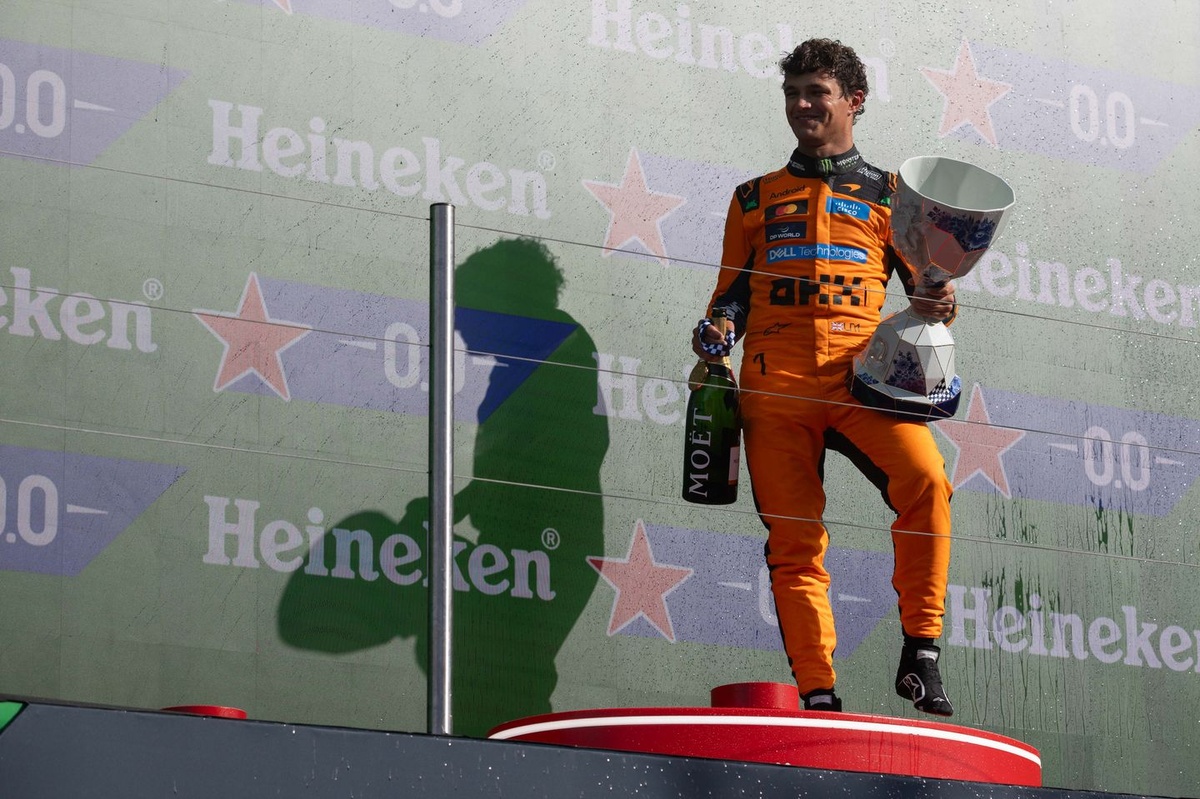
Lando Norris remains confident that McLaren can make the necessary improvements to its current Formula 1 car and challenge for the 2026 world championship.
Speaking to Sky Sports after announcing a contract extension with McLaren through the end of 2030, the British driver assessed the team’s prospects in the current championship campaign.
McLaren endured a difficult start to the season but has made a significant performance gain following the introduction of upgrades. Norris has since claimed consecutive victories at the Hungarian and Dutch Grands Prix, moving himself into title contention.
“Well, we’re trying to change that. That’s one thing I’m certain of,” Norris explained when asked if the car is in a position to fight for the championship.
“The team is working better than they’ve ever worked before. I think they’re working in a more efficient, harder way, even than the last couple of years. And that level was world championship-winning level. So, it’s not that I don’t think we can win it.
Lando Norris, McLaren Photo by: Eric Le Galliot
“I’m confident we have a lot of what we need in place. It’s just certain areas on the car that we need to improve. And I believe we can. It’s just a race against time, as always, within Formula 1. But we proved over the last few weekends that we can still win races, and we have very good momentum.
“I always want that little bit more, and I want to be confident that we can improve the car enough to easily say, ‘Yeah, we can fight for this world championship.’
“So, we can easily fight as a team. We just need to improve some things with the car, and I’m still confident we can do that.”
McLaren currently sits third in the constructors’ championship with 263 points, 162 points behind leaders Mercedes. Norris is fourth in the drivers’ standings with 159 points, 83 points behind championship leader Kimi Antonelli.