Key Highlights
- Lando Norris lost a likely Spanish Grand Prix victory due to unique Virtual Safety Car timing that prevented only him from pitting, reigniting debate over minimum VSC duration rules.
- McLaren team principal Andrea Stella expressed uncertainty over whether VSCs should last at least one full lap to equalize conditions or remain a “hands of the Gods” variable.
- Haas appears the most likely entry point for 2026 rookies, with F2 champion Leonardo Fornaroli and Ferrari academy driver Rafael Camara leading candidates alongside Toyota protege Ryo Hirakawa.
Norris Misfortune Reignites Virtual Safety Car Debate
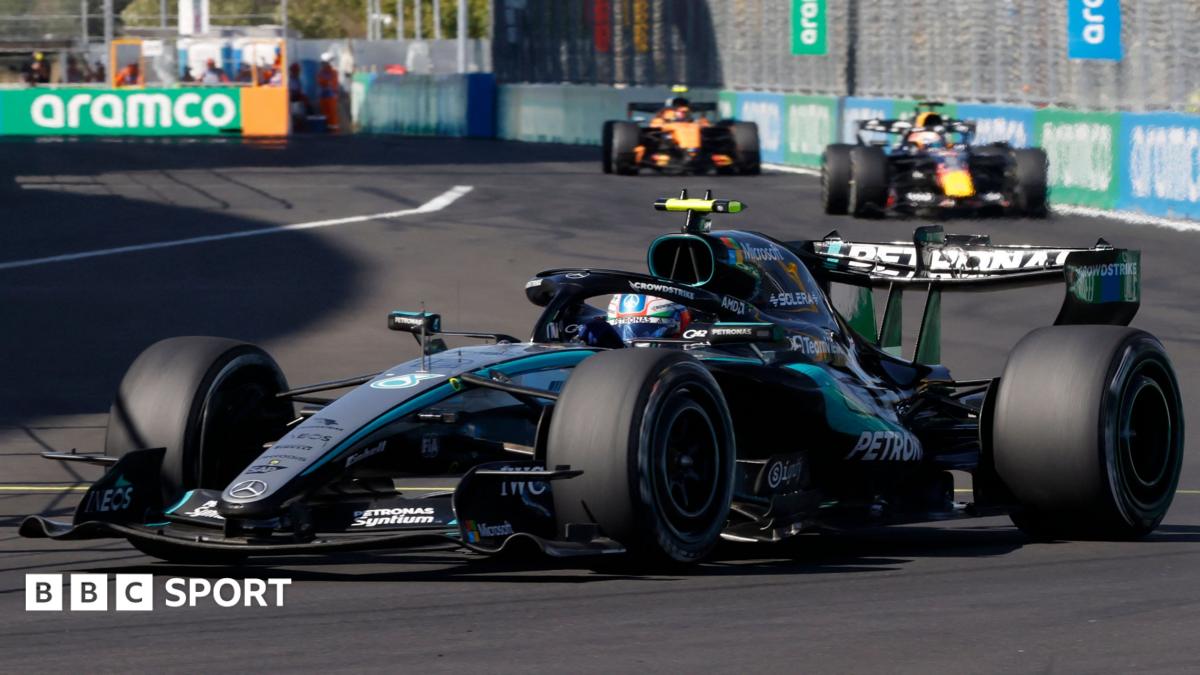
Lando Norris’ cruel twist of fate at the Spanish Grand Prix has thrust Formula 1’s Virtual Safety Car regulations back into the spotlight. The McLaren driver lost a commanding race lead—and near-certain victory—when a VSC deployment froze the field at the precise moment his track position made a pit stop impossible, while rivals behind him gained a free stop under neutralized conditions. Unlike previous strategic VSC gains, where teams deliberately gambled on a neutralisation, Norris’ predicament was purely circumstantial: he was the sole driver unable to access the pits during the brief window. The incident has been described as a “chance card in Monopoly” by observers, highlighting the arbitrary nature of the current system.
Stella Questions Fairness, FIA Process Looms
McLaren Team Principal Andrea Stella admitted the situation left him conflicted. “Offering a personal opinion, I’m puzzled myself as to what’s right,” Stella said. “Is it correct to give enough duration such that everyone will have been subject to the same track conditions? So, for instance, the virtual safety car lasts at least one full lap. Or you just keep it in the hands of the Gods, and sometimes you are lucky, sometimes you are not. I’m not sure.”
Norris revealed after the race that the specific issue of VSC duration and pit-lane equity “has been spoken about many, many times” in driver briefings. Any regulatory change would follow a formal pathway: analysis by the Sporting Advisory Committee, then review by the F1 Commission comprising teams, commercial rights holder Formula 1, and governing body the FIA. However, sources indicate no immediate momentum exists for a rule alteration, as safety-car variability is widely accepted as an intrinsic, albeit unpredictable, competitive element.
2026 Rookie Market: Haas the Epicenter of Opportunity
With most 2026 driver line-ups settled or trending toward continuity, Haas emerges as the primary gateway for new talent. Esteban Ocon’s seat appears vulnerable, creating a rare opening. The leading contenders are Italy’s Leonardo Fornaroli, the reigning Formula 2 champion and a McLaren development driver, and Brazilian Rafael Camara, currently second in the F2 standings and a Ferrari Academy member. Both have tested for the American squad and reportedly impressed. Haas reserve driver Ryo Hirakawa, a long-time Toyota protege linked to the team’s technical partnership, remains in contention but is considered a less probable choice. The team is understood to prioritize a combination of pace and financial backing.
Red Bull Junior Shuffle and Cadillac’s American Dilemma
Elsewhere, Red Bull is evaluating a promotion for F2 championship leader Nikola Tsolov into the Racing Bulls squad. Such a move would necessitate dropping either Liam Lawson—who has performed solidly this season—or impressive rookie Arvid Lindblad, making the decision complex. At Cadillac, the plan to fast-track IndyCar race-winner Colton Herta has stalled; his difficult F2 campaign, yielding just a best finish of fifth and 19th in the standings, makes a 2026 graduation a significant risk. Fellow American Ugo Ugochukwu, who clinched the Formula 3 title in Madrid, is on Cadillac’s radar but is likely too inexperienced for an immediate F1 step. His stature—well over six feet, taller than current grid giants Esteban Ocon, Alex Albon, and George Russell—also presents unique cockpit integration challenges. The only other potential vacancy hinges on Fernando Alonso’s undecided future at Aston Martin.
Why This Matters
The Norris incident exposes a structural tension in F1’s sporting regulations: the balance between operational efficiency—the VSC’s original purpose of minimizing disruption for quickly cleared hazards—and competitive equity. The current rules, evolved through iterations including pit-lane closures, still allow a neutralisation to arbitrarily advantage or disadvantage a single driver based solely on micro-sector position at the moment of deployment. With the Sporting Advisory Committee and F1 Commission as the only formal mechanisms for change, any adjustment will be deliberate and political, requiring consensus among teams that may benefit from the status quo. Simultaneously, the 2026 rookie landscape reflects a broader trend of grid stability driven by multi-year contracts and academy consolidation, making Haas’s decision a bellwether for how teams weigh academy allegiance versus immediate performance and commercial value.
Frequently Asked Questions
Could the VSC rules be changed before the end of the 2025 season?
It is highly unlikely. Any amendment requires analysis by the Sporting Advisory Committee and approval by the F1 Commission, a process that typically spans months. There is currently no indication that the FIA or Formula 1 management views this as an urgent safety or sporting integrity issue warranting an expedited change.
Who is the favorite for the open Haas seat in 2026?
There is no clear favorite. Leonardo Fornaroli (McLaren-backed F2 champion) and Rafael Camara (Ferrari-backed F2 runner-up) are the two primary candidates, both having tested successfully. Ryo Hirakawa (Toyota/HAAS reserve) is a dark horse. The final decision will likely weigh on-track performance, simulator work, and the commercial package each driver brings.
Is Colton Herta’s F1 dream over?
Not necessarily, but his path has narrowed significantly. A move to F1 in 2026 looks improbable given his current F2 form. Cadillac may opt to let him complete the F2 season to rebuild momentum for a potential 2027 entry, or explore alternative candidates like Ugo Ugochukwu, though the latter’s physical stature and inexperience present additional hurdles.