Key Highlights
- Netflix’s Monster: The Lizzie Borden Story, created by Ryan Murphy and Ian Brennan, stars Ella Beatty as Lizzie Borden, Charlie Hunnam as Andrew Borden, Rebecca Hall as Abby Borden, and Vicky Krieps as Bridget “Maggie” Sullivan.
- The series takes significant dramatic liberties with the historical record, including a fabricated lesbian romance between Lizzie and Bridget, a fictional poisoning attempt, and the invention of Bertha Manchester as a “test run” murder victim.
- While the real Lizzie Borden was acquitted of the 1892 axe murders of her father and stepmother in Fall River, Massachusetts, the Netflix series depicts her as the killer acting in concert with the family maid.
The Historical Case: Lizzie Borden and the 1892 Fall River Murders
The name Lizzie Borden instantly conjures images of hatchets, a Greek Revival-style home at 92 Second Street in Fall River, Massachusetts, and the children’s rhyme: “Lizzie Borden took an ax / And gave her mother 40 whacks. / When she saw what she had done / She gave her father 41.” On the morning of August 4, 1892, Andrew Borden and his second wife, Abby, were found murdered in their home. The murder weapon was never found, though investigators determined an axe or hatchet was used. Andrew’s 32-year-old daughter, Lizzie, was tried for the crimes. The only other person in the house was the Bordens’ Irish maid, Bridget Sullivan, called “Maggie” by the family.
Lizzie claimed she had been in the barn, returned to find her father’s body in the living room, and sent Bridget—allegedly napping on the third floor—to fetch a doctor. Abby Borden was discovered dead in an upstairs guest bedroom. The 1893 trial was a sensation. As historian Joseph Conforti writes, “The inquest, preliminary hearing, and Superior Court trial generated over 3,000 pages of testimony on the Borden murders,” and news coverage was exhaustive. Borden was acquitted, and no one else was ever convicted. The house now operates as a bed and breakfast where guests can stay in the 134-year-old crime scene.
Netflix’s “Monster: The Lizzie Borden Story”: Cast and Character Portrayals
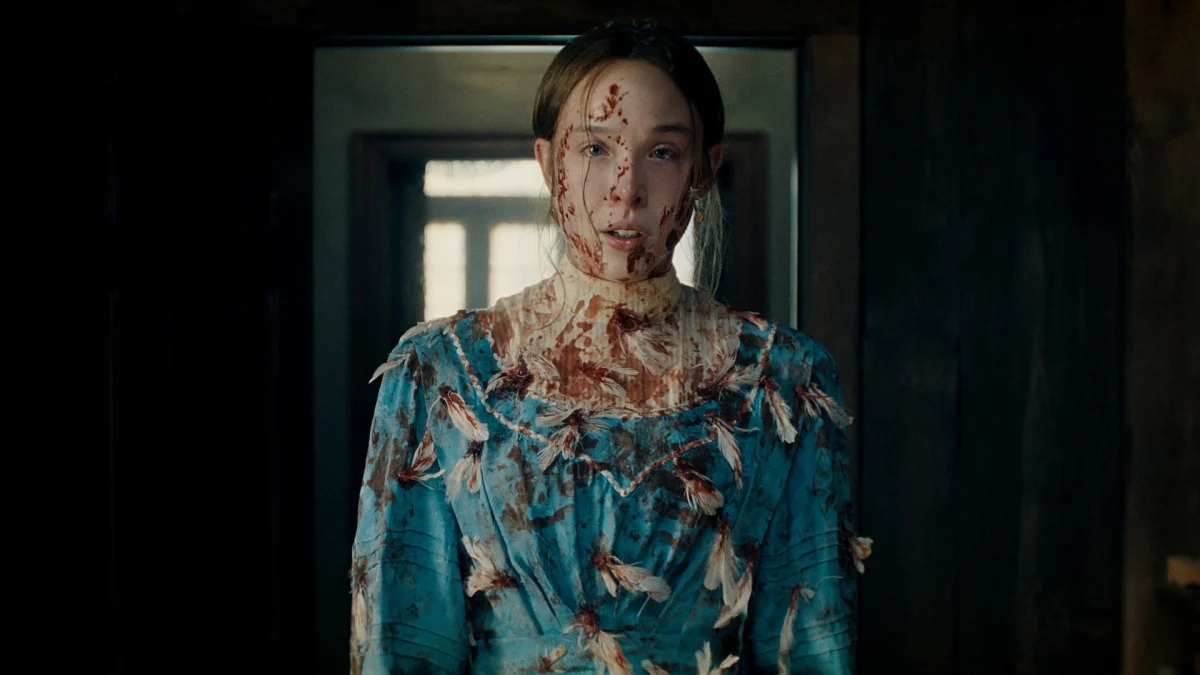
Ryan Murphy and Ian Brennan’s Monster anthology, previously focused on Jeffrey Dahmer and Ed Gein, recruits familiar faces for this installment. Ella Beatty (Feud: Capote vs. The Swans) portrays Lizzie Borden as a sweet, socially awkward, sexually oppressed woman with kleptomaniac tendencies, depicted in a “Disney princess-like” manner gathering flowers and feeding birds. Charlie Hunnam plays Andrew Borden as an undertaker and woodworker—though historically he was also a wealthy banker and textile investor. Rebecca Hall portrays stepmother Abby as “immovably malicious,” treating her stepdaughter as “inconvenient property” and doling out “hot liquid punishments” on maids. The series invents a cold marriage where Abby plans to leave Andrew in episode four, a complete fabrication.
Vicky Krieps (The Ed Gein Story) plays Bridget “Maggie” Sullivan. Despite no historical evidence, the series portrays Lizzie and Bridget’s relationship as an intimate lesbian love affair, consistent with most screen interpretations. Billie Lourd (American Horror Story) plays older sister Emma Borden, depicted as engaged, popular, and favored by their parents—though historically Emma was out of town during the murders, as the series also shows. Jessica Barden portrays famed actor Nance O’Neil, who was indeed friends with Lizzie, but the series moves their meeting to Fall River before the murders (they met in Boston after the acquittal) and invents O’Neil training Lizzie in acting for her trial.
Joey Pollari plays uncle John Morse, portrayed as a money-seeking “dirtbag” who stays the night before the murders and asks Andrew for business capital. In reality, Morse was the brother of Andrew’s late first wife, Sarah, and his role remains historically ambiguous.
Dramatic Liberties: How the Series Reimagines the Murders
Monster provides Lizzie multiple motives: emotional abuse (especially from Abby), Andrew’s treatment of Bridget, and exclusion from his will (historically, Andrew had no will, meaning Lizzie stood to inherit a fortune). The catalyst arrives when Abby kills Lizzie’s beloved birds with an axe, and Andrew dismisses her grief. The series shows the murders twice: an opening sequence closely tracking historical theory—Lizzie descending from her bedroom, murdering Abby in the guest room, then Andrew in the living room—and again in episodes four and five with elaborate dramatic embellishment.
In episode four, Abby’s death becomes a violent chase from the front door. A fabricated argument ends with Lizzie chopping off Abby’s nose with a hatchet. Contradicting historical accounts that Bridget was washing windows during Abby’s murder, the series places Bridget at the attack holding an axe. Episode five depicts Lizzie instructing Bridget to be seen washing windows to create an alibi. Afterward, Lizzie and Bridget bury Abby’s dress in the forest (a witness said Borden burned a dress; the series saves that for later).
Andrew’s death is equally reinvented. Episode five has Andrew return home and discover Abby’s body upstairs—which did not happen historically. He is attacked not by Lizzie but by Bridget with an axe in the bedroom. Lizzie intervenes, leading to a moment of acknowledgment between father and daughter. They shut Andrew in the basement with an axe embedded in his shoulder, clean the crime scene, and engage in an axe fight that never occurred. Andrew is ultimately killed in the living room, which aligns with history, but the series places the hatchet in Bridget’s hands for the final blows. The finale features Lizzie at a dinner party reciting alternate theories—uncle John, a random thief—before declaring: “a random act of violence, no motive, someone just walked into my family’s house and killed my dear parents with an axe.”
The Poison Plot and Bertha Manchester: Fabricated Narrative Threads
The real Lizzie Borden was seen buying prussic acid the day before the murders, leading to her arrest on August 11. Monster dramatizes this in early episodes, with Bridget suggesting poison and the pair studying plant properties. Episode two depicts a grotesque fantasy: the Bordens violently vomiting bouillabaisse, unknowingly purging the poison. After the attempt fails, Bridget proposes an axe instead: “An axe is the most personal way of killing someone,” she says. “Put all your feelings in the swing. Make it personal and give it your signature.” The series literally shows Bridget training Lizzie to swing a double-headed axe.
Perhaps most controversially, the series incorporates Bertha Manchester (Linda Reiter), a real Fall River woman murdered with an axe nine months after the Borden killings and one week before jury selection. Episode three reorders events to make Lizzie Bertha’s murderer, retaliating against a homophobic cat-o’-nine-tails attack on Bridget. “Bertha Manchester’s the first one we kill,” says Bridget. “We have to make sure we know what we’re doing, and that we have our courage.” The pair wash blood off in a waterfall as The Doors’ “The End” plays. Historically, Bertha Manchester’s murder remains unsolved and unconnected to Lizzie Borden.
Why This Matters
Monster: The Lizzie Borden Story continues Ryan Murphy’s pattern of prioritizing sensational drama over historical fidelity in true crime adaptation. The series joins a century of reinterpretations—from Elizabeth Montgomery’s 1975 Emmy-winning The Legend of Lizzie Borden to Christina Ricci’s Lifetime films and Chloë Sevigny’s 2018 Lizzie—that have cemented the case in pop culture. By inventing a lesbian romance, a poisoning subplot, a practice murder, and extensive maid complicity, the show transforms an unsolved historical mystery into a stylized revenge fantasy. This matters because streaming platforms increasingly serve as primary history teachers for general audiences. When a prestige series starring Oscar nominees (Hall, Krieps) and produced by a hitmaker (Murphy) presents fiction as plausible narrative, it reshapes public understanding of a case that already suffers from folklore overwhelming fact. The real Lizzie Borden lived until 1927 in Fall River, ostracized but legally innocent; the Netflix version ensures the rhyme’s version of her—axe-wielding, guilty, and theatrical—endures for another generation.
Frequently Asked Questions
- Was Lizzie Borden actually guilty of murdering her parents?
- Lizzie Borden was acquitted at trial in 1893, and no one else was ever convicted. The historical record remains inconclusive; she was legally innocent but forever suspected in public opinion.
- Did Lizzie Borden and Bridget Sullivan have a romantic relationship?
- There is no historical evidence of a romantic or sexual relationship between Lizzie Borden and Bridget Sullivan. The lesbian affair is a dramatic invention common to nearly all screen adaptations of the case.
- Did Lizzie Borden murder Bertha Manchester as a “test run”?
- No. Bertha Manchester was a real Fall River woman murdered nine months after the Borden killings, but her case was never linked to Lizzie Borden. The series fabricates this connection entirely for dramatic purposes.