Category: Coins

Digital assets, cryptocurrencies, blockchain, and currency news.

  • Malone Lam Admits Role in $245M Crypto Crime Ring

    Malone Lam Admits Role in $245M Crypto Crime Ring

    Singapore National Malone Lam Pleads Guilty to $245 Million Cryptocurrency Racketeering Conspiracy

    Singapore citizen Malone Lam, 22, entered a guilty plea on September 8 before U.S. District Judge Colleen Kollar-Kotelly in Washington, D.C., admitting to one count of participating in a Racketeer Influenced and Corrupt Organizations (RICO) conspiracy. The U.S. Department of Justice announced the plea, linking Lam to an international cybercrime network accused of stealing more than $245 million in cryptocurrency through social engineering, account takeovers, and physical home invasions.

    Organizer of a Global Crypto Theft Enterprise

    According to court documents, the enterprise operated from at least October 2023 through May 2025, with participants coordinating via online gaming platforms across multiple U.S. states and foreign jurisdictions. Prosecutors identified Lam as the ringleader who used online aliases including “Anne Hathaway,” “$$$,” and “King Greavy.” He allegedly identified victims, orchestrated social‑engineering operations, and assigned roles to a network that included database hackers, target researchers, impersonators, money launderers, and residential burglars.

    From a 4,100‑Bitcoin Heist to a Wider Indictment

    The investigation began with the August 18, 2024 theft of more than 4,100 BTC — valued at over $230 million at the time — from a Washington, D.C. resident identified by blockchain investigator ZachXBT as a Genesis creditor. Callers impersonated Google support and later Gemini exchange representatives, convincing the victim to reset security settings and share screen access, which exposed the credentials needed to drain the wallet.

    The original indictment charged Lam and Jeandiel Serrano with accessing the victim’s accounts and laundering proceeds through exchanges, mixers, pass‑through wallets, and peel chains. In May 2025, a superseding indictment expanded the case to 12 defendants and alleged a broader enterprise responsible for more than $263 million in thefts, including a separate $14 million theft in July 2024. The guilty‑plea announcement cites a figure of more than $245 million for Lam’s admitted conduct.

    Stolen Funds Financed Luxury Lifestyles

    Prosecutors detailed how the group converted stolen cryptocurrency into cash and high‑value assets. Expenditures included:

    • Rental mansions, private jets, and security guards
    • At least 28 exotic vehicles valued between $100,000 and $3.8 million each
    • Nightclub spending reaching $500,000 per evening
    • Designer clothing, watches, and expensive handbags distributed at parties

    Money‑laundering tactics involved crypto‑to‑cash services, shell companies, virtual private networks, and chains of intermediary wallets to obscure transaction trails. Some conspirators allegedly mailed bulk cash hidden inside stuffed toys.

    Arrest Timeline and Ongoing Prosecution

    Lam was arrested on September 18, 2024, per the original indictment. A later Justice Department release referenced September 18, 2025, which appears to be a clerical error conflicting with court records. While in pretrial detention, prosecutors allege Lam continued directing associates, including requests to purchase luxury handbags for his girlfriend.

    The case remains active against other defendants. Several participants have already pleaded guilty or been sentenced, including one member who received 78 months for conduct involving residential burglaries and another who received 70 months for laundering stolen cryptocurrency tied to the same enterprise.

    Sentencing Schedule and Investigative Agencies

    Judge Kollar‑Kotelly set a status hearing for December 8, 2026. No sentencing date or expected prison term has been announced. The court will determine the sentence based on federal statutes, advisory guidelines, and any plea‑agreement provisions regarding cooperation, restitution, and forfeiture — details not disclosed in the public announcement.

    The investigation was led by the U.S. Attorney’s Office for the District of Columbia, the FBI’s Washington Field Office, and IRS Criminal Investigation, with support from federal offices in California, Florida, and New Jersey. Assistant U.S. Attorneys Christopher Howland and David Liss are prosecuting the case.

    Broader Implications for Crypto Security

    The case illustrates how attackers blend digital deception with physical threats. Recent reporting indicates home invasions accounted for 37% of documented physical crypto attacks through mid‑2026. Further court filings will establish Lam’s sentencing schedule, forfeiture obligations, and any restitution owed to victims. No recovery total was disclosed alongside the guilty plea.

  • Zcash Shorts Hit 72% as ZEC Price Holds Above $1,100 — What’s Next?

    Zcash Shorts Hit 72% as ZEC Price Holds Above $1,100 — What’s Next?

    Binance top traders have aggressively positioned for a Zcash price decline, with short accounts representing 72.05% of positioning versus just 27.95% long, according to CoinGlass analytics. The resulting long/short ratio of 0.39 underscores a strong consensus for downside among the exchange’s largest participants. Yet this bearish crowd faces a mounting challenge: persistent spot buying pressure and a technical structure that could trigger a short squeeze if key support holds.

    High-profile short position deep underwater

    Garrett Jin, a prominent figure in crypto trading and executive circles, illustrates the risk embedded in the crowded short trade. His 39.76K ZEC short position, valued at approximately $44.90 million, was entered near $576.30. With Zcash trading near $1,128.58 at press time, the unrealized loss on the position has ballooned to roughly $21.98 million.

    Jin’s liquidation price sits higher at $2,540.50, providing a buffer against immediate forced closure. However, any renewed upside move would deepen losses and increase pressure on similarly positioned traders, potentially accelerating a squeeze dynamic.

    Spot market buyers contradict derivatives bias

    While top trader accounts lean heavily short, spot market activity tells a different story. The 90-day Spot Taker CVD (Cumulative Volume Delta) indicator remains buyer-dominant, signaling aggressive buyers continue to control cumulative taker activity. This divergence matters: the dominant short positioning has not translated into equivalent selling aggression on the spot side. Instead, buyers have consistently absorbed available supply despite widespread expectations for a deeper correction.

    Jin’s mounting unrealized loss highlights the specific risk created when heavy bearish exposure encounters sustained aggressive buying.

    Derivatives cooling weakens short-side confirmation

    Broader derivatives participation has cooled significantly, undermining the conviction signaled by the top-trader ratio alone. ZEC Open Interest (OI) fell 11.49% to $2.41 billion in 24 hours, while derivatives trading volume plunged 42.06% to $5.99 billion over the same period. These declines suggest traders are reducing leverage exposure rather than aggressively adding fresh short positions.

    Historically, rising bearish exposure alongside expanding OI provides stronger evidence of new shorts entering the market. The current contraction in OI and volume instead reflects broad position reductions as speculative activity cools after ZEC’s sharp price expansion.

    Technical structure: FVG defense critical for wave five

    On the daily timeframe, ZEC has entered a pullback phase within a broader ‘Elliot Wave’ structure after failing to clear the $1,256.68 resistance level. The pullback is identified as a potential ‘Wave (4)’ correction before another price expansion.

    Crucially, a fair value gap (FVG) extends toward the $1,023.60 support area, creating a pivotal zone for the bullish technical structure. The MACD remains constructive despite the retreat, standing at 138.95 above its signal line at 112.00 with a positive histogram reading of 26.94. The correction has not yet invalidated the broader bullish framework.

    If buyers persistently defend the FVG, ZEC could pursue ‘Wave (5)’ and continue placing pressure on the crowded short positions.

    Outlook: crowded shorts meet resilient demand

    The dominant short positioning among Binance top traders faces a dual threat: persistent spot buyer absorption and a technical structure that favors upside continuation if key support holds. Falling derivatives participation suggests the short bias may reflect stale positioning rather than fresh conviction. A successful defense of the FVG near $1,023.60 could reignite upward momentum and force a painful unwind for the bearish crowd.

  • Assessing Ethereum’s 2027 Upgrade: How It Could Redefine ETH Utility

    Assessing Ethereum’s 2027 Upgrade: How It Could Redefine ETH Utility

    Scalability remains a perpetual challenge for every Layer 1 blockchain. As competition intensifies, demonstrating network capabilities becomes critical to attracting users. For most blockchains, this means improving fundamentals such as speed, throughput, and finality. Ethereum, however, appears to be pursuing a different strategy.

    Ethereum’s Frames Upgrade Introduces Stablecoin Gas Payments

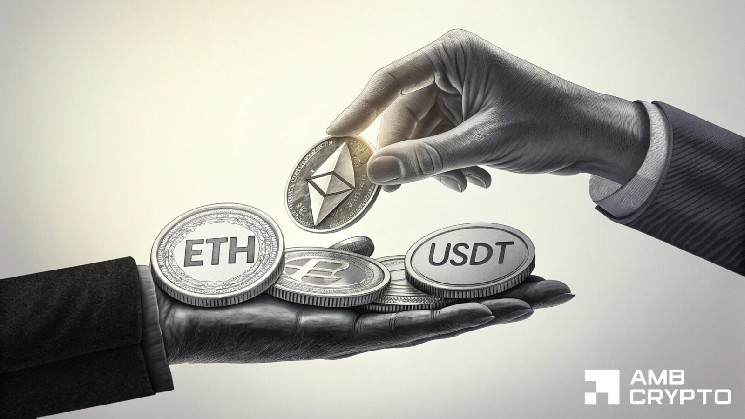
    In the Frames (EIP-8141) upgrade shared by Vitalik Buterin on X, Ethereum developers are working on a transaction model that would allow users to pay gas fees with stablecoins instead of $ETH. The update immediately drew market attention, with the reaction being generally bullish.

    Fee Market Implications: Decoupling Gas from $ETH

    When analyzing the upgrade’s impact on the fee market, the narrative may surprise some observers. The reasoning is purely logical: Ethereum fees are linked to the value of $ETH because they are paid directly in the native cryptocurrency. Every transaction creates demand for $ETH, directly affecting its price. The proposed upgrade changes this dynamic by allowing users to pay fees in stablecoins, which decouples gas costs from the value of Ethereum’s native token.

    Stablecoin Dominance Fuels Ethereum’s Utility Narrative

    Despite a recent slowdown in stablecoin market capitalization, the sector still hit a record $320 billion in H1. This matters because financial institutions globally continue to view stablecoins as a more efficient tool for cross-border payments and settlements. Naturally, the Layer 1 networks capturing the most stablecoin liquidity are becoming the key utility networks.

    The logic is straightforward: the more stablecoins move through a chain, the more relevant that network becomes for overall DeFi activity. Ethereum already holds a significant advantage in this regard. The network hosts nearly 50% of total stablecoin liquidity, totaling approximately $147 billion. Given this substantial concentration, Ethereum’s ‘utility’ narrative is clearly picking up.

    EIP-8141 Targets Mass Adoption for Next DeFi Cycle

    This context likely explains the thinking behind EIP-8141. As the analyst pointed out, the ultimate goal is “mass adoption.” The stablecoin market is growing, use cases are expanding, and Ethereum already hosts over 50% of this segment. Enabling users to pay gas fees in stablecoins could make Ethereum significantly more accessible.

    Users would no longer need to buy $ETH solely to cover transaction fees. Instead, they could make payments directly with the stablecoins they already hold. In this context, EIP-8141 is positioned to become a critical layer for $ETH‘s next growth phase. With rising stablecoin adoption, the upgrade will enable Ethereum to capture more utility and potentially facilitate an $ETH-based DeFi cycle in late 2026 and 2027.

  • Ethereum Foundation’s Trillion Dollar Security Initiative Launches ERC-7730 Clear Signing on Trezor

    Ethereum Foundation’s Trillion Dollar Security Initiative Launches ERC-7730 Clear Signing on Trezor

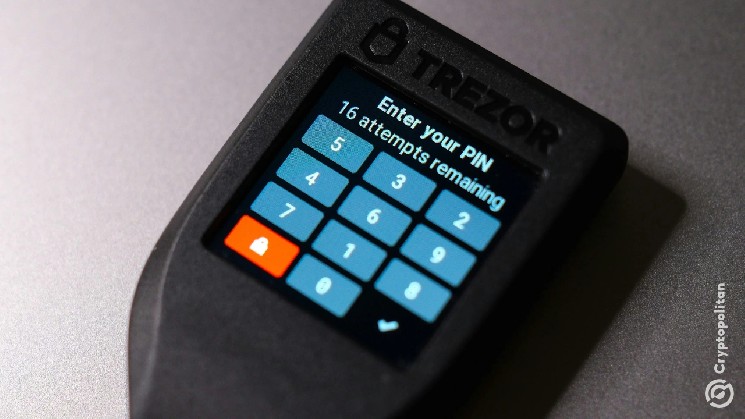
    The ERC-7730 standard addresses a long-standing vulnerability in cryptocurrency transactions, and its adoption is accelerating across the hardware wallet ecosystem. The standard enables wallets to decode smart contract transactions, displaying the actual action, tokens, amounts, and destination on the device screen instead of an opaque raw hash.

    Trezor activates clear signing via ERC-7730

    Trezor has enabled clear signing through the ERC-7730 standard, a development confirmed by both Trezor and the Ethereum Foundation on X on September 8. The rollout extends the security initiative the Foundation first launched in May to an additional set of hardware devices.

    Why blind signing created a critical attack vector

    Historically, users could not verify that the transaction amount shown on their computer screen matched what the hardware wallet was actually signing. Trezor illustrated the risk with a concrete example: a user intends to “swap 2,000 USDC for ETH.” That description appears on the computer, but the data reaching the wallet arrives as hexadecimal calldata, presented as an unreadable hash.

    Approving such a transaction required trusting that a potentially compromised computer displayed accurate information. If the machine was tampered with, the user had no way to detect the discrepancy on the device and could inadvertently sign away their assets. This vulnerability, known as blind signing, has been linked to some of the costliest thefts in crypto history. The Ethereum Foundation specifically cited the $1.5 billion Bybit breach, still the largest crypto hack on record, when launching what is now recognized as a solution to this gap.

    What changes on Trezor device screens

    With clear signing active, a supported Trezor device parses the transaction and renders it in plain language. This shift makes the hardware wallet the final source of truth rather than the computer it is connected to.

    Trezor emphasized that users do not need to install or toggle anything. The feature works automatically through Trezor Suite, WalletConnect, and Trezor Connect, preserving the existing workflow. The decoding stack is open-source, consistent with Trezor’s existing firmware, and the ERC-7730 standard itself is public.

    Supported protocols and hardware at launch

    At launch, Trezor lists major protocols including 1inch, Aave, Lido, Tether, LiFi, and Hyperliquid, with additional networks in progress. On the hardware side, the feature runs on the Trezor Safe 7, Safe 5, Safe 3, and Model T. The Trezor Model One is not supported.

    From Ledger innovation to neutral Ethereum Foundation stewardship

    The technical foundation is ERC-7730, an open format that gives wallets a consistent method to translate contract calls into readable actions, amounts, tokens, and destinations. Ledger originally developed the concept as an internal feature before formalizing it as ERC-7730 in 2024. Governance was subsequently transferred to the Ethereum Foundation to maintain neutrality.

    Descriptors reside off-chain in a registry at clearsigning.org, allowing existing contracts to adopt the format without redeployment. An attestation layer enables independent auditors to verify that a descriptor accurately reflects a contract’s actual behavior. The Foundation’s Trillion Dollar Security Initiative, the same program behind the One Trillion Dollar Security Dashboard launched in February, acts as steward of this registry.

    Security scales with ecosystem adoption

    The protective benefit scales directly with adoption because the standard only functions where a decentralized application has supplied a descriptor. Protection grows as more protocols and networks are added to the registry, creating a network effect that strengthens the entire ecosystem.

  • Polkadot Leads Rotation Into Older Layer-1s as Rate-Hike Odds Widen

    Polkadot Leads Rotation Into Older Layer-1s as Rate-Hike Odds Widen

    Pre-2018 Layer-1 Tokens Lead Tuesday Crypto Rally as Bitcoin, Ether Decline

    A cohort of layer-1 tokens launched before 2018 outperformed Tuesday while bitcoin and ether finished lower, and traders increased bets on a Federal Reserve rate hike next week. Only Polkadot among the group had a specific catalyst: holders are voting on a proposal to launch a native stablecoin, submitted to OpenGov on Monday and currently passing with 97.5% support. Cosmos Hub, Decred, and Ethereum Classic moved higher without any filings, releases, or governance actions during the window. The four tokens rallied together on a week when bitcoin gained 1.6%.

    Bitcoin and Ether Price Action

    Bitcoin last changed hands at $78,539, down 0.83% over 24 hours but up 1.6% over seven days, after trading between $77,666 and $79,432, according to CoinGecko data. Ether traded at $2,484.83, down 0.29% on the day and up 2.8% on the week. XRP rose 1.53% to $1.42; Solana fell 0.59% to $103.24; BNB gained 1.66% to $751.92, holding a 10.5% weekly advance. Total crypto market capitalization stood at $2.70 trillion on $91.54 billion of volume, with bitcoin dominance at 58.36%. Fifty-seven of the 125 largest non-stablecoin tokens rose and 66 fell.

    Bitcoin’s Round Trip

    Bitcoin peaked at $79,432 shortly after 10 p.m. ET Monday, during Tokyo’s morning, and sold off through the European session. The 24-hour low of $77,666 came in the 10 a.m. ET hour. It recovered to $78,833 by midday and gave that back through the afternoon, ending the U.S. session near where it opened. The token remains 37.7% below the $126,080 record set in October 2025.

    The Crypto Fear & Greed Index read 69 on Tuesday, down from 71 on Monday and 74 on Sept. 4, according to Alternative.me. It has remained above 60 every day since Aug. 29.

    Polkadot’s Stablecoin Proposal Drives 42.5% Weekly Gain

    Polkadot surged 16.7% to $1.25 and 42.5% over seven days, marking a second consecutive double-digit day after Monday’s 13.85% gain, on $420 million of volume against a $2.13 billion market value. It recorded the largest weekly gain among the 50 biggest tokens.

    The proposal went on-chain at 11:49 a.m. ET Monday. OpenGov Referendum 1944, “dotUSD: A Native Stablecoin for Polkadot,” sits on the Root track and is in its deciding period. “This proposal signals the intent of the DAO to introduce dotUSD, Polkadot’s native stablecoin, as the protocol’s primary stable-value instrument,” the text reads.

    The referendum lists seven actions, including creating the dotUSD asset “owned by the protocol,” opening a $DOT-dotUSD liquidity pool on Asset Hub, designating dotUSD a sufficient asset, and setting peg stability module parameters. It commits treasury funds: “$2.5M in $USDT will be used to mint dotUSD and $2.5M in $DOT will be allocated initially to the pool.”

    The Polkadot Community Foundation submitted the proposal and disclaims operational control. “dotUSD is a decentralized, protocol-native stablecoin project,” the text reads. “It would have no issuer and would instead operate autonomously via on-chain logic.”

    Voting stands at 2,343,074 $DOT in favor against 59,896 opposed, with 558,519 $DOT of support against an electorate of 1.67 billion $DOT. A second referendum, 1942, upgrading system chains to runtime 2.5, went on-chain Sept. 5 and is also deciding. No U.S. product filing accompanies the move. EDGAR full-text search returns one document mentioning Polkadot between Sept. 1 and Sept. 8, a Canary Staked TRX ETF prospectus that uses the word in passing. Polkadot’s own account has posted nothing about dotUSD.

    Cosmos Hub, Decred, and Ethereum Classic Rise Without Dated Catalysts

    Cosmos Hub, Decred, and Ethereum Classic rose alongside Polkadot without a specific catalyst. The Cosmos Hub’s most recent governance proposals, 1052 and 1053, were submitted Aug. 25 and finished voting Sept. 1. Decred’s last substantive release is the v2.1.6 consensus security patch from late August; its account’s most recent post, dated Sept. 7, is a marketing message. Ethereum Classic’s core-geth has not shipped a release since Hermes v1.12.22 on March 28, and the project’s repositories show no September activity. None of the three appears in Binance’s listing announcements for Sept. 4 through Sept. 8.

    VeChain added 10.6% to $0.008006 and 19.5% over seven days. Its Aug. 6 post on the Interstellar upgrade and its Aug. 24 statement that the VIP-255 vote passed give no mainnet activation date.

    Fed Rate-Hike Odds Climb to 54.5% on Polymarket

    Traders widened their bet on tightening for a third session. Polymarket put a quarter-point increase at 54.5% and no change at 45.5% on $104.6 million of volume. The same contracts read 52.5% and 45.5% at midday Tuesday, 50.5% and 49.5% on Monday, and 30.5% and 67.5% on Aug. 24. A quarter-point cut trades at 0.45%. The Federal Open Market Committee meets Sept. 15-16, one of the four meetings a year that carries a Summary of Economic Projections.

    Friday’s labor data set the direction. The Bureau of Labor Statistics reported that “total nonfarm payroll employment increased by 162,000 in August, and the unemployment rate was unchanged at 4.1 percent”, with June and July revised up by a combined 55,000. August producer prices publish Sept. 10 and consumer prices Sept. 11, both at 8:30 a.m. ET, the last two federal releases before the committee meets.

    Oil and Macro Markets

    Brent crude settled at $99.31 a barrel, up 3.15% from Friday and its highest close since July 23, when it ended at $100.69. West Texas Intermediate rose 3.03% to $94.25. The yen traded at 153.97 per dollar, its firmest since Feb. 18, and the dollar index fell 0.31% to 98.85.

    “Higher oil prices on the back of continued geopolitical escalations between the US and Iran and a rally in the Japanese yen to a 7-month high have taken the spotlight in the past 24 hours,” Thahbib Rahman, research analyst at Block Scholes, wrote in a note emailed to reporters on Tuesday. “Both events weighed on risk assets across US equity markets and crypto markets alike.”

    Rahman said options positioning has not followed spot lower. “While not near the highs of mid-August and early September, after the US Treasury’s bond interventions and Fed Governor Waller’s dovish speech, short-dated $BTC put-call skew remains tilted towards call options,” he wrote. “This means investors are leaning more bullish than bearish and is an indication that traders are willing to pay more for upside exposure to spot price than downside protection.”

    U.S. equities closed lower. The S&P 500 fell 0.58% to 7,673.52 and the Nasdaq Composite 0.32% to 26,421.41. The 10-year Treasury yield rose to 4.81% and the 30-year to 5.26%. Gold futures fell 0.67% to $4,400 an ounce.

    Zcash Gains After Options Listing Announcement

    Zcash rose 0.82% to $1,166.37 and 39.2% over seven days after touching $1,210.35, holding tenth place at a $19.73 billion market value, above Hyperliquid at $18.79 billion and Dogecoin at $14.01 billion. It remains 63.4% below the $3,191.93 record set on Oct. 28, 2016.

    Grayscale said on Tuesday that “$ZCSH, the world’s first Zcash fund, is now available for options trading on @NYSE.” The post links to the fund’s prospectus and does not name the options venue; the shares list on NYSE Arca, and NYSE American Options and NYSE Arca Options are separate venues. No exchange listing notice or SEC rule filing corroborating the options listing was retrievable, and the most recent document under the trust’s EDGAR record is the Aug. 25 prospectus.

    The fund completed its uplisting from OTCQX to NYSE Arca on Aug. 25 under the ticker ZCSH, registering the shares through a Form 8-A12B filed Aug. 24 and changing its name to The Zcash ETF the same day. Grayscale’s fund account said on Sept. 4 that ZCSH “just crossed $400,000,000 in AUM.” The Defiant covered the original conversion filing in November 2025.

    Monero fell 4.3% to $497.42 after trading as high as $525.33, and is down 0.7% over seven days against Zcash’s 39.2%. Monero’s official blog has published nothing since the July 21 GUI release, and no Monero item appeared on the announcement pages of Binance, Kraken, OKX or Bithumb on Monday or Tuesday. The token has no U.S. listed vehicle.

    Injective Rallies on Triple Catalyst

    Injective rose 5.25% to $6.45 and 33.8% over seven days after trading 12.7% higher at midday, on $190 million of volume against a $650 million market value. Three dated announcements sit behind it. Injective said on Tuesday that “native USDC on Injective is now live on @krakenfx,” allowing deposits and withdrawals of the stablecoin directly between the exchange and the chain. On Monday it said that “$INJ is now live on @RobinhoodCrypto”; Robinhood’s own asset page lists the token as tradable without stating a date. Also on Monday, the project said that “over 58.8 Million $INJ tokens are now staked onchain,” which it called a record. Injective’s public node reported 58,461,008 $INJ bonded against a total supply of 122,781,894, or 47.6%, slightly below the figure the project gave. $INJ trades 87.7% below the $52.62 record it set in March 2024. The chain’s most recent blog post, dated Sept. 4, says Pineapple Financial has moved more than $1 billion in residential mortgage records onto Injective.

    Useless Coin Surges on Korean Exchange Listings

    Useless Coin gained 24% to $0.2791 on $174 million of volume, against a $279 million market value, after two Korean exchanges opened trading in it on Tuesday. Bithumb’s market list carries a KRW-$USELESS pair whose hourly candles begin at 1 a.m. ET. Upbit’s market list carries $BTC and $USDT pairs whose candles begin at 8 a.m. ET, with the $USDT pair flagged for price volatility and cross-venue price gaps; Upbit did not open a won pair. The listings account for Tuesday’s move. The 138.5% seven-day gain predates both, and no project statement covering that period is available.

    Venice Token Leads Daily Gainers

    Venice Token led the day at 30.2%, reaching a record $25.49 before easing to $24.18 and a $1.15 billion market value on $177 million of volume. The most recent post on the Venice blog is dated July 17, carrying an Aug. 5 update that cuts $VVV emissions to 2.5 million a year on Sept. 1 and to 2 million on Oct. 1, and raises the DIEM supply target to 40,000 on Sept. 14. Those dates were set five weeks ago. The project’s changelog has not been updated since July 30.

    Other Notable Movers

    Falcon Finance rose 25.6% to $0.1495 and 51.9% over seven days. Its most recent blog post is dated Aug. 31 and its account’s Sept. 8 posts respond to the price rather than explain it. Pons added 17.7% to $0.8265 and 93.8% over seven days; Uniswap Labs bought $PONS tokens on Sept. 3.

    ETF Flows Pause for Holiday

    U.S. spot bitcoin and ether ETF flows for Tuesday had not published as of 5 p.m. ET. The last completed session is Friday, when bitcoin funds took in $174.6 million and ether funds $25.9 million, according to Farside Investors. BlackRock’s IBIT accounted for $117.4 million of the bitcoin total and Fidelity’s FBTC $57.2 million; among ether funds, BlackRock’s two products drew $74.2 million while Fidelity’s FETH lost $48.3 million. No row exists for Monday, when U.S. markets were closed for Labor Day, which means Monday’s altcoin advance ran with the ETF and equity markets shut.

    DeFi and Stablecoin Metrics

    DeFi total value locked stood at $87.94 billion, down 0.7% over 24 hours and up 1.57% over seven days, DefiLlama data shows. Stablecoin supply was $311.71 billion, down 0.1% on the day, up 0.49% over seven days and 1.35% over 30 days.

    Additional Market Moves

    Hyperliquid fell 0.79% to $84.50 and trades 5.7% below the $89.60 record it set on Sept. 6. Its account has posted nothing since Aug. 31. WhiteBIT Coin rose 6.16% to $81.35 and 14.3% over seven days after touching a record $81.98 at 12:40 p.m. ET; its blog has published nothing since July 28.

    Akedo traded 21% higher at midday before ending 8.6% lower. It holds a 76.7% weekly gain. Hedera was the largest token among the decliners at a $3.46 billion market value, and is still up 6.8% over seven days. Its most recent blog post, dated Sept. 4, covers new council partners, and its Tuesday statements concern an insurance consortium building on the network. Monero’s 4.3% decline falls just outside the table.

    Prices and market data as of 5:11 p.m. ET on Sept. 8, 2026.

  • PONS Sees $2.78M Cumberland Buy – Why This Zone Is Crucial

    PONS Sees $2.78M Cumberland Buy – Why This Zone Is Crucial

    A Cumberland-linked wallet has accumulated 3.5 million $PONS tokens, valued at approximately $2.78 million, signaling institutional demand amid persistent exchange outflows that continue to tighten available supply. According to on-chain analytics platform Lookonchain, the wallet withdrew the tokens from Gate at an average acquisition price of roughly $0.80, moving a significant position off the exchange while the market price traded below that entry level.

    Institutional Accumulation Coincides with Sustained Exchange Outflows

    The withdrawal shifts a considerable token position into cold storage, reinforcing a supply-constrained backdrop. However, with $PONS trading below the wallet’s $0.80 average cost basis, the position currently sits at an unrealized loss, leaving the accumulation as a demand-zone signal rather than confirmation of an immediate price recovery.

    Exchange flow data from CoinGlass underscores the tightening supply dynamic. Spot netflow remained firmly negative across consecutive daily readings. On September 7, netflow hit –$1.96 million, indicating outflows exceeded inflows by that margin. The negative trend persisted on September 8, with netflow recording –$271,800. Although the imbalance narrowed significantly, outflows continued to surpass inflows in the most recent session, maintaining a limited exchange-supply environment as the Cumberland-linked wallet accumulated separately.

    Daily Chart Tests $0.645 Demand Zone and Bullish Pennant Structure

    Technical analysis on the daily timeframe shows $PONS retreating toward the $0.70 level after failing to sustain its prior advance. Price has now entered a demand zone that extends toward the critical $0.645 support level. The pullback places a developing bullish pennant structure at a decisive test; buyers must defend this region for the pattern to retain validity and support another attempt toward overhead liquidity.

    Momentum indicators reflect the cooling. The Relative Strength Index (RSI) has dipped to 47.03, slightly below neutral territory following the earlier rally. Its moving average remains elevated at 56.07, highlighting the rapid fade in buying strength. A rebound from the demand zone would likely preserve the bullish structure and reopen the $0.922–$0.96 region as the next major resistance zone. Sustained strength above that band could bring the psychological $1.00 level back into focus. Source: TradingView

    Liquidation Heatmap Highlights Overhead Leverage Clusters

    Binance liquidation heatmap data from CoinGlass supports the upside scenario by concentrating the densest leverage liquidity clusters above the current price rather than below it. The strongest nearby cluster sits in the $0.76–$0.79 zone, creating a clear overhead liquidity magnet. With $PONS trading near $0.70, this cluster is within reach of a renewed recovery move. A stronger reversal could propel the token toward those levels as leveraged positions face mounting liquidation pressure. Additional liquidity bands extend toward the $0.85 zone, mapping further upside targets. Source: CoinGlass

    Key Levels to Watch

    If buyers reclaim the nearby liquidation cluster around $0.76–$0.79, the technical path toward the $0.922 price level could strengthen considerably. Conversely, a decisive break below $0.645 would invalidate the demand-zone defense and undermine the bullish pennant scenario.

    Summary

    • Cumberland-linked accumulation of 3.5M $PONS ($2.78M) at ~$0.80 avg price signals institutional interest.
    • Persistent negative spot netflows (–$1.96M Sept 7; –$271.8K Sept 8) tighten exchange supply.
    • Price tests $0.645 demand zone; bullish pennant structure hinges on buyer defense.
    • Overhead liquidation clusters at $0.76–$0.79 and $0.85 create magnetic upside targets if momentum returns.
    • Invalidation: Daily close below $0.645 weakens the bullish case.
  • BREAKING: An Altcoin Announces Binance Delisting, Price Plunges

    BREAKING: An Altcoin Announces Binance Delisting, Price Plunges

    Velodrome and Aerodrome Communities Merge Ahead of Aero Launch

    Decentralized finance protocol Velodrome has announced a merger of the Velodrome and Aerodrome communities under the upcoming Aero brand. The consolidation includes social media channels, community platforms, and token infrastructure as the project prepares for the Aero launch.

    Social Media and Community Channels Consolidate

    Starting September 10, the @VelodromeFi X account will reduce activity significantly. All news, updates, and announcements will shift to the @aeroxyz account as the primary communication channel.

    On the same date, the Velodrome Discord server will be downsized to essential channels only. Community activities will redirect to the existing Aero Discord server, centralizing user engagement under the new brand.

    Impact on VELO Token and Binance Trading

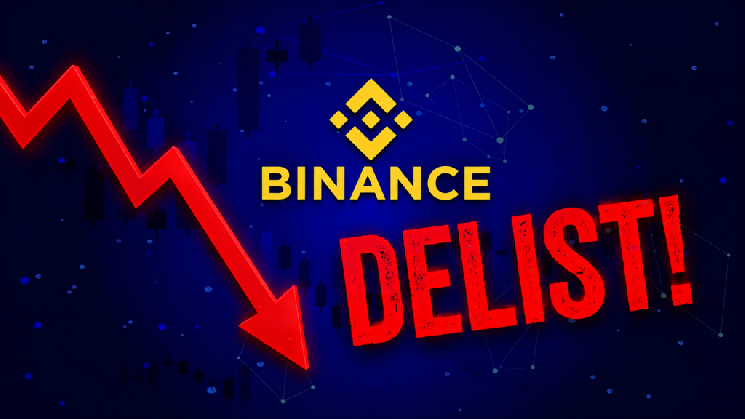
    The transition directly affects the $VELO token. Velodrome confirmed that $VELO trading on Binance is scheduled to end this week as part of Aero preparations. Meanwhile, the public audit competition for Aero is expected to conclude on September 21.

    Market Reaction Shows Volatility

    Following the announcement, $VELO experienced sharp price movement. On Binance, the $VELO/USDT trading pair briefly declined from approximately $0.0268 to $0.0252 before recovering to around $0.0265.

    This article is for informational purposes only and does not constitute investment advice.

  • Sen. Lummis: CLARITY Act Won’t Fail on Ethics, but Democrats Could Kill Bill

    Sen. Lummis: CLARITY Act Won’t Fail on Ethics, but Democrats Could Kill Bill

    Senator Lummis Defends CLARITY Act Amid Ethics Debate, Warns of Democratic Opposition

    Senator Cynthia Lummis insists the CLARITY Act will not fail over ethics concerns, but warns the bipartisan digital asset legislation could collapse if Democrats refuse to support what she describes as a consumer protection framework. The Wyoming Republican frames the upcoming Senate vote as a pivotal choice between advancing American innovation or ceding financial leadership to China.

    Bipartisan Committee Victory Sets Up September 15 Cloture Vote

    The CLARITY Act cleared the Senate Banking Committee with a 15-9 bipartisan vote, signaling initial cross-party support. However, the legislation now faces a critical procedural hurdle: a cloture motion scheduled for 2:15 p.m. ET on September 15 that requires 60 votes to advance to formal debate.

    With Republicans holding 53 Senate seats, at least seven Democrats or independents must join them if the GOP votes unanimously. Failure to reach the 60-vote threshold would likely stall the bill for the remainder of the congressional session, increasing pressure on negotiators to reach a compromise.

    Lummis: Ethics Not the Obstacle, Democratic Demands Are

    Addressing speculation that ethics provisions could derail the bill, Lummis directly attributed potential failure to Democratic reluctance.

    “If this bill fails, it won’t be because of ethics,” “It will be because Democrats didn’t join Republicans in embracing a bipartisan bill that protected consumers, cements America’s leadership in digital assets, and empowered law enforcement to clamp down on illicit finance.”

    The senator argued that Democratic amendments seek to grant future regulators excessive authority over the cryptocurrency industry, a move she characterizes as overreach that could stifle innovation.

    CLARITY Act Would Split Oversight Between CFTC and SEC

    The legislation aims to establish regulatory clarity by dividing digital asset oversight between the Commodity Futures Trading Commission (CFTC) and the Securities and Exchange Commission (SEC). Lummis emphasized the bill’s consumer protection provisions, particularly in light of the FTX collapse.

    She highlighted that FTX customers endured years of bankruptcy proceedings because existing law lacked a framework for digital assets. Under the CLARITY Act, digital commodities would be classified as customer property in bankruptcy proceedings.

    FTX customers waited for years for bankruptcy courts to claw back their money because current law never built a framework for digital assets. The Clarity Act makes digital commodities customer property in bankruptcy, ensuring consumers are protected and made whole.

    — Senator Cynthia Lummis (@SenLummis) September 8, 2026

    Warning of Decade-Long Delay If Bill Fails

    Lummis has previously cautioned that failure to pass the CLARITY Act could push the next major market structure effort to 2030, costing the United States jobs, investment, and tax revenue. With the cloture vote one week away, she issued a stark choice to her colleagues.

    “Next week, my colleagues have a choice: they can choose American innovation and strong consumer protections, or cede the future of finance to China.”

    The standoff underscores a broader legislative impasse: while both parties acknowledge the need for digital asset regulation, fundamental disagreements over regulatory scope and agency authority threaten to derail the most significant crypto market structure bill in years.

  • Crypto Trail Leads FBI to Alleged Darknet Nitazene Kingpin Brothers

    Crypto Trail Leads FBI to Alleged Darknet Nitazene Kingpin Brothers

    U.S. authorities have arrested two brothers from Jacksonville, Florida, following an investigation that traced cryptocurrency payments linked to an alleged darknet drug operation, according to blockchain analytics firm Chainalysis.

    Blockchain Analysis Identifies Darknet Vendor

    Investigators used blockchain records to identify a vendor operating under the handle “BarbaraWhite”, who allegedly sold hundreds of thousands of nitazene pills through multiple darknet markets. Nitazenes are synthetic opioids that can be more potent and dangerous than fentanyl.

    Chainalysis detailed the investigation in a social media post dated September 8, 2026:

    FBI agents just arrested an alleged darknet market vendor who sold “FENT FREE” nitazenes – an opioid that can be more dangerous than fentanyl – for crypto.We unpack how agents tracked their suspect down on-chain:1/5 pic.twitter.com/je6ellSrXy
    — Chainalysis (@chainalysis) September 8, 2026

    Cryptocurrency Trail Connects Vendor to Suppliers

    According to investigators, “BarbaraWhite” operated on darknet markets including Nemesis, Bohemia, and Abacus. Authorities traced Bitcoin transactions that linked market proceeds to the operation’s suppliers.

    Investigators identified wallets linked to “BarbaraWhite” during a separate probe. The wallets received approximately $220,000 from darknet markets and subsequently moved roughly $230,000 in cryptocurrency. About $7,210 was sent to a China-based chemical supplier that authorities allege provided substances used to produce nitazenes.

    Investigators also traced payments to postage services and connected the wallets to a mobile payment account belonging to Stanislav Chernyshov.

    Law Enforcement Combines Digital and Traditional Evidence

    The U.S. Department of Justice announced the arrests on August 28, charging both brothers with conspiracy. Authorities stated that “BarbaraWhite” operated the darknet business since 2020 and linked the operation to 12 overdoses, including three deaths.

    Before connecting the online operation to the two brothers, investigators reviewed postal records, conducted surveillance, and made undercover purchases.

    Related Developments in Crypto Enforcement

    This case highlights the growing role of blockchain analytics in combating illicit drug distribution on darknet markets. Recent enforcement actions include Tether freezing $39 million USDT in Xinbi-linked Tron wallets and Australia revoking 45 crypto registrations, signaling increased regulatory scrutiny across the cryptocurrency ecosystem.

  • MetaDAO’s Approach to Capital Formation Could Reshape Fundraising

    MetaDAO’s Approach to Capital Formation Could Reshape Fundraising

    MetaDAO is reshaping startup capital formation through a decentralized governance model that leverages token markets to guide funding decisions. Highlighted in a recent analysis by Delphi Digital, the platform enables projects to raise capital while integrating token holders directly into treasury management — a structure that could redefine how early-stage ventures secure and allocate resources.

    Market Context and Model Mechanics

    The broader cryptocurrency market continues to show mixed momentum across major assets. Against this backdrop, MetaDAO distinguishes itself with a DAO treasury framework that imposes spending limits on raised capital. Projects submit proposals to adjust funding or treasury usage, and traders use decision markets to estimate potential outcomes. This mechanism aims to foster a more engaged and active token holder community, though its long-term effectiveness remains under observation.

    Key Metrics and Milestones

    • Capital Raised: $13.34 million across four approved proposals.
    • Governance Structure: DAO treasury model with token holder voting on capital allocation.
    • Accountability: Capital has been returned to investors when projects were wound down.
    • Engagement: Participation rates among token holders vary, with overall activity levels still uncertain.

    Current Market Activity

    As of the latest data, MetaDAO shows no active trading volume, and its token price remains at $0 — indicators of the platform’s early developmental stage and the current market’s cautious dynamics. Despite low liquidity, the novel integration of governance and capital management may draw increased trader interest as engagement mechanisms mature.

    Outlook and Implications

    Market participants will closely monitor MetaDAO’s ability to sustain active token holder participation. Critical metrics include proposal voting turnout and the success rate of capital management strategies. If proven effective, the model could establish a new precedent for decentralized capital formation, influencing how future crypto startups approach fundraising and community governance.

    This article is for informational purposes only and does not constitute financial advice.