Author: DN19 Newsroom

  • MTA Unveils Interborough Express (IBX) Renderings Connecting Queens and Brooklyn

    MTA Unveils Interborough Express (IBX) Renderings Connecting Queens and Brooklyn

    MTA Unveils Interborough Express: First New NYC Transit Line in a Century

    The Metropolitan Transportation Authority revealed plans Wednesday for the Interborough Express (IBX), a proposed $5.5 billion light rail line connecting Brooklyn and Queens. The 14-mile route would stretch from the Brooklyn Army Terminal to Roosevelt Avenue, marking the city’s first new transit line since 1937.

    Light Rail Chosen for Speed and Capacity

    The MTA evaluated multiple technologies before selecting light rail for the IBX. Unlike traditional subway extensions, the line would not require tunnel boring, potentially accelerating construction timelines. The route would feature 18 new stations equipped with wider fare gates, multiple elevators, and comprehensive accessibility upgrades.

    “We studied all different technologies. Light rail is the one that moves fastest, and it’s going to carry the most people because of the speed that it can move at,” said MTA Chair and CEO Janno Lieber.

    The projected trip time is approximately 30 minutes, with connections to 17 subway lines and the Long Island Rail Road. The agency is simultaneously advancing full ADA accessibility at three connecting subway stations ahead of the IBX opening, while accessibility improvements at the Wilson Avenue L station have been expedited within the 2025–29 Capital Plan.

    Design Timeline and Funding Strategy

    Design work on the passenger line is expected to conclude by year’s end. “And then we figure out exactly how fast we can get things moving, and shovels in the ground to give service to people in these neighborhoods,” said Jamie Torres-Springer of MTA Construction and Development.

    Governor Kathy Hochul has directed the MTA to fast-track the project. “Fast. I want it done fast,” Gov. Kathy Hochul said.

    Half of the $5.5 billion price tag is already secured through the MTA’s capital plan, bolstered by congestion pricing revenue. The remaining funding depends on federal contributions, introducing political uncertainty into the timeline.

    Federal Support Critical to Timeline

    “There was a point in time when the federal government was a leader in the fight for exactly these kinds of infrastructure fights. And I want to return to that,” said New York State Assembly Member Claire Valdez.

    Valdez, who won the Democratic congressional primary in a district encompassing several proposed IBX stops, attended Wednesday’s informational pop-up event. She would join Democratic efforts to secure federal funding if the party prevails in upcoming elections.

    “We take the majority in the House, we take the Senate, we take back the White House in two years, and I feel confident the money will be there at the federal level,” Hochul said. “But regardless, we’re committed to seeing this all the way through.”

    Decade-Long Horizon for Completion

    The Interborough Express is projected to open sometime in the next decade. If realized, it would represent the most significant expansion of New York City’s transit network in generations, linking historically underserved corridors across two boroughs without relying on Manhattan-centric routing.

  • San Clemente Condo Owners Stunned by Sudden $26,000 HOA Fee for Emergency Roof Assessment

    San Clemente Condo Owners Stunned by Sudden $26,000 HOA Fee for Emergency Roof Assessment

    Homeowners at the Villa Moura condominium complex in San Clemente, California, are challenging a more than $26,000 emergency assessment for roof replacements. Residents say the charge is creating a serious financial burden and question whether the homeowners association board had the legal authority to impose it without a community vote.

    San Clemente homeowners face $26,000 roof assessment

    Beverly Albright, an 81-year-old Villa Moura resident, said the assessment has made her uncertain about whether she can remain in her home.

    “I will have to move. And this was my… I’ve worked very hard to make it so that I could be here,” Albright said.

    The 198-unit complex’s homeowners said each resident received an emergency assessment of $26,000 or more to fund new roofs. Some residents believe many homeowners will be unable to afford the cost.

    “They’re not going to be able to afford this, and the board’s response is to take out a loan, or take out equity of your house, or dip into your retirement, and I feel like that’s just unacceptable,” homeowner Megan Blanda said.

    Residents are seeking to recall members of the homeowners association board and have filed a claim alleging that the board violated the law.

    Noah Martin, a Villa Moura homeowner, said the roofing project does not meet the definition of an emergency under state regulations. He argued that residents should have been allowed to vote on how the work would be handled.

    “It didn’t fit under the California Code of Regulations, 5610. Clearly, it was not an emergency; it’s a deferred maintenance. And so, then we as members should have a vote on how we want to take care of the roofs,” Martin said.

    Residents question roofing work and potential liens

    Homeowners said they have been warned that liens could be placed on their properties if they fail to pay the assessment.

    “They’re threatening, also, to put a lien on our property if we don’t comply and we don’t pay,” a resident said during a gathering of homeowners.

    Residents said the HOA board has known for several years that repairs would be needed on the complex’s tile roofs. They contend the roofs are not leaking and that the required work involves replacing the underlayment rather than all of the roof tiles.

    “What we would like to do is have multiple bids competitively submitted and actually negotiate those bids in the best interest of the homeowners. As the board should be doing with their fiduciary responsibilities to us,” said homeowner Adam Dubin.

    Michael Kushner, an attorney and homeowners association expert with MBK Chapman who is not involved in the dispute, said large special assessments have become increasingly common. He said homeowners generally must pay an assessment even when they believe it was imposed illegally and are challenging it.

    “Homeowners have to pay those, even if they’re completely illegal. They have to pay them and then dispute them. California law doesn’t recognize the right of offsets, and you can’t withhold payment,” Kushner said.

    Payment options and financial hardship

    According to residents, homeowners were offered three ways to pay the more than $26,000 assessment: pay it in full, divide it into two payments, or add more than $2,000 to their monthly payment for six months, followed by an additional $400 thereafter.

    The cost has left some residents unsure how they will pay.

    “Retired, single, what, lose my house? I wouldn’t qualify for a loan to refinance. So where do you go?” Albright questioned.

    Homeowners have created a GoFundMe page to support residents who cannot afford the assessment.

    The HOA board said it could not comment because of ongoing legal matters. Residents said they are considering filing a lawsuit against the board.

    Copyright © 2026 KABC Television, LLC. All rights reserved.

  • ‘United 93’ Returns to the Big Screen in Gettysburg for 9/11 Commemoration

    ‘United 93’ Returns to the Big Screen in Gettysburg for 9/11 Commemoration

    The historic Majestic Theater in Gettysburg will host a special screening of Paul Greengrass’s acclaimed drama United 93 this Saturday at 6 p.m., marking the 25th anniversary of the September 11 attacks. The event includes a live panel discussion with five family members of the passengers and crew who lost their lives aboard United Airlines Flight 93, which crashed in Shanksville, Pennsylvania.

    Director Paul Greengrass on the Film’s Legacy

    Two decades after its release, United 93 remains a benchmark for dramatizing real-life tragedy. For Greengrass, the project holds a unique place in his career.

    “It’s no doubt in my mind that making “United 93″ was the most extraordinary privilege of my working life,” Greengrass said.

    The director pursued rigorous authenticity, filming inside an exact replica of a Boeing 757, casting non-professional actors and actual aviation personnel, and securing unanimous approval from the victims’ families.

    Family Members Share Personal Connections

    Gordie Felt, whose brother Edward Felt was a passenger on Flight 93, rarely watches the film. He describes the experience as a tense hope against known history.

    “You know, we’ll never really know exactly what happened in terms of the order of people rushing the cockpit, but much of that film is substantiated by facts that we’ve gleaned over the years from recordings of passengers, support people and family members on the ground,” Felt said.

    “It’s amazing — you’re hoping, you’re watching, knowing how it ends. The way it’s constructed, you’re hoping they can do it, take that plane back, then reality strikes,” Felt said.

    Edward Felt made a 911 call from the plane to a Westmoreland County dispatch center, a moment depicted in the film’s climax. Actor John Rothman portrays Edward Felt, a performance Gordie Felt praised.

    “He did such a superb job of portraying Ed. I was very grateful to him,” Felt said.

    Felt remembers his brother as a brilliant computer engineer and a devoted father.

    “When he started talking about what he did for work, we never really understood — we’d just smile and nod and be thankful there are guys like Ed out there,” Felt said.

    “Our kids are younger. We looked at Ed and Sandy and watched how they raised their kids, and it was inspiring,” Felt said.

    For Gordie Felt, the screening is another chance to honor the courage of the passengers and crew who fought the hijackers.

    “We’ll carry this story with us for as long as we can, and there will come a day when we can’t tell the story anymore. That’s why it’s important to have projects like United 93 — to tell the story, at least thematically, to the next generation,” Felt said.

    Event Organizer Highlights Significance

    Andrew Dalton of Gettysburg History helped organize the commemoration.

    “The purpose of this event is [to] showcase great works of American history on screen, and I can’t think of a better way to commemorate the 25th anniversary of 9/11 than to screen United 93,” Dalton said.

    “Having these family members involved makes this event more than a screening,” Dalton said.

    Screening Details and Special Guest

    The screening takes place Saturday at 6 p.m. at the Majestic Theater on Carlisle Street in Gettysburg. Actor John Rothman, who played Edward Felt in the film and also appeared in the 1993 movie Gettysburg, will attend. Rothman originally suggested bringing United 93 to the town.

    Tickets are available online; click here to purchase.

  • Ohio State Begins Its 137th Season Saturday Against Ball State

    Ohio State Begins Its 137th Season Saturday Against Ball State

    Ohio State opens its 2026 football season today against Ball State in a nonconference matchup at Ohio Stadium. Kickoff is scheduled for 12:30 p.m.

    The 2026 season will be the 137th in Ohio State football history.

    Ohio State vs. Ball State: Key Facts

    • Ohio State has won 26 consecutive season openers, the longest active streak in the country.
    • The Buckeyes are 487-115-20 all-time at Ohio Stadium, which begins its 104th season as Ohio State’s home in 2026.
    • Ryan Day’s teams are 24-1 in September and 19-1 in regular-season nonconference games.
    • The game against Ball State will be Day’s 31st against a non-Big Ten opponent as Ohio State’s head coach, including wins over Oregon State and TCU as acting head coach in 2018.

    Day’s Buckeyes are 24-6 in their previous 30 games against non-Big Ten opponents and have averaged 41.7 points per game. Those 24 wins include seven against teams ranked in the top 10: No. 1 Texas in 2025, No. 3 Clemson in 2020, No. 5 Texas in 2024, No. 5 Notre Dame in 2022, No. 7 Notre Dame in 2024, No. 9 Tennessee in 2024 and No. 9 Notre Dame in 2023.

    Ohio State is 8-0 in season-opening games under Day, with an average margin of victory of 25.4 points per game.

    Ohio State and Ball State Meet for the First Time

    The Buckeyes and Cardinals will meet for the first time in program history.

    Ohio State is 39-1 all-time against current members of the Mid-American Conference and enters the game riding a 36-game unbeaten streak against MAC teams.

    Ohio State’s 2025 Season in Review

    Ohio State had one of the most dominant scoring defenses in college football last season, allowing 9.3 points per game in 2025. That figure was the third-fewest in the BCS and College Football Playoff era, which dates to 1999. Ohio State was also one of only five FBS defenses across those eras to allow fewer than 10 points per game.

    The Buckeyes allowed 129.7 passing yards per game in 2025, the second-fewest by any FBS team in the College Football Playoff era and the lowest total by any team since 2014.

    Ohio State ranked No. 1 or No. 2 nationally in nine categories, including No. 1 in scoring defense at 9.3 points per game, total defense at 219.1 yards per game, passing defense at 129.7 yards per game, first-down defense at 184, red-zone scoring defense at 66.67 percent and fewest plays of 10 or more yards allowed at 90.

    Jeremiah Smith has already set more than a handful of Ohio State records. He became the fastest Buckeye to reach 100 receptions, 1,000 receiving yards, 1,500 receiving yards, 2,000 receiving yards and 25 touchdown receptions.

    Julian became a Heisman Trophy finalist and led the nation with a 77.0 percent completion rate. He ranked second nationally in efficiency at 177.5 after throwing for 3,610 yards and 32 touchdowns, the fourth-most in the country, with only eight interceptions.

    Julian’s 77.0 percent completion rate in 2025 was the best single-season mark in Ohio State history, a Big Ten record and the third-highest mark in FBS history. Bo Nix completed 77.4 percent of his passes at Oregon in 2023, while Mac Jones posted the same percentage at Alabama in 2020.

    Bo Jackson was one of three true freshmen to rush for more than 1,000 yards last season, joining Caleb Hawkins of North Texas and Nate Sheppard of Duke. Jackson became the fifth Ohio State true freshman to surpass 1,000 rushing yards in a season, following Robert Smith with 1,126 yards in 1990, Maurice Clarett with 1,237 yards in 2002, JK Dobbins with 1,403 yards in 2017 and TreVeyon Henderson with 1,248 yards in 2021.

    Ball State Cardinals Preview

    Ball State finished the 2025 season with a 4-8 record, including a 3-5 mark in MAC play.

    Cardinals head coach Mike Uremovich is entering his second season at Ball State. He previously served as Butler’s head coach from 2022 through 2024, compiling a 23-11 record.

    Ball State enters the 2026 season with 11 players from Ohio on its roster, including Ohio State transfer defensive back Diante Griffin.

    The Cardinals have 19 transfers on their roster who last played at Power Four schools, including five transfers from the Big Ten.

    Ball State is replacing starting quarterback Kiael Kelly, who led the Cardinals in both passing and rushing in 2025. The likely Week 1 starter is redshirt junior Keldric Luster, who transferred from Texas State after previously playing at SMU.

    Over his previous three years in college, Luster played in nine games, completing 4 of 12 passes for 37 yards with zero touchdowns and zero interceptions. He also recorded 16 carries for 76 yards.

    Ball State returns three of its top four running backs from last season. Redshirt junior TJ Horton leads the group after rushing for 180 yards on 60 carries in 2025.

    On defense, the Cardinals return three starters from last season: defensive tackle Ameir Glenn, cornerback Willizhuan Yates and safety DJ Fields.

    Ohio State 2026 Football Schedule

    Date Opponent Time
    Sept. 5 Ball State 12:30 p.m.
    Sept. 12 at Texas 7:30 p.m.
    Sept. 19 Kent State 12:00 p.m.
    Sept. 26 Illinois TBA
    Oct. 3 at Iowa TBA
    Oct. 10 Maryland TBA
    Oct. 17 at Indiana TBA
    Oct. 31 at USC TBA
    Nov. 7 Oregon TBA
    Nov. 14 Northwestern TBA
    Nov. 21 at Nebraska TBA
    Nov. 28 Michigan 12:00 p.m.

    Source: ohiostatebuckeyes.com

  • Ontario Fines SeatGeek $25,000 Under New Anti-Scalping Law

    Ontario Fines SeatGeek $25,000 Under New Anti-Scalping Law

    Ontario has fined ticket reseller SeatGeek $25,000 in what appears to be the first penalty issued under the province’s new anti-scalping law.

    Passed last April, the law prohibits individuals and businesses from reselling tickets—or facilitating their resale—for more than the total price paid to the primary seller. That amount includes the ticket’s base price, fees, service charges and taxes.

    Ticket resale companies have argued that they do not always have access to verified original prices, making it difficult to ensure tickets are listed without markups.

    SeatGeek fines issued under Ontario ticket resale law

    Ontario’s Consumer Beware List shows that three administrative penalties were issued against SeatGeek on Aug. 28:

    • $10,000 for making “a ticket available or facilitating the sale of a ticket [that] exceeded the resale price cap”;
    • $5,000 for failing to disclose the total price of a ticket when purchased from the primary seller; and
    • $10,000 for facilitating a “sale without proof of total price when purchased from primary seller.”

    No further information was available about the sale or sales involved.

    The province amended the Ticket Sales Act, 2017, as part of its April budget. The government said the changes were intended to protect Ontario fans from sharply rising resale prices, including the high prices charged for tickets during last fall’s Toronto Blue Jays playoff run, which angered Premier Doug Ford.

    Businesses or individuals are added to the Consumer Beware List when they have been subject to compliance or enforcement actions under the Consumer Protection Act or other legislation overseen by the Ministry of Public and Business Service Delivery and Procurement.

    StubHub says ticket pricing rules remain unclear

    In June, the ministry said officials had inspected 27 major secondary ticketing platforms to assess compliance with the new law. It said it was “pursuing enforcement actions where appropriate, including issuing some compliance orders to date.”

    SeatGeek and StubHub, another major ticket reseller, received notices of proposed compliance in late May. The ministry said the notices were “advisable for the protection of ticket purchasers.”

    StubHub told The Globe and Mail on Tuesday that it would not comment on the government’s ongoing investigation into the company, but said it faced challenges complying with the law.

    “We are upholding our responsibility as best we can despite the law’s silence on some core issues, including how a seller should verify the original price of a ticket,” the company said in an e-mailed statement. “The government has acknowledged this gap and indicated that there is a need for implementation guidance. We will continue to engage in productive conversation to address these matters.”

    The Ministry of Public and Business Service Delivery and Procurement did not respond to emails seeking comment on StubHub’s statement, requesting an interview with Minister Stephen Crawford or asking about the SeatGeek penalty.

    SeatGeek tickets appeared to sell for more than double the original price

    StubHub has not received any fines to date, making the SeatGeek penalty apparently the first issued under Ontario’s new ticket resale rules.

    In June, the government announced that it had raised the maximum administrative penalty for repeat offenders to $25,000 from the previous limit of $10,000. It also said the ministry would be allowed to publicly “name and shame” ticketing businesses against which enforcement actions had been initiated.

    It remains unclear how effective the province’s enforcement efforts have been. On Tuesday, SeatGeek listed numerous tickets for that evening’s Chris Stapleton concert at Toronto’s Rogers Stadium. Several appeared to be marked up by more than 100 per cent compared with tickets listed by Ticketmaster, the primary vendor.

    Ticketmaster tickets in row 20 of floor section C3 were priced at up to $224.69, including a face value of $179.75 and a service fee of $44.94. Tickets for the same row on SeatGeek were listed at $469.04, including a ticket price of $409 and a service fee of $60.04.

    SeatGeek did not respond to a request for comment on Tuesday.

    However, in June, Joe Freeman, the company’s vice-president of government affairs, told The Canadian Press that many original sellers, including sports season-ticket holders, do not have access to the original face value of tickets sold as part of a package.

    “This is information that only a primary ticketer like Ticketmaster would have, and Ticketmaster has not been forthcoming with that information,” Mr. Freeman said at the time.

  • California Woman Killed by Longtime Stalker in US Illegally, DHS Says

    California Woman Killed by Longtime Stalker in US Illegally, DHS Says

    A 38-year-old Sacramento woman was shot and killed on September 8 in a parking lot near a restaurant, in what authorities describe as the culmination of months of stalking by a man who had been living in the United States illegally. The suspect, identified as 22-year-old Rohit Rohit, died later the same day from an apparent self-inflicted gunshot wound after deputies located his vehicle using an automated license-plate reader system.

    Victim Identified as Shalini Thakur

    Authorities have not officially released the victim’s name, but her mother, Sudesh Kumari, confirmed to CNN affiliate KCRA that her daughter was Shalini Thakur, a Sacramento resident. Kumari, who said goodbye to her only child at a funeral on Monday, is questioning whether more could have been done to protect her. The service was attended by Kumari, Thakur’s uncle, friends, and even a customer from the IHOP where Thakur worked; the rest of her family remains in India.

    Friends remembered Thakur’s vibrant spirit. “I want to honor her heart and her kindness,” Melinda Willey, who became friends with Thakur, told KMAX/KOVR. “She was a lady with a vibrant personality. Larger than life, with this glow about her, her aura,” Satinder Dulai, another friend, told the outlet. “She had a bubbly personality. She had a lot of goals. And I think one by one, she was completing them. She was a little feisty, but very loving.”

    Suspect Details and Immigration Status

    Rohit Rohit, an Indian national, entered the U.S. through Arizona in 2023, according to the Department of Homeland Security (DHS). He and Thakur knew each other through work; court documents obtained by KCRA indicate Thakur met Rohit when he picked up DoorDash orders from her workplace. A DoorDash spokesperson confirmed Rohit had passed a background check using a Social Security number but had not been active on the platform for over six weeks and was not working the day of the shooting. The company stated it had received no prior reports about him.

    “This is an unimaginable tragedy, and our hearts are with Ms. Thakur’s family and loved ones as they grieve this immense loss,” a DoorDash spokesperson said.

    Stalking Timeline and Escalation

    Investigators say the harassment began in at least January when Thakur discovered an Apple AirTag hidden under the hood of her car. The behavior intensified over the months:

    • Rohit deflated Thakur’s tires and followed her to her workplace, offering to help.
    • He obtained a copy of her apartment key, entered while she was sleeping, and claimed he was worried because she hadn’t answered him.

    “Despite the bizarre behavior, the victim initially declined to pursue charges or obtain a restraining order,” the Sacramento County Sheriff’s Office said. Deputies and detectives remained in contact with Thakur out of concern for her safety. In May, after repeated urging, she obtained a restraining order. In late July, Rohit allegedly violated that order by leaving groceries at her door.

    Law Enforcement Response and Investigation

    On September 8, deputies responded around 3 p.m. after witnesses reported a shooting. The sheriff’s office said Rohit had been waiting for Thakur at a shopping center; she was dropped off at her vehicle shortly before the attack. “As the victim attempted to run away, Rohit chased her down, pulled out a firearm, and shot her multiple times,” the news release stated. Thakur fell to the ground, and Rohit fired additional shots. Sheriff Jim Cooper posted a brief, blurry video on Facebook that he said depicted the shooting.

    Witnesses provided a description of the suspect’s car. Deputies used Flock, an automated license-plate reader system, to track the vehicle. Within minutes, they located it. As they attempted a traffic stop, the driver slammed on the brakes. After trying to call the driver out, deputies discovered Rohit had died from an apparent self-inflicted gunshot wound.

    Political Reaction and Sanctuary Policy Debate

    The case has ignited a political firestorm over immigration enforcement. DHS issued a statement blaming the Biden administration and California’s sanctuary laws.

    “This tragedy would have been completely avoided if it weren’t for the Biden Administration RELEASING this killer into our country,” a DHS spokesperson told CNN. “Sanctuary politicians must put an end to reckless policies that play Russian roulette with American lives. Our thoughts and prayers are with the victim and her family.”

    California Governor Gavin Newsom pushed back, attributing the DHS statement to the California Values Act, which limits local law enforcement’s involvement in immigration enforcement.

    “Trying to turn a horrific act of stalking and domestic violence into an indictment of California’s sanctuary policies is not supported by the evidence and distracts from the real issues this case raises — law enforcement preventing stalking and domestic violence, enforcing restraining orders, and keeping victims safe,” Newsom’s spokesperson, Diana Crofts-Pelayo, told CNN.

    Research cited in the debate includes a National Institute of Justice summary of a Texas study finding undocumented immigrants were arrested for violent and drug-related crimes at less than half the rate of native-born U.S. citizens, and National Bureau of Economic Research data showing lower incarceration rates for immigrants overall.

    Remembering Shalini Thakur

    As the investigation continues, Thakur’s loved ones are honoring her memory. An obituary page collects written tributes from former coworkers and friends. A GoFundMe campaign organized to support her family describes her as “a caring, loving, selfless, and generous young woman who gave so much of herself to others” and someone whose kindness left a lasting impact on everyone who knew her.

    Resources for Domestic Violence Victims

    If you or someone you know is experiencing domestic violence, help is available 24/7:

    • National Domestic Violence Hotline: Call 1-800-799-SAFE (7233)
    • Text: “START” to 88788
    • Online chat: Available at thehotline.org
  • UK Upgrades Diplomatic Relations with Venezuela

    UK Upgrades Diplomatic Relations with Venezuela

    The United Kingdom government announced Tuesday an upgrade in its diplomatic relations with Venezuela, including the appointment of an ambassador to the country, in a move it said would strengthen its capacity “to play a constructive role in support of a democratic transition.”

    “Esta decisión forma parte de un acercamiento internacional más amplio,” the government said in a statement addressed to Parliament.

    “Este enfoque no representa ningún cambio en la valoración que hace el Reino Unido de los recientes procesos electorales, incluidos los celebrados en 2024, ni implica el respaldo a ningún partido. La postura tradicional del Reino Unido es reconocer a los Estados, no a los Gobiernos,” clarified the document signed by the Minister for Latin America, Chris Elmore.

    “La mejora de nuestras relaciones reforzará nuestra capacidad para desempeñar un papel constructivo en apoyo de una transición democrática. Nos permitirá defender de manera más eficaz el respeto de los derechos humanos y contribuir a la recuperación y reconstrucción del país tras los devastadores terremotos del 24 de junio,” the text adds.

    Meanwhile, Colin Dick, head of mission at the British Embassy in Caracas, stated in a communiqué: “Espero que el Reino Unido y Venezuela trabajen aún más estrechamente en los próximos años.”

    For its part, the Venezuelan government said it “valora la decisión del Reino Unido” to elevate the level of diplomatic relations.

    Oliver Blanco, Vice Minister for Europe and North America, posted on X: “Reafirmamos nuestra disposición a profundizar un diálogo respetuoso y constructivo, así como a promover la cooperación en áreas de interés común para nuestros países y avanzar en la recuperación de los recursos que pertenecen legítimamente a los venezolanos.”

  • John Roberts Often Defers to Trump—but Not on the White House Ballroom Project

    John Roberts Often Defers to Trump—but Not on the White House Ballroom Project

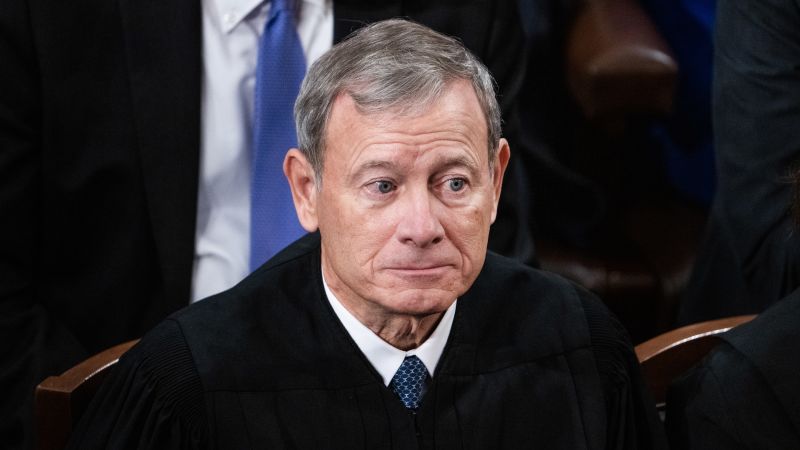
    Chief Justice John Roberts broke with Donald Trump and the Supreme Court’s other conservative justices on Monday, objecting to the president’s plan to build a massive ballroom at the White House.

    “The White House is not just any building.”

    Roberts has often deferred to Trump’s executive authority, but his dissent marked a rare break from a president whose policies have dominated the court’s docket. Roberts has authored major opinions supporting Trump, including the 2024 ruling granting him immunity from criminal prosecution and last June’s decision allowing him to fire the heads of independent agencies.

    Even in dissent, Roberts used the historically minded rhetoric for which he is known. His six-page statement invoked the history and architecture of Washington, quoting Theodore Roosevelt and Winston Churchill on the importance of iconic public buildings.

    “‘We shape our buildings, and afterwards our buildings shape us,’” Roberts wrote, lifting a line from a 1943 Churchill war speech.

    He added, “All the more reason to ensure that those responsible follow the rules in deciding what to tear down and what to build up at the People’s House.”

    Roberts invokes the White House’s historic role

    Roberts, who often tells audiences that he once planned to pursue a history Ph.D. rather than a law degree at Harvard, highlighted the symbolism of Washington’s historic architecture.

    He noted that when Roosevelt thanked Congress in 1902 for funding additions to the East and West wings, the president referred to “the stately simplicity” of the original architecture and the importance of preserving “such buildings as historic monuments which keep alive our sense of continuing with the Nation’s past.”

    Throughout his opinion, Roberts showed his own appreciation for the White House’s architecture, much as he has expressed pride in the Supreme Court’s columned building. The Supreme Court did not have its own building until 1935, more than a century after the White House and US Capitol were constructed.

    Roberts’ position did not affect the outcome and came at no apparent cost to Trump. His five conservative colleagues formed a majority that allowed construction of the ballroom to continue. The project has been underway for nearly a year and is nearing completion.

    Still, Monday’s statement adds another dimension to Roberts’ record as chief justice during Trump’s aggressive second-term agenda. The president’s cases have shaped the court’s work and will form a significant part of Roberts’ legacy.

    Roberts has approved many Trump policies, but last session he voted against two of the president’s most far-reaching initiatives: sweeping tariffs on foreign goods imposed without congressional approval and an effort to restrict birthright citizenship, the long-standing practice granting US citizenship to children born in the country.

    Trump’s plans to reshape Washington

    The case’s focus on American history also underscored Roberts’ role as chancellor of the Smithsonian Institution. The position is largely ceremonial because he serves as chief justice, but Roberts has presided over Smithsonian board meetings and observed the Trump administration’s continuing effort to reshape the nation’s leading public museums.

    Trump’s campaign to transform Washington in his own image has included adding his name to the John F. Kennedy Center for the Performing Arts and proposing a 250-foot triumphal arch. The arch is planned for the traffic circle between the entrance to Arlington National Cemetery and the Lincoln Memorial.

    The lawsuit was brought by the National Trust for Historic Preservation. The organization argued that demolishing the East Wing and constructing a 90,000 square-foot ballroom and security structure required congressional approval.

    Lower federal courts initially sided with the Trust and allowed the case to proceed. The judges found that the organization had “standing” to sue because it had shown a significant injury. The Trust cited Alison Hoagland, a longtime Trust leader and member and an architectural historian, who said the project had harmed her enjoyment of the White House.

    The Supreme Court’s majority rejected that reasoning, writing that “mere offense, disagreement, or distaste does not qualify as a concrete and particularized injury” for purposes of bringing a lawsuit. The majority issued its ruling per curiam, Latin for “by the court,” as is common in appeals arriving through the court’s emergency docket. Justices Clarence Thomas, Samuel Alito, Neil Gorsuch, Brett Kavanaugh and Amy Coney Barrett did not sign separate opinions.

    Roberts disagreed that Hoagland’s claim was minor. Liberal Justices Sonia Sotomayor, Elena Kagan and Ketanji Brown Jackson joined his opinion.

    “The White House is not just any building, and – when it comes to historic preservation – Hoagland is not just any person.”

    Roberts said earlier court decisions had recognized injury based on “esthetic interests.” He cited a 1992 precedent in which, as Roberts described it, “a desire to … observe an animal species like a particular crocodile, even for purely esthetic purposes was undeniably a cognizable interest for purposes of standing.”

    Roberts says ballroom project is likely unlawful

    In the case before the court, Roberts declared, “A historic preservationist such as Hoagland can be aesthetically injured in a concrete, particularized way by the transformation of a historic building that she frequently enjoys, just as an environmentalist can sustain a concrete, particularized aesthetic injury from the extinction of a particular animal or the transformation of a particular forest or river that he regularly enjoys.”

    Monday’s ruling addressed only the question of standing. The majority said it was not deciding whether the ballroom project itself was lawful. Roberts, however, made clear that he viewed the broader construction effort skeptically.

    He wrote that Congress had expressly prohibited construction on such federal property “without express authority of Congress.”

    “That construction is likely unlawful,” he said, adding that the usual appropriation for White House maintenance “likely does not authorize the President to use hundreds of millions of dollars in private donations to tear down the East Wing and construct a ballroom in its stead.”


  • Supreme Court Rejects Trump Plan to Limit Mail-In Voting in Midterm Elections

    Supreme Court Rejects Trump Plan to Limit Mail-In Voting in Midterm Elections

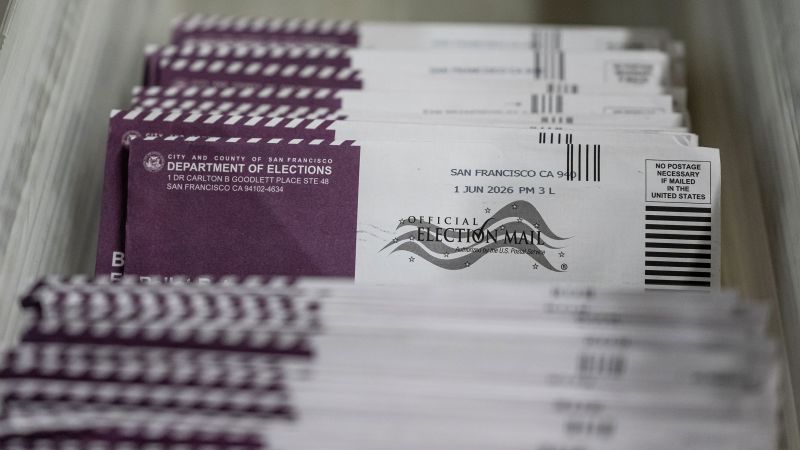
    The Supreme Court on Monday rejected President Donald Trump’s controversial plan to change how mail ballots are sent to voters nationwide, blocking a proposal that election officials warned would have caused catastrophic consequences for the 2026 midterms.

    In one of the most significant cases on the court’s emergency docket in years, a majority of justices halted a procedure that would have granted the U.S. Postal Service unprecedented authority to withhold potentially millions of mail ballots. Even some Republican election officials cautioned the proposal could trigger chaos and mass disenfranchisement.

    The court ruled the administration “is unlikely to succeed on the merits of its challenge” but provided minimal reasoning in its three-sentence, unsigned order. Conservative Justices Samuel Alito and Clarence Thomas dissented.

    Major Setback for Trump’s Mail Voting Crusade

    The decision marks a significant loss for the president, who has spent years attacking mail voting with false claims of widespread fraud while continuing to vote by mail himself. The administration framed its proposal as a “modest” regulatory tweak intended to protect against alleged fraud. Critics, however, labeled it an unconstitutional power grab the Postal Service was unprepared to execute.

    CNN has reached out to the White House for comment.

    Kavanaugh Concurs on Timing, Leaves Door Open for Future

    Justice Brett Kavanaugh, part of the court’s conservative wing, wrote a concurrence stating he believed the proposal might fall within USPS authority, but that “state and local election officials do not have sufficient time to reasonably implement the rule before the elections.”

    His reasoning acknowledged a flood of briefs from election officials arguing there was simply not enough time to implement the order this late in the cycle. The concurrence also suggested Kavanaugh could side with Alito and Thomas to approve similar changes for a future election.

    Alito Dismisses Practical Concerns, Cites Postal Authority

    In dissent, Alito argued the practical implementation concerns raised by election officials were insufficient grounds for the plaintiff states and voting rights groups to prevail.

    “The government has a strong interest in enforcing the rule, and implementing it will also ‘en­hance the visibility of Federal Ballot Mail’ in order to better detect election fraud,” Alito wrote. “On the other side of the balance, the plaintiff States invoke the practical ef­fects of implementing the rule close to the midterm elec­tions. I take that problem very seriously, but it is not enough to convince me to deny the application.”

    “That Hail Mary pass is unlikely to be successfully completed here,” Alito wrote. “The Postal Service has broad authority to regulate the mail.”

    Bipartisan Coalition Warned of Last-Minute Chaos

    Beyond the Democratic-led states and voting rights groups that challenged the proposal, a bipartisan coalition of election administrators, former governors, and others warned the justices against last-minute changes to mail ballot procedures. The Postal Service rule required states to upload massive voter datasets to an online portal that was not yet operational. It also mandated changes to ballot envelopes that had already been purchased and, in many states, already mailed to voters.

    Officials Celebrate Ruling as Defense of Democracy

    The plaintiffs praised the court’s decision late Monday.

    “Trump’s attempt to sabotage the 2026 elections has failed,” said Colorado Secretary of State Jena Griswold, a Democrat.

    California Attorney General Rob Bonta, also a Democrat, called the high court’s decision a “victory for our democracy and a powerful affirmation of the rule of law.”

    The administration argued the changes were necessary to secure ballots and ensure only eligible voters receive them. A coalition of two dozen Democratic-led states and voting groups countered the effort was a power grab by a president who has long falsely alleged widespread voter fraud in mail ballot systems.

    Court Prioritizes Voter Harm Over Administrative Burden

    In recent emergency docket rulings, the court has often found the Trump administration harmed when lower courts block controversial policies. In this case, however, the court determined that “equitable factors”—the potential harm to voters—outweighed those concerns.

    The emergency appeal, filed last week, was the third time the administration raced to the Supreme Court on this policy. In late August, the court allowed the president to proceed on technical grounds related to lawsuit timing. A lower federal court blocked the changes days later.

    Under the Constitution, states and Congress determine voting procedures—not the White House or the post office.

    Order Required Voter Lists, Barcodes, and Prosecution Threats

    The president’s order required states to submit eligible voter lists to the USPS. The agency would then be barred from delivering ballots to anyone not on those lists. It also mandated tracking barcodes on ballot envelopes and “prioritized” federal prosecution of state election officials who send or receive ballots to non-citizens or other ineligible voters.

    Whistleblower Warned of Mass Ballot Withholding

    While the Supreme Court deliberated, a Postal Service whistleblower issued stark warnings. The whistleblower’s report revealed that if a single ballot had a barcode issue, officials would decline to deliver the entire batch of mailings containing that envelope. The report also described a rushed effort to launch an online data-sharing system that could make the complex plan even more vulnerable to mass disenfranchisement.

    No Evidence of Widespread Fraud; Multiple Courts Rejected Plan

    Trump has long promoted conspiracy theories about mail voting to discredit the 2020 presidential election he lost. Improper voting remains exceedingly rare, and the administration has never produced evidence of widespread fraud capable of influencing the 2020 outcome or any other contest.

    Multiple federal courts rejected the proposal. Over the weekend, U.S. District Judge Carl Nichols, a Trump nominee in Washington, D.C., became the latest to pause the USPS rule for the midterms.

  • US Military Confirms Deployment of Weapons in Space

    US Military Confirms Deployment of Weapons in Space

    US Acknowledges Deployment of Space Weapons for First Time

    The United States has deployed weapons in space and will use them to defend American forces, Air Force Secretary Troy Meink announced Monday. The statement marks the first public acknowledgment of such capabilities in orbit and serves as a deliberate signal to potential adversaries.

    Meink’s Announcement at Air, Space and Cyber Conference

    “Today we continue to ensure we remain ready to meet the challenges of evolving threats wherever they exist,” Meink told the Air, Space and Cyber Conference, an annual gathering hosted by the Air & Space Forces Association in National Harbor, Maryland. “This is why the United States now has on-orbit space control weapons capable of defending the joint force against hostile adversary action.”

    Meink did not provide specifics on the weapons and, when asked to expand, refused to offer additional details. It remains unknown when the weapons were placed into orbit.

    Context: Space Force and Global Competition

    President Donald Trump established the US Space Force in 2019 as part of the Air Force, touting it as a historic step toward bolstering US defense capabilities amid an advancing arms race. China and Russia have challenged America’s space dominance, according to US military assessments.

    “China develops and operates space and counterspace capabilities as part of a military modernization strategy,” the US Space Force says on its website, while “Russia views space as a warfighting domain and believes space supremacy will be a decisive factor in future conflicts.”

    Russian and Chinese Space Capabilities

    US military officials have repeatedly warned that both countries are testing new offensive space capabilities. Examples cited include Russian satellite constellation training missions that Washington says could demonstrate “attack and defend tactics” for future combat, and China’s development of a nuclear-capable partial-orbit hypersonic missile.

    As CNN reported in 2024, US intelligence suggests Russia has also made efforts to develop a space-based nuclear weapon that would use a massive energy wave, known as an electromagnetic pulse, to potentially knock out a large swath of commercial and government satellites – a claim Moscow has denied.

    Potential Impacts of Space-Based Weapons

    Such a weapon could have broad, devastating impacts. For example, it could upend satellites the world relies on to predict the weather and respond to disasters, or even potentially affect global navigation systems used for everything from banking and cargo shipping to hailing a ride share and ambulance dispatch.

    “It is critically important that we maintain our dominance not only in the air but in space, and so we’ve had to take steps to make sure that when we’re threatened, we can take care of that,” Meink said Monday.

    CNN has reached out to the Space Force for comment.

    Legal Framework and Treaty Considerations

    While the 1967 Outer Space Treaty bans nuclear weapons or weapons of mass destruction in orbit, it does not prohibit the use of conventional weapons in space or the use of ground-based weapons against assets in space – leaving room for interpretation.

    Trump’s Golden Dome Initiative and Future Plans

    Last December, Trump signed an executive order calling US superiority in space “a measure of national vision and willpower,” with an emphasis on developing next-generation missile defense technologies and ensuring its abilities to counter threats, including “any placement of nuclear weapons in space.”

    The executive order was a step toward Trump’s proposed “Golden Dome” missile defense system, an ambitious multibillion-dollar plan inspired by Israel’s Iron Dome that officials say would allow the US to intercept missiles from anywhere in the world.

    The US has remained vague on its plans for developing the missile shield, which Trump said he hopes to be completed by 2028. As CNN earlier reported, the Pentagon has scheduled its first major test for just before the 2028 election, according to two sources familiar with the matter.

    Speaking Monday, Meink also said a US space-based interceptor program had moved “from initial contract to flight-ready hardware in less than one year,” without revealing further details.