Author: DN19 Newsroom

  • Elon Musk’s Mother Maye Sleeps in Her Son’s Garage

    Elon Musk’s Mother Maye Sleeps in Her Son’s Garage

    Maye Musk at 78: From Kalahari Camping to CoverGirl, a Life of Reinvention and Resilience

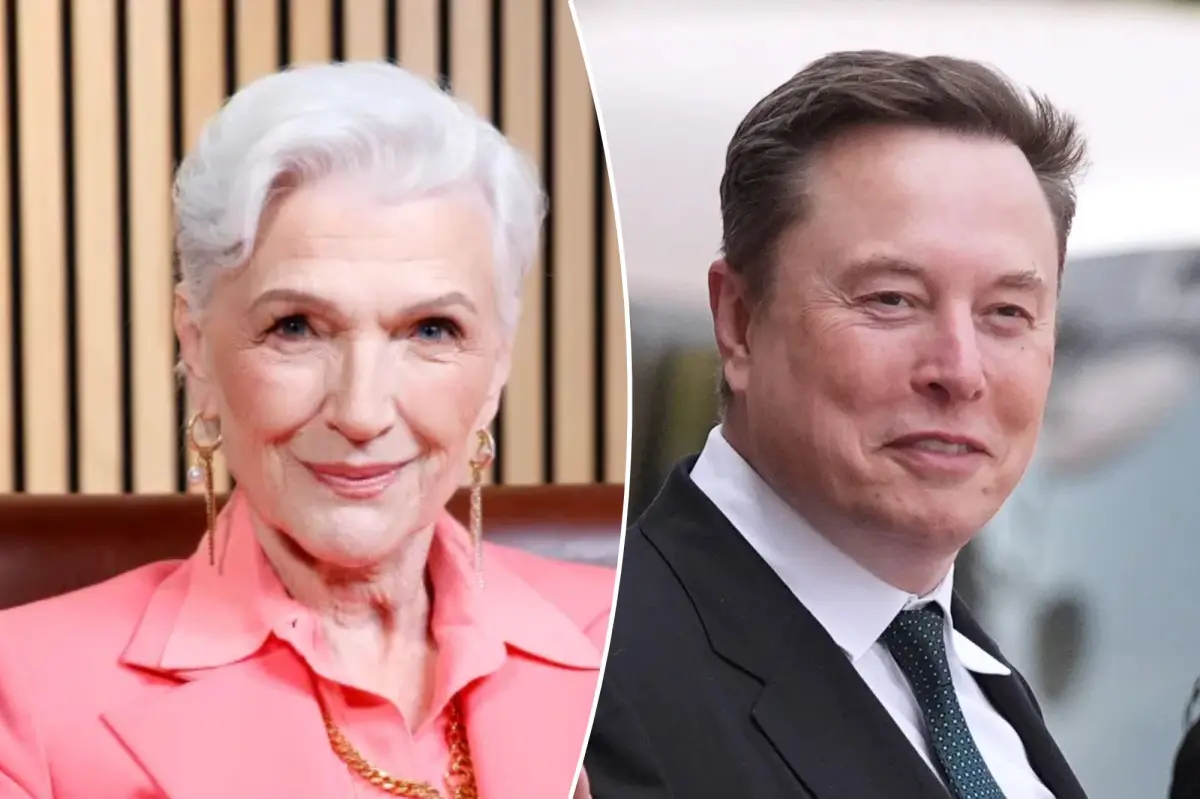
    Elon Musk is famously nomadic, opting for friends’ couches or spartan temporary lodgings over a permanent address. As it turns out, the apple doesn’t fall far from the tree. His 78-year-old mother, Maye Musk, reveals she shares that same comfort with “roughing it”—a mindset forged during a childhood spent camping in the Kalahari Desert and decades of couch-surfing that lasted until she was 60.

    A No-Frills Philosophy Forged in Adversity

    “If I have a couch or a mattress on the floor, then I’m good,” Maye told The Post. “Sleeping on the floor — there’s a roof over your head. That’s a luxury.”

    This unsentimental, no-frills approach defines the matriarch’s new memoir, Timeless: The Art of Reinvention and Resilience at Any Age (Harper Wave). It is a philosophy born from raising three children as a single mother while building a thriving career in modeling and nutrition. In a culture that often treats victimhood as a virtue, Maye’s grit is a refreshing counter-narrative—especially from a woman who could easily be retired on a superyacht.

    “People suffer a lot in this world and they don’t think there’s a way out,” Maye said. “They need to focus… how are you going to get out of this miserable situation?”

    It is a question she answered decisively in her 30s. After years married to Errol Musk, whom she describes in her book as physically and emotionally abusive, she left him to support herself, Elon, younger son Kimbal, and daughter Tosca. (Errol denied the abuse claims in a New York Times interview last year.)

    As a single mother in South Africa and later Toronto, she juggled roles as a private dietitian, nutrition teacher, and model to keep the family afloat.

    “You can do without dinners and you can do without movies or fancy clothes or anything, as long as you don’t have somebody who’s nasty around, shouting at you all the time,” she said.

    The “Best Years” Arrive in Her Seventies

    At 50, Maye moved to New York City, drawn by the pace: “New Yorkers walk fast, they talk fast, they think fast.” The move prioritized her modeling career, which has since launched into the stratosphere. Now in her late 70s, she has zero interest in slowing down. In 2022, she became the oldest woman to appear in the Sports Illustrated Swimsuit edition and currently serves as a CoverGirl ambassador.

    “I would say my seventies have been my best,” Maye said. “My best years, really.”

    That success demands discipline. Living in downtown NYC, Maye spends four hours every morning managing her social media profiles and vetting modeling and speaking opportunities—work she insists on doing herself rather than delegating to a team.

    A Family Ethos of Relentless Building

    That work ethic is clearly inherited. Her children—Elon, filmmaker Tosca, and technologist-turned-chef Kimbal—have all embraced a drive to build. Yet Maye admits to being occasionally bewildered by her eldest son’s intensity. She recalled him appearing at breakfast after an all-nighter designing rockets.

    “And what do you answer to that… I don’t have an expertise to offer,” she said. “I can just offer scrambled eggs.”

    But she also witnesses a tender side of the tech mogul the public rarely sees.

    “When he’s with his kids, no one else exists. He just plays with them,” she said. “He’s just lovable. He’s funny. But he is brilliant. He’s a genius. He really is one of a kind, and a genius of the world.”

    Defending Her Son in the Public Arena

    Since her 2019 book, A Woman Makes a Plan, public scrutiny of Elon has intensified. He has become a political lightning rod, drawing threats against Kimbal’s restaurants, vandalism at Tesla dealerships, and heated rhetoric. Maye has taken an active role in challenging media narratives she views as unfair, tracking down journalists on X (formerly Twitter) to confront them directly.

    “I would find the journalist who wrote the story. I found their tag so that I could tag them and say, ‘shame on you,’” she said. “I’m angry … it gave me a lot of comfort. It didn’t stop them.”

    Her political engagement extends offline. She recounted a confrontation with a friend advocating for open borders. When Maye asked if the friend would want to live next to undocumented young men, the response was telling:

    “As long as it’s not near me.”

    The Long Road to American Citizenship

    The immigration debate is deeply personal for Maye. Despite her father and grandparents being American-born Midwesterners, her Canadian birth meant roughly 12 years on visas working as a dietitian and model before obtaining a green card, followed by another five-year wait for citizenship.

    “[When] you get your citizenship … you just cry. You’re just so happy,” she recalled.

    No Retirement in Sight

    With upcoming shoots and speeches scheduled for Hong Kong, Austin, Buenos Aires, and Shanghai, Maye remains laser-focused on what comes next. When asked why she keeps pushing near 80, she dismisses the premise of retirement entirely.

    “I’m having the best time.”

  • Al Ain vs Al Nassr Live: Houssine Rahimi Opens Scoring (1-0)

    Al Ain vs Al Nassr Live: Houssine Rahimi Opens Scoring (1-0)

    Al Ain vs Al Nassr: Live Updates from 2026–27 AFC Champions League Elite Opener

    HAZZA BIN ZAYED STADIUM — Cristiano Ronaldo and Al Nassr kicked off their 2026–27 AFC Champions League Elite campaign against Al Ain in a well-attended Group B fixture at Hazza Bin Zayed Stadium. Ange Postecoglou’s side entered the match aiming to translate strong Saudi Pro League form onto the continental stage.

    Match Preview and Team News

    Al Nassr arrived in the United Arab Emirates sitting third in the Saudi Pro League standings with five wins, one draw, and one loss, targeting back-to-back domestic titles. Since joining the club, Ronaldo has recorded 17 appearances in the AFC Champions League Elite, scoring 14 goals and providing two assists.

    Uzbek referee Ilgiz Tantashev took charge of the contest at the 25,000-capacity venue. Ronaldo wore the captain’s armband for the visitors, while goalkeeper Khaled Eisa led the home side.

    Al Ain Starting XI

    Khaled Eisa; Rafa Rodriguez, Yahya Benkhaleq, Skoko; Kaku Romero Gamarra, Houssine Rahimi, Lazaro, Matias Palacios; Soufiane Rahimi, Rami Rabia, Abdoulkarim Traore.

    Al Nassr Starting XI

    Nawaf Al Aqidi; Saad Al Nasser, Inigo Martinez, Abdulelah Al Amri, Joao Felix, Sadio Mane; Abdullah Al Khaibari, Samu Costa, Cristiano Ronaldo.

    First Half: Al Ain Strike Early

    The match began with a minute of silence following the tragedy in Nepal before Tantashev blew the opening whistle at 12:02 PM local time.

    2′ — An active start produced immediate drama. Al Ain rattled the post early, while Al Nassr appealed for a penalty that was not awarded.

    4′ — The home side looked to control possession and play vertically in the opening exchanges.

    9′ — Argentine forward Matias Palacios emerged as Al Ain’s primary creative threat, consistently demanding the ball in dangerous areas.

    13′ — Lazaro fashioned the game’s first clear shooting opportunity but saw his effort blocked by an Al Nassr defender.

    16′ — Postecoglou’s side struggled to find rhythm. A header from Inigo Martinez represented Al Nassr’s most dangerous moment to that point.

    20′ — Al Ain pressed closer to an opener. Kaku Romero Gamarra advanced dangerously and delivered a threatening cross that went unmet in the box.

    25′ — GOAL: AL AIN 1-0 — Soufiane Rahimi capitalized on a defensive error to open the scoring.

    28′ — Al Nassr penalty appeals were dismissed following a VAR review.

    30′ — Al Ain thought they had doubled their advantage just before the hydration break, but the goal was ruled out for offside.

    Second Half Underway

    32′ — Play resumed after the interval with Al Nassr trailing 1-0 and needing a response to avoid a losing start to their Group B campaign.

    Looking Ahead

    On Matchday 2, Al Nassr will host FK Neftchi Fergana while Al Ain travel to face Al Quwa Al Jawiya as both clubs pursue top spot in the group.


    Reporting by Matias Persuh, sports journalist and Bolavip US contributor since July 2024. Persuh holds a bachelor’s degree in Sports Journalism (2008) and has covered domestic and international soccer events throughout his career.

  • Ask the Developer Vol. 23: Fire Emblem: Fortune’s Weave — Part 1

    Ask the Developer Vol. 23: Fire Emblem: Fortune’s Weave — Part 1

    Developers Discuss Fire Emblem: Fortune’s Weave in New “Ask the Developer” Interview

    In the 23rd volume of Nintendo’s “Ask the Developer” interview series, the creative team behind Fire Emblem: Fortune’s Weave—a Nintendo Switch 2 exclusive launching Thursday, September 17, 2026—discuss the game’s narrative structure, world-building, and character design. The interview was conducted before the game’s release.

    Meet the Development Team

    Four key developers participated in the conversation:

    • Toshiyuki Kusakihara (Intelligent Systems) – Director on the Intelligent Systems side, also directed Fire Emblem: Three Houses.
    • Masahiro Higuchi (Intelligent Systems) – Producer on recent Fire Emblem titles, producer on the Intelligent Systems side for this game.
    • Genki Yokota (Nintendo) – Producer on Fortune’s Weave; previously directed Three Houses and produced Fire Emblem Engage.
    • Kenta Nakanishi (Nintendo) – Associate producer, coordinating development flow and proposing design and gameplay ideas.

    Game Overview: Four Parallel Paths Converging

    Yokota opened with a high-level summary of the tactical RPG:

    Sure. The Fire Emblem series is part of the tactical RPG genre. It combines RPG-style character development, shaped by the player’s choices, with turn-based battles in which players move characters across a grid-based battlefield and command them in battle. A defining feature of the series is that every choice the player makes affects the characters’ growth and how the battle plays out. In Fire Emblem: Fortune’s Weave, the story unfolds across four parallel paths, each told from the perspective of a different protagonist. Players can freely change between the four paths as they gather allies, build their own ultimate team, and take on their enemies.

    Kusakihara expanded on the setting and narrative framework:

    The story of this title takes place on the continent of Dagda, which lies south of Fódlan, the setting of Fire Emblem: Three Houses. There, the Dagdan Empire stands as a massive nation ruled by gods. In the first half of the game, warriors from various lands gather in its capital, Dagsion, to compete for victory in the Heroic Games. As Yokota-san touched on earlier, the game has four paths. Through them, players follow the stories of four warriors from different lands, with each story told from its protagonist’s perspective.

    Nakanishi described how the paths unite in the second half:

    In the latter half of the game, the characters that players have recruited across the four paths ultimately come together as a single force, moving toward one common goal. In Fire Emblem: Three Houses, players choose one of three houses, each associated with one of three major powers, and develop the characters in that house. Ultimately, those three nations come to stand opposed to one another.

    Connected World, Standalone Experience

    Asked whether Fortune’s Weave is a sequel to Three Houses, Higuchi clarified the relationship:

    That’s right. While this title is set in a world connected to Fire Emblem: Three Houses, both the time period and the region are different. We developed the game with the guiding principle that players should be able to fully enjoy it as a standalone title, even if they aren’t familiar with Fire Emblem: Three Houses. So rather than thinking of it as a sequel, we’d like players to see it as a new title.

    Kusakihara added that the team felt significant responsibility after Three Houses‘ success:

    We were very fortunate that so many players enjoyed Fire Emblem: Three Houses, but at the same time, we had an enormous sense of responsibility. We spent a lot of time wondering how we could create something that would surpass it. So initially, we came up with the bold idea of increasing the number of story perspectives from three to eight. The three powers in Fire Emblem: Three Houses are fundamentally at odds with one another. This time, we decided to take the opposite approach, with the stories unfolding along each path ultimately coming together into one. From there, we worked to refine the concept.

    Yokota noted the practical challenges of eight protagonists:

    Suddenly going from three perspectives to eight is a pretty big jump. Kusakihara-san had really developed a clear theme for each protagonist, and I felt it could lead to something really interesting. But with eight protagonists, there was almost too much we could do… It seemed like players would have a lot to keep track of, which could make the game feel complicated. So, we decided to put the focus on four of those protagonists instead.

    Building Dagda: A Contrast to Fódlan

    The developers detailed how they crafted Dagda’s distinct identity. Yokota emphasized the goal of a “completely different feel” from Three Houses.

    Kusakihara elaborated on the thematic and visual contrast:

    Right. Fódlan, the setting of Fire Emblem: Three Houses, was a strict world that placed great importance on doctrines. In contrast, with Dagda, the setting of Fire Emblem: Fortune’s Weave, we aimed to create a place filled with freedom and vitality, where people live energetically under blue skies and the blazing sun. We wanted to capture the kind of life force and energy often associated with people from an earlier age. For the building designs, Fire Emblem: Three Houses was inspired by Eastern Europe from the medieval period onward, while this title drew inspiration from the ancient Mediterranean region. I think another major difference from Fire Emblem: Three Houses is that in Dagda, people worship multiple gods, and those gods also coexist with humans.

    Nakanishi highlighted a structural element carried over from Three Houses:

    At the same time, there are also elements from Fire Emblem: Three Houses that we carried over. Traditionally, Fire Emblem games have been structured so that the story starts with a small group, and the cast gradually grows over time. By contrast, in Fire Emblem: Three Houses, almost all of the characters are introduced in the early stages of the game, and players build their team by choosing allies from among them. We thought this structure, where almost all of the characters were introduced in the early stages of the game, was one of the things that worked well in Fire Emblem: Three Houses. So, we tried to carry over that approach as much as we could for this title.

    Kusakihara summarized the narrative ambition:

    What I wanted to depict in this title was how people choose to lead their lives, almost like a grand historical drama in which the intentions of many different people and nations intertwine and set history in motion. That’s exactly why I wanted to increase the number of perspectives from which the story is told. This title features a wide variety of people with different backgrounds, including age, origin, and ethnicity. The arena, an important setting in this title, is where all these people come together.

    Higuchi noted the arena’s narrative utility:

    The Fire Emblem series has often featured arenas as places where unique characters gather and strive toward a shared goal. In this title’s Heroic Games, many different people, including the four protagonists, each fight for their own reasons. I think the arena also works very well as a setting that helps drive the story.

    The Four Protagonists

    Kusakihara introduced the four central characters whose paths players can follow:

    Many people gather for the Heroic Games of the Dagdan Empire, but the four protagonists are: Cai, a boy from the peaceful village of Ribeira; Dietrich, a swordsman from the foreign land of Fódlan; Theodora, the young queen of the Kingdom of Saramis; and Leda, a bard whose homeland was taken from her. Cai leaves his village with his childhood friends to unravel the mystery of his birth and grows significantly through the battles of the Heroic Games. Dietrich is an exceptional swordsman who happens to wash up in Dagda after surviving a shipwreck. He lives for battle, so when he hears about the Heroic Games, he leaps at the chance to take part. Dietrich’s story is about a man with a kind of self-destructive impulse, someone who only feels alive in the midst of battle, and how he comes to discover bonds with others in the land of Dagda. The Kingdom of Saramis, ruled by Theodora, was founded through a complex history involving the Dagdan Empire and the gods. She joins the Heroic Games with the aim of fulfilling a long-held wish of her people. Leda, meanwhile, is a passionate woman who has devoted herself entirely to revenge. After discovering that the person who killed her father and destroyed her city is still alive in Dagsion, she enters the Heroic Games to carry out her revenge. As each of the protagonists takes on the Heroic Games, the motives and conspiracies of those around them become intricately intertwined, driving the story forward.

    The Player Character: Eshmel

    The game begins with the player controlling Eshmel, a character added late in development. Kusakihara explained the reasoning:

    Eshmel plays a slightly different role from the four protagonists. The game begins with the player controlling Eshmel, but to be honest, this character didn’t even exist until partway through development. Eshmel was another protagonist we added right at the end. Our initial idea was that players would choose whichever of the four protagonists they liked and then keep fighting with that protagonist through to the end. But something about that never quite felt right to me. The issue was that it didn’t really feel like the four stories were coming together into one in a satisfying way. As I mentioned earlier, once the game reaches its second half, the story comes together into one, and the four protagonists gather in one place. But even after that, if we continued to follow the story through each of their individual perspectives, it just wouldn’t have felt like it matched the concept of multiple stories converging into one. That led us to realize that we needed another character who could take a broader view of all four protagonists. So, our thinking was, “If we just had one more person, all the stories would come together nicely!” And that’s how Eshmel was born. We were already halfway through development, but I went to the team and said, “Sorry, but we’re adding one more character.” (Laughs)

    Nakanishi compared Eshmel to the professor role in Three Houses:

    Having each path’s protagonist lead the way toward the final battle would’ve been interesting, too. But we needed a character who could look at the whole picture, like the professor in Fire Emblem: Three Houses. I think adding that character made the overall structure easier to understand, with the idea that Eshmel helps the four protagonists rebuild a world that has fallen apart.

    Yokota confirmed the time-travel element was introduced with Eshmel:

    Before Eshmel came into the picture, the story wasn’t built around returning to the past, right?

    Kusakihara affirmed:

    Right. Back then, it was just a story that moved toward the future. But once Eshmel was added, we had a clear purpose. Eshmel would go back in time, gather information and experiences from the past, and ultimately bring the four protagonists’ stories together into one. In that way, the idea of “weaving everything together” became part of both the gameplay and the story, and I think we were able to make the two fit together really well.

    The interview continues in Part 2: “Weaving experiences into a single outcome.”

    Content rating: Fantasy Violence, Mild Language, Suggestive Themes, Use of Alcohol. In-Game Purchases.

  • Child-Free Women Constantly Asked This Question — Then a Man Was Asked Too

    Child-Free Women Constantly Asked This Question — Then a Man Was Asked Too

    Tina, a 51-year-old New Yorker who works in the magazine industry, has spent years fielding the same question, asked in what she describes as a faintly accusatory tone: “Don’t you want kids?” Her slightly younger husband faces a parallel assumption in his office: colleagues treat his child-free status as a temporary phase awaiting correction by his wife’s supposedly inevitable change of heart. When he clarifies that his wife is in her 50s and they will not be having children, the men in his office fall silent.

    “The men at his job are constantly complaining about their kids and ask him, ‘Do you have kids?’” Tina, who prefers not to use her surname, told Newsweek. “And he’s like, ‘No, we don’t have kids.’ And they’re like: ‘Oh, just wait, your wife is going to bug you. She’s going to want a family,’ and then he tells them … And they look at him in shock and awe, utterly speechless.”

    That small office exchange captures a larger shift playing out across American life. Research from the University of New Hampshire reveals a record number of women are now living without children. In 2024, there were 5.7 million more childless women of “prime childbearing age” than historical patterns would have predicted—a sharp increase from 2.1 million in 2016 and 4.7 million in 2022. Of the 44.2 million American women between the ages of 20 and 39, 23.1 million—or 52 percent—had not yet given birth. Researchers note the increase has been steepest among women under 30. Yet even as the child-free population climbs year after year, societal stigma and discomfort surrounding the choice, particularly for women, has proved far slower to shift.

    Building Community Online: @tinadmartinez

    Tina has become something of an unofficial spokesperson for that discomfort. On TikTok, where she posts under the handle @tinadmartinez, she has built a following among women who say they have long felt unseen for choosing a life without children, and who are increasingly finding one another online.

    “For a long time, I too felt unseen as a woman who didn’t have children and chose a different path,” Tina said. “There were times when it almost felt like I couldn’t be considered a ‘great’ woman because I wasn’t a mother, as though motherhood was somehow the thing that gave a woman her value.”

    That community, she said, has become a source of validation rarely offered elsewhere.

    “Finding this community has made me realize how many other women have felt the same way, and there’s something incredibly positive about being able to say to one another, ‘We are good enough, we are worthy, and our lives are meaningful and fulfilling, too.’”

    She is careful to draw a distinction, however, between her own choice and any judgment of parents.

    “I would never discount the incredibly hard work that parents do day in and day out, and that’s not what this conversation is about. It’s about not making women who don’t have children feel ‘othered.’”

    Why Child-Free Women Face Questions

    Tina traces the stigma around childlessness to a script most people absorb while young.

    “Having children is still seen as part of the traditional life path. We’re taught you go to school, get a job, get married, buy a home, have kids,” she said. “It’s almost presented as a checklist rather than a series of choices you get to make for yourself.”

    For women especially, she added, “there’s still this deeply ingrained idea that motherhood is something we’re all supposed to want.”

    Choosing otherwise can unsettle people who never examined their own path as a conscious choice, she continued.

    “Having children has historically been treated as the default, while choosing not to have them is still seen as the decision that needs an explanation,” Tina said. “I do think there can sometimes be a little discomfort around people who consciously chose to be child-free, because we made a choice that someone else may never have realized was actually a choice they could make.”

    Seeing someone take a different route, she suggested, can force an uncomfortable reckoning.

    “That doesn’t mean they regret having children or don’t love being parents,” Tina said. “But I think seeing someone take a different path can make you examine your own choices in a way you may never have before.”

    “And maybe that’s why the child-free person so often ends up being the one who is asked to explain themselves,” she continued.

    Still, Tina believes the culture is edging toward acceptance one conversation, and one stunned co-worker, at a time.

    “There isn’t one right way to build a life,” she said, “and choosing not to have children doesn’t mean you’re missing something. It just means your version of a fulfilling life looks different.”

  • FBI Investigation Thwarts “mass casualty attack” Planned by Pennsylvania Man Accused of Pledging Allegiance to ISIS

    FBI Investigation Thwarts “mass casualty attack” Planned by Pennsylvania Man Accused of Pledging Allegiance to ISIS

    Pennsylvania Man Arrested for Alleged ISIS-Inspired Mass Casualty Plot

    A 21-year-old Pennsylvania man was arrested Saturday on federal charges alleging he planned an ISIS-inspired mass casualty attack, authorities announced at a press conference Tuesday. Jonathan Kramer of Valencia was taken into custody outside a hotel in Cranberry Township, approximately 25 miles north of Pittsburgh, with a rifle, ammunition, and dozens of knives in his possession.

    FBI Details “Imminent Threat” and Radicalization

    Richard Evanchec, special agent in charge of the FBI’s Pittsburgh field office, characterized the planned attack as an “imminent threat of violence inspired by ISIS.”

    “Let me be clear about this threat: Jonathan Kramer demonstrated a sustained devotion to the Islamic State of Syria,” Evanchec said. “He recorded a pledge of allegiance to the same. Following that pledge, he made efforts to spread their propaganda and shared ways to kill all in the name of a foreign terrorist organization.”

    United States Attorney Troy Rivetti stated it became clear that Kramer, a 2023 Mars Area High School graduate, was moving forward “with his radical ideology.” Officials did not disclose specific details regarding the timing or location of the alleged planned attack.

    Surveillance Timeline Leads to Arrest

    According to federal agents, surveillance on the morning of September 12 tracked Kramer leaving his home with a backpack. He took an Uber to a Walmart in Gibsonia, where he met another individual in the parking lot and retrieved a long black bag from the trunk—believed by agents to contain a rifle.

    Kramer then traveled by Uber to a hotel in Cranberry Township, paying $450 in cash for a week’s stay. Agents observed him at the firearms counter of a Dunham’s Sports store before he returned to the hotel, where the FBI moved in and arrested him.

    Weapons Cache and Evidence Recovered

    Searches of Kramer’s hotel room and residence yielded a semi-automatic rifle, loaded rifle magazines, a rifle scope, boxes of ammunition totaling roughly 190 rounds, and 30 knives. Investigators also found a note stating, “I cant live In constant Fear,” according to court documents.

    The FBI uncovered social media correspondence on encrypted platforms that indicated attack planning was underway.

    “This defendant made repeated attempts to encourage and coordinate violence through encrypted platforms such as advising others on attack methods, discussing chemical poisons, vehicle attacks, drone delivery explosives and firearms-based assaults,” Evanchec said.

    Public Cooperation Credited

    Rivetti described the investigation as “covert” and emphasized the critical role of community involvement.

    “We want to thank the individual who first reported this defendant’s dangerous and troubling behavior, as well as the other individuals who agreed to speak to law enforcement this weekend,” Rivetti said.

    Rivetti noted that public cooperation is essential for law enforcement to “prevent horrific crimes from being committed in our community.”

    “We hope this prosecution serves as a stark reminder to everyone of the importance of vigilance,” Rivetti said.

    Elected Officials Respond

    U.S. Congressman Mike Kelly (R-PA), whose district includes Butler County, commended the investigative work.

    “This disgusting, hate-filled extremism has no place in our nation,” Rep. Kelly said.

    Charges and Court Proceedings

    Kramer has been charged with one count of receipt or transfer of a firearm or ammunition knowing or having reasonable cause to believe such firearm or ammunition will be used to commit a felony or a federal crime of terrorism.

    Officials confirmed that Kramer waived his right to a detention hearing but requested a preliminary examination hearing scheduled for Wednesday.

  • WTA Finals Qualification Tracker: Who’s In, On the Bubble, and Outside Looking In

    WTA Finals Qualification Tracker: Who’s In, On the Bubble, and Outside Looking In

    WTA Finals Indian Wells 2026: Race Standings with Eight Weeks Remaining

    The 2026 WTA Finals in Indian Wells are now just eight weeks away, and the battle for the final qualification spots is intensifying. With two WTA 1000 events and several 500 and 250 tournaments left on the WTA Tour Driven by Mercedes-Benz, the top eight singles players and doubles teams are beginning to separate from the pack.

    Qualification Rules for the WTA Finals

    The top seven players in the WTA Race Leaderboard earn automatic qualification. The eighth spot is reserved for the highest-ranked Grand Slam champion of the year who sits between No. 8 and No. 20 in the race and is not already qualified. If that Grand Slam champion falls outside the top 20, or if all four major champions are already inside the top seven, the next highest-ranked player at No. 8 claims the final berth.

    Singles Race: Who Would Qualify Today

    1. Elena Rybakina — 7,492 points (QUALIFIED)

    Rybakina became the first official singles qualifier on Monday after capturing her third major title at the US Open and ascending to the No. 1 ranking. The defending WTA Finals champion has shown remarkable consistency dating back to her Ningbo Open title last season. Her 2025 campaign includes the WTA Finals Riyadh title, Australian Open crown, Stuttgart championship, and US Open victory, plus deep runs at both Sunshine Swing events and a Rome quarterfinal appearance.

    Best results: Australian Open champion (2000), US Open champion (2000), Indian Wells finalist (650), Toronto finalist (650), Stuttgart champion (500), Miami semifinal (390)

    2. Aryna Sabalenka — 6,485 points

    Despite relinquishing the No. 1 ranking and going without a major title in a single season for the first time since 2022, Sabalenka remains in prime position for her sixth WTA Finals appearance. She reached the finals at both the Australian Open and US Open and became only the fifth player to complete the Sunshine Double at Indian Wells and Miami.

    Best results: Australian Open finalist (1300), US Open finalist (1300), Indian Wells champion (1000), Miami champion (1000), Brisbane champion (500), Roland Garros quarterfinal (430)

    3. Jessica Pegula — 5,825 points

    The World No. 3 has nearly claimed titles on all three surfaces this season with victories in Dubai and Charleston and a runner-up finish in Berlin. Her aggressive, flat-hitting game has powered deep runs including two Grand Slam semifinals. The top-ranked American is chasing her fifth consecutive WTA Finals berth and begins her Asian Swing in Singapore, where a title as projected top seed could secure her Indian Wells spot.

    Best results: Dubai champion (1000), Australian Open semifinal (780), US Open semifinal (780), Charleston champion (500), Cincinnati finalist (650), Wimbledon quarterfinal (430), Berlin finalist (325)

    4. Coco Gauff — 5,654 points

    Gauff surged in the race with a Cincinnati title and US Open semifinal run, putting her more than 1,700 points clear of ninth place. Her dominant summer hard-court swing, complemented by finals in Miami and Rome, positions her strongly for another WTA Finals appearance. She returns to Wuhan as defending champion in the season’s final stretch.

    Best results: Cincinnati champion (1000), Wimbledon semifinal (780), US Open semifinal (780), Miami finalist (650), Rome finalist (650), Australian Open quarterfinal (430)

    5. Mirra Andreeva — 5,614 points

    The 19-year-old led the race earlier in the year after her Roland Garros breakthrough, which carries significant weight for her first WTA Finals singles qualification. After a challenging stretch across the Middle East and Sunshine Swings, the clay swing delivered a major title in Paris, preceded by a Linz championship and Madrid runner-up finish. She also reached the US Open quarterfinals.

    Best results: Roland Garros champion (2000), Madrid finalist (650), Adelaide champion (500), Linz champion (500), US Open quarterfinal (430), Australian Open fourth round (240), Rome quarterfinal (215)

    6. Elina Svitolina — 4,809 points

    Despite a third-round exit in New York, Svitolina strengthened her position with quarterfinal and semifinal runs in Washington DC and Toronto. Her season foundation includes an Auckland title, Australian Open semifinal, Dubai final, and a third career Rome championship. She sits in decent shape for a fourth WTA Finals appearance and first since 2019 Shenzhen.

    Best results: Rome champion (1000), Australian Open semifinal (780), Dubai finalist (650), Roland Garros quarterfinal (430), Indian Wells semifinal (390), Toronto semifinal (390), Auckland champion (250)

    7. Karolina Muchova — 4,400 points

    Muchova has not added to her total since her Wimbledon finalist run after missing Toronto and Cincinnati due to a minor procedure. Still enjoying the best season of her career with titles in Doha and Bad Homburg, she needs a strong Asian Swing to hold off countrymate Linda Noskova and Marta Kostyuk.

    Best results: Wimbledon finalist (1300), Doha champion (1000), Bad Homburg champion (500), Miami semifinal (390), Stuttgart finalist (325)

    8. Linda Noskova — 4,234 points

    Noskova holds the No. 8 position after a strong US Open quarterfinal where she fell to Sabalenka in a match tiebreak. Her maiden Grand Slam title at Wimbledon keeps her in prime qualification position. If she remains between No. 8–20, she would qualify as a major champion provided Andreeva finishes No. 7 or higher (Rybakina has already qualified). The Czech posted the tour’s best grass season with a Berlin title.

    Best results: Wimbledon champion (2000), Berlin champion (500), US Open quarterfinal (430), Indian Wells semifinal (390), Madrid quarterfinal (215)

    On the Bubble: Alternate Positions

    Players finishing No. 9 and No. 10 would serve as alternates.

    9. Marta Kostyuk — 3,850 points

    Back-to-back Grand Slam semifinals in Paris and London followed by a US Open fourth-round showing have Kostyuk knocking on the door. She trails Noskova, a major champion, and ideally needs to surpass Muchova. After cracking the top 10 for the first time, Kostyuk could close her best season with a high note and possibly an Indian Wells berth.

    Best results: Madrid champion (1000), Roland Garros semifinal (780), Wimbledon semifinal (780), Brisbane finalist (325), Rouen champion (250)

    10. Iga Swiatek — 3,584 points

    The six-time major champion ended an 11-month title drought with a Toronto victory last month, rediscovering her patient yet aggressive game. A US Open fourth-round exit keeps her on the bubble, but Swiatek is never counted out — strong runs in Beijing and Wuhan could secure her sixth straight WTA Finals appearance.

    Best results: Toronto champion (1000), Australian Open quarterfinal (430), Rome semifinal (390), Indian Wells quarterfinal (215), Doha quarterfinal (215), United Cup 3-2 singles record & champion with Poland (150)

    11. Victoria Mboko — 2,393 points

    The Canadian has been sidelined since a lower-leg injury at Queen’s Club and is not scheduled to play through Beijing. Prior to the injury, she reached three finals this year. With a significant points deficit and no tournaments remaining, qualification appears unlikely, though a healthy 2027 campaign remains the priority.

    Best results: Doha finalist (650), Adelaide finalist (325), Strasbourg finalist (325), Hong Kong champion (250)*

    *Results from 2025 Chennai, Hong Kong, and Jiujiang 250 tournaments count for the 2026 Race as they occurred the week before the WTA Finals. This year, Tokyo and Guangzhou are the final tournaments counting toward the 2026 race.

    12. Sorana Cirstea — 2,390 points

    The veteran is enjoying a career-best season, recently reaching a career-high No. 15 ranking. Consistent all year, Cirstea could make a late push in Asia. If she retires at season’s end as suggested, a dominant Asian swing could send her out with a WTA Finals appearance.

    Best results: Roland Garros quarterfinal (430), Rome semifinal (390), Cluj-Napoca champion (250), US Open fourth round (240), Wimbledon third round (130)

    13. Diana Shnaider — 2,344 points

    The 22-year-old’s breakthrough came with a Roland Garros semifinal, followed by semifinal and quarterfinal runs in Washington and Toronto. Scheduled for Beijing and likely Wuhan, with the Tokyo 500 as an option, she still has a path for a final push.

    Best results: Roland Garros semifinal (780), Toronto quarterfinal (215), Adelaide semifinal (195), Washington DC semifinal (195), Charleston quarterfinal (108)

    Outside Looking In (Nos. 14–20)

    14. Iva Jovic — 2,232 points | 15. Alexandra Eala — 2,181 points | 16. Naomi Osaka — 2,177 points | 17. Elise Mertens — 2,130 points | 18. Madison Keys — 2,095 points | 19. Belinda Bencic — 2,087 points | 20. Anna Kalinskaya — 1,967 points

    Full Race Rankings — Singles

    Doubles Race: Three Grand Slam Champions Already Inside Top Seven

    The doubles qualification criteria mirror singles: top seven teams automatically qualify, with the eighth spot going to the highest-ranked Grand Slam champion pair ranked No. 8–20 not already qualified. If that pair falls outside the top 20, or all four major-winning teams are inside the top seven, the No. 8 team claims the spot.

    All three Grand Slam-winning teams this year currently sit inside the top seven. Taylor Townsend and Katerina Siniakova have captured two majors together.

    Team Points Tournaments Together Status
    Taylor Townsend & Katerina Siniakova* 8,370 9 QUALIFIED
    Gabriela Dabrowski & Luisa Stefani 6,503 12 QUALIFIED
    Aleksandra Krunic & Anna Danilina 5,638 14 QUALIFIED
    Kristina Mladenovic & Guo Hanyu* 3,566 10
    Demi Schuurs & Ellen Perez 3,035 18
    Zhang Shuai & Elise Mertens* 3,018 9
    Jelena Ostapenko & Hsieh Su-wei 2,898 7
    Nicole Melichar-Martinez & Cristina Bucsa 2,418 5 Last In

    *Indicates Grand Slam champion pair this year

    On the Bubble (Current Alternates)

    9. Shuko Aoyama & Liang En-Shuo — 2,199 points (8 tournaments)
    10. Olivia Nicholls & Tereza Mihalikova — 2,155 points (19 tournaments)

    Full Race Rankings — Doubles

  • Hillhouse High School Assistant Principal Arrested for Student Sexual Assault, New Haven Police Say

    Hillhouse High School Assistant Principal Arrested for Student Sexual Assault, New Haven Police Say

    New Haven police have arrested Hillhouse High School assistant principal Daniel Bonet-Ojeda on multiple sexual assault charges involving a student, authorities confirmed Monday.

    Charges and Arrest Details

    Bonet-Ojeda faces two counts of second-degree sexual assault and two counts of fourth-degree sexual assault. Police said the victim was a student at the school. The allegations were reported to police on May 22, 2026, by the state Department of Children and Families.

    City officials confirmed earlier this month that Bonet-Ojeda was placed on administrative leave on May 26. He turned himself in on Monday, the same day an arrest warrant was issued. His bond was set at $250,000.

    Investigation Findings

    According to police, detectives interviewed the student, who described two separate alleged assaults that occurred on consecutive days in Bonet-Ojeda’s office. The student said he arranged to be alone with her while school was in session. Investigators corroborated the victim’s account using surveillance video, along with statements from witnesses and staff members, which established probable cause for the arrest.

    District Response and Community Support

    The New Haven Public Schools district issued a statement to Hillhouse High School families addressing the arrest. The statement reads:

    Today we informed Hillhouse High School families that a warrant has been issued for a James Hillhouse High School (JHHS) administrator charged with allegedly sexually assaulting an underage student. The alleged behavior was reported by the student; the administrator was immediately placed on leave in accordance with NHPS protocols. At the same time, the Department of Children and Families and the police launched investigations. An interim replacement will fill the vacant position. We are working with our school social workers and specialized staff to support our students and staff. JHHS and NHPS are committed to maintaining a healthy and supportive school community. Support is available for any students and staff who need it. Nothing is more important than the safety of our students. Hillhouse families with questions or concerns have been invited to reach out to the school.

    The district said an interim replacement will assume the vacant administrative role. School social workers and specialized staff are providing support to students and staff. Families with questions or concerns have been encouraged to contact the school directly.

  • Sydney Sweeney Ad Criticized for Ignoring Decades of Progress, Called ‘Time-Warp Stuff’

    Sydney Sweeney Ad Criticized for Ignoring Decades of Progress, Called ‘Time-Warp Stuff’

    In 2014, just before my senior year of high school, the sanitary products brand Always released its seminal “Like A Girl” campaign. You probably remember it. If you are like me, it is burnt into your retinas.

    An indiscriminate cast of men and women, boys and girls, is asked to act out athletic tasks: run, jump, throw, kick. These participants are then asked to execute those same tasks — only this time, “like a girl”.

    The results are distressing. Those basic human actions previously acted out with deliberate power and assurance are imbued with striking weakness: frail flips of the arm, intention-less strides, demure giggles, eyes a vapid expanse. They all do this: the men, the women, the boys. All of them. Except the young girls.

    I remember crying, uncontrollably, in my living room in Covington, Louisiana, awash with shame. Despite growing up competing in myriad sports at an elite level, spending weekends attending all of Louisiana State University’s sports events and spending all day Sunday watching the NFL’s New Orleans Saints, my innate response was not that of the young girls but of the men, the women, the boys. And I was what society then considered a “sporty girl”.

    The lingering impact of a cultural touchstone

    In the 12 years since, I have thought about that commercial often, the message perennially occupying a visible corner of my brain like a doorman, a reminder of the time-warp I had once escaped. Naturally, then, it was one of my first thoughts this week as the outcry grew surrounding Sydney Sweeney’s advert for the sports prediction app Novig.

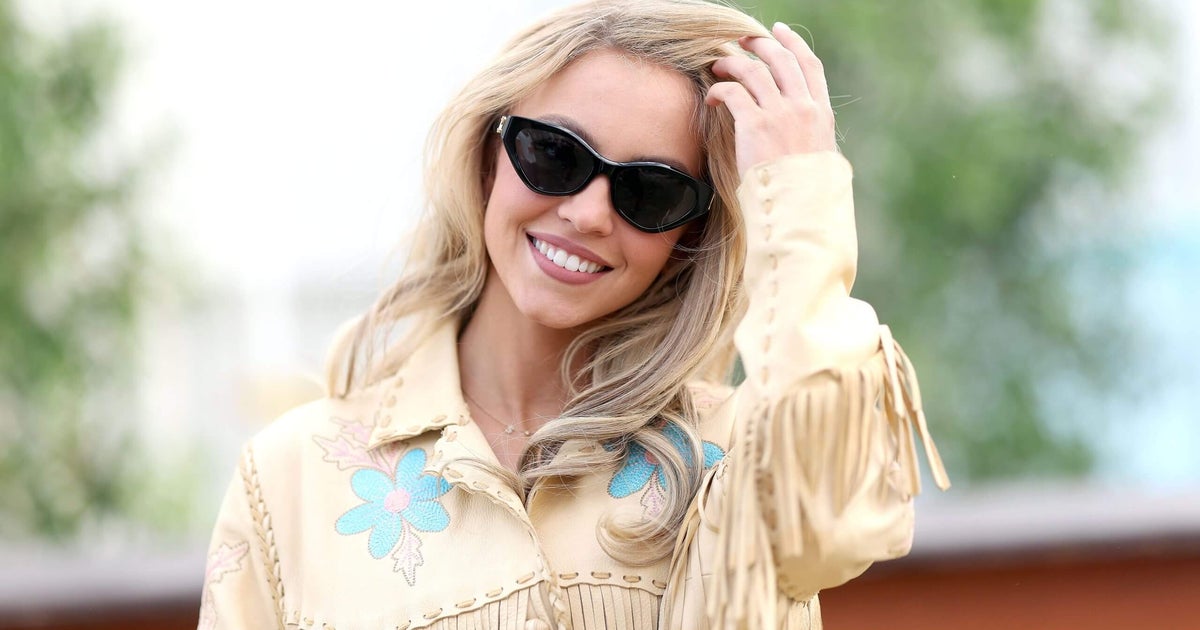
    In the one-minute campaign, the American actress says “sports” a lot, while impressively managing not to actually engage in any form of athletic prowess but instead vacillating between varying states of undress and espousing the potential bikini-viability of footballs.

    Backlash signals a societal shift

    The response has been swift and damning, predominantly from women in sport whom Sweeney is — intentionally or not — representing. Athletes of all abilities and levels have shared images of what it actually looks like to be a woman in sport, denouncing Sweeney’s hyper-sexualised iteration.

    In one sense, the speed and power of the movement against the advertisement have been encouraging, signs of some societal shift over the past decade. And yet, there remains a part of me standing back in my living room, 17 years old and crying uncontrollably at the television, wondering whether I or any of the women around me managed to escape anything at all.

    Women in sport have driven real change

    The reason Sweeney’s commercial has infuriated so many women in sport is that if there is a group that has managed to genuinely force change in the perception of what women are capable of since the turn of the century — of what it means to be a strong and powerful woman, to be a girl, without prostrating to the male gaze — it is women in sport. That is important.

    Growing up, I watched the gritty, rebellious rage of third-wave feminism squabble for purchase with feminism by sexual reclamation. There was fun in it: women could be powerful and sexy, could use their bodies and their beauty to subvert the system in which they had once been subservient, to turn the male gaze into their very own cash cow.

    So, like many of the girls my age, my bedroom walls were adorned with posters of Britney Spears, the Pussycat Dolls, and the Spice Girls. And while there was a frisson at feeling free to dance and dress as I wanted, the messaging being peddled was clear, even if it wasn’t intentional: sex was a woman’s greatest currency, our bodies a power.

    While many, including myself, insisted internally that this was its own form of rebellion, of zeitgeist rearing, in hindsight, it only calcified the foundations upon which so many of us danced: women are ultimately at their most valuable, their most lucrative, most powerful, when they are objects of desire.

    Progress built on performance, not aesthetics

    All the while, women in sport were busy competing. Busy running, lifting, kicking, shooting. Forcing change that genuinely mattered: better facilities, better governance, equal pay, greater opportunities. Busy winning.

    According to a report by Deloitte in April, global revenues in women’s elite sports are projected to surpass $3 billion (£2.2 bn) this year, representing a 340 percent increase in global revenue since 2022. Around 50 percent of the global population reported following women’s sports in 2024, according to a UN Women report, rising from 45 percent in 2022. Eighty percent of female Fortune 500 CEOs played sports in their formative years. Women’s football is projected to have more than 800 million fans globally by 2030 and become one of the world’s top five sports.

    Many women athletes did not sacrifice their femininity or sexuality in exchange for sporting success — see tennis stars Serena and Venus Williams and Naomi Osaka, and gymnast Simone Biles.

    Gymnast Simone Biles won three gold medals and a silver at the 2024 Olympics (Naomi Baker/Getty Images)

    The scale of evolution and change earned did not occur because they balanced inexplicably in the nude atop a basketball hoop. Their power arose from being undeniably talented at their chosen sport, not just good at it but excellent to the point of profound perfection, so that no holes might be picked, despite the measly resources provided, the challenging environments, the holes in the system through which so many women before them had fallen, not for a lack of trying.

    An advertisement that ignores decades of progress

    That is why this advert hurts so much. Because Sweeney and all those implicit in creating it have intentionally ignored the decades of hard work by elite and amateur athletes who have managed not only to make a dent in that system, but even to deconstruct parts of it altogether.

    This feels like a bleak moment for women and girls in sport. According to Unesco, more than one in five (21 per cent) of professional women athletes have experienced sexual abuse as a child in sport — almost double the rate of male athletes. Anywhere between 26 per cent and 74 per cent of women experience psychological, physical, and sexual maltreatment in sport. During this summer’s World Cup, football-related domestic abuse incidents in England and Wales reached their highest recorded levels for a men’s major tournament.

    Sweeney’s advert is by no means a catalyst for this violence, but it forms part of a trend in society that is quietly helping to re-normalise the objectification of women and girls.

    The cycle continues, and athletes bear the burden

    Sweeney has responded to the condemnation with images of great sporting women stripping down in the name of strength and power. Indeed, these things have happened before. And with the help of those like Sweeney and Novig, they will happen again.

    Many will argue it’s not Sweeney’s responsibility to halt the cycle. She is making money. Others before her made money. Either way, the responsibility will remain with the athletes, those most let down in this situation.

    Still trapped in the time-warp

    I think back to that commercial 12 years ago — why, upon hearing the words “like a girl”, I unconsciously filed myself away into another category altogether, despite being a girl. Because to be a girl was to not be sporty in the way I understood it: to be good at sport, to love it, to play it with ferocity, confidence, aplomb. That was reserved for a certain type of girl, a non-girl. To be a girl and like sport was to be an iteration of Sweeney: sport as an accessory, a means of sexual attraction, a giddy affectation of another’s deepest desires.

    It is sad, even pitiful, that there are still those stuck in that time-warp.

  • Why Do Elite Athletes Frequently Soil Themselves?

    Why Do Elite Athletes Frequently Soil Themselves?

    Joanna Wietrzyk’s Viral Hyrox Incident Highlights Prevalence of Faecal Incontinence in Elite Sport

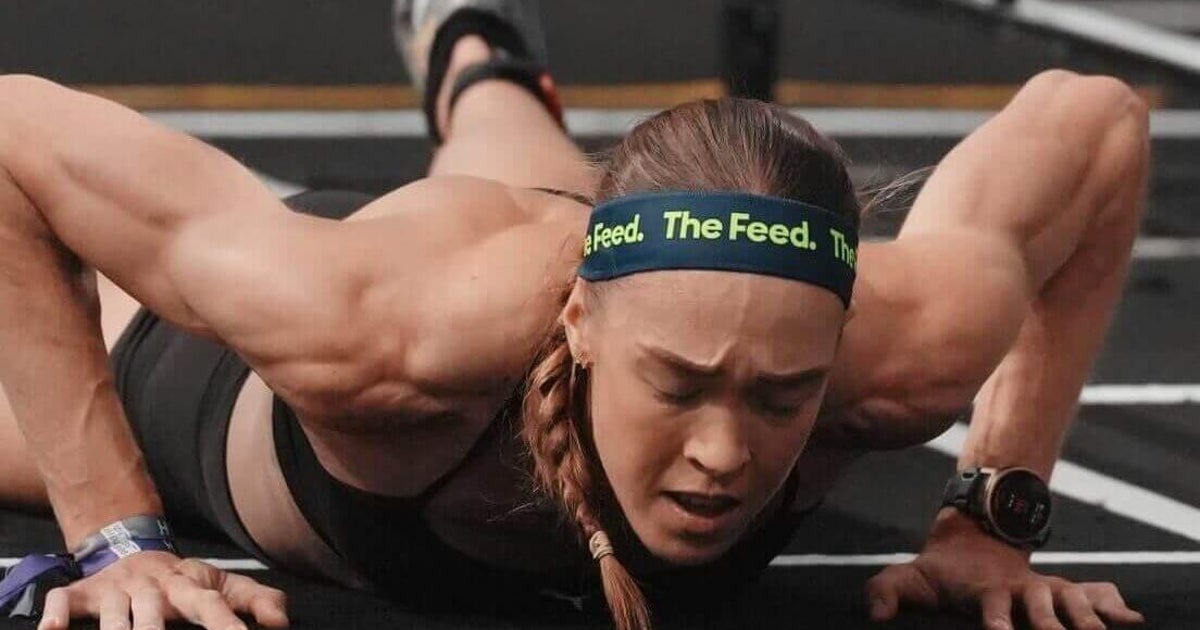
    Hyrox world record holder Joanna Wietrzyk became a global talking point this week after soiling herself during an elite event in Beijing. Organisers later apologised to those affected “directly or indirectly” by the incident, which saw faeces smeared across communal equipment. Yet Wietrzyk herself appeared remarkably unruffled. She not only continued to win the race, but in her only public statement — a since-deleted social media post — she simply wrote:

    “Go hard or go home, they say… A win is a win.”

    That nonchalance underscores an evident truth: faecal incontinence is far more common among athletes than many realise. Greg LeMond, Michael Jordan, and Dame Paula Radcliffe have all been affected by the issue — a condition that remains under-researched. Here is what the science says about why it happens, who is most at risk, and how athletes manage it.

    What Causes Faecal Incontinence During Intense Exercise?

    Academic consensus holds that faecal incontinence results from a combination of factors rather than a single cause. Fundamentally, the gastrointestinal system comes under extreme strain during maximal efforts. Blood flow is diverted away from the small intestine to prioritise working muscles, making digestion difficult.

    A 2017 Finnish study found that 90 minutes of intense running can temporarily damage the intestine, impairing the transmission of contents into the bloodstream. Other research shows significant impacts on bacteria levels and nutrient uptake. The Mayo Clinic also cites the “physical jostling of the organs” caused by the up-and-down motion of running as a major contributor. That motion, combined with reduced blood flow, accelerates the passage of waste through the bowels.

    The higher prevalence among runners versus cyclists — to the extent it is informally known as “runner’s trots” — highlights the role of impact. Once matter reaches the lower bowel, the anal sphincter’s effectiveness is also compromised. The sphincter has two rings: a weaker outer voluntary ring and a stronger inner involuntary ring. During all-out efforts, the involuntary ring weakens as the body prioritises other systems, leading to loss of control.

    Diet, Nutrition, and the Role of Caffeine

    Diet plays a significant role. Paula Radcliffe, who defecated on the road en route to winning the 2005 London Marathon, told reporters afterward:

    “I probably ate too much last night. It was my usual gluten-free pasta and grilled salmon but I probably stuffed too much down me. It was just that I needed to go, and then I was fine.”

    Wietrzyk similarly posted that she had eaten street food in Beijing the day before the race. Unfamiliar foods — whether in volume or composition — can impair digestion and raise incontinence risk.

    Caffeine gels, widely used for energy and alertness, carry a latent risk. Numerous studies document their laxative properties: they speed peristalsis (the bowel contractions that push matter through the intestines) and relax the sphincter. A recent trend sees athletes cutting caffeine in the build-up to a race so its effects are felt more acutely — along with the negatives.

    Why Does It Disproportionately Affect Female Athletes?

    A 2024 qualitative study by Dutch researchers on recreational runners found women face an increased risk due to “pelvic floor dysfunction.” The pelvic floor — a hammock of muscles running from the pubic bone to the tailbone that supports pelvic organs — is structurally more vulnerable in women because of anatomical differences, childbirth, and hormonal changes linked to menstruation and menopause.

    The researchers wrote: “Increased intra-abdominal pressure due to reactive forces on the pelvic floor during activities like jumping and running is believed to deform pelvic floor structures, potentially impacting continence mechanisms.”

    Several studies over the past 30 years have identified the luteal phase of the menstrual cycle (between ovulation and the next period) as a time when gastrointestinal problems are more frequent in some women, further elevating the risk of faecal incontinence during extreme exercise.

    How Common Is It? High-Profile Examples Across Sports

    More common than expected. A 2014 study found that 30 to 90 per cent of endurance runners experienced gastrointestinal complaints of varying severity while competing. As four-time New York City Marathon winner Bill Rodgers famously said:

    “More marathons are won or lost in the porta-toilets than at the dinner table.”

    Radcliffe is the most famous case, but this year’s Comrades Marathon winner in South Africa, George Kusche, suffered faecal incontinence during the latter stages of the 86 km ultramarathon, crossing the line with diarrhoea seeping down his legs. At the 2016 Rio Olympics, race walker Yohann Diniz experienced gut issues, fainted several times, yet finished eighth.

    In 2022, top U.S. triathlete Taylor Knibb was leading a race in Dubai by over two minutes when she turned to a camera operator on live television and said:

    “I just s*** myself. So can you not get my ass?”

    The issue crosses sports. Former England striker Gary Lineker admitted to soiling himself against the Republic of Ireland in Cagliari during the 1990 World Cup opener:

    “I’d not been very well the night before, but I didn’t tell anyone because I wanted to play. Fifteen minutes into the second half I start cramping and I think: ‘Oh Christ, I’m in a s*** load of pain here.’ The ball goes out on their left-hand side and I kind of did a lunge at it, and as I did that I kind of relaxed and it’s just gone boof, and I’ve gone, ‘Oh my God’. I’m sat there on the ground and it’s all there.”

    Three-time Tour de France winner Greg LeMond blamed a bout of explosive stomach trouble on “a bad peach.” On stage two of the 1986 Tour, with almost 100 km remaining, he stuffed a team cap into his shorts and defecated into it rather than lose time to rival Bernard Hinault. LeMond won the yellow jersey — the first American to do so — by three minutes.

    Dutch rider Tom Dumoulin, wearing the pink jersey at the 2017 Giro d’Italia, was forced to pull over on the Umbrio Pass while leading Stage 16. His lead was cut to 31 seconds, but he recovered to win the race.

    In Game 5 of the 1997 NBA Finals — the “Flu Game” — Michael Jordan played through vomiting and diarrhoea to score 38 points as the Bulls beat the Utah Jazz, clinching their fifth title in seven seasons.

    In weightlifting, urinary incontinence is extremely common among female athletes due to the strain heavy lifts place on pelvic floor muscles. A 2018 study found nearly 75 per cent of elite powerlifters had experienced it during a repetition.

    Preventative Strategies: Gut Training, Hydration, and Nutrition

    Amateurs aiming for a personal best can take steps to minimise risks. Simple measures include avoiding new foods before competition and preventing dehydration. Insufficient water concentrates carbohydrates in the stomach, increasing gastrointestinal distress as the body tries to expel the build-up. Electrolytes lost through sweat are also vital for absorbing energy through the gut.

    Over recent decades, athletes have adopted specific “gut training.” Twenty years ago, elite road cyclists could absorb only about 60 g of carbohydrates per hour without stomach issues. Today, top riders consume at least double that. Australian Cameron Wurf reported taking in 200 g per hour en route to setting the fastest bike split in Ironman history last year.

    Writing in cycling publication Escape Collective, sports dietician Dr Alan McCubbin described the field as a “Wild West” as nutritionists push ahead of published research. He outlines a process where athletes gradually consume slightly more than their typical food and fluid intake before a session, waiting until exercise occurs without discomfort before increasing intake further. This trains the gastrointestinal system to absorb energy rather than expel it as waste, reducing the chance of incontinence.

  • Needham High School junior dies suddenly, superintendent says – NBC Boston

    Needham High School junior dies suddenly, superintendent says – NBC Boston

    Needham High School Junior Elijah Chen Dies Suddenly; Community Mourns

    The Needham, Massachusetts, community is grieving following the sudden death of Needham High School junior Elijah Chen on Monday, according to Superintendent Dan Gutekanst. The cause of death was not immediately disclosed.

    Student Remembered for Athletic Involvement and Family Ties

    Elijah had many friends on the football and track teams, as well as two younger siblings attending High Rock School and Pollard Middle School, the superintendent added.

    Crisis Support Deployed for Students and Staff

    Students in Elijah’s classes are being supported by the high school administration and staff. The Needham Police Department also brought their emotional support dogs, Rocket and Ghost, to visit with students throughout the day. Guidance and other counseling services will continue to be offered as necessary.

    Superintendent Issues Statement to Families

    “News like this is difficult to share, especially when it involves a young person,” Gutekanst wrote in a statement to Needham families. “Please join me in offering prayers and support to Elijah’s family.”

    Gutekanst also encouraged parents to consider several resources as a way to talk about this tragic news with their child if they are curious or concerned.