Author: DN19 Newsroom

  • China’s Modded RTX 5090 GPU Reaches 96GB VRAM at $3,888 Price

    China’s Modded RTX 5090 GPU Reaches 96GB VRAM at $3,888 Price

    Shenzhen Manufacturer Lists Modded RTX 5090 With 96GB VRAM on Alibaba for $3,888

    A Shenzhen manufacturer has done something Nvidia never authorized: it tore apart a GeForce RTX 5090, tripled its memory, and put the result up for sale on Alibaba for less than the price of a decent laptop. On September 11, 2026, Tom’s Hardware reported that Shenzhen Suqiao Intelligent Technology is selling a modified RTX 5090 carrying 96GB of VRAM, up from the card’s stock 32GB, for $3,888. Other Alibaba sellers are listing similar rebuilds closer to $5,900. Neither price is official Nvidia pricing, and neither card is an Nvidia product anymore in any sense the company would recognize.

    What Actually Showed Up on Alibaba This Week

    The listing itself is straightforward: a GeForce RTX 5090, Nvidia’s current flagship gaming GPU built on the Blackwell architecture, with its factory 32GB of GDDR7 memory replaced by 96GB. Tom’s Hardware framed the math directly in its headline, describing the card as offering “3x more VRAM at 65% the cost of the original” relative to comparable market pricing for high-memory alternatives. Whatever the exact baseline for that percentage, the headline figures are simple enough: 96GB of VRAM for $3,888 versus Nvidia’s official $1,999 Founders Edition MSRP for the unmodified 32GB card, or the $2,500 to $5,000 range the RTX 5090 actually trades at on the open retail market in 2026.

    Suqiao is not a hobbyist operation. Reporting describes it as an OEM/ODM manufacturer, meaning it already runs board-level production and assembly work for other brands and is applying that same capability to memory rebuilds. Tom’s Hardware also flagged something worth dwelling on: rumors of leaked Nvidia firmware had reportedly circulated for months before these 96GB cards appeared, suggesting the software side of the mod, getting the GPU to correctly address and report the expanded memory pool, relied on a firmware mechanism that was never meant to leave Nvidia’s internal toolchain.

    This isn’t even the most extreme example on the market. A separate Tom’s Hardware report covers an even rarer modded RTX 5090 carrying 128GB of VRAM, priced at roughly $13,000 and described explicitly as a limited-run prototype rather than a production item. That card sits well outside normal consumer or even prosumer budgets, but it confirms the ceiling modders are chasing: as close to datacenter memory capacity as a gaming die can be pushed.

    Stock RTX 5090 vs. the Modded Alibaba Cards

    Laid side by side, the spec gap explains why buyers are willing to accept a rebuilt card with no factory backing. The table below compares Nvidia’s official RTX 5090, the mainstream 96GB Alibaba mod, the rarer 128GB prototype, and Nvidia’s own China-compliant variant, the RTX 5090D V2, which is a separate and fully legal product built to satisfy export-control performance ceilings rather than a mod.

    Card VRAM Price Status Architecture
    RTX 5090 (Founders Edition) 32GB GDDR7 $1,999 MSRP (Jan. 30, 2025 launch) Official Nvidia product Blackwell
    RTX 5090 96GB (Suqiao mod) 96GB $3,888 on Alibaba Unofficial third-party rebuild Blackwell (modified board)
    RTX 5090 96GB (other Alibaba sellers) 96GB ~$5,900 Unofficial third-party rebuild Blackwell (modified board)
    RTX 5090 128GB (prototype) 128GB ~$13,000 Unofficial, limited-run prototype Blackwell (modified board)
    RTX 5090D V2 (China) ~25% less VRAM/bandwidth than global RTX 5090 $2,299 MSRP in China Official Nvidia China SKU Blackwell (export-compliant)

    That last row matters for context. Nvidia already sells a China-specific, deliberately downgraded RTX 5090 variant, the RTX 5090D V2, which trims roughly a quarter of the VRAM and memory bandwidth off the global card to stay under export-control performance thresholds, while keeping the same $2,299 MSRP in China according to Tom’s Hardware’s coverage. In other words, Nvidia’s own compliant answer to Chinese demand for the RTX 5090 is a card with less memory. The Alibaba mod scene is doing the opposite: taking the globally sold, uncapped RTX 5090 and pushing memory well past what Nvidia offers in any version, official or restricted.

    This Isn’t New: The RTX 4090 48GB Mod Economy Since 2023

    The RTX 5090 story is a sequel. Chinese workshops have been rebuilding RTX 4090 cards since 2023, doubling their stock 24GB of GDDR6X to 48GB and marketing the results under names like “RTX 4090D 48G” (a companion mod bumps the RTX 4080 from 16GB to 32GB). These conversions were never supported by Nvidia and were documented independently by outlets including Tom’s Hardware, TweakTown, ExtremeTech, and HotHardware, along with a steady stream of Reddit and Taobao listings tracked by the r/LocalLLaMA community.

    The technique is closer to factory rework than garage tinkering. Technicians desolder the original Ada Lovelace GPU die and memory chips from a donor RTX 4090, then transplant them onto a custom “clamshell” PCB that carries memory packages on both sides of the board instead of one. Twelve additional Micron GDDR6X modules go on alongside the original twelve, doubling the total to 24 chips, and a custom BIOS is flashed to make the card correctly enumerate 48GB instead of 24GB. Tom’s Hardware traced the software trick back to a leaked Nvidia BIOS mechanism for partial memory-controller changes, the same category of leak now suspected in the RTX 5090’s 96GB conversion.

    Pricing has followed a consistent pattern across three years and two GPU generations, summarized below using figures reported by Tom’s Hardware, TweakTown, BigGo News, and UK/EU repair shops that now offer the same service as a standing catalog item rather than a one-off mod.

    Source / Market Mod Reported Price Notes
    Chinese retail (TweakTown, BigGo News) RTX 4090 24GB → 48GB ~$3,400 (with AIO cooler) Sold openly in China, early 2025
    Taobao listings (Reddit-tracked) RTX 4090 24GB → 48GB / “4090D” variant ~$3,300 / ~$2,900 Multiple active sellers as of 2025-2026
    Component cost breakdown (Tom’s Hardware) Upgrade kit only ~$430–$1,800+ (excludes donor card) 12 extra GDDR6X modules ~$288 total, plus custom PCB/cooler
    UK repair shop (Blackstone Repair) RTX 4090 24GB → 48GB From £1,000 Customer sends in own card
    EU repair shop RTX 4090 24GB → 48GB €1,600 (own card) / €3,900 (card included) 3-month shop warranty
    Alibaba (Shenzhen Suqiao) RTX 5090 32GB → 96GB $3,888 September 11, 2026 listing

    The RTX 4090 mod economy has had three years to mature into something resembling an actual supply chain, with component sourcing, standardized kits, and international repair shops now offering the same service outside China. The RTX 5090 conversion is following the identical playbook on a newer, more expensive donor card.

    Why VRAM, Specifically, Is the Thing Worth Rebuilding a GPU For

    Gamers rarely need more than 16GB to 24GB of VRAM even at 4K with ray tracing enabled. AI inference and fine-tuning workloads are a different story: model size, context length, and batch size all scale directly with available memory, and running out of VRAM doesn’t degrade a large language model’s performance gracefully, it simply stops the job from running at all. That’s the specific pain point these mods target. Chinese buyers documented on Reddit have used 48GB RTX 4090 mods to run Llama 3.1 70B locally and to train video generation models at 720p resolution with a batch size of four, workloads that would otherwise require a genuine datacenter card or a cloud GPU rental.

    That’s the economic logic driving both the RTX 4090 and RTX 5090 mod markets: a rebuilt gaming card that costs $3,000 to $4,000 delivers memory capacity that would otherwise require equipment priced in the tens of thousands of dollars, with none of the export paperwork.

    The Export Control Backdrop Making These Mods Worth the Risk

    None of this happens in a vacuum. U.S. export policy on Nvidia’s AI-class chips to China shifted twice in 2026, and both shifts help explain why a modded gaming card looks attractive to Chinese AI teams. In a January 2026 final rule, the Bureau of Industry and Security moved Nvidia’s H200 and AMD’s MI325X from a “presumption of denial” posture to “case-by-case licensing” for exports to China and Macau, according to BIS’s own press release. The change applies only to chips under a specific performance ceiling (total processing performance below 21,000 and DRAM bandwidth below 6,500 GB/s), and approval still requires third-party U.S. testing, customer-screening commitments, and a hard cap limiting China to no more than 50% of the volume sold to American customers.

    Nvidia’s Blackwell-generation datacenter chips, the B100, B200, and GB200, remain flatly excluded from that opening. They sit under presumption-of-denial status for China in 2026, a restriction reinforced on May 31, 2026, when BIS issued weekend guidance clarifying that license requirements apply to any company whose ultimate parent is headquartered in China, even if the purchasing entity sits in a subsidiary outside the country, according to reporting from Al Jazeera. That guidance closed a subsidiary workaround that some Chinese-linked firms had reportedly used to acquire Blackwell hardware indirectly. Blackwell chips also depend on TSMC’s 4NP process node, which is separately barred from China-bound production runs under U.S. national-security rules, adding a manufacturing-level barrier on top of the licensing one.

    Put plainly: the newest, most capable Nvidia AI silicon is essentially unreachable for Chinese buyers in 2026, and even the mid-tier H200 requires clearing a licensing gauntlet most smaller labs and startups can’t navigate. A rebuilt gaming GPU, bought retail and modified domestically, sidesteps every part of that process. It’s not a datacenter-class part, but for teams doing inference or fine-tuning at a moderate scale, 96GB of memory for under $4,000 is a workable substitute that requires no license, no compliance review, and no wait.

    What the Warranty Fine Print Actually Says

    Buyers of these cards are trading Nvidia’s backing for the mod shop’s own guarantee, and that trade is total. Nvidia’s official GeForce Graphics Cards Warranty covers manufacturing defects and hardware component failures for three years from the date of purchase, but explicitly excludes damage tied to abuse, misuse, negligence, or misapplication of service by a non-authorized party. Nvidia’s broader service terms for its DGX line go further, stating coverage applies only to unmodified products used exactly as documented, and that opening a case for self-service, let alone desoldering the GPU die, voids support entirely.

    Once a card like the RTX 5090 or RTX 4090 has its memory chips physically replaced and its BIOS re-flashed, it is no longer, in Nvidia’s terms, an unmodified product. The three-year factory warranty is gone the moment the rework begins. That’s precisely why the mod shops profiled by Tom’s Hardware, Blackstone Repair, and various EU services offer their own short-term coverage, typically just three months, reflecting the real failure risk baked into a hand-reworked, non-standard board.

    Modded Gaming Cards vs. Real Datacenter Silicon

    Even at 96GB or 128GB, a modified RTX 5090 is not a substitute for genuine enterprise AI hardware, it’s a budget alternative for teams priced out of the real thing. The gap in both capacity and cost is stark.

    GPU Memory Hardware List Price Cloud Rental (per GPU/hr)
    RTX 5090 96GB (modded) 96GB GDDR7 $3,888 Not applicable (retail card)
    Nvidia H100 80GB HBM ~$31,000; 8-GPU HGX system $250,000–$320,000 $0.57–$14.90 (avg. ~$3.99–$4.09 on major platforms)
    Nvidia H200 141GB HBM3e ~$39,999 (retailer list) $0.93–$13.78 (~$3.22 typical)
    Nvidia B200 192GB HBM3e ~$50,000–$70,000 (rumored) $3.35–$16.11 (~$5.25 typical)

    The comparison explains the appeal without overselling it. A single H100 card lists around $31,000, and an eight-GPU HGX H100 system runs $250,000 to $320,000, according to pricing data compiled by GetDeploying and Morphllm. A modded RTX 5090 costs roughly an eighth of a single H100’s list price for a bit more raw memory (96GB versus 80GB), but none of the HBM bandwidth, error correction, NVLink interconnect, or driver-level enterprise support that make H100, H200, and B200 the actual workhorses of large-scale AI training. For a closer look at how the stock RTX 5090 stacks up against its predecessor on pure gaming performance, see our RTX 5090 vs RTX 4090 comparison. What the modded card buys is memory capacity for inference and mid-scale fine-tuning, not a datacenter replacement.

    A Bigger Pattern: 2026’s Year of Export-Control Workarounds

    The Alibaba GPU mod is one data point in a much larger story that’s played out across 2026: Chinese entities finding creative, sometimes legally contested paths around U.S. chip restrictions. Reporting this year uncovered Megaspeed’s Malaysian subsidiary, Speedmatrix, purchasing an estimated $2 billion in Nvidia chips, and Chinese server maker Inspur routing roughly $5.6 billion in Nvidia hardware purchases through Aivres, an offshore-registered entity. Samsung and SK Hynix have also been drawn into the picture, testing China-made chipmaking tools after four of their fabs lost Verified End User status earlier in 2026, forcing a review of which equipment those fabs can keep using. Meanwhile, Beijing has publicly rejected U.S. claims that Chinese AI labs distilled American models to shortcut their own development, naming six firms in its rebuttal.

    None of those stories involve physically modifying consumer GPUs, but they share the same underlying dynamic: export restrictions create a price and access gap, and someone, whether a shell subsidiary, a chip-tool importer, or a Shenzhen OEM with a soldering iron, moves to close it. The RTX 5090 mod is simply the version of that story that plays out on a retail marketplace instead of in a corporate structuring memo.

    Market Impact: What This Means for Nvidia’s Product Strategy

    For Nvidia, a thriving gray-market mod economy is an awkward signal wrapped around otherwise good news. The fact that Chinese buyers are willing to pay a premium to rebuild an already-expensive consumer card into something resembling a workstation GPU confirms just how much unmet demand exists for mid-tier AI compute inside China, demand Nvidia’s own compliant product, the RTX 5090D V2, was specifically designed not to fully satisfy by trimming its VRAM and bandwidth below the global card. Every modded RTX 5090 sold outside Nvidia’s channel is also a card Nvidia didn’t get standard margin on twice: once at original retail, and again on whatever premium the reseller charges after the rebuild, since the donor card itself still had to be purchased at market price before the mod shop touched it.

    There’s also a support-cost angle. Even though Nvidia’s warranty explicitly excludes modified hardware, a card as visibly non-standard as a clamshell-rebuilt RTX 5090 with double-sided memory chips is unlikely to pass unnoticed if it ever reaches an authorized service center, but the sheer volume of RTX 4090 mods documented since 2023 suggests enforcement at the point of sale, rather than after the fact, has not meaningfully slowed the practice.

    Competitive Landscape: How This Compares Across the GPU Industry

    Nvidia isn’t the only company whose chips are caught in this dynamic, but it is by far the largest target because of its dominant position in AI compute. AMD’s MI325X falls under the same case-by-case H200-tier licensing framework the January 2026 BIS rule established, meaning it faces an identical, if smaller-scale, version of the same access gap. There’s no public reporting of a comparable gray-market VRAM-mod economy built around AMD’s Radeon gaming cards, which likely reflects Nvidia’s overwhelming share of both the gaming GPU market and the AI software ecosystem, since CUDA compatibility matters enormously for anyone trying to repurpose a gaming card for machine learning work, and that ecosystem lock-in points buyers toward GeForce cards specifically.

    On the memory side, Micron and Samsung GDDR6X and GDDR7 chips are the components actually being harvested and re-soldered in these mods, meaning the memory makers are, indirectly, supplying both Nvidia’s official product line and the parallel gray-market rebuild industry at the same time, through entirely separate distribution channels.

    The Cost-Per-Gigabyte Math Buyers Are Actually Running

    Strip away the marketing angle and the decision comes down to simple arithmetic that Chinese AI buyers are clearly already running for themselves.

    • Stock RTX 5090: $1,999 / 32GB = $62.47 per GB
    • Modded RTX 5090 96GB: $3,888 / 96GB = $40.50 per GB
    • Nvidia H100: ~$31,000 / 80GB = $387.50 per GB
    • Nvidia H200: ~$39,999 / 141GB = $283.68 per GB
    • Nvidia B200: ~$60,000 / 192GB = $312.50 per GB (midpoint of rumored range)

    By raw cost-per-gigabyte, the modded card is cheaper than every legitimate option on the list, including the stock RTX 5090 itself. That math ignores bandwidth, reliability, support, and the fact that GDDR7 is not HBM3e, but for a buyer whose bottleneck is simply fitting a large model into memory at all, it’s an easy number to be persuaded by.

    Historical Context: Gray Markets Have Always Chased Export Bans

    The pattern isn’t unique to GPUs. Whenever a government restricts a technology’s flow to a specific market, that market historically self-organizes to route around the restriction, from Cold War-era electronics smuggling to more recent cases of restricted networking and semiconductor equipment reaching sanctioned buyers through third countries. What’s notable about the RTX 4090 and RTX 5090 mod economy is how visible it is. These aren’t hidden transactions, they’re listed openly on Alibaba, discussed openly on Reddit and Bilibili, and covered openly by mainstream tech press. The openness itself is a signal that mod shops and their customers view the practice as occupying a gray zone rather than a clearly illegal one, since VRAM modification of a legally purchased consumer product sits in a different legal category than smuggling a restricted datacenter chip across a border.

    Predictions: Where This Goes From Here

    Based on the trajectory from the RTX 4090 mod cycle to the RTX 5090 cycle now underway, a few outcomes look likely over the next 12 to 18 months.

    • Mod pricing will compress. The RTX 4090’s 48GB conversion dropped from an early premium toward roughly $2,900 to $3,400 within about two years of appearing; expect the RTX 5090’s 96GB mod to follow a similar downward curve as more Shenzhen shops enter the market and component sourcing scales.
    • Nvidia will keep segmenting China-specific SKUs rather than chasing individual mod shops. The RTX 5090D V2’s reduced-spec, same-price approach suggests Nvidia’s strategy is to control what it can, official channel products, rather than police what it can’t, aftermarket rebuilds of cards already sold.
    • U.S. export policy will likely see further incremental adjustment rather than a single dramatic reversal, continuing the back-and-forth seen in the January 2026 H200 easing followed by the May 2026 subsidiary-loophole crackdown.
    • Expect a 128GB or higher modded tier to become more commercially available, following the same escalation path that took the RTX 4090 mod scene from 48GB toward the rarer 96GB variant over roughly two years.
    • Scrutiny of secondhand and gray-market GPU resale will increase globally as regulators in the U.S. and EU pay closer attention to where high-VRAM consumer cards ultimately end up, given their dual-use potential for AI workloads.

    What Buyers Outside China Should Take Away From This

    For readers outside China who might be tempted by a heavily discounted, high-VRAM RTX 5090 or RTX 4090 showing up on a resale platform or an overseas Alibaba storefront, the practical risk calculus hasn’t changed from what has applied to modded 4090s since 2023: no Nvidia warranty, no guarantee the BIOS mod remains stable under sustained load, and no recourse beyond whatever short-term guarantee the individual mod shop offers. For workloads that genuinely need the memory and can tolerate that risk, particularly hobbyists and small labs running local large language models who would otherwise be priced out of any high-VRAM option entirely, the economics are real. For anyone running production workloads, the gap between a $3,888 gray-market card and a supported, warrantied piece of hardware is the entire point of paying more in the first place. For more on how AI chip pricing and availability are reshaping the broader hardware market, see our ongoing AI chips coverage.

    Frequently Asked Questions

    What is the China-modified RTX 5090 with 96GB of VRAM?

    It’s a standard Nvidia GeForce RTX 5090 that has had its factory 32GB of GDDR7 memory removed and replaced with 96GB through a board-level rework. Shenzhen Suqiao Intelligent Technology began selling the modified cards on Alibaba around September 11, 2026, for $3,888, with other sellers listing similar cards closer to $5,900.

    How does the price compare to the official RTX 5090?

    Nvidia’s official RTX 5090 launched on January 30, 2025, at a $1,999 Founders Edition MSRP with 32GB of VRAM. The modded 96GB version costs roughly $3,888 to $5,900 depending on the seller, roughly double to triple the original MSRP for three times the memory.

    Does modifying an RTX 5090 or RTX 4090 void the Nvidia warranty?

    Yes. Nvidia’s official GeForce Graphics Cards Warranty excludes damage or issues caused by abuse, misuse, or servicing by a non-authorized party, and the company’s broader service terms state that support only applies to unmodified products. A card with its GPU die and memory desoldered and replaced is no longer considered unmodified.

    Why do buyers want more VRAM than Nvidia officially provides?

    AI inference and fine-tuning workloads scale directly with available memory. Larger VRAM pools let a single GPU load bigger language models, longer context windows, or larger training batch sizes. Buyers of 48GB RTX 4090 mods have reported running Llama 3.1 70B locally and training video generation models, workloads that would otherwise require far more expensive datacenter hardware.

    What’s the difference between this mod and Nvidia’s own RTX 5090D V2?

    The RTX 5090D V2 is an official, Nvidia-sanctioned China-market SKU that reduces VRAM and memory bandwidth by roughly 25% compared to the global RTX 5090, in order to comply with U.S. export-control performance thresholds, while keeping a $2,299 MSRP. The Alibaba mod is the opposite: an unofficial, unsanctioned rebuild of the full global RTX 5090 that increases memory well beyond any version Nvidia sells.

    Are these modded GPUs legal to buy and own?

    Buying and owning a modified consumer GPU is not the same legal question as exporting a restricted datacenter AI chip. The RTX 5090 and RTX 4090 are retail gaming products with no export restriction on the base card; the mods are aftermarket hardware modifications, which typically fall into a legal gray area around warranty and consumer protection rather than export control law. Buyers should not assume any manufacturer support or recourse.

    What is the current status of U.S. export controls on Nvidia AI chips to China in 2026?

    As of 2026, Nvidia’s H200 and AMD’s MI325X are eligible for case-by-case export licensing to China and Macau under a January 2026 BIS rule, subject to performance ceilings, third-party testing, and volume caps. Nvidia’s Blackwell-generation datacenter chips (B100, B200, GB200) remain under a presumption of denial and are effectively banned for China, a position reinforced by May 2026 guidance closing a subsidiary-based workaround.

    Can these modded cards still be used for gaming?

    In principle yes, since the GPU die itself is unchanged, but the added memory provides no gaming benefit since no current game uses anywhere near 32GB of VRAM, let alone 96GB. The mods are built and marketed specifically for AI workloads, not gaming performance.

  • Diamondbacks vs. Rangers Discussion – Yahoo Sports

    Diamondbacks vs. Rangers Discussion – Yahoo Sports

    The Arizona Diamondbacks open a critical weekend series needing to spark an offense that has gone cold over the past two and a half weeks. With the San Diego Padres facing the San Francisco Giants up the coast, and the Chicago Cubs already securing a win while the Philadelphia Phillies sit in a rain delay against the Milwaukee Brewers, the National League wild-card picture is shifting in real time.

    Offensive Slump Defies Winning Record

    Despite a respectable 10-7 record over their last 17 games, Arizona has been outscored 63-55 during that span. The team is averaging barely three runs per game, posting a collective .626 OPS across 622 plate appearances. Getting the bats back on track is the primary objective for a club trying to keep pace in a tight playoff race.

    Runners Left on Base: Narrative vs. Reality

    Contrary to a popular narrative in game-day discussions, the Diamondbacks have actually left a below-average number of runners on base this season. To date, they have stranded 111 fewer baserunners than the Cubs, suggesting the recent scoring drought stems more from a lack of baserunners than a failure to drive them in.

    Around the League

    Scoreboard watching will be essential tonight. The Padres are in San Francisco taking on the Giants, while the Phillies and Brewers wait out a rain delay before what projects as a difficult road series for Philadelphia. The Cubs have already banked a victory, adding pressure on Arizona to handle its business at home.

    Want to join the discussion? Sign up for an SB Nation account to comment on articles, receive improved notifications, and access the community on the SB Nation app for iOS or Android.

  • MLB Scouts Reveal What Really Happened to Cal Raleigh, Paul Skenes This Season

    MLB Scouts Reveal What Really Happened to Cal Raleigh, Paul Skenes This Season

    Two of baseball’s most notable disappointments in the 2026 season are Seattle Mariners catcher Cal Raleigh and Pittsburgh Pirates ace Paul Skenes. After establishing themselves as elite stars last year, both players are searching for answers as the regular season winds down.

    Cal Raleigh’s Power Outage

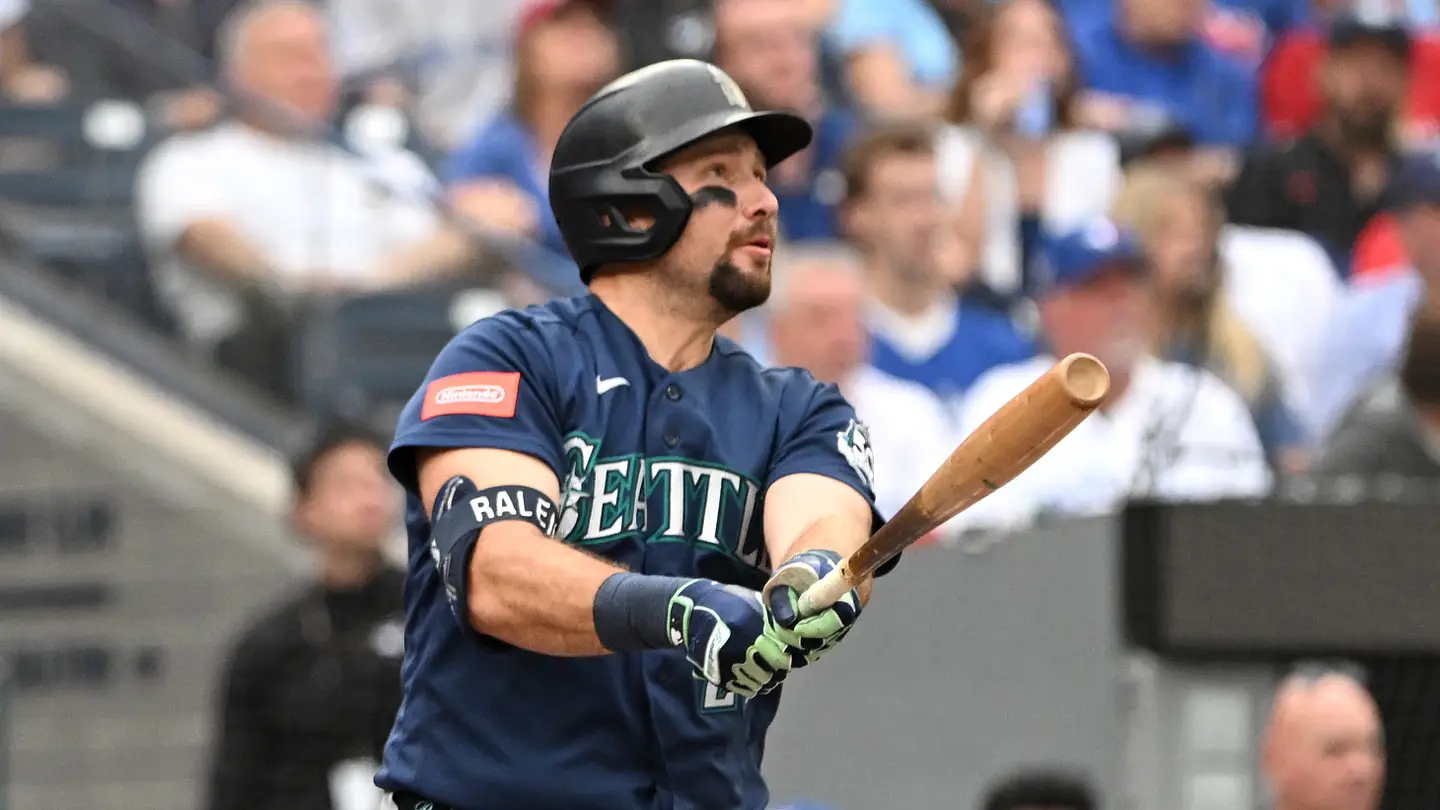
    Raleigh, the 2025 American League MVP runner-up, posted 60 home runs, 125 RBI, and a .948 OPS last season. Through 112 games in 2026, his line has plummeted to .183/.296/.374 with a .670 OPS, 21 homers, and 59 RBI. One National League scout described the campaign as an extremely weird season for Raleigh.

    “Some of the batted ball data is down a notch, but the swing characteristics have remained the same from last year,” the scout said.

    Another NL scout offered a deeper diagnosis of Raleigh’s struggles.

    “There has always been a lot of swing-and-miss (with Raleigh),” the scout said. “Raleigh is also weaker (hitting) from the right side. Teams are just throwing lefties at him as much as possible. He also caught a lot last year and the only teams that played more games than him were the two World Series teams, so there was going to be regression there.”

    The numbers back up the left-handed pitching theory. Raleigh is hitting just .161/.265/.308 with a .573 OPS and seven home runs against lefties in 2026. His strikeout rate sits at 31.3 percent (bottom sixth percentile), per Baseball Savant, after fanning 188 times last season.

    An oblique injury complicated matters further. Raleigh missed over a month from May 14 to June 16 with a right oblique strain he initially tried to play through. The same scout believes the injury and increased defensive attention have compounded his issues.

    “(Raleigh) tried to play through an injury. The combination of the (oblique) injury and teams paying more attention to him,” the scout said. “Nobody around him is having a good year. Nobody is hitting around him. He’s always going to be closer to Kyle Schwarber numbers as opposed to Shohei Ohtani and Freddie Freeman numbers.”

    Paul Skenes’ Velocity and Command Questions

    Skenes entered 2026 on the heels of back-to-back sub-2.00 ERA seasons. His first nine starts this year produced a 1.98 ERA, but the ensuing 20 starts since May 17 have ballooned his season ERA to 3.83.

    Scout No. 1, whose team has faced Skenes multiple times, reported concerning feedback from hitters.

    “We’ve faced Skenes numerous times and in his most recent start against us a little over a month ago, our hitters were saying that the stuff was flat,” the scout said of Skenes. “Obviously the four-seam velocity is down, which could be due to a variety of factors including fatigue. “

    The scout also cited mechanical adjustments visible on video.

    “Another mechanical thing that I’ve been hearing is due to the posture and weight distribution on the lift,” the scout said. “Weight is concentrated in the middle of his heel. He rocks back and then has a more pronounced torso crunch/dive as he goes into his stride. Seems to be counter-rotating more than in the past, which could be compensation for something. “

    “There appears to be other things just checking out some video with the arm path being longer and the timing being off (not doing the glove tap anymore).”

    Scout No. 2 offered a more optimistic perspective, suggesting the velocity dip may be intentional workload management.

    “Looking under the hood at his numbers, outside of the ERA, everything else is about consistent with where he has been at,” the scout said. “His velocity is down, but I think that’s by design. It’s not sustainable to start 30 games per year and average 99 mph on your fastball. “

    “I think he is throttling his velo. The Chris Sales, Justin Verlanders, Max Scherzers, have all learned to throttle their velo. Skenes wants to post 30 starts per year. The Pirates have pushed him pretty hard. He’s a big body, so I think he’s going for longevity and doesn’t want to blow out (his arm).”

  • Mount Washington ‘Honor Summit’ 9/11 Light Display: What to Know

    Mount Washington ‘Honor Summit’ 9/11 Light Display: What to Know

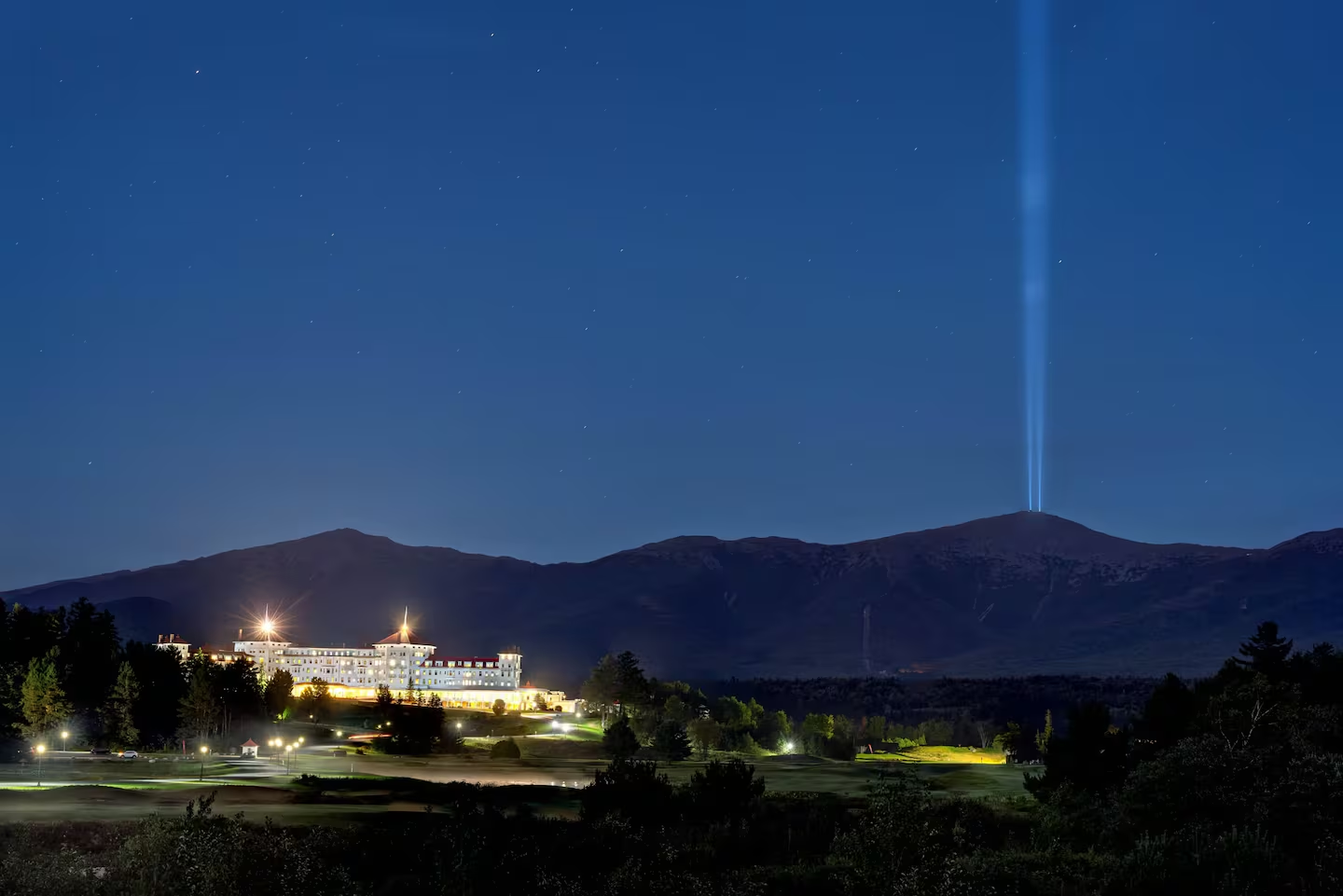
    The “Honor Summit” light installation illuminated the night sky atop Mount Washington for the first time Wednesday, marking the first 9/11 memorial of its kind in New England. Inspired by New York City’s “Tribute in Light,” the display projects two powerful beams into the atmosphere from the highest peak in the Northeast, commemorating the 25th anniversary of the September 11, 2001, terrorist attacks.

    Schedule and Duration

    The twin beams will be visible nightly from 8 p.m. to midnight through Saturday, Sept. 12. Organizers confirmed the installation received final approval in August from state park officials after agreeing to environmental safeguards, including a shutdown protocol to protect wildlife disturbed by the lights.

    Organizers, Sponsors, and Beneficiaries

    The project was spearheaded by Renee Plummer, a Portsmouth businesswoman and founder of the Granite Springs Foundation. The nonprofit organized the event with backing from corporate sponsors, including utility giant Eversource, which provides the power for the nightly illumination.

    The foundation has pledged to donate all remaining sponsorship funds to four veteran and first responder organizations: Harbor Care, Delta Dogs, Hidden Battles, and Camp Resilience.

    Visibility Range Across New England

    Positioned at over 6,000 feet above sea level, the lights are visible across a 135-mile radius when weather permits. Officials estimate the beams can be seen as far away as Boston. The Honor Summit website maintains a list of suggested viewing locations, currently limited to spots in New Hampshire, Vermont, and Maine, with more locations to be added as the display progresses.

    Cloud cover and rain obscured the mountain on Wednesday night, according to the Mount Washington Valley Chamber of Commerce, but hopeful viewers in areas like Pembroke have calculated favorable sightlines for clear conditions.

    Viewing Options Near the Summit

    For those seeking a guaranteed vantage point near the mountain, several organized experiences are available:

    Omni Mount Washington Resort & Spa

    The resort near the Bretton Woods ski area is offering public access to its Veranda and Observatory Bar. Guests are required to pay for parking.

    Mount Washington Auto Road Van Tours

    Van tours to the summit operate Friday and Saturday nights, departing at 7:15 p.m. for a roughly one-hour viewing window. Tours are fully booked as of Thursday, though waitlist spots remain available.

    Mount Washington Cog Railway Tribute Rides

    Special 9/11 tribute trains depart Marshfield Station at 7 p.m. on Friday and Saturday, ascending to the summit as the beams activate. Tickets cost $119.00, with $9.11 from each purchase donated to the summit foundation.

    Pleasant Mountain, Maine

    Pleasant Mountain is opening its ski lift on Friday night, transporting visitors up Haggett’s ski trail for an elevated view. The viewing area will remain unlit to preserve visibility. Passes cost $10 for adults and $5 for children five and under. The first chair ascends at 7 p.m., with the last ride down at 9:30 p.m. Closed-toe shoes are required and headlamps are recommended.

    Best Night for Viewing: Friday

    According to the National Weather Service, Friday night offers the optimal viewing window. Forecasts predict clear skies across most of the region, including Boston, Worcester, Concord, Manchester, Burlington, and Portland. Cloud cover is expected to return Saturday night, potentially obstructing the display.

    Bryan Hecht can be reached at [email protected]. Follow him on Instagram @bhechtjournalism.

  • Cam Skattebo Named Brand Ambassador for The Farmer’s Dog Ahead of NFL Season

    Cam Skattebo Named Brand Ambassador for The Farmer’s Dog Ahead of NFL Season

    New York Giants running back Cam Skattebo has signed a new endorsement deal with The Farmer’s Dog, becoming the fresh pet food delivery brand’s latest ambassador. The partnership was officially announced Wednesday via Instagram, where the company shared Skattebo’s first commercial featuring his three dogs: Duke, Daizy, and Cheech.

    Skattebo Reveals Softer Side in New Campaign

    The 24-year-old rookie, a former Arizona State standout selected in the fourth round of the 2025 NFL Draft, used the launch to showcase a personality trait that contrasts with his on-field intensity. In the brand’s announcement caption, The Farmer’s Dog wrote:

    “Welcome to the team, @NFL running back Cam Skattebo (@sk4ttp4ck). And, of course, his dogs Duke, Daizy, and Cheech,”

    Skattebo explained the motivation behind the collaboration, stating:

    “I think the persona of who I am on the field is definitely not a dog lover. Being able to show that I love my dogs is something that I’m proud to be and proud to show.”

    Why the Running Back Chooses Dogs

    In the same Instagram video, Skattebo elaborated on his deep connection with his pets, emphasizing the loyalty that defines the human-canine bond:

    “I’m a dog person solely for the fact that they’re super loyal. Every day when you show up after a stressful day at work, you know that your dog is going to have you back, be right next to your side, barking happiness … lick your face … and you know, just make sure that they’re there for you when you’re stressed out.”

    Giants Prepare for 2026 Season Opener

    The endorsement news arrives as Skattebo prepares for his second NFL campaign. His rookie season ended prematurely after just eight games due to a season-ending right ankle injury. New York enters the 2026 season aiming to rebound from a 4-13 record last year. The Giants will open their season against the Dallas Cowboys on Sunday at MetLife Stadium.

    This story was originally published by Athlon Sports on Sep 11, 2026.

  • King Charles Draws Line With Harry and Meghan as Private Citizens, Expert Says

    King Charles Draws Line With Harry and Meghan as Private Citizens, Expert Says

    King Charles III has drawn a firm “line in the sand” with Prince Harry and Meghan Markle after Buckingham Palace circulated a letter spelling out the couple’s non-working royal status. The move comes after the Duke and Duchess of Sussex told People magazine they were “surprised” by the timing of the clarification.

    Palace Letter Reiterates Non-Working Royal Status

    On September 7, a senior palace official reiterated that Harry and Meghan are non-working royals, according to People magazine. The letter, issued on behalf of the king by Lord Chamberlain Richard Benyon, was shared with the Sussexes. A spokesperson for the couple said they were “a little surprised not to have been told about this in advance,” the BBC reported.

    Sources close to the couple told People they received the letter and, 20 minutes later, sent back questions. However, they were informed the letter had already been circulated to the media.

    The document pointed out that the couple are “private citizens” and their His and Her Royal Highness styles remain in abeyance and are not used.

    Royal Commentators Weigh In on King’s Decision

    British broadcaster and photographer Helena Chard told Fox News Digital the guidance made one thing clear: they “do not represent the Crown.”

    “King Charles’ narrative is decisive as he draws a line in the sand — nothing new here, no more discussion required,” Chard told Fox News Digital. “I’m sure the Sussexes expected flexibility. Prince Harry may be the king’s son, but he lacks power to amend and dictate the monarch’s statement.“

    “There is no ambiguity about who is in and who is out,” she said. “The king is protecting the institution. The public has made it clear they do not want the monarchy to be undermined or damaged by confusion. The letter’s statement puts minds at rest.“

    “In part, yes, the monarchy can only have one voice,” Chard shared. “Prince William and Princess Catherine are the future king and queen. They officially speak for the crown alongside King Charles and Queen Camilla. It’s constitutional, and the crown takes precedence.“

    Royal commentator Richard Fitzwilliams said there’s another, more silent message the king wants to convey.

    “The letter states the palace’s position, but it’s clearly intended as a put-down after the way the royals were blindsided by the Sussexes returning to Britain,” he claimed.

    “The Sussexes see themselves as public figures, not private citizens,” he said. “So, they are ‘surprised,’ but are unlikely to alter their plans. The king was never going to debate anything with the Sussexes. The royals don’t debate, although Queen Elizabeth’s ‘recollections may vary’ is legendary.“

    Full Text of the Palace Letter

    The letter, as quoted by People, reads:

    “It is well known that in January 2020 the Duke and Duchess stepped down from undertaking representative duties on behalf of The Sovereign, and are no longer working Members of The Royal Family,” stated the letter, as quoted by People. “This position, distinct from the State and Royal duties undertaken by the working Royal Family, and with the personal latitude it brings the couple in respect of financial independence and protection of their privacy as they would wish, will continue to be fully respected.“

    “It follows that there is no change to the current status of the Duke and Duchess of Sussex,” it continued. “Their styles as His and Her Royal Highness remain in abeyance and are not used. The charitable work of the Duke and Duchess is a personal matter for them both and undertaken in their private capacity. In short, their position is akin to private citizens with commercial and charitable interests.“

    Chard Calls Letter a “Reality Check”

    “It shouldn’t have been a shock,” she said. “The update was inevitable and warranted. Harry and Meghan unexpectedly swanned back to the U.K. and seemingly hoped to continue as if they were still working royals. The blurred lines created an air of confusion, with the majority wondering if Harry was back in the fold of the institution. The petty comment batted back from Team Sussex highlighted bruised egos.“

    “Allegedly the Sussexes were caught off guard. The irony when you consider Harry’s book ‘Spare,’ their Netflix documentaries and the Oprah interview catching the British royal family off guard over the years.“

    Uganda Withdraws from Invictus Games

    The fallout extended beyond the palace. On September 9, Gen. Muhoozi Kainerugaba, son of Ugandan President Yoweri Museveni and head of the country’s armed forces, announced Uganda’s withdrawal from the Invictus Games.

    “In order not to be construed as being opposed to His Majesty King Charles III of the United Kingdom, whom we deeply revere, Uganda hereby withdraws from the Invictus Games,” he wrote on X. “We shall not participate in anything that does not have His Majesty’s approval.“

    “I have factions in the Ministry of Defence that support that Harry-Meghan nonsense. I had to quash it straight away. I support the monarch. Period.“

    A source close to Harry told People:

    “They made it very clear that the reason they pulled out was a direct result of perceived guidance from the Lord Chamberlain. This was an unintended or intended consequence of the letter — and that was always going to happen. Hence the wish not to rush it out.“

    “The only people suffering as a result are the competitors from Uganda who would have been taking part in next year’s Invictus Games,” the insider added.

    Experts Divided on Impact

    British royal expert Hilary Fordwich criticized the Sussexes’ response.

    “Harry blaming this letter for Uganda pulling out of the Invictus Games is a ghastly move on his part,” she said. “No doubt Harry and Meghan thought King Charles would accommodate their return or at least consult with them. But their expectations weren’t relevant for the royals.“

    Royal broadcaster Ian Pelham Turner told Fox News Digital he believes the letter has caused more harm than good in any peace talks.

    “My personal opinion on the decision by King Charles to make public a letter conceived by the Lord Chamberlain to reiterate that Harry and Meghan were not working royals was an act of malicious intent initiated by those intending to disrupt their return,” he explained.

    “The message was unjustified,” said Turner. “I hope Harry and Meghan will not rise to the bait and retaliate but calmly move on.“

    Palace Insiders: No New Policy

    People reported that the king remains supportive of organizations and initiatives like the Invictus Games that help wounded service personnel. Palace insiders pointed out the letter does not represent a new policy but reiterates terms agreed to at the 2020 “Sandringham Summit” led by the late Queen Elizabeth II, shortly before Harry and Meghan stepped back as senior working royals and moved to California.

    Royal author Robert Jobson previously told The Daily Mail:

    “Perhaps predictably, there was an immediate response from the couple,” he told the outlet. “But don’t expect to see anything similar coming from the palace. The king has no intention of being drawn into responding further.“

    While the Sussexes have returned to the U.K. for an extended stay, they will not resume their roles as working royals. They plan to live in a private, non-royal residence outside London while maintaining their California home and a property in Portugal.

  • ‘Proof or Revenge’: Hanwha Life Esports vs. T1 in Elimination Match

    ‘Proof or Revenge’: Hanwha Life Esports vs. T1 in Elimination Match

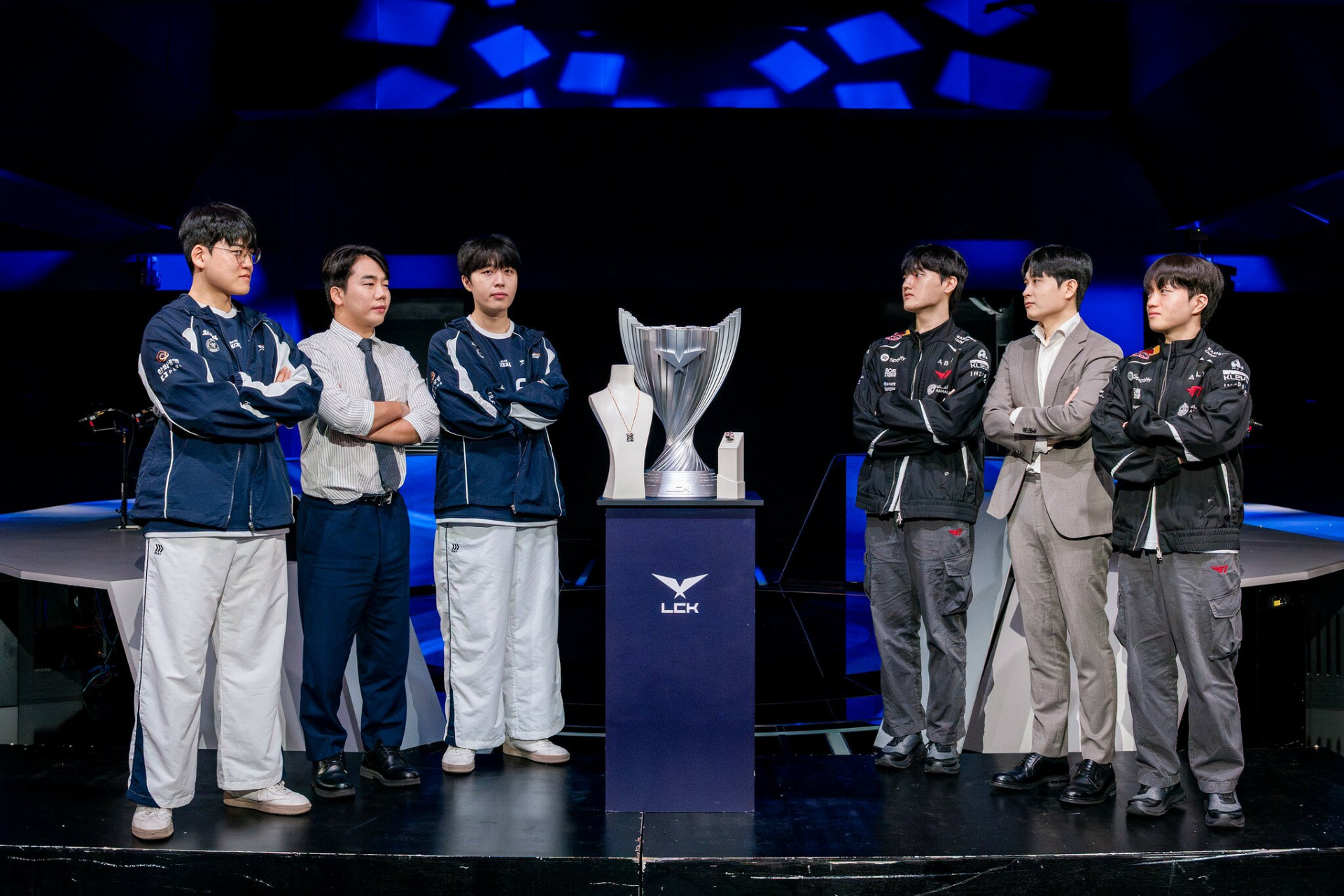
    The2026 LoL Champions Korea (LCK) Finals Qualification Match is set for May 12 at the KSPO Dome in Seoul’s Olympic Park. The matchup pits Hanwha Life Esports, known for aggressive, high-firepower play, against T1, a squad that thrives on unexpected variables and the explosive carry potential of its bottom duo.

    Season Series Tells a Tale of Two Trajectories

    The head-to-head history this season maps a clear divergence. T1 took the early meetings, winning the LCK Cup and Round 1 of the regular season by scores of 2-1 and 2-0 respectively. From Round 2 onward, however, Hanwha Life Esports flipped the script, stringing together consecutive victories.

    Hanwha Life stumbled out of the gate but surged mid-season to capture the Mid-Season Invitational (MSI) title. T1, conversely, rode strong early momentum before a sharp decline beginning in Round 3. Across all meetings, Hanwha Life holds a commanding 5-2 match record and a 13-9 set advantage.

    Playoff Preview: The Five-Set Turning Point

    Their most recent clash—Round 2 of the playoffs—went the full distance. T1 claimed Games 1 and 2 behind overwhelming performances from its bottom lane, but Hanwha Life regrouped on the brink of elimination, reversing the sweep from Game 3 onward.

    That series exposed two critical vulnerabilities for T1: an over-reliance on the bottom lane and a topside slump. Those concerns were largely eased in the very next match against Dplus KIA, where T1’s top half rediscovered its form. Carrying that momentum into the Finals Qualification Match is now the pivotal storyline.

    Given that Hanwha Life’s primary engine runs through its own topside, T1’s ability to hold serve in the top half of the map is arguably the single most decisive factor.

    Hanwha Life’s Topside Trio: The “Whale,” the Jungler, and the Mid Laner

    ‘Zeus’ Choi Woo-je is a matchup nightmare. Given a favorable pick, he destroys opponents; handed a disadvantage, he methodically outplays them into his “swamp.” He lurks like a whale in the deep, mouth wide, waiting for prey to swim in—and occasionally shocks the world with solo kills from impossible angles.

    ‘Kanavi’ Seo Jin-hyeok exploits weaknesses with unpredictable, unorthodox pathing. He also excels at amplifying strong laning phases, turning a 100% advantage into 200% impact.

    ‘Zeka’ Kim Geon-woo is peaking, drawing praise for recapturing the form that carried him to a World Championship.

    Bottom-Lane Duel: Carry Ceilings on Both Sides

    To deny T1 revenge, Hanwha Life must neutralize the ‘Peyz’ Kim Su-hwan and ‘Keria’ Ryu Min-seok axis. The carry ceiling the “Pey-Keria” duo displayed in Games 1 and 2 of the playoff series exceeded not just Hanwha Life’s expectations, but the entire broadcast audience’s.

    Yet T1’s own duo—‘Gumayusi’ Lee Min-hyeong and ‘Delight’ Yoo Hwan-joong—is unquestionably world-class. As Games 3 through 5 demonstrated, if draft and in-game strategy can even slightly suppress the opposition’s bottom lane, the “Guma-Delight” pair is fully capable of delivering top-tier carry performances of their own.

    That two-way bottom-lane threat, combined with a resurgent topside, is why Hanwha Life enters as the slight favorite—but only slightly.

    T1’s “Big Stage” Pedigree Looms Large

    T1 remains a team with explosive, tournament-winning upside. A third consecutive World Championship—achieved despite regular-season turbulence—was neither coincidence nor luck. The organization has a documented history of scaling with the stakes.

    All eyes turn to the KSPO Dome: will T1 avenge its playoff reverse sweep and punch a ticket to the finals, or will Hanwha Life Esports validate its matchup dominance and march toward the 2026 LCK championship?

  • Cardinals Rookie Projected to Edge Brice Turang for Gold Glove Over Incomplete Statistic

    Cardinals Rookie Projected to Edge Brice Turang for Gold Glove Over Incomplete Statistic

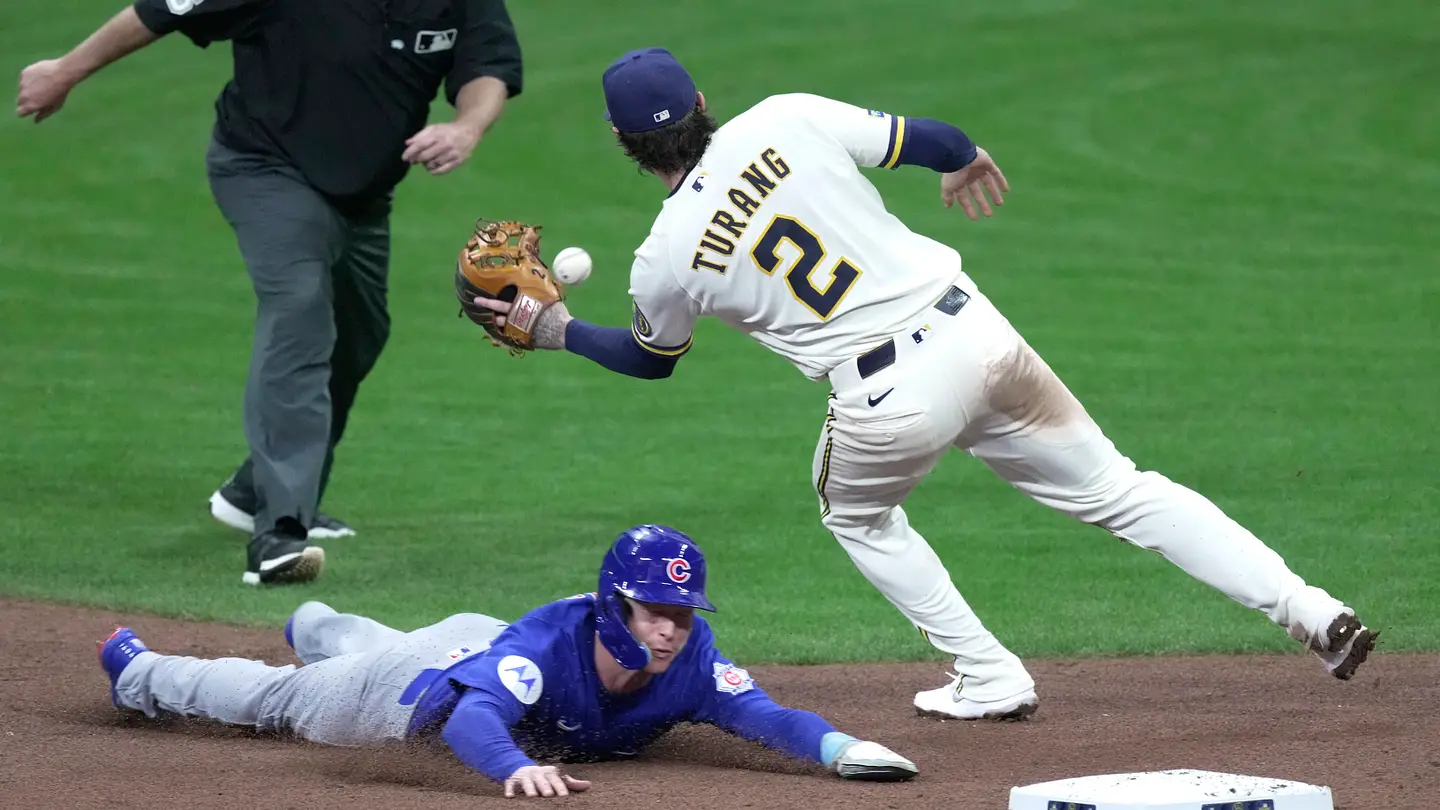
    Historically, second base was often the position where teams hid their least-capable defensive infielder, especially after defensive shifts became prevalent. An athletic shortstop or a rangy first baseman could easily compensate for deficiencies at the keystone. Recently, however, elite defense at second base has come back into vogue, driven in part by players like Milwaukee Brewers second baseman Brice Turang.

    Turang’s Established Track Record

    Turang is one of only two second basemen to win the Platinum Glove since its introduction in 2011, joining Andrés Giménez (2023). He has firmly established himself as one of the premier infield defenders in baseball, regardless of position. Following his award-winning 2024 campaign, Turang was a Gold Glove finalist in 2025, ultimately finishing behind Chicago Cubs second baseman Nico Hoerner in the voting.

    The 2026 Race: Turang vs. Wetherholt

    A year later, the narrative appears poised to repeat itself. Turang has been tremendous with the glove again in 2026, but another National League Central second baseman—St. Louis Cardinals rookie JJ Wetherholt—is pulling ahead in projections, at least according to MLB.com’s experts. That projection, however, may not tell the whole story. There is a compelling statistical argument that Turang should currently be considered the leader in the clubhouse for his second Gold Glove.

    Dueling Metrics: OAA and FRV vs. DRS

    The case for Wetherholt rests primarily on range-based metrics. He leads all major league second basemen in Outs Above Average (OAA) and Fielding Run Value (FRV) at +21 each. Those totals comfortably pace the position; for comparison, Turang ranks fourth in OAA and second in FRV at +12 each.

    However, Turang has opened a similarly significant lead in Defensive Runs Saved (DRS). His +21 DRS mark sits seven runs ahead of second-place Nasim Nuñez and eight ahead of Wetherholt. This divergence matters because OAA—and to a lesser extent FRV—is a range-based metric. Range is less critical for a second baseman than it is for a center fielder, given the position’s responsibilities.

    DRS measures a more holistic sense of defensive capability, tuned specifically to a fielder’s ability to convert batted balls into outs. While range is a component, the metric weighs conversion efficiency more heavily, aligning closer with the traditional demands of the keystone position.

    Voting History Favors DRS

    Gold Glove voters have historically recognized this distinction. Turang won his Gold Glove (and Platinum Glove) in 2024 after posting a staggering +22 DRS, a total that literally lapped the field at the position. By contrast, his OAA and FRV that season were just +5 each, both ranking outside the top four among National League second basemen.

    Snubs Are Nothing New

    Snubs are familiar territory for Turang. If he loses the 2026 Gold Glove to Wetherholt, it would not come as a shock. However, voting history suggests the Brewers star possesses a better chance to win than the current national media consensus gives him credit for.

  • Rory McIlroy Records Slowest-Ever Round, Then Faces Different Test

    Rory McIlroy Records Slowest-Ever Round, Then Faces Different Test

    Rory McIlroy, a veteran of nearly two decades on professional tours, delivered a startling assessment after his opening round at the Irish Open on Thursday. The 37-year-old Northern Irishman, defending his title at Doonbeg on Ireland’s southwest coast, found himself part of a marathon group that redefined the concept of a slow play.

    Marathon Round Sets Unwanted Benchmark

    McIlroy, playing alongside Robert MacIntyre and Brooks Koepka, teed off at 1:35 p.m. local time. Their final putt dropped at 7:41 p.m., marking a round of 6 hours and 6 minutes — a duration roughly equivalent to a transatlantic flight from New York to Dublin.

    “I can’t recall a round of golf that has taken that long before. We’ve had some rounds that are five-and-a-half or five-and-three-quarter hours, but six hours is a first for me.”

    McIlroy insisted he was not exaggerating. The glacial pace stemmed from a perfect storm of factors: a one-tee start for the 138-player field, wet and windy conditions that turned the Greg Norman-designed layout into a “bogey-breathing beast,” and a 20-minute ruling involving Erik van Rooyen that halted play early in the round.

    “When you’re playing a round of golf and it takes six hours, it’s hard to get into the rhythm of things,” McIlroy said.

    Scotsman Ewen Ferguson, speaking Friday, offered a blunter take on the physical and mental toll.

    “I made a few mistakes coming in yesterday, just with kind of being knackered and wanting it done, to be honest, and also, like, a lapse of concentration,” Ferguson said. “Golf shouldn’t take that long.”

    Defending Champion Chases From Behind

    Despite a level-par 70 (officially scored as a one-under 69), McIlroy opened seven shots behind leader Joaquín Niemann, who carded a 65. The slow start stood in stark contrast to the emotional high of his 2024 victory at the K Club near Dublin.

    “The scenes of the celebrations and dads and sons hugging each other, it was very fulfilling,” McIlroy said earlier in the week, reflecting on the significance of that win for the Irish public.

    On Thursday, however, the scene at the 18th green was subdued, with near-empty grandstands shrouded in fading light greeting the final group.

    Friday Reset Yields Similar Score, Different Feel

    Fairer conditions greeted the early starters Friday. McIlroy teed off at 9:30 a.m. and avoided the disaster of Thursday — notably a double-bogey at the par-4 14th — but failed to build momentum. A birdie at the 2nd was erased by a bogey at the 7th. A kick-in eagle at the par-5 8th was wiped out by bogeys at 11 and 18. A lone birdie at 17 salvaged a second consecutive 69.

    “Frustration,” is how McIlroy described his primary emotion at round’s end. “I just didn’t have it on the greens. I really struggled to read them. It’s hard whenever you struggle to read them, and then when you do get over the ball you’re trying to trust what you’re seeing, but everything else that you have seen hasn’t went the way you thought, so it’s hard to put a committed stroke on it.”

    Doonbeg’s Devilish Greens

    The putting surfaces at Doonbeg remain a formidable test. While Martin Hawtree’s 2014 renovation tamed some of Greg Norman’s original severe slopes, the greens retained enough tilt to confound the world’s best. On Friday, McIlroy missed eight putts inside 12 feet.

    “It’s a reading issue,” he said when pressed. “I’m starting them on my lines, so that’s not really an issue. I feel like I’m pretty good at that. It’s just getting the right read and then trusting it I think is — like the putt that I holed on 17. The only reason I holed that is because I saw what Brooks did before me, it was on the exact same line. So if I can get me some more putts like that where someone can show me the line then that would be good.”

    Lowry Surges, McIlroy Hopes for Weather Advantage

    At two-under through 36 holes, McIlroy finds himself chasing his “old pal” Shane Lowry. The Offaly native seized control Friday with a spectacular eight-under 62, reaching 11-under par. Lowry briefly threatened the magical 59 barrier on the back nine before settling for the course record.

    McIlroy acknowledges the deficit is substantial but eyes Saturday’s forecast — a return to foul weather — as a potential equalizer. He believes tough conditions place a premium on ball-striking, a facet of his game that has been sharp all week.

    “If I can do that and just see a couple [putts] go in,” he said, “then hopefully it’s a different story.”

    Another fairytale ending at the Irish Open would require a historic comeback, but for a player of McIlroy’s caliber, the script remains unwritten.

  • Peaky Blinders Sequel Gets Major Netflix Update

    Peaky Blinders Sequel Gets Major Netflix Update

    Peaky Blinders Sequel Series Advances with Netflix Season 2 Order

    The Shelby family saga continues to expand. Steven Knight, creator and screenwriter of Peaky Blinders, has confirmed that the upcoming sequel series — tentatively titled Peaky Blinders: The New Generation — has completed its scripts and secured a Season 2 pre-order from Netflix.

    Scripts Complete, Production Advancing

    Speaking on the Zoe Ball in the Afternoon podcast, Knight revealed the project is further along than many expected.

    “Peaky [Blinders]: The New Generation, I guess you can call it, is already in the can,” he said. “It is so good. I mean, I would say that, wouldn’t I? But it is really, really good.”

    The news follows the 2025 release of Peaky Blinders: The Immortal Man, the feature-length film that debuted on Netflix to a 90% Certified Fresh rating on Rotten Tomatoes. The film’s success reignited global interest in the franchise, which originally premiered on BBC Two in 2013 before becoming a worldwide phenomenon across six seasons.

    Honoring Sam Neill’s Legacy

    As production moves forward, the cast and crew continue to mourn the loss of Sam Neill, who played a significant role in the series. The team has expressed a commitment to honor his contribution through the storytelling that defined the show’s reputation.

    From Skepticism to Global Phenomenon

    Knight reflected on the franchise’s improbable journey, recalling early doubts during the BBC Two launch.

    “When [Peaky Blinders] was first a BBC Two drama and people would go, ‘1920s Birmingham, with Birmingham accents and gangsters?’ said Knight. “Cillian [Murphy] was saying that he and Benjamin [Zephaniah] were shooting the first two or three days, and they got together and said, ‘What do you think? Is this gonna work?’ And they were like, ‘Nah, I don’t think so.’”

    The turning point, Knight says, arrived in an unexpected form.

    “But then, it just went bonkers. I really realized something was happening when Snoop Dogg’s agent was in touch, and said [Snoop] wants to meet you. We spent three hours in a hotel room talking about how Peaky reminded him of how he got involved in gang culture. And I just thought, ‘This is madness.’”

    Snoop Dogg and the Expanding Universe

    The Snoop Dogg encounter underscores the franchise’s cultural reach. While no casting has been announced, Knight acknowledged the rapper’s fandom and acting experience leave the door open for a future appearance — whether in the sequel series or a potential spinoff.

    With scripts finalized and a two-season commitment from Netflix, Peaky Blinders: The New Generation represents the most concrete step yet in extending the Shelby universe beyond its original run.