Author: Jordan Hayes

  • “I thought we were going to run out of oxygen”: Paige Bueckers Reveals Traumatic Experience

    “I thought we were going to run out of oxygen”: Paige Bueckers Reveals Traumatic Experience

    Paige Bueckers Recalls Traumatic Elevator Incident From 2017 USA Basketball Debut

    Long before Paige Bueckers made her senior FIBA Women’s Basketball World Cup debut in Berlin, a frightening off-court moment during her first international trip left a lasting impression. The Dallas Wings star recently shared the story during an interview with USA Basketball, revealing how a routine elevator ride in Argentina became a claustrophobic ordeal she still remembers nearly a decade later.

    Teenage Team USA Trip Turns Scary in Argentina

    Bueckers was just 15 years old when she traveled to Argentina for the 2017 FIBA Americas Under-16 Championship. The United States captured the gold medal, marking the beginning of her decorated international career. Yet the tournament also produced a harrowing memory unrelated to basketball.

    During a recent USA Basketball YouTube interview, Bueckers recalled being trapped inside an elevator with roughly a dozen teammates. The elevator was rated for only six people.

    “It was like 12 of us packed into a six-person elevator. We clicked up to go to level three or something. We started going down,”

    Bueckers told USA Basketball.

    “I was like, ‘we’re supposed to be going up.’ So, we got rescued, thankfully. But that was an interesting moment for sure.”

    Claustrophobia and Panic During the Ordeal

    The incident was especially difficult because Bueckers already considered herself “a little claustrophobic.” After the elevator began descending instead of ascending, it stopped completely, leaving the players waiting for help.

    Bueckers said she and her teammates were trapped for between 10 and 15 minutes. Although the ordeal ended safely, she acknowledged her thoughts began to spiral while they were stuck.

    “We started going down. Then we got stuck. So, it wasn’t totally bad, but I thought we were going to run out of oxygen, so I almost had a panic attack,”

    she added during the interview.

    The memory remains powerful enough that Bueckers still avoids elevators whenever possible, describing the experience as “traumatic” and illustrating how a relatively brief incident can have a lasting psychological impact.

    From U16 Gold to Senior World Cup Stage

    There is an ironic connection between that difficult 2017 trip and Bueckers’ current role with the senior national team. The Argentina tournament represented the beginning of her journey with USA Basketball. Now she is representing the country at the FIBA Women’s Basketball World Cup, playing alongside some of the biggest names in the sport.

    Fellow stars Caitlin Clark and Aliyah Boston were also part of Bueckers’ early USA Basketball journey, making her progression to the senior team an especially meaningful full-circle moment.

    Impressive International Résumé

    Bueckers has already built a remarkable international resume:

    • Gold medal at the 2017 U16 Americas Championship
    • Gold medal at the 2018 FIBA U17 Women’s World Cup
    • Gold medal at the 2019 U19 Women’s World Cup
    • Represented Team USA in 3×3 basketball at the 2018 Youth Olympic Games

    She was named MVP of the 2019 U19 tournament and subsequently selected as USA Basketball’s Female Athlete of the Year. The senior World Cup, however, carries a different significance.

    “As a basketball player, you feel like representing your country at the World Cup level, at the Olympic level, on the senior national team. That’s the highest honor you could have. So being one of 12 for the USA, to see that they see me as a fit and see that they think that I can contribute to winning basketball with the team, that means everything,”

    Bueckers said.

    “It’s a dream come true, and you never want to take it for granted.”

    Strong World Cup Performance

    Her performances have demonstrated why she earned the opportunity. Through the group stage, Bueckers averaged 10.3 points, 2.0 rebounds, 3.7 assists, 1.3 steals and 1.3 blocks, according to supplied statistics. FIBA’s official player page confirms her role, including a 14-point performance in the opening victory over China.

    The United States went unbeaten through three group-stage games, defeating China, Italy, and Czechia. Bueckers contributed seven points, five rebounds, two assists, two steals and two blocks in the narrow 55-52 victory over Italy before the Americans finished group play with a 105-64 win over Czechia.

    Title Defense Amid Challenges

    Team USA remains one of the leading contenders for the title, but the path has not been completely straightforward. The Americans have faced competition capable of exposing weaknesses, while France and several other nations remain serious threats.

    The absence of A’ja Wilson has also altered the dynamic for the reigning champions, who are attempting to extend the United States’ remarkable run of four consecutive World Cup gold medals.

    A Journey Defined by Resilience

    For Bueckers, simply reaching this stage represents another milestone in a journey that began with that teenage trip to Argentina. The gold medal from 2017 may have been the official prize, but the elevator incident became another lasting part of her story.

    Nearly a decade later, Bueckers has gone from being a teenager experiencing a frightening moment in a cramped elevator to sharing the court with the world’s elite while wearing the USA jersey. And despite the difficult memory, she continues to embrace what representing her country means to her.
  • Monza’s Most Magical Home Wins: From Ascari to Antonelli

    Monza’s Most Magical Home Wins: From Ascari to Antonelli

    F1 Hall of Fame Journalist David Tremayne Recalls Emotional Monza Victories for the Tifosi

    Formula 1 Hall of Fame journalist David Tremayne reflects on the most stirring wins witnessed by the passionate Tifosi at the historic Monza circuit.

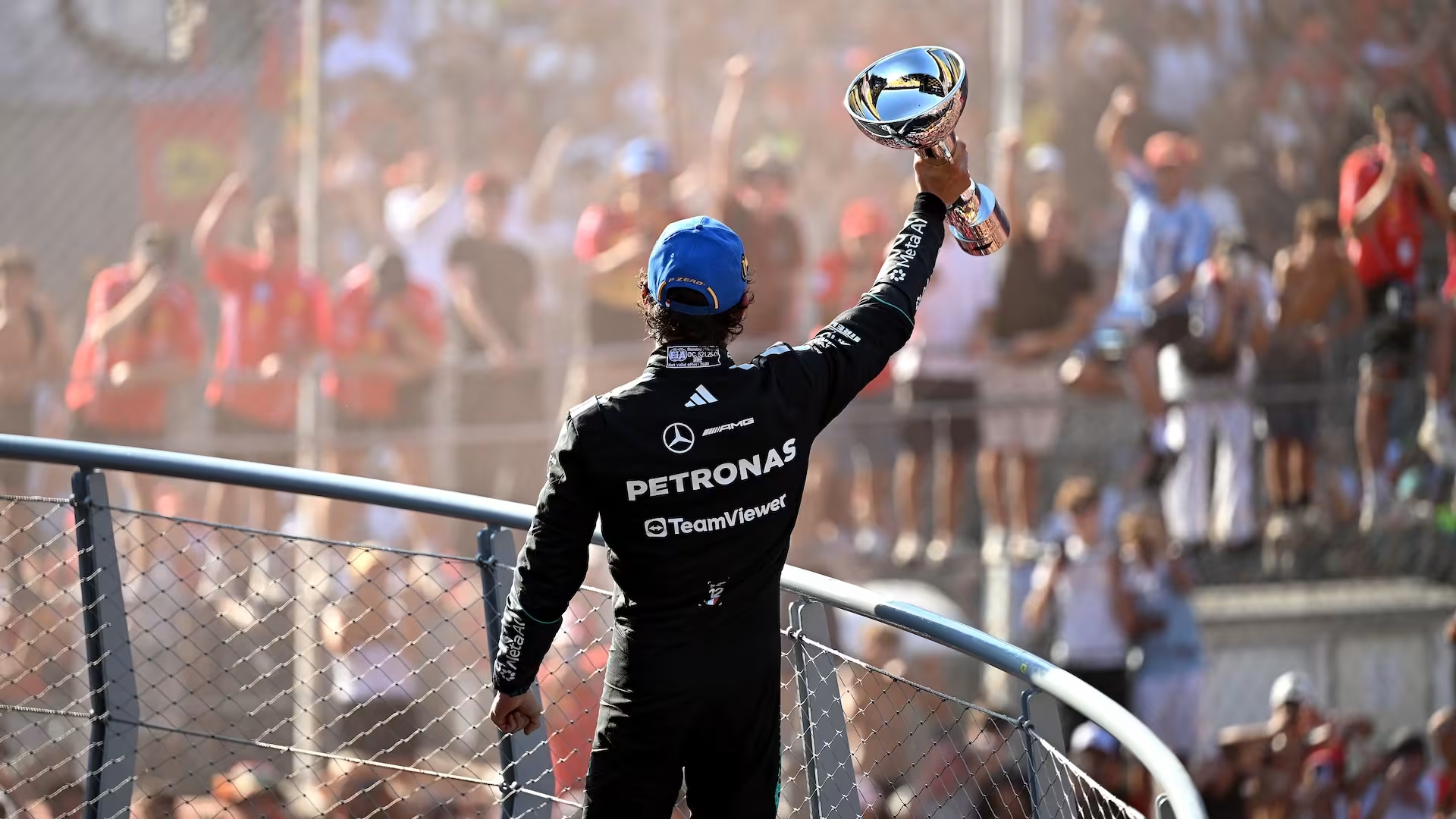
    The Italian Grand Prix at Monza has long served as a stage for unforgettable moments, where the sea of red in the grandstands amplifies every triumph. Tremayne, a veteran chronicler of the sport, revisits those races where emotion peaked for Ferrari’s devoted followers.

    A Legacy of Passion at the Temple of Speed

    Monza, known as the “Temple of Speed,” holds a unique place in Formula 1 history. For the Tifosi—Ferrari’s famously fervent fan base—a victory here transcends mere points; it is a cultural event. Tremayne’s retrospective highlights how specific drives have etched themselves into the collective memory of motorsport’s most dedicated supporters.

    From dramatic last-lap overtakes to dominant home-soil performances, the selected victories underscore the deep connection between the Scuderia, the circuit, and its fans. The analysis offers context on why these particular wins resonated so profoundly amid the noise and color of the Italian Grand Prix weekend.

  • ECB Appoints Australian Leah Poulton as England Women’s Managing Director

    ECB Appoints Australian Leah Poulton as England Women’s Managing Director

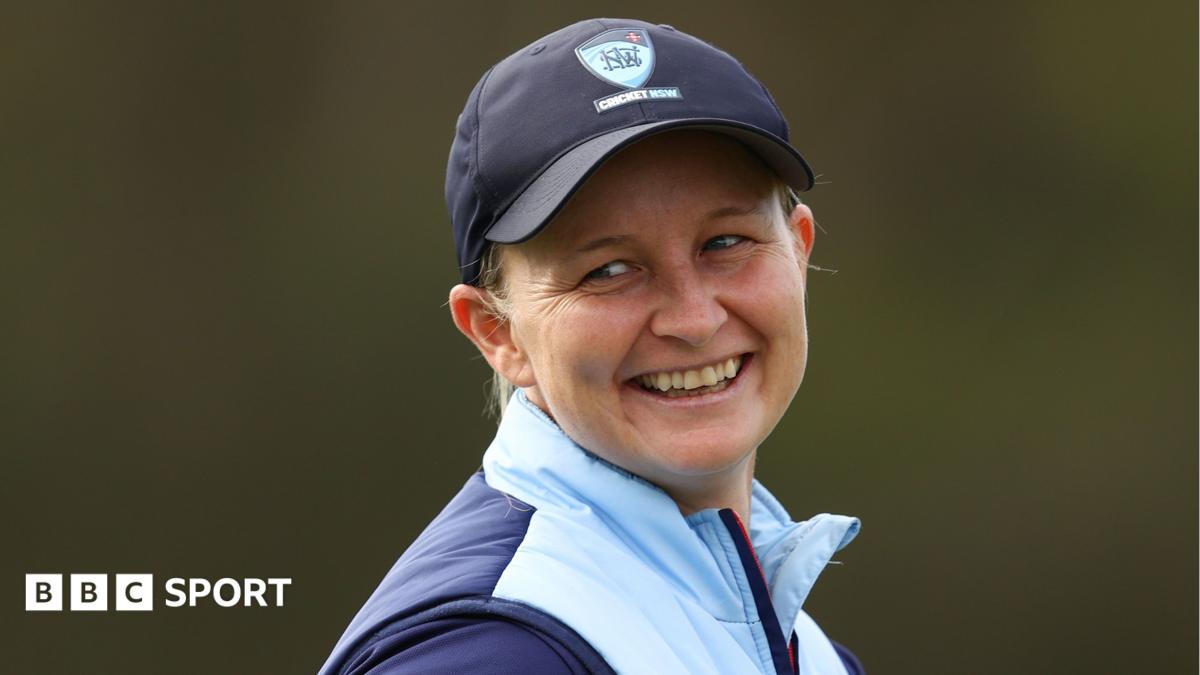
    The England and Wales Cricket Board (ECB) has confirmed the appointment of Australian cricket executive Leah Poulton as the new Managing Director of England Women’s Cricket. The 42-year-old former international batter will assume the role in November, taking over from Clare Connor.

    Extensive High-Performance Background

    Poulton brings a wealth of coaching and administrative experience to the position. A veteran of 90 appearances for Australia, her post-playing career has been defined by leadership roles in elite female pathway development. She has served as an assistant coach for the Sydney Thunder and Sydney Sixers in the Women’s Big Bash League (WBBL) and held the positions of Pathway Manager and Assistant Coach for the NSW Breakers at Cricket New South Wales (NSW).

    Prior to her current stint, Poulton worked as a High Performance Coach at Cricket Australia. For the past six years, she has led the elite female cricket program as Head of Elite Female Cricket at Cricket NSW.

    Mandate: Unified Vision for World Stage Success

    The ECB outlined a broad remit for the incoming director. According to the board, Poulton will be “accountable for the performances of England women, England women A, England women U19s and the overall effectiveness and reputation of the women’s high-performance system”.

    The governing body emphasized the collaborative nature of the role, stating: “Working closely with England women’s head coach Charlotte Edwards and captain Nat Sciver-Brunt, she will set a clear, unified vision for England women to consistently succeed on the world stage.”

    The appointment comes at a pivotal moment, with England set to host Australia in a highly anticipated Women’s Ashes series next summer.

    Poulton: ‘A Huge Privilege’

    In her first comments since the announcement, Poulton expressed enthusiasm for the challenge ahead.

    “I’m incredibly excited and honoured to be joining England and to have the opportunity to help shape our programmes and, most importantly, invest in our people,”

    said Poulton.

    “I’m looking forward to working with Charlotte, Nat and the wider team, building on the strong foundations already in place and taking the programme forward.

    “I know how vital strong pathways and a healthy domestic game are to sustained success, so I’m looking forward to connecting with people across the game and helping give the next generation of English players every opportunity to thrive. It’s a huge privilege to be part of England women and I can’t wait to get started.”

  • Betby Report: World Cup Acts as Gateway to Wider Betting, Only 43.6% of Wagers on Tournament

    Betby Report: World Cup Acts as Gateway to Wider Betting, Only 43.6% of Wagers on Tournament

    Sportsbook supplier Betby has released findings from a network-wide data analysis comparing the 2022 and 2026 FIFA World Cup tournaments. The research indicates that major international football events serve primarily as an acquisition channel, drawing bettors into a broader wagering ecosystem rather than functioning as isolated revenue peaks.

    World Cup as an Entry Point, Not a Standalone Peak

    According to Betby’s comparative analysis, the 2026 World Cup successfully reached 80% of its projected engagement metrics during the tournament window. However, the supplier emphasizes that the true value lies in the long-term player retention and cross-product adoption that follows the initial surge. The data suggests operators should view these tournaments as the top of a funnel, optimizing the onboarding experience to convert tournament-driven traffic into sustained activity across casino, virtual sports, and other betting verticals.

    Shifting Operator Strategy for Major Events

    The findings challenge the traditional approach of maximizing short-term margins during World Cup windows. Instead, Betby recommends a strategy focused on player lifetime value, leveraging the heightened attention of a global tournament to introduce users to the full breadth of a sportsbook’s offering. This includes personalized retention campaigns triggered post-tournament and seamless navigation between match betting and adjacent products.

  • Women vs. Men: Who Excels at Endurance Running?

    Women vs. Men: Who Excels at Endurance Running?

    Why Women May Hold the Edge in Ultra-Endurance Running

    Science is still catching up to the phenomenon of women excelling in ultra-endurance events, but athletes and experts point to a powerful combination of physiology, psychology, and community.

    The Science Is Still Evolving

    Andrew Jones, a professor of applied physiology who played a key role in Eliud Kipchoge’s sub-two-hour marathon challenge in 2019, cautions that the research base for ultra-distances remains thin. “There isn’t as much hard evidence as there would be for shorter distances, which have been studied for a long time in quite some detail,” he says, describing the science in this area as “behind.”

    Dr Richard Burden, co-lead of female athlete health and performance at the UK Sports Institute, shares that view. “At the moment we are speculating … there are definitely some physiological adaptations that you see more in women than men that are favourable for ultra-type events. But those need to be better established and more studies would need to be done.”

    Mental Resilience Defines the Ultra Distance

    Beyond physiology, the realities of multi-day events—sleep deprivation, extreme terrain, unpredictable conditions—make the finish line as much a mental destination as a physical one. New Zealand runner Sophie Woods, who set a record on the Via Alpina, believes this is where women hold a distinct advantage.

    “It’s not necessarily about being the fastest person at the start,” she says. “It is about preparation, it is about mental strength and being able to continue to persevere when things go wrong.”

    During her record-breaking run, Woods faced wildfires that forced a longer, more dangerous route and swarms of horseflies. “I was so tired and there were so many of them and I wanted to have a complete meltdown and just cry, but I couldn’t because if I stopped moving, they started biting me,” she says. “I think women are really good at adapting and continuing and just knowing that once we start something, you’ve just got to keep moving until you get to the finish.”

    Community and Camaraderie as Competitive Fuel

    Norwegian runner Yngvild Kaspersen, who last month became the first woman to win the prestigious Ultra-Trail Mont Blanc CCC race in the Alps twice, credits her victory to the “mental game” she practices in training. Balancing life as a GP with professional running, she also highlights a unique cultural strength.

    “We’re competitors but we’re also motivating each other, inspiring each other, pushing each other to do better in the races,” she says. “If you see the podiums for the women this year [at UTMB], how close we are and how we’re running together out there – that’s very special and I’m very proud to be a part of that community and that group of women.”

    Hormonal Fluctuation as Endurance Training

    Sports dietitian Renee McGregor, who specializes in athlete nutrition and hormonal health and is an ultra-runner herself, argues that female resilience is forged long before race day. “The moment women step into puberty, we are dealing with a fluctuating hormonal system,” she says. “We never ever give ourselves credit for that, it’s just an accepted part of being female. But actually, it is an endurance in itself and I think that’s probably where a big part of our resilience comes from.”

    McGregor points to research suggesting female runners display more disciplined, even pacing strategies than men in distance races, maximizing what she terms the female “brain bank.” “I don’t think women go into these races without a lot of thought and contingency planning,” McGregor adds.

    She connects that strategic approach to lived experience. “For example, if you’ve been through a pregnancy and you’ve dealt with nausea, if you’ve had a baby and dealt with the lack of sleep or if you’ve gone through fertility treatment, you have to go through so much discomfort, but you know you can get through it. And I think it’s that knowledge of ‘I can get through this, I can find a solution’.”

  • ‘We stopped playing our football’: Valverde reflects on Real Madrid’s win over Inter

    ‘We stopped playing our football’: Valverde reflects on Real Madrid’s win over Inter

    Valverde Reflects on Real Madrid’s Champions League Opener Win Against Inter

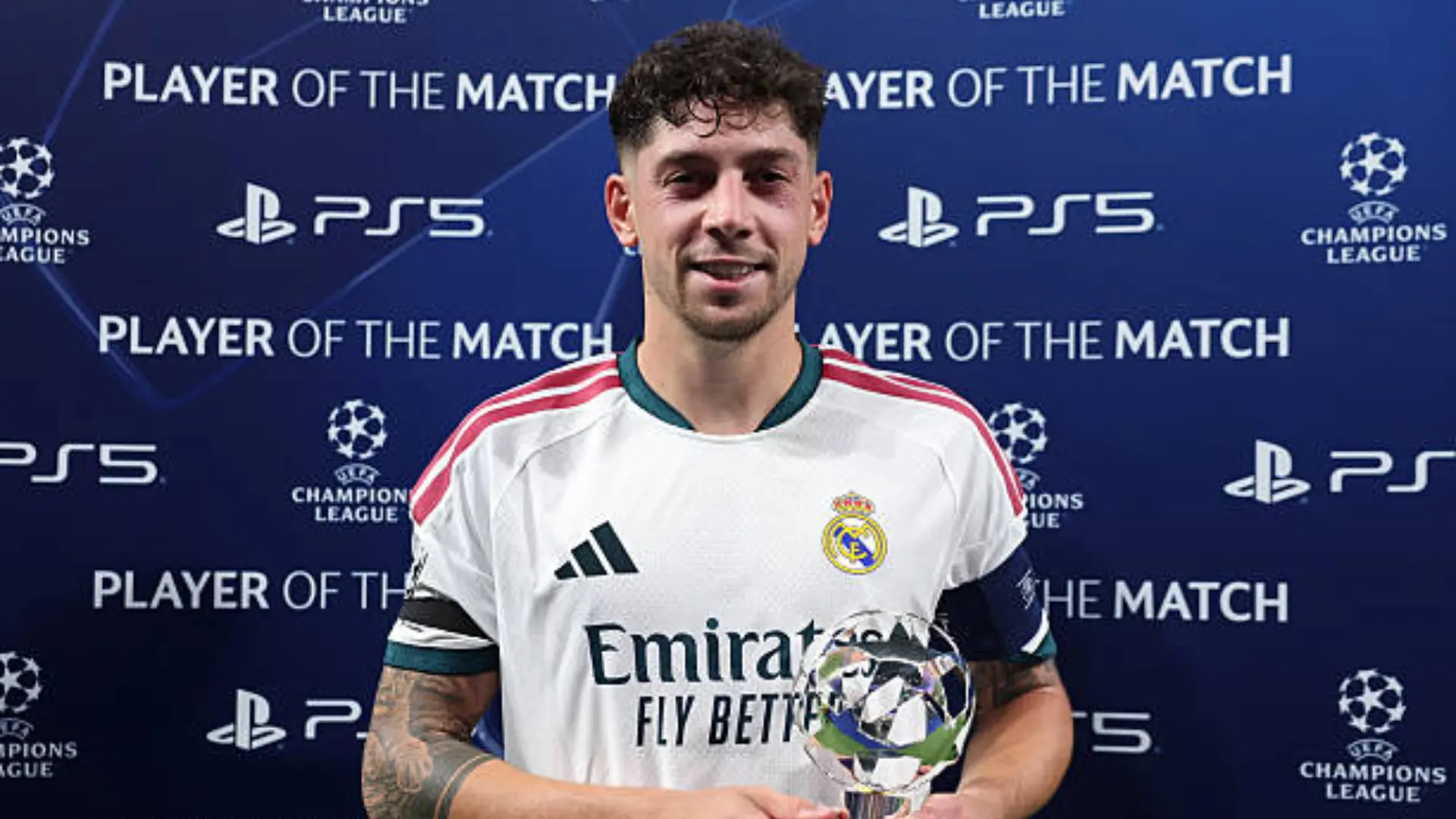
    Real Madrid captain Federico Valverde offered a candid post-match assessment after the team secured a 2-1 victory over Inter Milan in their opening Champions League group stage fixture. The Uruguayan midfielder delivered a standout performance that earned him the Man of the Match award, underlining his growing influence in Carlo Ancelotti’s midfield.

    Strong Start Undermined by Second-Half Slippage

    Speaking after the final whistle, Valverde acknowledged the quality of the team’s first-half display but pointed to a noticeable drop in intensity after the break. The midfielder emphasized that while the early control was encouraging, the lapses in concentration during the second period cannot be repeated against elite European opposition.

    Man of the Match Performance Anchors Midfield

    Valverde’s all-around contribution proved decisive. His energy, defensive interceptions, and ability to drive transitions helped Real Madrid dictate the tempo early on. The award recognizes not only his technical output but also his leadership on the pitch — a role he has embraced since inheriting the captain’s armband.

    Focus Shifts to Consistency in Europe

    With three points secured, the focus now turns to maintaining momentum in the group stage. Valverde’s remarks reflect a squad aware that margins are thin at this level, and that sustaining performance across 90 minutes will be essential as the campaign progresses.

  • Test Your Football Knowledge With Daily Quizzes

    Test Your Football Knowledge With Daily Quizzes

    Challenge your sports expertise with today’s interactive quiz lineup. The daily feature includes three distinct games designed to test different aspects of your ball knowledge.

    Today’s Quiz Lineup

    • Who Am I? — Identify the mystery player or personality from a series of progressive clues.
    • Five in Five — Answer five rapid-fire questions in under five minutes.
    • Brainteaser — Solve a lateral-thinking puzzle tied to the sport’s history, rules, or statistics.

    Each game resets daily, offering fresh challenges for casual fans and die-hard followers alike. Track your score, compare results, and return tomorrow for a new set of questions.

  • Max Verstappen Interview: Red Bull Driver Discusses McLaren Talks, ‘numb’ Cars, and Why He Speaks His Mind

    Max Verstappen Interview: Red Bull Driver Discusses McLaren Talks, ‘numb’ Cars, and Why He Speaks His Mind

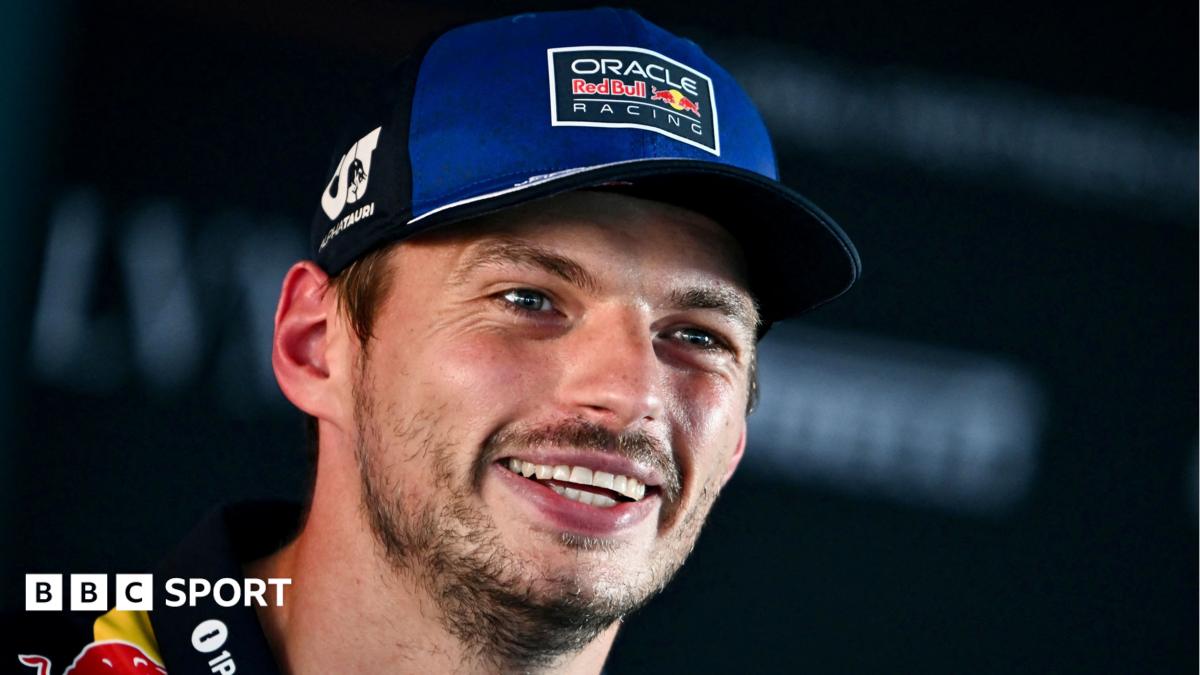
    Max Verstappen sat down for an exclusive interview with BBC Sport on the eve of the Italian Grand Prix at Monza, offering his most uncompromising assessment yet of Red Bull’s 2026 campaign and his decision to extend his contract with the team.

    Contract extension offers stability but no guarantees

    The four-time world champion signed a two-year extension earlier this year that theoretically runs through 2030, though performance clauses remain in place. The deal keeps Verstappen at Red Bull but leaves the door open for a departure if the team cannot return to championship contention next season.

    Verstappen arrived for the interview in sweltering conditions, with temperatures in the mid-30s Celsius and the team’s hospitality unit struggling to cope. “It’s too hot in here,” he said, briefly adjusting a fan before dismissing the need for a break. “No, no. I’m good. It was just that it was super-hot in the corner when I was doing the print [media].”

    Season assessment: learning for 2026

    When asked where his head is at regarding the season so far, Verstappen was blunt. “Of course it’s not where I want to be, but as a team we’re trying to just learn and understand a lot of things for next year. We are not in a title fight. We are just trying to find more performance.”

    He emphasized that fundamental changes are needed for next year’s car. “Changes need to happen to the car for next year. We will not be able to change that for this year, but we just need to try and get a lot of learnings to do better next year.”

    On the specific deficiencies, Verstappen pointed to inconsistent balance through corners. “Overall we’re just lacking a bit of performance. The car is not where I want it to be feeling-wise, and the through-corner balance is too hit and miss between entry, mid and exit.” He added, “It’s just fundamentally something in the car that we need to try and work on for the next year.”

    Recurring issues across regulation changes

    The Dutchman acknowledged this has been a theme extending beyond the current season. “That’s exactly that. There’s also things that we talk about within the team, like how can that happen, how can we fix it? That’s basically what we are doing now and trying to do now.”

    Personnel changes are part of the response. “Some people have left, new people have come in. With the new people, we are discussing what we can do about it. Is that just some changes, a different philosophy? All these kind of things.”

    Why he stayed: family, belief, and broader projects

    On his decision to extend, Verstappen cited emotional and practical factors. “It comes down to also feeling well within a team. This is like a second family to me.”

    He expressed confidence in the team’s ability to rebuild. “The belief that you can turn things around, you can build towards hopefully a better future with other people, new people. And at the end of the day, it’s not only Formula 1 for me. There are a lot of things that I’m doing next year that Red Bull is involved in as well.”

    “I feel good here. So this, for me, is the right place to be.”

    No hard sell required

    Verstappen said the decision did not require extensive persuasion. “I always said to them: ‘Don’t stress about it, just work on the car.’ Because the faster the car goes, the easier the decision is anyway.”

    He acknowledged the team’s anxiety but remained focused on his own role. “I can understand, of course, maybe sometimes they were a little bit worried. But at the same time, for me, I was just worried about here, what was going on.” Outside commitments also limited his engagement with other options. “At the same time, I was very busy with my stuff also outside of Formula 1. So I never really spent a lot of time talking or doing different things or trying to go somewhere else.”

    Loyalty over convenience

    Addressing the perception that Red Bull had little leverage, Verstappen framed his stance as a matter of principle. “I don’t mind the challenge also. I don’t have that desire or need to show in another car that I can win it, or whatever.”

    He rejected the idea of chasing the fastest machinery. “It’s easy to run to the fastest car and then do it all again. But it’s not how I am. You cannot be the captain of the ship and as soon as there is something not working, you jump off the ship.”

    Verstappen even welcomed the rebuilding process. “It’s been a bit downwards from the dominant years, but I don’t mind also rebuilding it. It’s another challenge as well.”

    Talks with Mercedes and McLaren

    Verstappen confirmed discussions with rival teams but downplayed their significance. “Of course, any kind of chat you take seriously. They’re all very respectful chats. There’s nothing wrong with that.”

    His decision ultimately came down to instinct. “I felt that staying was, for me, the right choice. You have to follow your heart. I could have run away very early on in my Red Bull career and gone somewhere else to try and win. If you have a little bit of patience, you do end up winning. I feel like that’s my approach now as well.”

    Highlight of the year: Nürburgring 24 Hours

    Asked about his most enjoyable race this season, Verstappen pointed to his endurance debut. “Probably the Nordschleife [Nurburgring 24 Hours]. It was super-cool to be able to do an endurance event with my team-mates, the guys that won with the car throughout the main season.”

    Despite a mechanical retirement, the experience stood out. “We knew that we were going to be really strong. We peaked at the right time, but unfortunately the car retired. It was an incredible experience. And pure. Pure motorsport.”

    Simulator preparation paid off

    Verstappen’s opening stint, where he climbed from tenth to first in treacherous conditions, drew particular praise. He credited extensive simulator work. “I was enjoying it. Not easy conditions. It started to drizzle. The track was slippery. Crashes. Code 60s [when a stretch of track is limited to 60km/h after an incident].”

    He dismissed suggestions he might be out of his depth. “Some people were like: ‘Let’s see how he will do in the race under pressure with all these kinds of scenarios that he has never done before.’” Instead, “But I have done them a million times on the simulator. I have done so many laps and 24-hour races on the simulator. I never felt out of depth or whatever. I was fully zoned in. I just had a great time.”

    The intensity of the race brought a familiar focus. “Once I was in the race, you switch to another level. I was just in a zone. It’s really enjoyable.”

    Endurance ambitions on his own terms

    Verstappen confirmed a desire to return to the Nürburgring and pursue other endurance events, including the Hypercar class in the World Endurance Championship. “All the endurance races. Eventually, of course also Hypercar [the world endurance championship]. I don’t want to rush it. I want to do it in the right environment. On my terms. And competitive.”

  • Authorities Investigate Drug Gangs’ Exploitation of Girls

    Authorities Investigate Drug Gangs’ Exploitation of Girls

    Key Highlights

    • Investigation examines systemic failures spanning two decades in protecting girls from exploitation and rape by drug gangs
    • Report highlights institutional shortcomings in safeguarding vulnerable minors from organized criminal networks
    • Analysis covers pattern of inadequate response across multiple agencies and time periods

    Two Decades of Systemic Failure Documented

    A new investigation provides a comprehensive examination of what it describes as twenty years of failure to protect girls who have been exploited and raped by drug gangs. The report traces a persistent pattern of institutional shortcomings that have allowed organized criminal networks to target vulnerable minors with impunity across multiple jurisdictions and time periods.

    Pattern of Institutional Shortcomings

    The analysis identifies recurring failures across law enforcement, social services, and child protection agencies. Despite repeated warnings and visible evidence of exploitation, coordinated intervention remained fragmented and often reactive rather than preventive. The investigation maps how these systemic gaps created environments where drug gangs could operate with reduced risk of detection or prosecution, while victims faced barriers to disclosure and support.

    Scope and Scale of Exploitation

    According to the examination, the exploitation involves organized drug distribution networks that systematically target girls, using coercion, violence, and substance dependency as control mechanisms. The report documents how the intersection of drug trade operations and child sexual exploitation has been inadequately addressed by existing legal and protective frameworks, leaving a protection vacuum that has persisted across two decades.

    Why This Matters

    This investigation underscores the critical need for cross-agency coordination between law enforcement, child protection services, and public health systems to address the convergence of organized crime and child exploitation. The two-decade timeline suggests that piecemeal reforms have failed to address root causes. Policymakers face pressure to implement structural changes that prioritize early intervention, victim-centered approaches, and accountability mechanisms for agencies tasked with safeguarding minors. The findings may inform upcoming legislative reviews and resource allocation decisions for child protection services.

    Frequently Asked Questions

    What time period does the investigation cover?

    The examination spans two decades of institutional responses to the exploitation of girls by drug gangs.

    Which agencies are implicated in the failures?

    The report identifies systemic shortcomings across law enforcement, social services, and child protection agencies without naming specific organizations in the provided source.

    What are the key mechanisms of exploitation described?

    Drug gangs reportedly use coercion, violence, and substance dependency to control and exploit girls within organized drug distribution networks.

  • Dillon Brooks Takes Offseason Training to China for Kung Fu

    Dillon Brooks Takes Offseason Training to China for Kung Fu

    Phoenix Suns forward Dillon Brooks is elevating his offseason preparation with an unconventional approach, traveling to China’s Wudang Mountains to train in kung fu. The All-Defensive selection, renowned for his relentless gym work ethic, is incorporating martial arts into his regimen to enhance concentration, rhythm, strength, and overall conditioning.

    NBA Players Embracing Combat Sports Training

    Brooks joins a growing list of NBA stars exploring combat sports for cross-training benefits. Five-time All-NBA center Anthony Davis has similarly integrated boxing into his workout routine, highlighting a trend among elite athletes seeking competitive edges through disciplines that emphasize footwork, timing, and mental focus.

    Brooks Coming Off Career-Best Season

    The 28-year-old wing missed 26 games during the 2023-24 campaign due to injury, yet delivered the most productive season of his eight-year career when available. His decision to pursue kung fu training in the birthplace of Taoist martial arts signals a commitment to durability and peak performance as he enters a pivotal year with Phoenix.

    The Wudang Mountains, a UNESCO World Heritage site in Hubei Province, are renowned as a historic center for internal martial arts such as Tai Chi and Baguazhang. Brooks’ immersion in this environment reflects a holistic approach to athletic development that blends ancient practice with modern sports science.