Author: Maya Brooks

  • Boss Allows Unlimited Lunch Breaks If Work Gets Done — Workers Take Notice

    Boss Allows Unlimited Lunch Breaks If Work Gets Done — Workers Take Notice

    Key Highlights

    • TikTok creator Zero Dollar Coach went viral advocating for unlimited paid lunch breaks — up to two hours — provided employees complete their work and don’t burden teammates.
    • The business owner argues companies that strictly time lunch breaks while ignoring unpaid overtime, shortened breaks, or after-hours work are applying a double standard.
    • The video amassed 312,000 likes and sparked widespread debate, with healthcare workers and other commenters contrasting the policy against rigid 30-minute breaks on 12-hour shifts.

    Viral Management Philosophy Challenges Conventional Break Policies

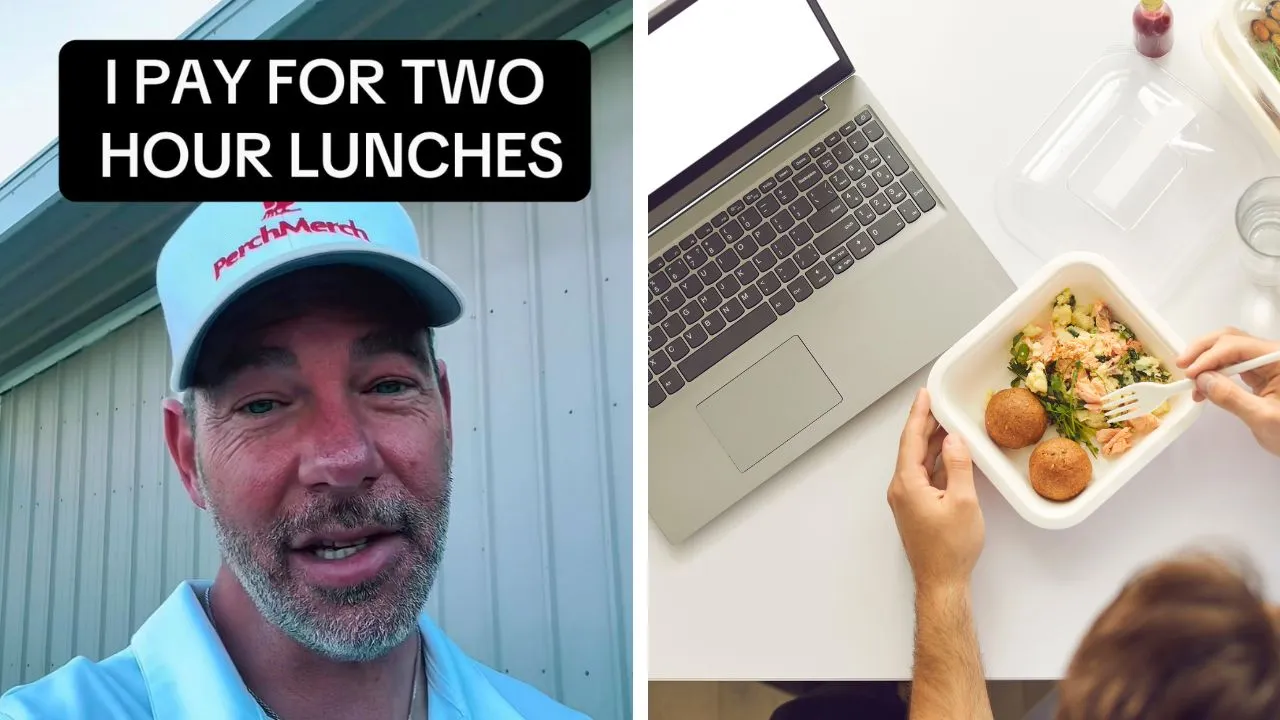
    A TikTok creator known as Zero Dollar Coach has ignited a widespread conversation about workplace autonomy after sharing his unconventional lunch-break policy. In a video that had garnered 312,000 likes as of publication, the business owner stated plainly: “I don’t care how long of a lunch my employees take.” His only conditions: the work must get done, customers must be taken care of, and the employee’s absence cannot negatively impact the rest of the team.

    The creator, who identifies as a boss and business owner, explained that his employees receive paid lunch breaks and that he does not use a stopwatch to monitor their time away. He cited real-world examples from his workplace, such as an employee spending an extended lunch with a visiting relative or taking extra time after a difficult morning. According to him, the system balances out naturally: someone who takes a two-hour lunch one day might eat at their desk, skip lunch entirely, or stay late to handle time-sensitive tasks on another.

    Critique of Asymmetric Time Tracking

    Zero Dollar Coach directed pointed criticism at organizations that rigorously police lunch durations while overlooking the extra time employees routinely contribute. He argued that companies tracking every minute of a long lunch should equally account for every minute employees give back — through shorter breaks, work-related phone calls during meals, or staying past their scheduled hours.

    “You don’t get to count every minute an employee takes from you and completely ignore every minute they give back,” he said. His framework shifts the focus from input-based metrics — how long someone sits at a desk or eats a sandwich — to outcome-based measures: completed work, satisfied customers, and fair distribution of labor among colleagues.

    Summarizing his philosophy, he added: “If the work gets done and the customers are taken care of and you’re not screwing over the rest of the team, I genuinely do not care how long it took you to eat a sandwich.”

    Public Response Highlights Industry Divides

    The video drew thousands of comments, many expressing a strong preference for managers who grant such autonomy. One commenter wrote: “Treat adults like adults, and you get an adult,” while another noted their most productive employees were those they treated “like adult humans.”

    However, the discussion also exposed sharp contrasts across industries. Numerous healthcare workers responded that they receive only 30-minute lunch breaks during 12-hour shifts and are sometimes prevented from taking even those. Others raised practical concerns about coverage in roles where team members depend on one another to maintain operations. Zero Dollar Coach acknowledged these coverage issues as valid and stated he would address any individual who misused the flexibility rather than imposing blanket restrictions on the entire staff.

    Why This Matters

    The viral moment reflects a growing tension between traditional, time-based management models and emerging expectations for trust-based, results-oriented workplaces. As labor markets tighten and younger workers prioritize autonomy, policies like Zero Dollar Coach’s serve as a litmus test for organizational culture. The stark contrast with sectors like healthcare — where rigid scheduling is often dictated by regulatory and patient-safety requirements — underscores that “flexibility” is not universally feasible. However, even in constrained environments, the core principle — accounting for total employee contribution rather than isolated time increments — offers a framework for rethinking fairness in labor practices. The conversation is likely to influence ongoing debates about work-life balance, productivity measurement, and the future of hourly versus salaried compensation structures.

    Frequently Asked Questions

    Who is Zero Dollar Coach?
    Zero Dollar Coach is a TikTok creator and business owner who shares management and leadership advice. His real name is not disclosed in the source article.
    What is his exact lunch-break policy?
    Employees may take paid lunch breaks of any length — up to two hours or more — as long as their work is completed, customers are served, and their absence does not burden coworkers. No stopwatch or time-tracking is used.
    How did viewers react to the video?
    The video received 312,000 likes and thousands of comments. Many praised the autonomy and said they would prefer working under such a policy. Some, particularly healthcare workers, contrasted it with their own rigid 30-minute breaks on 12-hour shifts. Others raised concerns about coverage in team-dependent roles, which the creator acknowledged and said he would handle case by case.
  • TikTok’s “How I Feel In My Hometown” Trend Explained

    TikTok’s “How I Feel In My Hometown” Trend Explained

    Key Highlights

    • A TikTok trend titled “How I Feel In My Hometown” emerged in late August 2026, pairing local footage with anime or fictional character edits.
    • The format uses the on-screen caption “how I feel in my hometown” to express emotions such as awkwardness, boredom, displacement, and nostalgia.
    • The trend leverages relatable media characters to visualize the complex experience of returning to or residing in one’s place of origin.

    The Anatomy of a Viral Hometown Sentiment

    In late August 2026, a new meme format began circulating on TikTok that quickly crystallized a specific, widely shared emotional experience. Known interchangeably as “How I Feel In My Hometown” or “How It Feels In My Hometown,” the trend invites creators to juxtapose video clips or static images of recognizable local landmarks—their high school, a specific strip mall, a childhood park—with edited footage of an anime protagonist or another fictional character. The connective tissue is a simple, lowercased caption: “how I feel in my hometown.”

    Visual Language and Emotional Resonance

    The trend’s power lies in its economy of storytelling. By overlaying a fictional character’s dramatic reaction—whether it is a blank stare of existential dread, a frantic attempt to escape, or a quiet moment of tearful recognition—onto mundane local geography, users bridge the gap between internal psychology and external environment. The selected characters often come from popular anime series, though the source material extends across animation, gaming, and live-action franchises. This choice allows participants to outsource the articulation of complex feelings to a pre-existing visual vocabulary understood by the platform’s culturally literate user base.

    Mapping the Spectrum of Return

    While the specific character edits vary, the emotional core of the trend clusters around a distinct set of themes. Primary among them is a sense of awkwardness or feeling visibly out of place, often depicted through characters hiding their faces or shrinking into themselves. Boredom and stagnation are frequent motifs, represented by characters staring into middle distance or engaging in repetitive, low-stakes actions. However, the trend is not purely negative; a significant subset of posts leans into nostalgia or a bittersweet identification with a character’s journey, suggesting that the hometown serves as both a trap and a touchstone for identity formation.

    Why This Matters

    The rapid adoption of the “How I Feel In My Hometown” trend underscores TikTok’s role as a primary engine for collective emotional processing among younger demographics. It transforms the private, often isolating experience of navigating one’s past geography into a public, shareable language. For sociologists and digital culture analysts, the trend offers a real-time dataset on how Generation Z and younger Millennials conceptualize “home”—not merely as a location, but as a psychological state characterized by regression, alienation, and the search for self-definition against the backdrop of formative spaces. The trend also highlights the increasing dominance of anime and “fandom” aesthetics as a universal lingua franca for emotional expression on social media, superseding traditional reaction GIFs or stock photography.

    Frequently Asked Questions

    When did the “How I Feel In My Hometown” trend start?
    The trend emerged on TikTok in late August 2026 and spread over the following weeks.
    What kind of media is typically used for the character edits?
    Users most frequently edit in characters from anime series, though characters from other franchises such as video games, Western animation, and live-action properties are also used.
    Is the trend exclusively about negative feelings toward one’s hometown?
    No. While awkwardness, boredom, and feeling out of place are common themes, the trend also encompasses nostalgia and positive identification with a character’s journey, reflecting a complex, often bittersweet relationship with one’s origins.
  • Viewers Spot ‘Glitch in the Matrix’ as Woman Vanishes on Live TV

    Viewers Spot ‘Glitch in the Matrix’ as Woman Vanishes on Live TV

    Key Highlights

    • A woman appeared to vanish during a live broadcast on Argentine channel Todo Noticias (TN) as the ARA Libertad returned to Buenos Aires after a five-month training voyage.
    • Viral footage sparked widespread speculation online, with many viewers suggesting a “glitch in the matrix” or supernatural explanation for the disappearance.
    • Social media users quickly debunked the mystery, pointing out the woman likely made a sharp left turn behind the reporter to avoid remaining in the camera frame.

    Live Broadcast Captures Baffling Moment During Navy Ship Homecoming

    Viewers of Argentina’s Todo Noticias (TN) were left perplexed over the weekend when a live television segment covering the return of the navy training ship ARA Libertad appeared to show a woman vanishing into thin air. The vessel docked in Buenos Aires on Saturday, September 19, concluding a voyage that began on April 11 and lasted more than five months at sea. Each year, the ARA Libertad serves as a floating classroom for cadets on a training voyage designed to enhance their maritime and nautical expertise.

    The homecoming featured emotional reunions as trainees and senior personnel met family members for the first time in months. Notably, two corporals—José María Báez and Corporal Sando Flores—met their newborn children, whose partners had given birth during the deployment. However, it was an unexplained moment during a routine deck interview that captured the internet’s attention.

    Footage Sparks “Glitch in the Matrix” Theories

    During a live interview on the deck, a female sailor spoke with a TN reporter, smiling broadly as she discussed the ship’s return. After concluding the conversation and bidding the journalist farewell, she walked behind him across the deck—and seemingly disappeared completely. Even when the camera panned to a wider angle, the woman was nowhere to be seen.

    The strange footage ignited a firestorm of speculation across social media platforms. One viewer posted: “I can’t stop watching it. It blows my mind. Is it a ghost? Is it a glitch in the matrix? What the hell is this? Go look up the girl to see if we find out she’s been dead for 100 years.” Another added: “Either there’s a perfectly normal explanation we haven’t spotted yet, or the matrix really did lag for a second.” A third exclaimed: “I can’t believe that A GLITCH IN THE MATRIX WENT LIVE and was caught on camera. I can’t find an explanation.” A Spanish-language tweet echoed the sentiment: “No puedo creer que UNA FALLA EN LA MATRIX SALIÓ EN VIVO y quedó captada en cámara. No encuentro explicación.”

    Internet Sleuths Offer Mundane but Logical Explanation

    While supernatural theories proliferated, other observers quickly offered a far more prosaic explanation. Sharp-eyed viewers noted the woman’s movement relative to the camera operator. One X user pointed out: “She changed direction to the left when she noticed the camera is going to the right.” Another concurred: “She started walking away then turned around and went the other way. The reporters body covered it. This ain’t the matrix.” A third joked: “Sharp left turn or teleportation? Hmmmm…”

    The consensus suggests the sailor simply executed a sharp left turn behind the reporter to avoid walking into the background of the continuing live shot, with the reporter’s body momentarily obscuring the maneuver from the camera’s perspective.

    Why This Matters

    The incident highlights how easily optical illusions in live broadcasts can fuel viral misinformation and supernatural speculation in the social media era. The ARA Libertad’s annual training voyage is a significant event for the Argentine Navy, marking the culmination of months of seamanship instruction for future officers. While the “vanishing woman” provided momentary entertainment, the ship’s return represents a genuine milestone for the cadets and their families. The episode also serves as a reminder of the importance of media literacy and critical observation when evaluating viral content, as camera angles and editing artifacts frequently create misleading perceptions.

    Frequently Asked Questions

    What ship was involved in the broadcast?

    The vessel was the ARA Libertad, an Argentine Navy training ship that returned to Buenos Aires on September 19 after a five-month training voyage that began April 11.

    Did the woman actually vanish or was it a camera trick?

    Social media analysis indicates the woman made a sharp left turn behind the reporter to exit the frame, with the reporter’s body temporarily blocking the camera’s view of her change in direction—creating the illusion of a sudden disappearance.

    Which network aired the live segment?

    The broadcast aired on Todo Noticias (TN), an Argentine news channel, during their live coverage of the ARA Libertad’s homecoming ceremony.

  • Survey: Which TV Show Would You Watch 10 Times for $1 Million? All Answers Share One Thing in Common

    Survey: Which TV Show Would You Watch 10 Times for $1 Million? All Answers Share One Thing in Common

    Key Highlights

    • A Reddit thread on r/AskReddit asking which TV show users would watch ten times for $1 million attracted over 11,000 responses, with commenters strategically favoring short, highly rewatchable series.
    • The animated miniseries Over the Garden Wall emerged as a top tactical pick due to its minimal runtime—just ten episodes at eleven minutes each—allowing completion in a single day.
    • Other frequently cited shows included the comedy-drama Psych, the war miniseries Band of Brothers, and the historical drama Chernobyl, all praised for enduring rewatch value despite varying lengths and tones.

    The Reddit Challenge: $1 Million for 10 Rewatches

    A hypothetical scenario posted to Reddit’s r/AskReddit community sparked a massive discussion this week, drawing more than 11,000 comments from users calculating the optimal television series to watch ten times in exchange for a $1 million payout. The prompt, submitted by user u/Longjumping-Editor94, asked simply: “You get $1 million but you have to watch every episode of a TV show 10 times, what show are you picking?” The responses revealed a clear consensus: strategic brevity and high rewatchability outweighed prestige or episode count.

    Short-Form Strategy: Over the Garden Wall Dominates

    The animated dark fantasy miniseries Over the Garden Wall, created for Cartoon Network, was the first show mentioned and quickly became a favorite for its mathematical efficiency. The ten-episode series, which follows two half-brothers traveling through a mysterious forest to find their way home, runs approximately eleven minutes per episode. One commenter calculated the advantage precisely: “Only 10 episodes, 11 minutes each.” Another elaborated on the experience: “Total run time is less than most movies. You could legitimately wrap it up in a day, and honestly, the first 2-3 watches would be downright pleasant.”

    Comfort Rewatches: Psych and the “Forgotten Plot” Advantage

    For those willing to invest more time, the USA Network comedy-drama Psych—centering on a young crime consultant, Shawn Spencer, who pretends to have psychic powers to solve cases alongside his best friend Gus—earned passionate endorsements. Commenters acknowledged the heavier commitment of eight seasons but emphasized the show’s unique comfort value. “Psych is a much bigger commitment, but at least it’s ridiculously rewatchable,” one user wrote. Another highlighted a specific cognitive benefit: “Psych has the advantage of being one of those shows where you can forget half the plot and still have a great time rewatching it. The little Shawn and Gus moments somehow stay funny even when you already know the punchline.”

    Prestige Miniseries: Band of Brothers and Chernobyl

    Two acclaimed historical miniseries also commanded significant support. Band of Brothers, the 2001 World War II drama produced by Steven Spielberg and Tom Hanks based on Stephen Ambrose’s book, inspired fierce loyalty. “This is my answer. I’ve watched it 50 times already, ten episodes 1 hour each. It’s this or the pacific for sure,” declared one commenter. Another added, “I’d already have that $1mil. I re watch it every year.” Meanwhile, Craig Mazin’s 2019 HBO miniseries Chernobyl, dramatizing the 1986 nuclear disaster, drew responses ranging from dark humor to profound appreciation. “The million dollars might even cover a portion of the therapy costs you’ll incur,” one user quipped. Another offered a contrasting emotional take: “Chernobyl is my go to when I need to believe in people again.” A third commenter revealed existing habits: “I’m watching it for about the 100th time right now.”

    Why This Matters

    The thread illuminates how modern audiences evaluate media consumption through a lens of “time economy” and emotional regulation. In an era of peak TV and infinite scrolling, viewers have developed sophisticated mental models for rewatchability, distinguishing between shows that reward repeated viewing through dense humor (Psych), narrative efficiency (Over the Garden Wall), or mastery of craft (Band of Brothers, Chernobyl). The discussion also reflects the cultural staying power of limited series versus open-ended network dramas; miniseries with defined arcs were frequently preferred over long-running shows with variable quality. For streaming platforms and content creators, the conversation underscores that “rewatch value” is a distinct, quantifiable asset—one that drives retention, subscriber loyalty, and cultural longevity far beyond initial viewership metrics.

    Frequently Asked Questions

    Which TV show was the most frequently recommended for the $1 million challenge?
    Over the Garden Wall was the first show mentioned and widely cited as the optimal strategic choice due to its total runtime of roughly 110 minutes (ten episodes at eleven minutes each), allowing a viewer to complete all ten required viewings in a single day.
    Why did commenters favor miniseries over long-running series?
    Commenters consistently preferred miniseries like Band of Brothers, Chernobyl, and Over the Garden Wall because their finite episode counts and self-contained narratives made the ten-viewings requirement mathematically manageable, whereas open-ended series represented an unpredictable time commitment.
    What other shows were mentioned in the Reddit thread?
    Additional shows named by commenters included Bluey, Freaks and Geeks, and Fawlty Towers, among others, though the discussion centered primarily on the four titles detailed above.
  • TikToker Asks If Men Can Love Without Lust; Married Men Flood Comments

    TikToker Asks If Men Can Love Without Lust; Married Men Flood Comments

    Key Highlights

    • TikTok creator @kaylynmarie10 sparked a viral debate with a video questioning whether any man can love his partner without lusting after other women, amassing 4 million views.
    • The comment section polarized between skepticism and testimonials from married men asserting fidelity is not only possible but natural for them.
    • A parallel TikTok story by creator Kels Gordon detailed a real-life confrontation where a wife discovered her husband’s alleged long-term infidelity during a staged vow-renewal ceremony.

    A Viral Question Ignites a Referendum on Male Fidelity

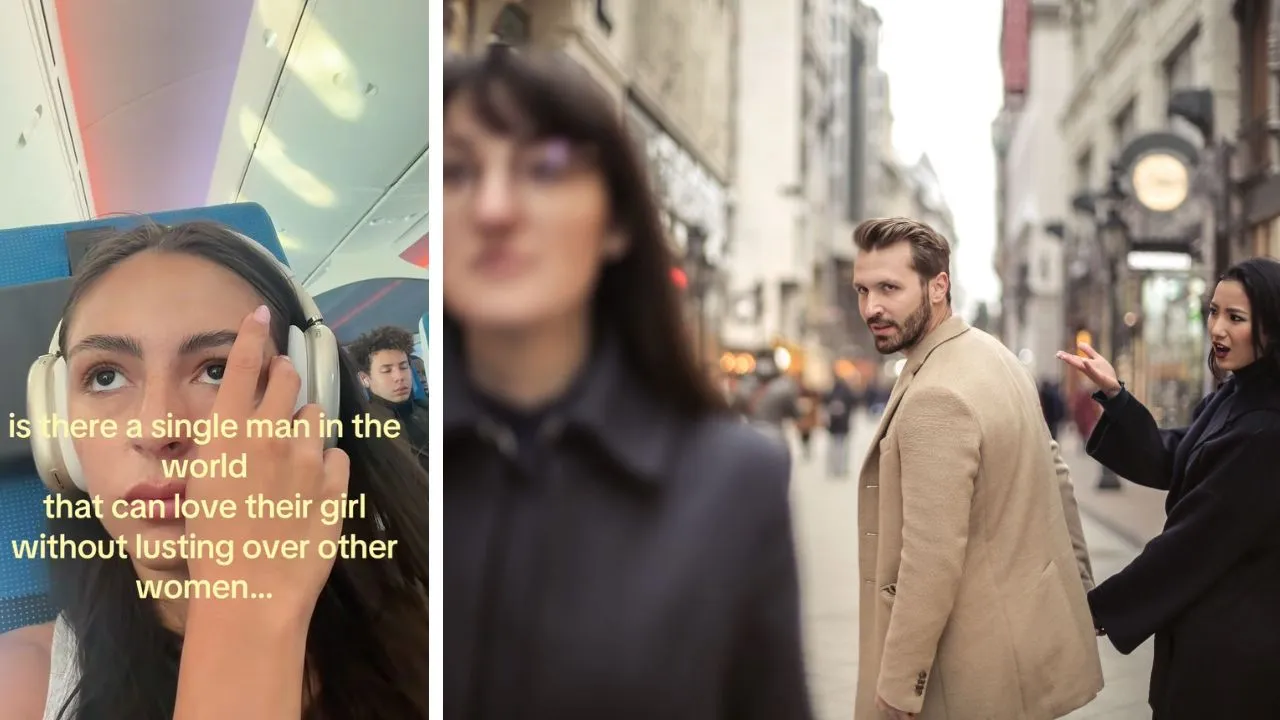
    A seemingly simple question posed on TikTok by creator @kaylynmarie10 has opened a raw, public fracture in how audiences perceive monogamy and male desire. In a video viewed 4 million times as of publication, the creator sits on an aircraft, headphones on, eyes closed, appearing contemplative. Over the footage runs the text: “Is there a single man in the world that can love their girl without lusting over other women…?” The query struck a nerve, transforming the comment section into an impromptu battlefield where lived experience clashed with deep-seated cynicism.

    Comments Section Becomes a Confessional for Married Men

    The responses were immediate and polarized. While some users leaned into humor or resignation—one commenter quipped, “I think Tom Holland is the only one.”—a significant contingent of self-identified married men used the platform to offer forceful counter-narratives. One user wrote a detailed testimony, stating:

    As a married man with 3 children without a shred of doubt… we can. I have absolutely no interest in anyone other than my wife. It’s not even a matter of self control, I’m just simply disinterested.

    Another commenter escalated the discourse by tying fidelity to identity and status, writing:

    Yup. Thats me. I can look at another woman and think she’s pretty but not lust. Married 26 years to the love of my life. 6’6 very fit and a wealthy executive of a large tech company. I get hit on regularly as I travel a lot and stay at nice places, so it would be easy to cheat. I would never do it but younger women try even when they I know I’m married. I have eyes on the prize. My job is to lead, protect and provide for my family but my wife is who I spoil. There are many men like me, we just keep to ourselves.

    These unsolicited testimonies reframed the video from a rhetorical lament into a referendum on the visibility of faithful men, suggesting a “silent majority” exists but chooses discretion over declaration.

    Parallel Narrative: A Real-World Confrontation Over Alleged Infidelity

    The conversation around male fidelity gained a disturbing real-world parallel through a separate viral TikTok series by creator Kels Gordon (@kelsgordon). Gordon recounted discovering her boyfriend, identified as Ethan, was allegedly living a double life as a married father. According to Gordon’s account, a woman approached her at a coffee shop identifying herself as Ethan’s wife. Initial disbelief shattered when the wife produced a family photograph featuring herself, their children, and Ethan.

    Gordon stated she immediately apologized, unaware of the marriage. The wife reportedly revealed this was not the first affair she had uncovered; over five years, she had discovered multiple infidelities but forgiven Ethan each time to preserve the family unit. The discovery of Gordon’s relationship allegedly became the breaking point, prompting the wife to pursue divorce.

    In a dramatic escalation detailed by Gordon, the two women collaborated on a staged vow-renewal ceremony attended by more than 100 guests, including family, friends, and colleagues. Mid-ceremony, the wife halted her vows, invited Gordon to walk down the aisle, and introduced her as Ethan’s girlfriend. Together, they confronted Ethan publicly. The wife filed for divorce shortly thereafter.

    Why This Matters: Digital Culture as a Court of Public Opinion

    These two viral moments—@kaylynmarie10’s philosophical query and @kelsgordon’s narrative exposé—illustrate how TikTok has evolved into a primary venue for adjudicating relationship norms and airing intimate grievances. The platform’s algorithm amplifies extreme poles: the performative confidence of the “provider-protector” archetype in the comments, and the raw, unverified spectacle of a public humiliation ritual in Gordon’s story.

    Critically, The Daily Dot could not independently verify the claims made in either video or the identities of those involved. The details reflect the accounts as shared by the creators. This verification gap is endemic to the “storytime” genre, where engagement metrics often reward narrative velocity over journalistic rigor. For audiences, the takeaway is a fragmented mosaic: fidelity is either a baseline expectation defended by anonymous husbands, or a fragile construct shattered by elaborate deceit. The discourse underscases a growing trend where private betrayals are litigated in the court of public opinion, with lasting digital footprints for all parties involved.

    Frequently Asked Questions

    What was the central question in @kaylynmarie10’s viral TikTok?
    The creator asked: “Is there a single man in the world that can love their girl without lusting over other women…?” The video garnered 4 million views and sparked a heated debate in the comments.
    How did married men respond in the comments?
    Many self-identified married men pushed back against the premise, asserting that fidelity is natural for them. One wrote he has “absolutely no interest in anyone other than my wife,” while another detailed 26 years of marriage, stating, “I can look at another woman and think she’s pretty but not lust.”
    What happened in the Kels Gordon TikTok story?
    Creator Kels Gordon alleged she discovered her boyfriend Ethan was married with children after his wife confronted her. The two women reportedly staged a vow-renewal ceremony to publicly expose Ethan, after which the wife filed for divorce. The Daily Dot could not verify these claims.
  • ‘Something in Me Died’: TikToker Asks if Relationships Can Survive Cheating; Commenters Offer Complicated Answers

    ‘Something in Me Died’: TikToker Asks if Relationships Can Survive Cheating; Commenters Offer Complicated Answers

    Key Highlights

    • TikTok creator @lily.girltea sparked a viral conversation on September 16, 2026, asking viewers whether relationships can truly recover after infidelity, drawing over 118,000 likes and 2,200 comments within five days.
    • Commenters shared deeply personal accounts spanning a spectrum of outcomes—from enduring emotional trauma years later to successful reconciliation contingent on total behavioral change and forgiveness.
    • The discussion highlighted that rebuilding trust often requires concrete actions like digital transparency, lifestyle changes, and acceptance of a fundamentally altered relationship dynamic rather than a return to “fairy tale” normalcy.

    Viral Question Sparks Thousands of Personal Stories

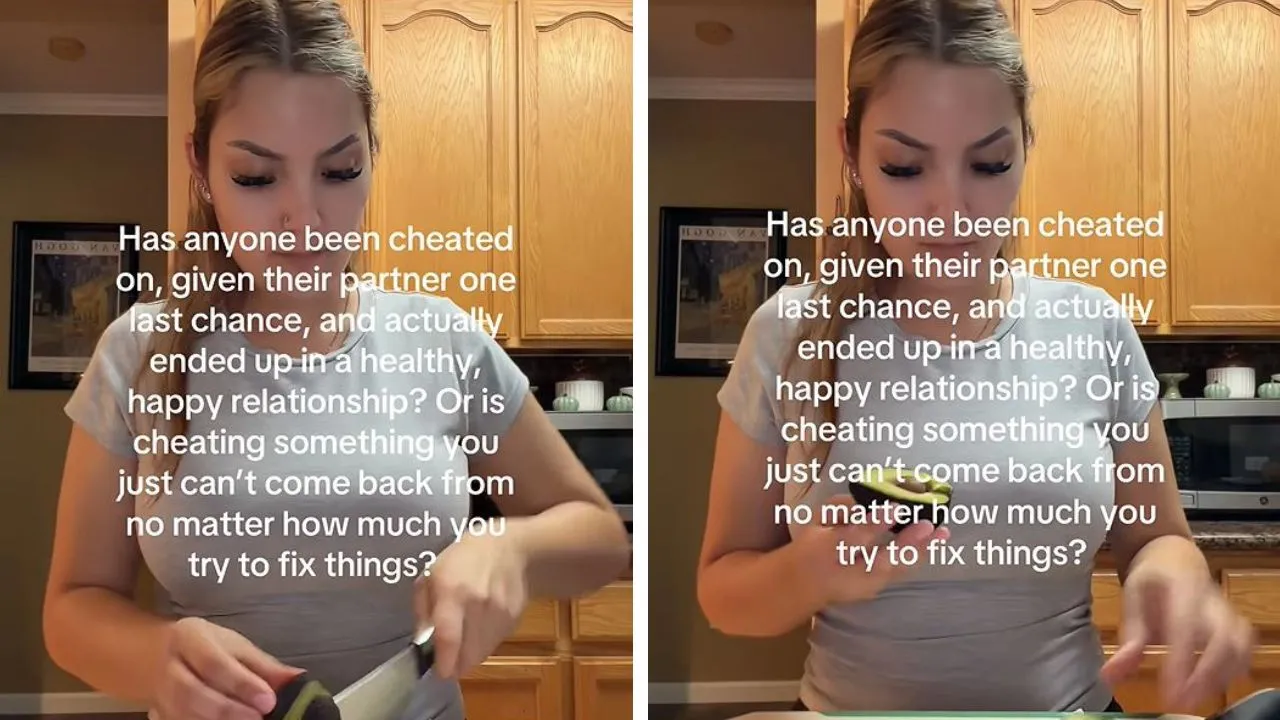
    A silent TikTok video posted by creator @lily.girltea on September 16, 2026, has become a focal point for a raw, crowdsourced examination of infidelity and reconciliation. Filmed in her kitchen while preparing food, the video features no spoken dialogue. Instead, on-screen text poses a direct question to the audience: Has anyone been cheated on, given their partner one last chance, and actually ended up in a healthy, happy relationship? Or is cheating something you just can’t come back from no matter how much you try to fix things? Set to the track “FOUND” by Zach Webb, the post rapidly accumulated more than 118,000 likes and 2,200 comments, transforming the comment section into a de facto support forum and debate hall.

    The Spectrum of Healing: From ‘Something Died’ to Complete Forgiveness

    The responses reveal no consensus, only a complex taxonomy of lived experience. One commenter encapsulated the lingering shadow of betrayal even after a partner reforms, writing, I stayed, he changed and has been so good to me, but something in me died. Not sure how to explain it, its been 3 years and I’m still hurting it comes in waves. This sentiment—that the relationship survives but the person is permanently altered—was countered by accounts of total resolution. Another user testified to a complete turnaround: Yes! 4 years ago, I literally never think about it because he COMPLETELY changed all behaviors and has become a better partner and person. You have to fully forgive & they need to change.

    The Case for Never Returning

    For some, the cognitive toll of betrayal renders reconciliation impossible. A particularly vivid comment articulated the inescapability of the memory across life’s milestones: The one thing that will never make me go back to someone who’s cheated on me is I’ve heard from numerous women that you don’t stop thinking about it. You think about it when he gets down on one knee, you think about it when you’re at your wedding, you think about it when you decide to try for your first born, you think about it when you’re giving birth, you think about it when you hold ur first child. This perspective frames infidelity not as a discrete event to be resolved, but as a permanent fracture in the narrative of a shared life.

    Practical Steps Toward Rebuilding Trust

    Amid the philosophical debate, several commenters offered concrete blueprints for the “work” required to repair a bond. One woman detailed the specific conditions that facilitated her reconciliation after her partner cheated a year and a half into their relationship: He gave me location full access to his phone, he actively stopped drinking and CHANGED. he also allowed me to lash out and go through the ups and downs of getting through a betrayal. She noted the couple separated for three months before reuniting, concluding, 3 years later we are in an amazing place. Her account underscores a recurring theme: recovery demands radical transparency, the cessation of contributing behaviors (like substance use), and the offending partner’s willingness to absorb the emotional volatility of the betrayed partner.

    Cultural Touchstones and the ‘New Normal’

    The discourse frequently borrowed from pop culture to articulate the shift in relationship dynamics. One commenter invoked the sitcom Friends to describe the loss of relational innocence, writing that there is no fairy tale left, even the realistic ones, and that repairing a relationship afterward becomes a choice and work rather than something that ever feels effortless again. Another offered a forward-looking framing focused on narrative control: You can never rewrite history but you can make it a very small fraction of your narrative when you put the work into making the rest of your life very different.

    Why This Matters

    The viral traction of @lily.girltea‘s post reflects a broader cultural shift toward processing relationship trauma in public digital spaces. Unlike traditional advice columns mediated by experts, TikTok’s algorithm surfaces peer-to-peer testimony, allowing users to benchmark their experiences against a vast, unfiltered dataset of outcomes. The conversation illustrates that “surviving cheating” is not a binary outcome but a negotiated, daily practice. For mental health professionals and relationship researchers, the thread offers a rich, real-time qualitative archive of how individuals navigate the aftermath of betrayal—highlighting the critical role of behavioral consistency, digital transparency, and the bereavement of the relationship’s “first version.” As the Daily Dot noted, the personal experiences shared in the comments were not independently verified, underscoring the platform’s role as a space for testimony rather than evidentiary record.

    Frequently Asked Questions

    What prompted the viral discussion on TikTok?
    On September 16, 2026, creator @lily.girltea posted a video showing her cooking while on-screen text asked viewers if a relationship can become healthy and happy after a partner is given a second chance following infidelity, or if cheating is an insurmountable breach.
    What were the main perspectives shared in the comments?
    Commenters presented a wide range of outcomes: some described lasting emotional pain (“something in me died”) despite a partner’s improvement; others reported full reconciliation achieved through the cheater’s total behavioral change and the betrayed partner’s forgiveness; and some argued the intrusion of the memory into future life milestones makes returning impossible.
    What concrete steps did commenters identify as necessary for reconciliation?
    Successful reconciliation stories cited specific actions: the offending partner providing full phone/location access, stopping contributing behaviors (e.g., drinking), allowing the betrayed partner to express anger without defensiveness, and accepting a temporary separation. The consensus was that the relationship does not return to “effortless” but becomes a continuous, conscious choice.
  • ‘Can You Pretend You Came Here With Me?’ Viral TikTok Shows Man Posing as Stranger’s ‘Fake Friend’ at Walmart After She Was Followed

    ‘Can You Pretend You Came Here With Me?’ Viral TikTok Shows Man Posing as Stranger’s ‘Fake Friend’ at Walmart After She Was Followed

    Key Highlights

    • TikTok creator @voycebutler5 posted a viral video recounting how a woman asked him to pretend they were together after she noticed two men following her inside a Walmart store.
    • The pair approached a Walmart employee for assistance, and the creator said the suspected followers left the area shortly after.
    • The clip sparked a massive discussion on Reddit’s r/JustGuysBeingDudes forum, where users shared their own experiences acting as “fake friends” or “fake boyfriends” to help strangers escape uncomfortable or unsafe situations.

    The Viral Walmart Encounter

    Two days ago, TikTok creator @voycebutler5 uploaded a storytime video that quickly amassed millions of views across social media platforms. In the clip, the creator recounts a routine shopping trip to a Walmart that took an unexpected turn when a woman he did not know quietly approached him. According to his account, she asked a direct, urgent question: “Can you pretend you came here with me?” The creator states that once she explained she was being followed by two men, he immediately understood her fear and agreed to help.

    The pair walked together to find a Walmart employee. The creator reports that the presence of the employee and the appearance of companionship caused the two men who had been trailing the woman to leave the vicinity. The video, captioned with hashtags #fyp #storytime and featuring original sound – voycebutler5, resonated deeply with viewers, prompting a wave of shares on platforms including Reddit.

    Community Response on Reddit’s r/JustGuysBeingDudes

    The video was cross-posted to the subreddit r/JustGuysBeingDudes, a community dedicated to highlighting positive male behavior, where it generated thousands of comments. The discussion evolved into a broader conversation about bystander intervention. One commenter, u/Doodlebug510, shared an experience of noticing a man following a woman late at night and choosing to sit with her until her ride arrived. Another user recounted a scenario at a bar where a woman introduced him to a patron as a friend to extract herself from an unwelcome conversation.

    The “Fake Friend” Phenomenon

    A recurring theme in the thread was the concept of the “fake friend” or “fake boyfriend”—a stranger who momentarily pretends to know someone to provide a shield of safety. One highly upvoted comment encapsulated the sentiment: “I’ve been a fake boyfriend in nightclubs on two occasions. It’s a very nice feeling to make somebody feel safe.” Commenters described similar interventions in libraries, bars, and other public venues, illustrating a grassroots network of situational awareness and altruism.

    Safety Strategies and the Role of Staff

    While the stories celebrated individual kindness, a significant portion of the discussion focused on protocol. Many users emphasized that involving store staff, security officers, or other employees is a critical step. In the Walmart scenario, commenters noted that approaching an employee not only created immediate safety through numbers but also ensured the business was aware of the situation from all angles. However, several voices cautioned that helpers should remain conscious of their own environment and leverage professional security personnel whenever possible to avoid escalating risk.

    Why This Matters

    The viral spread of this interaction highlights a growing public discourse on personal safety in retail and social spaces. It underscores the reliance on informal, citizen-led safety nets—often termed “bystander intervention”—when formal security may be distant or unaware. The enthusiasm on r/JustGuysBeingDudes reflects a desire among men to model protective, non-violent masculinity. For retailers like Walmart, the incident serves as a reminder that employee training on de-escalation and harassment recognition is not merely a policy matter but a frontline necessity. The Daily Dot noted it was unable to independently verify the specific events in the TikTok video or the anecdotal Reddit comments, meaning the narrative rests on the creators’ firsthand accounts.

    Frequently Asked Questions

    What exactly happened in the viral Walmart TikTok video?

    TikTok user @voycebutler5 stated that while shopping at Walmart, a woman he did not know approached him and asked, “Can you pretend you came here with me?” She explained she was being followed by two men. He agreed, they found a Walmart employee together, and he said the men left the area afterward.

    What is the “fake friend” or “fake boyfriend” trend discussed on Reddit?

    It refers to a bystander intervention strategy where a stranger pretends to know a person who is being harassed or followed, providing immediate social cover and safety. Redditors on r/JustGuysBeingDudes shared numerous personal stories of doing this in bars, libraries, and stores, with one commenter writing, “I’ve been a fake boyfriend in nightclubs on two occasions. It’s a very nice feeling to make somebody feel safe.”

    Has the Walmart incident been verified by a news organization?

    The Daily Dot reported that it was unable to independently verify the events described in the TikTok video or the personal experiences shared by Reddit commenters. The details reflect the account shared by @voycebutler5 and the responses on r/JustGuysBeingDudes.

  • Woman Refuses Couple Photos Until Relationship Is Official: Six Weeks In, He’s Unsure If It’s Smart or Sad

    Woman Refuses Couple Photos Until Relationship Is Official: Six Weeks In, He’s Unsure If It’s Smart or Sad

    Key Highlights

    • A 30-year-old man shared on Reddit’s r/dating_advice that his 28-year-old girlfriend of six weeks refuses to take couple photos until they are officially exclusive.
    • The woman’s “no photos together” rule stems from past experiences where her camera roll filled with pictures of short-lived dates, leaving her feeling “weirdly depressed” when deleting them.
    • Reddit commenters overwhelmingly supported her boundary, calling it “genius,” “smart,” and a healthy way to avoid “putting the cart before the horse” in early dating.

    Six Weeks In, No Couple Photos: Reddit Debates Dating Boundary

    A 30-year-old man turned to Reddit’s r/dating_advice community this week seeking perspective on a relationship dynamic that left him torn between admiration and confusion. Posting under the username u/P0rtalGun63, he detailed his six-week courtship with a 28-year-old woman—six dates, mutual initiation of plans, public affection, and even a brief introduction to one of her friends. “Nothing feels secretive,” he wrote. Yet a single moment last week exposed a firm boundary that has since sparked a viral conversation with over 2,300 comments.

    The Moment the Rule Surfaced

    While out at a scenic location, the man suggested capturing a photo together. His girlfriend laughed and replied, “I don’t take couple pictures until I’m actually in a couple.” Initially assuming she was joking, he soon realized it was a deliberate rule she had established. She explained that during periods of active dating, her camera roll would fill with images of people she had known for only three weeks and never saw again. When she later deleted those photos, she said she “always felt weirdly depressed.” Her solution: wait until a relationship is defined before creating what she calls “relationship souvenirs.”

    The man emphasized that she has no issue with solo photography. “She’s totally fine taking a picture OF me or having me take one of her. Just not together,” he wrote. He added, “I honestly can’t decide whether this is extremely sensible or slightly sad. Would this strike you as emotionally guarded, or just someone who learned what works for her?”

    Reddit Rallies Behind the Boundary

    The community response was swift and decisively supportive of the girlfriend’s approach. One top commenter declared, “This is genius on her part and quite frankly really smart. She has no idea where he will post them. And until he’s ready to commit they really aren’t a couple. She’s my hero for this. It’s totally fair.”

    Another user echoed the sentiment with blunt practicality: “I’ve never had this as a ‘rule’ but like why the hell would I want to take a couples picture with someone I barely know lol. I agree with her [,] it feels like putting the cart before the horse.”

    A third commenter offered a psychological read on the situation, suggesting the boundary might double as a communication test: “Dude, I know us women need to get better at the whole ‘men aren’t mind readers’ scenario, but I’d bet dollars to dimes that the next thing she was hoping to hear is ‘Well, should we actually define what this relationship is then?’ She was giving you a chance to clarify.”

    Why This Matters

    The viral post highlights a growing cultural shift in how daters navigate digital permanence and emotional self-protection. In an era where photos are instantly shareable, searchable, and potentially weaponized post-breakup, the concept of “relationship souvenirs” reframes couple photography not as a casual milestone but as a deliberate marker of commitment. The girlfriend’s rule reflects a broader trend toward intentional dating—where boundaries are communicated early, not as walls but as filters for alignment. For the man in this scenario, the real question may not be whether her rule is “sensible or sad,” but whether he is ready to define the relationship his actions already resemble.

    Frequently Asked Questions

    What is the girlfriend’s specific rule about photos?
    She refuses to take photos together until the relationship is officially exclusive, but she is happy to take solo photos of each other.
    Why does she have this rule?
    She found that her camera roll filled with pictures of short-term dates, and deleting them later made her feel “weirdly depressed.” She now waits for a defined relationship before creating “relationship souvenirs.”
    How did Reddit react to the post?
    The vast majority of the 2,300+ commenters supported her boundary, calling it smart, healthy, and a form of emotional self-protection. Some also viewed it as an invitation for the man to clarify the relationship status.
  • Woman Lets Neighbor’s Kids Use Pool; Finds 15 Children, Balloons on Fence, Strangers on Patio Furniture

    Woman Lets Neighbor’s Kids Use Pool; Finds 15 Children, Balloons on Fence, Strangers on Patio Furniture

    Key Highlights

    • A homeowner discovered an unauthorized birthday party with approximately 15 children, balloons, and unfamiliar adults using her backyard pool while she was at work, after previously agreeing only to supervised visits by her neighbor’s two children.
    • The neighbor had not requested permission for the party and texted the homeowner, “Don’t worry, we’ll be gone way before you’re home!” when confronted via security camera alerts.
    • Reddit commenters on r/AITApod overwhelmingly supported the homeowner, citing significant liability risks and a breach of trust that justified revoking pool access entirely.

    Neighbor Transforms Casual Pool Access Into Unauthorized Birthday Party

    A routine summer arrangement between neighbors unraveled dramatically last Saturday when a homeowner returned early from her Saturday shift to discover her backyard had been commandeered for a child’s ninth birthday celebration. The original poster, Reddit user u/Acceptable_Ease_1133, shared the incident on the subreddit r/AITApod, where the post amassed over 6,100 upvotes and 1,400 comments as of publication. The homeowner had agreed in June to allow her next-door neighbor’s two children to use her pool during summer heat waves, establishing clear conditions: the neighbor would remain outside to supervise and would text before each visit. For weeks, the arrangement functioned smoothly, with the children visiting roughly twice a week and the neighbor almost always providing advance notice.

    Security Cameras Reveal Uninvited Guests and Escalating Tensions

    The situation shifted around 2 p.m. last Saturday when the homeowner’s phone flooded with alerts from her backyard security camera. The feed revealed approximately 15 children in the pool, balloons tied to her fence, and unfamiliar adults occupying her patio furniture — none of whom she knew or had authorized to be on her property. She immediately texted the neighbor, “Are you having a party at my house??” The neighbor confirmed it was her daughter’s ninth birthday and responded, “Don’t worry, we’ll be gone way before you’re home!” Undeterred, the homeowner left work early and arrived to find vehicles parked “all the way down” her street. She terminated the gathering on the spot, refusing a request to stay for birthday cake. As she later wrote, she “didn’t know a SINGLE one of those kids or if they could even swim.”

    Fallout Includes Tearful Departure and Accusations of Cruelty

    The abrupt end to the party triggered an emotional scene. The birthday girl cried while attendees packed up over roughly 20 minutes. One departing parent acknowledged he had “just assumed” the homeowner was amenable to the event. The confrontation continued the following morning when the neighbor returned to retrieve a forgotten folding table. She informed the homeowner her daughter had “cried herself to sleep” and demanded to know “what kind of person ruins a little girl’s birthday over a pool they weren’t even using,” adding that the homeowner “she herself had said the kids could come over ‘whenever.’”

    Commenters Highlight Legal Liability and Boundary Violations

    The r/AITApod community rallied behind the homeowner, with top comments emphasizing the severe legal exposure created by the neighbor’s actions. One commenter warned, “She filled your pool with kids you’ve never met and didn’t even think to ask? If one of them had gotten hurt, that’s your insurance and your name on the lawsuit.” Another argued the breach warranted a permanent end to the arrangement: “Change the lock too. The fact that she felt entitled to bring 15 kids over while OP was at work is enough to end the arrangement. Once someone turns a casual favor into unauthorized pool parties, access needs to be done. No more goodwill after that.” A third pointed to the neighbor’s own behavior as proof of bad faith: “The fact that she typically texts op before taking the kids to swim and didn’t notify them AT ALL about the pool party shows that she knew she was in the wrong.”

    Why This Matters

    This incident illustrates the significant legal and personal risks homeowners assume when granting informal access to amenities like swimming pools. In many jurisdictions, property owners can be held liable for injuries sustained by guests — even uninvited ones — under premises liability laws and attractive nuisance doctrines. The neighbor’s decision to host a large gathering without permission, while the homeowner was demonstrably absent, escalates a neighborly favor into a potential lawsuit scenario. The widespread support for the homeowner on Reddit reflects a broader consensus that property rights and safety protocols cannot be overridden by social expectations or emotional appeals. For the homeowner, the path forward likely involves formalizing boundaries — potentially changing gate locks and issuing a written revocation of access — to prevent recurrence and protect against future liability.

    Frequently Asked Questions

    Did the homeowner give permission for the birthday party?

    No. The homeowner had only agreed to supervised visits by the neighbor’s two children with advance text notification. She was unaware of the party until receiving security camera alerts while at work.

    What were the main concerns raised by Reddit commenters?

    Commenters focused on the homeowner’s legal liability if a child had been injured, the neighbor’s breach of the agreed-upon conditions, and the neighbor’s apparent awareness that the party was inappropriate — evidenced by her failure to request permission despite normally texting before visits.

    Has the homeowner indicated she will continue allowing pool access?

    While the original post does not explicitly state a final decision, the homeowner’s termination of the party and the overwhelming community advice to revoke access and change locks suggest the arrangement is unlikely to continue.

  • People Report Ads Invading Their Dreams; Expert Explains Why

    People Report Ads Invading Their Dreams; Expert Explains Why

    Key Highlights

    • New survey data from The Media Image reveals 61% of Americans report experiencing advertisement-like content in their dreams over the past year, with 38% saying it occurs frequently.
    • Experts attribute the phenomenon to heightened daily ad exposure via social media and the brain’s natural memory consolidation processes during REM sleep, not covert marketing technology.
    • Clinical Lead Dr. Daniel Atkinson recommends a digital curfew of at least one hour before bed and engaging in mindful activities like crafting to reduce dream intrusions.

    Surge in Reports of ‘Dream Advertising’ Sparks Online Discussion

    A growing chorus of voices on social media platforms is describing a surreal modern experience: watching commercials while asleep. On the Dreams subreddit, one user asked, “Has dream advertising started?” before revealing that “for the last year or so, every dream [they have had] has revolved over some kind of product.” The sentiment was echoed by another Redditor who described a “very specific” advert in their dream that felt “almost like product placement.” They added, “Not the first time this has happened. I’ve had ads pop up right in the middle of a dream just like YouTube ads. They’ve infiltrated the dream world. Honestly not surprised, it was gonna happen at some point.” Similar accounts appeared on Facebook, where one person wrote, “My dreams have commercials in them, I’ve noticed recently that between different dreams I will have a dream that’s an advertisement for things. Maybe it’s because I sleep with the TV on but it seems like this just started happening the past three or four days.”

    Survey Data Quantifies the Phenomenon

    Anecdotal reports are now backed by quantitative research. Data released this year by The Media Image indicates that a significant majority of the U.S. population is experiencing this phenomenon. The survey found that 61 percent of Americans say they have had dreams that include ad-like content in the last year. For a substantial minority, this is a recurring event: 38 percent report it happens frequently, ranging from once a month to every day. Perhaps most tellingly, 41 percent admitted that they think ads are actively infiltrating their dreams, suggesting a widespread perception that marketing has breached the final frontier of mental privacy.

    Expert Analysis: Neuroscience Over Nefarious Tech

    While the frequency of these reports evokes comparisons to dystopian fiction, medical experts offer a grounded neurological explanation. Dr. Daniel Atkinson, Clinical Lead at Treated, dismissed the idea of direct dream-hacking technology. “One reason is exposure. Previously, adverts were something we consumed comparatively infrequently: when watching television, reading magazines or newspapers or travelling past a billboard. Now, we’re seeing adverts much more often as we engage with social media and use online tools for day-to-day activities, at pretty much any time of day.” He added a second factor: “Another reason is novelty. Again, advertising has evolved to a point where elaborate, fantastical imagery is more common because it’s easier to pull off from a production standpoint.”

    How the Brain Processes Ads During Sleep

    Dr. Atkinson detailed the specific cognitive mechanics that transform daytime scrolling into nighttime narratives. “The brain processes and catalogues images and and information during the day and stores this in the thalamus, and often more deeply processes data that’s catchy or repetitive in the cerebral cortex,” he explained. “The prefrontal cortex and hippocampus effectively decide whether or not to ‘keep’ something for later, and it’s at this point that associations with that memory begin to be matched to emotions and motivations (‘I want to buy one of those’). When you enter REM sleep at night, the brain is working to further process this information, and this is why images might infiltrate dreams.” He noted that certain creative formats are stickier than others: “Animated content, or campaigns utilising bright colours with a higher level of contrast, have a higher visual salience and are usually easier to recall, and these might be prioritised by the brain because they’re more striking than other images we’ve seen throughout the day.”

    Why This Matters

    The prevalence of advertising in dreams underscores the sheer volume of media consumption in the digital age. With the average person encountering thousands of marketing messages daily—via algorithmic feeds, video pre-rolls, and native advertising—the brain’s nightly “defragmentation” process inevitably sorts through this backlog. This phenomenon highlights a shift in cognitive load; the boundary between waking consumption and subconscious processing is thinning not because of invasive tech, but because the sheer density of visual stimuli has saturated working memory. For the advertising industry, it serves as an unintended metric of creative salience: campaigns that penetrate dreams are those achieving the highest visual and emotional encoding. For public health, it reinforces the link between screen hygiene and sleep quality, framing digital boundaries as a neurological necessity rather than a lifestyle preference.

    Frequently Asked Questions

    Are companies using technology to insert ads directly into people’s dreams?

    No. According to Dr. Daniel Atkinson, there is no evidence of “Black Mirror”-style mind infiltration. The phenomenon is explained by the brain’s natural memory consolidation processes during REM sleep, fueled by the unprecedented volume of advertising imagery encountered during waking hours.

    How common is it to see advertisements in dreams?

    It is remarkably common. Survey data from The Media Image indicates that 61% of Americans have experienced ad-like content in their dreams over the past year, with 38% reporting it happens frequently (monthly to daily).

    What can I do to stop dreaming about ads?

    Dr. Atkinson recommends implementing a digital curfew of at least one hour before bed and engaging in mindful, tactile activities—such as drawing, crafting, or embroidery—to help the brain filter out the day’s visual noise before sleep onset.