Key Highlights
- Louisa Livingstone, the mysterious figure on Black Sabbath’s 1970 debut album cover, was identified in 2020 after 50 years of speculation.
- Now recording as Indreba, Livingstone has released electronic music inspired by the album cover, including tracks titled “Witch Woman” and “The Woman by the Mill.”
- Her latest project is a five-track psychedelic rock opera called Alice, exploring a futuristic romance between Alice and artificial intelligence, created partially with AI tools including voice cloning.
The Woman Behind the Iconic Black Sabbath Cover
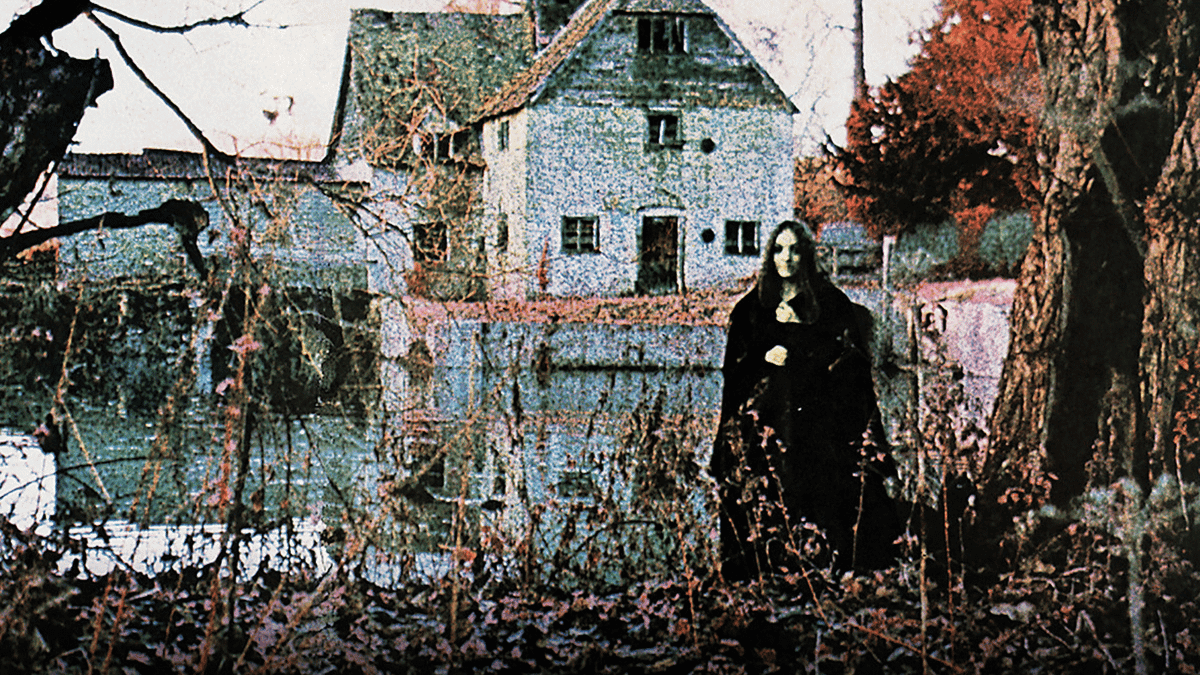
For more than five decades, the silhouetted woman standing in the grounds of Mapledurham Watermill in Oxfordshire has been one of rock music’s most enduring visual enigmas. She appears on the cover of Black Sabbath, the self-titled 1970 debut album that birthed heavy metal, staring toward the camera in a pose that felt both accidental and ominous. Her identity remained unknown until 2020, when Rolling Stone revealed her to be Louisa Livingstone, a London-based model who was in her late teens when photographer Keith Macmillan scouted her for the session. Macmillan selected Livingstone specifically because her diminutive five-foot frame would exaggerate the scale of the surrounding landscape, amplifying the cover’s foreboding atmosphere.
A Freezing Dawn Shoot and an Unknowing Debut
The photoshoot took place in the pre-dawn chill of an English morning. Recalling the experience years later, Livingstone told Rolling Stone: “I remember it was freezing cold. I had to get up at about 4 o’clock in the morning.” At the time, the significance of the band escaped her. “I’m sure [Macmillan] said it was for Black Sabbath, but I don’t know if that meant anything much to me at the time,” she confessed. The image would go on to define the visual language of heavy metal, yet its subject walked away unaware she had just become the face of a cultural phenomenon.
From Album Cover Muse to Recording Artist Indreba
Decades later, Livingstone has emerged as a musician in her own right, recording under the moniker Indreba. While her primary genre is electronic music, she has directly engaged with her unexpected legacy. She has released tracks explicitly referencing the Sabbath session, including “Witch Woman” and “The Woman by the Mill,” transforming her passive role as a cover model into active artistic authorship. This pivot marks a rare trajectory: the subject of an iconic rock image reclaiming the narrative through her own sonic output.
A Psychedelic Rock Opera on AI and Illusion
Livingstone’s most ambitious project to date is Alice, a five-track psychedelic rock opera that reimagines Lewis Carroll’s Alice in Wonderland with a 2026 technological twist. The concept centers on a protagonist—effectively an avatar of the artist—who falls in love with artificial intelligence before confronting the emptiness of that connection. Describing the narrative arc to Rolling Stone, she framed it as the story of “myself (or Alice) falling in love with AI” before realizing it was “just a beautiful illusion along with everything else on the internet.” The work grapples with themes of authenticity, digital intimacy, and the blurred line between creation and simulation.
Embracing AI as a Creative Tool
Notably, Livingstone did not merely write about AI—she used it to construct the opera. The project incorporates AI-generated instruments, vocals, and experiments in cloning her own voice. “I’ve been experimenting a little with cloning my own voice and seeing what different things I can do with the help of AI,” she explained. Her perspective on the technology has evolved from skepticism to a pragmatic view of it as a neutral instrument. Addressing the controversy surrounding AI in music, she mused: “I used to be very judgmental about AI like many people, but it’s a tool that you can use to create either absolute rubbish or ‘slop’ as it’s called, to something really good and interesting.” She emphasized that the output remains a reflection of the user: “It’s still down to the user and their input. It will always reflect the person who is using it and how well or badly they use it and their musical tastes and knowledge.”
Why This Matters
Livingstone’s journey from anonymous album cover figure to AI-exploring artist encapsulates several intersecting cultural currents. First, it highlights the often-overlooked labor of visual collaborators in music history—models, photographers, and designers whose work becomes iconic while their names fade. Second, her pivot to music later in life challenges industry ageism and the myth that artistic relevance expires. Third, her engagement with generative AI places her at the center of the music industry’s most contentious debate. By using AI to interrogate AI—creating a rock opera about digital illusion with the very tools that produce it—she models a nuanced approach: neither wholesale rejection nor uncritical adoption, but deliberate, authorial experimentation. As major labels and streaming platforms grapple with AI policy, independent artists like Indreba are already defining what an AI-augmented creative practice can look like.
Frequently Asked Questions
Who is the woman on the Black Sabbath debut album cover?
The woman is Louisa Livingstone, a London model who was in her late teens when photographer Keith Macmillan shot the cover at Mapledurham Watermill in Oxfordshire around 1969. Her identity was confirmed publicly by Rolling Stone in 2020.
What music does Louisa Livingstone make now?
Recording as Indreba, Livingstone produces electronic music and has released tracks inspired by the Black Sabbath cover, including “Witch Woman” and “The Woman by the Mill.” Her latest project is Alice, a five-track psychedelic rock opera about falling in love with artificial intelligence, created partially with AI tools including voice cloning.
How does Louisa Livingstone view the use of AI in music creation?
Livingstone sees AI as a neutral tool whose value depends entirely on the artist’s intent and skill. She told Rolling Stone: “It’s still down to the user and their input. It will always reflect the person who is using it and how well or badly they use it and their musical tastes and knowledge.” She has moved from being “very judgmental” about AI to experimenting with it directly in her own work.
Leave a Reply